EDITORIAL CHECK
Source and Review Basis
Seoul photo-spot guides are checked against city and park references because seasonal flowers, parks, lakes, and walking routes can change by date and event.
A Seoul photo spot guide becomes easier to use once visitors recognize that hanok alleys, river views, trendy streets, park walks, retro night blocks, and spring flower routes produce very different results. This guide organizes Seoul photo spots by neighborhood mood, walking rhythm, and visual structure so visitors can decide where to begin instead of jumping between unrelated places.
— How should you divide Seoul photo spots so they feel easier to choose
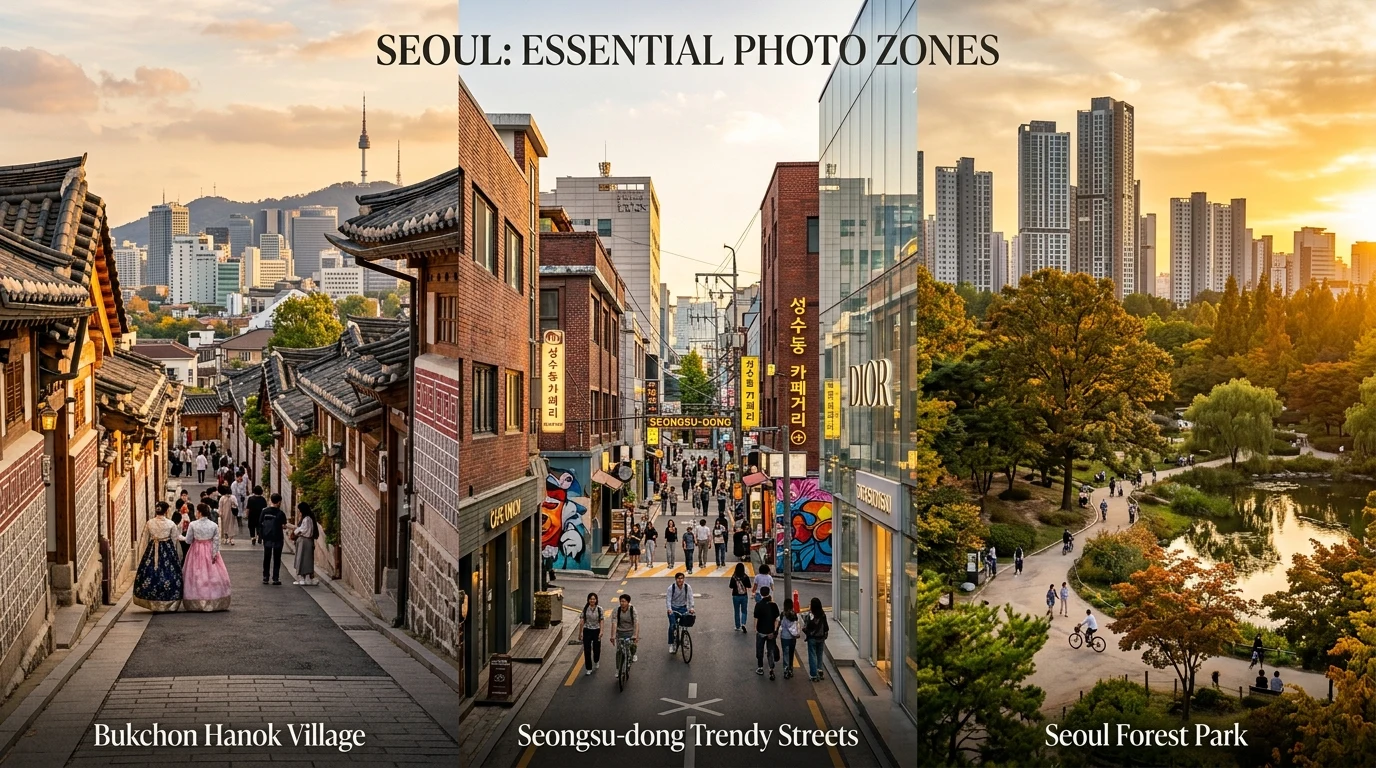
- Hanok alley type: places like Bukchon where rooflines, walls, and slope organize the frame.
- Street mood type: places like Seongsu, Itaewon, and Euljiro where storefront rhythm changes the photos.
- Nature walk type: places like Seoul Forest, Seokchon Lake, and riverside areas where light and season lead the scene.
- Time-sensitive type: places where blossom timing, sunset, or night views matter more than the neighborhood alone.
The easiest way to use a Seoul photo spot guide is to sort the city before comparing names. Some visitors want traditional Seoul, some want cleaner trend-driven streets, and others want open light, trees, or water. Those are not minor differences. They change route logic, pace, and the kind of images people actually bring home.
This matters even more for first-time visitors because Seoul has too many strong options to treat as one simple list. If the city is divided into hanok, street, and nature-led categories first, routes become easier to build and the final image set stays much more coherent.
— Where do hanok photo spots split from denser Seoul alley photography
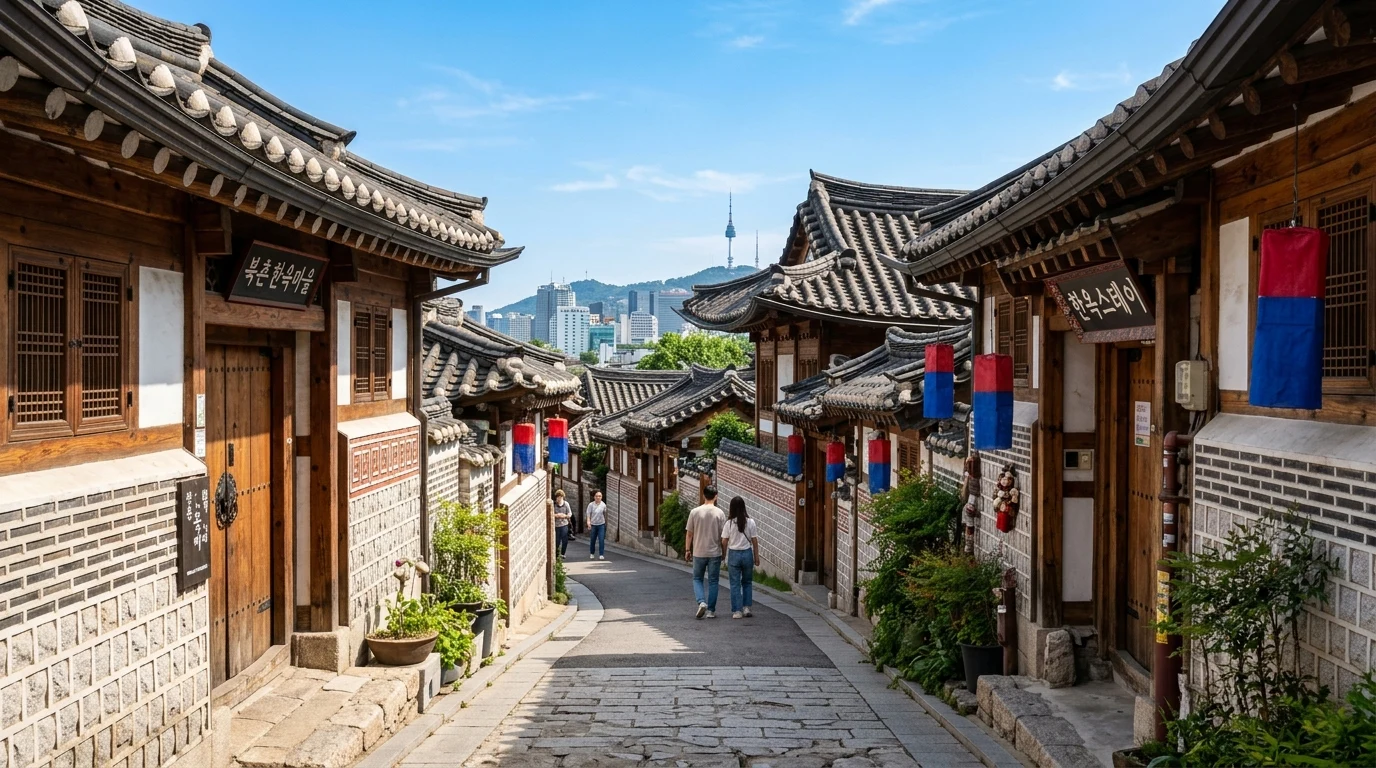
Hanok photo spots work best when structure leads the frame. In Bukchon, rooflines, wall texture, and uphill alleys make the scene feel stable and readable. In denser hanok-commercial areas like Ikseon-dong, the frame gets tighter, busier, and more layered, so the mood turns from calm structure toward compressed atmosphere.
That distinction matters because both areas can be called traditional Seoul, yet they answer very different search intent. Bukchon suits people who want order and quieter framing first, while tighter alley districts suit visitors who want mood, detail, and faster visual change.
Adding hanbok into the equation makes the split even clearer. Bukchon typically works better for structured hanbok backgrounds, while denser hanok-commercial districts work better when the alley mood matters more than the clothing. The same "traditional Seoul" label can lead to very different visual outcomes.
If you want the clearest hanok-based starting point inside Seoul, Best Things to Do in Bukchon Hanok Village is still the strongest anchor guide.
— Why do trend-driven Seoul neighborhoods branch into different photo moods
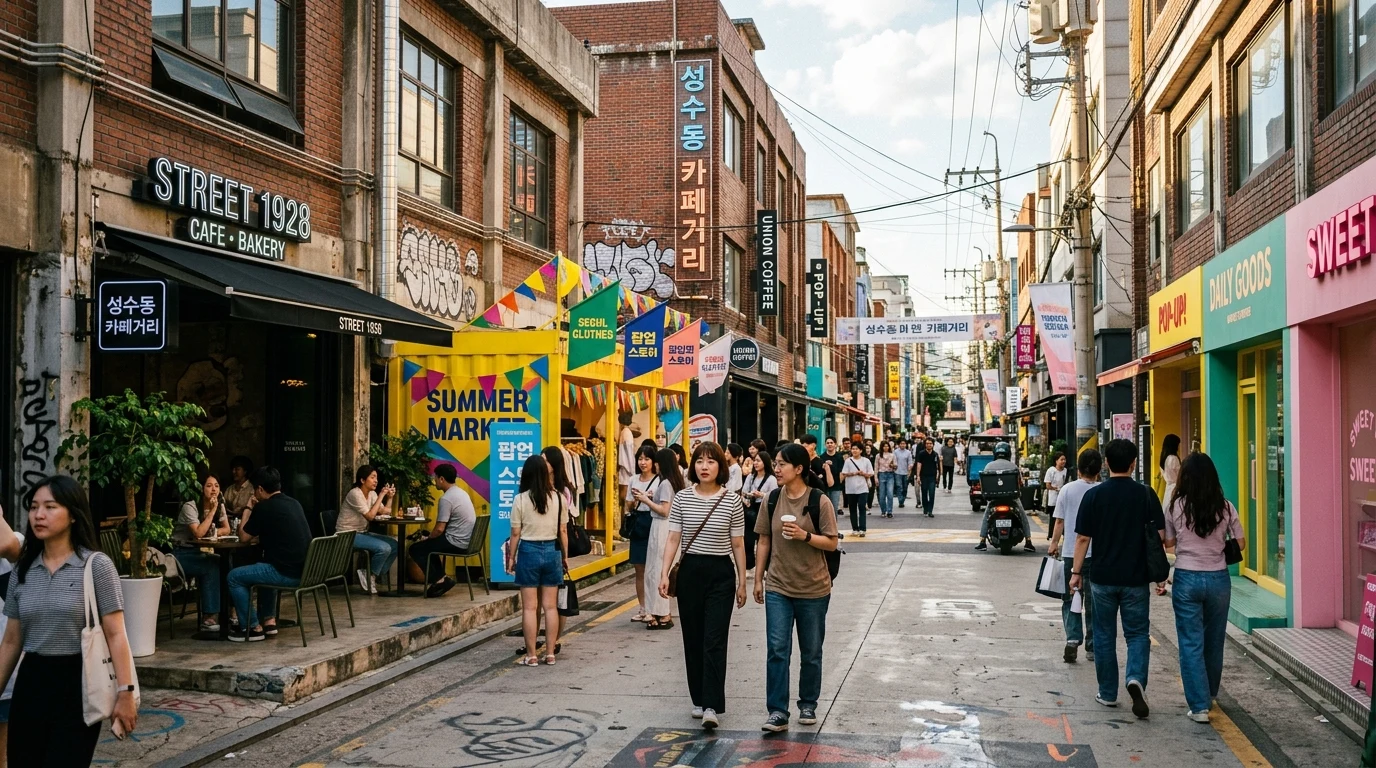
Seongsu, Itaewon, and Euljiro all belong to the broader category of stylish Seoul streets, but they do not look alike once you start shooting. Seongsu leans clean, current, and cafe-heavy. Itaewon and Gyeongnidan-gil feel more international, mixed, and uphill. Euljiro leans retro, metallic, and especially strong at night.
That is why a generic search for Seoul aesthetic locations can become misleading. The city has multiple kinds of stylish street photography. A person who wants polished cafe rhythm will not necessarily want the same route as someone chasing retro alleys or mixed-culture storefront contrast.
Time of day widens the differences further. Seongsu stays relatively stable from daytime into early evening, Itaewon gains more of its identity later in the day, and Euljiro frequently becomes strongest once the city shifts toward night. Stylish Seoul is not one mood. It branches by light as much as by neighborhood.
If you want to translate that street mood into a more output-focused direction right away, the K-style profile flow is a natural mid-guide bridge.
— When do parks, rivers, and lakes become the better Seoul choice
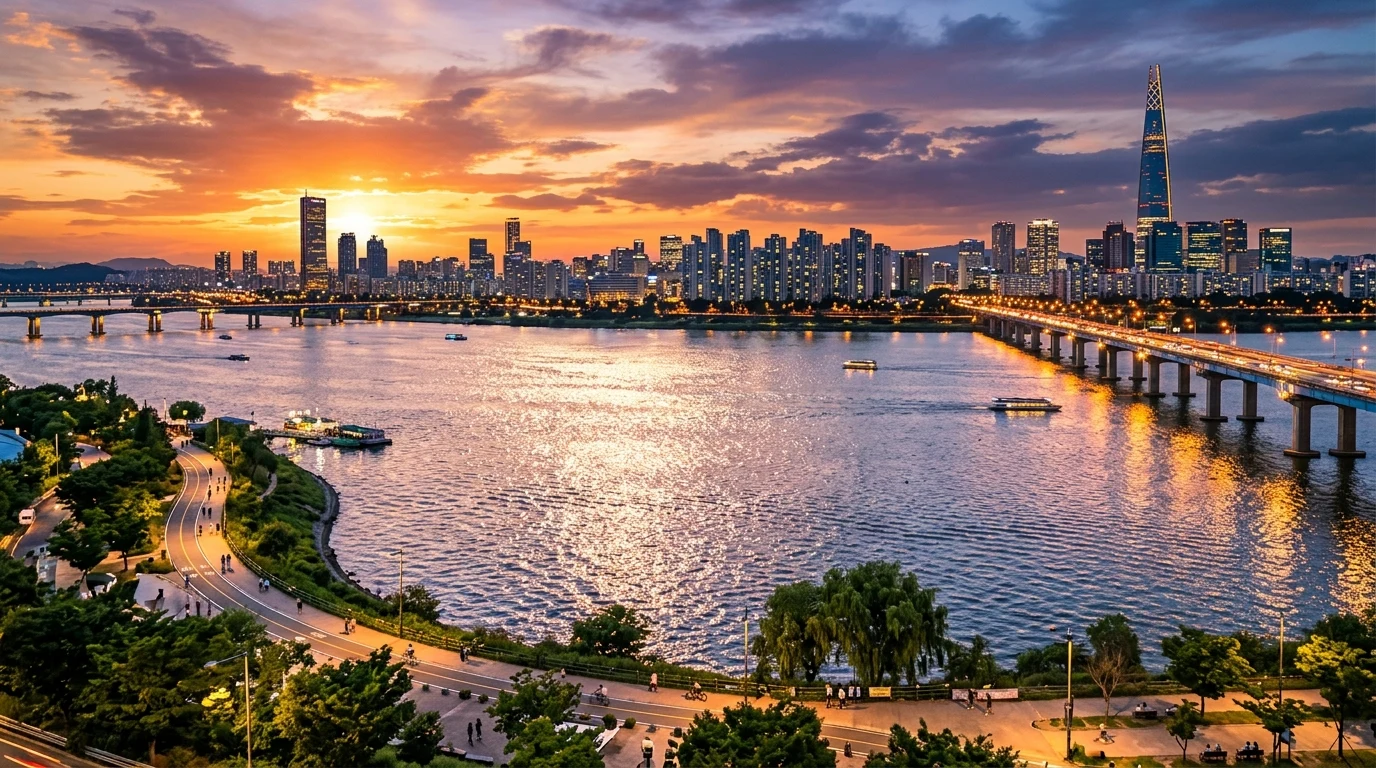
Open-air locations such as Seoul Forest, Seokchon Lake, and the Han River work better when visitors want light, movement, season, and breathing room. These places depend less on building texture and more on trees, water, sky, blossom timing, sunset, and wider composition.
Because of that, they frequently feel more forgiving for casual visitors. Park and river routes are easier to walk, easier to revisit, and more responsive to season than narrow alley-based districts. The tradeoff is that they need better timing. Light and weather matter more here than in enclosed city streets.
That makes them especially good for newer photographers or visitors who want lower route complexity. The framing is frequently less delicate than in alley districts, but the success rate depends more heavily on weather, blossom timing, sunset placement, or seasonal color.
— Where should first-time visitors begin if they only want one Seoul photo area
First-time visitors should typically start by narrowing Seoul into one of three priorities: traditional structure, street mood, or open seasonal scenery. If traditional framing matters most, begin with hanok districts. If culture-mix and trendy storefronts matter more, start with Seongsu or Itaewon-type streets. If open air and easier walking matter most, begin with park, lake, or riverside routes.
That approach makes the city easier to read because it turns Seoul photo spots into a set of categories instead of one oversized bucket list. The city rewards people who choose by visual logic first.
Short trips benefit from even stronger reduction. Trying to fit hanok alleys, trendy streets, and open river scenes into one day frequently creates too much transit and too little focus. Seoul typically works better when one or two visual directions are paired instead of trying to cover every famous name at once.
For street-led Seoul routes, the clearest next reads are Itaewon and Gyeongnidan-gil Walk Guide, Seochon Date Route and Photo Spots, Ikseon-dong Hanok Alley Photo Guide, and Euljiro Retro Photo Spot Guide.
For park, lake, and seasonal routes, continue with Seoul Forest Picnic and Photo Guide, Seokchon Lake Photo Spot Guide, Naksan Park Night View Guide, and Best Cherry Blossom Photo Spots in Seoul for Spring Walks.
— How do season and trip length change the best Seoul choice
Seoul photo priorities shift with the season. Spring raises the value of blossom routes and riverside parks, summer favors greener walks and easier neighborhood combinations, fall frequently strengthens hanok and park structure, and winter makes night views and mixed indoor-outdoor streets more practical. The city does not keep one stable photo hierarchy all year.
Trip length matters just as much. With only one day, it typically makes sense to choose one main category and one supporting route. With two or more days, hanok, street, and nature-led areas can be separated more cleanly. A good Seoul photo spot guide is not only about what looks best. It is about what stays readable within the time and season available.
Seoul photo spots become easier to choose once visitors divide hanok alleys, street mood routes, and open seasonal scenery.
Bukchon, Seongsu, Itaewon, Euljiro, Seoul Forest, and riverside areas all serve different visual priorities instead of one shared style.
First-time visitors typically do better when they choose by photo mood and walking pace before choosing by neighborhood name.
💡 Editor's Honest Review
After buying and trying countless products with my own money, I realized you don't need the most expensive items. Finding basic items that fit your skin type or body shape is much more important. I usually stock up during major sales events at Olive Young Global or Musinsa Global.
| Buying Point | Editor's Pick | Pro Tip | |---|---|---| | Value | Value Sets during sale | Best time to stock up! | | Practicality | Daily wear/use items | Basics over trends. | | Trend | Clean and timeless | Make sure it lasts. |