EDITORIAL CHECK
Source and Review Basis
Seoul photo-spot guides are checked against city and park references because seasonal flowers, parks, lakes, and walking routes can change by date and event.
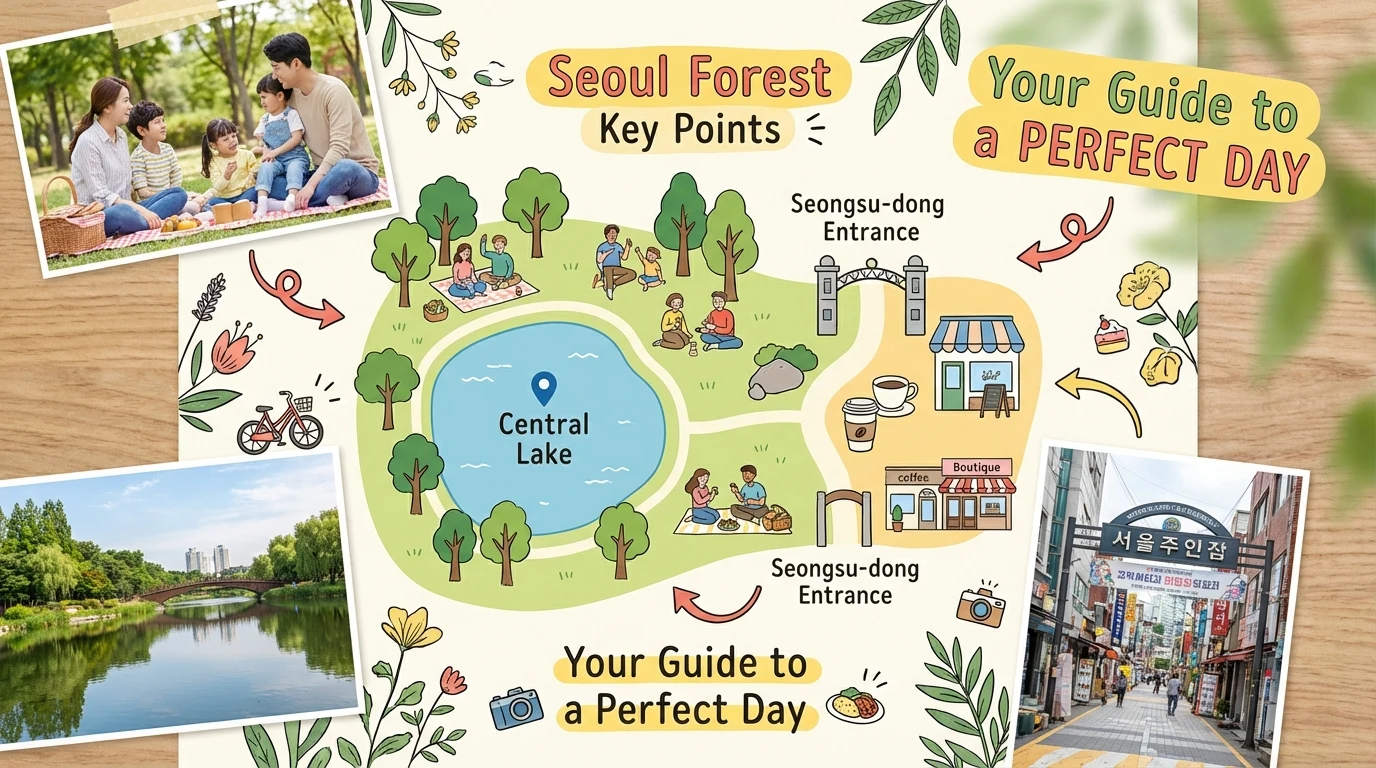
Seoul Forest divides more usefully than it first appears. Grass areas, tree-lined paths, open lawns, and the route toward Seongsu all change the experience in different ways. This guide uses the wider Seoul Photo Spot Guide as a base and explains how to enjoy Seoul Forest as both a picnic park and a city photo route.
The park is strongest when visitors stop trying to make one corner do everything. The calmest place to sit is not always the most photogenic walking section, and the strongest photo stretch is not always the best place to spread out for an hour. Once those functions are separated, Seoul Forest becomes much easier to read.
That is also why it works so well for first-time visitors. It gives enough room to rest, enough variety to keep a walk interesting, and a clean transition into Seongsu if you want the outing to keep going after the park. The real skill is not finding one perfect point. It is building the right order.
— Where should you set up a Seoul Forest picnic if you want it to feel easy
Verified date: 2026-10-11. Facility and transit details may change depending on operating authorities.
| Item | Details | | :--- | :--- | | Public Transit | Seoul Forest Station (Suin-Bundang Line) Exits 3 & 4 (approx. 3 min walk) / Ttukseom Station (Line 2) Exit 8 (approx. 10 min walk) | | Operating Hours | Park open 24/7 year-round (Ecological Forest 05:30 – 21:30; Insect Garden 10:00 – 17:00, closed Mondays) | | Parking Rates | Public parking 150 KRW / 5 min for standard cars (1,800 KRW / hour) | | Inquiries | Seoul Forest Management Office (+82-2-460-2905) |
-
How to get there: A 5 to 10-minute walk from the nearest subway station exit.
-
Best time to visit: Between 2:00 PM and 4:00 PM for optimal natural lighting.
-
Estimated duration: 1 to 2.5 hours depending on crowds.
-
Budget & Tips: Expect to spend around 15,000 KRW per person on average.
-
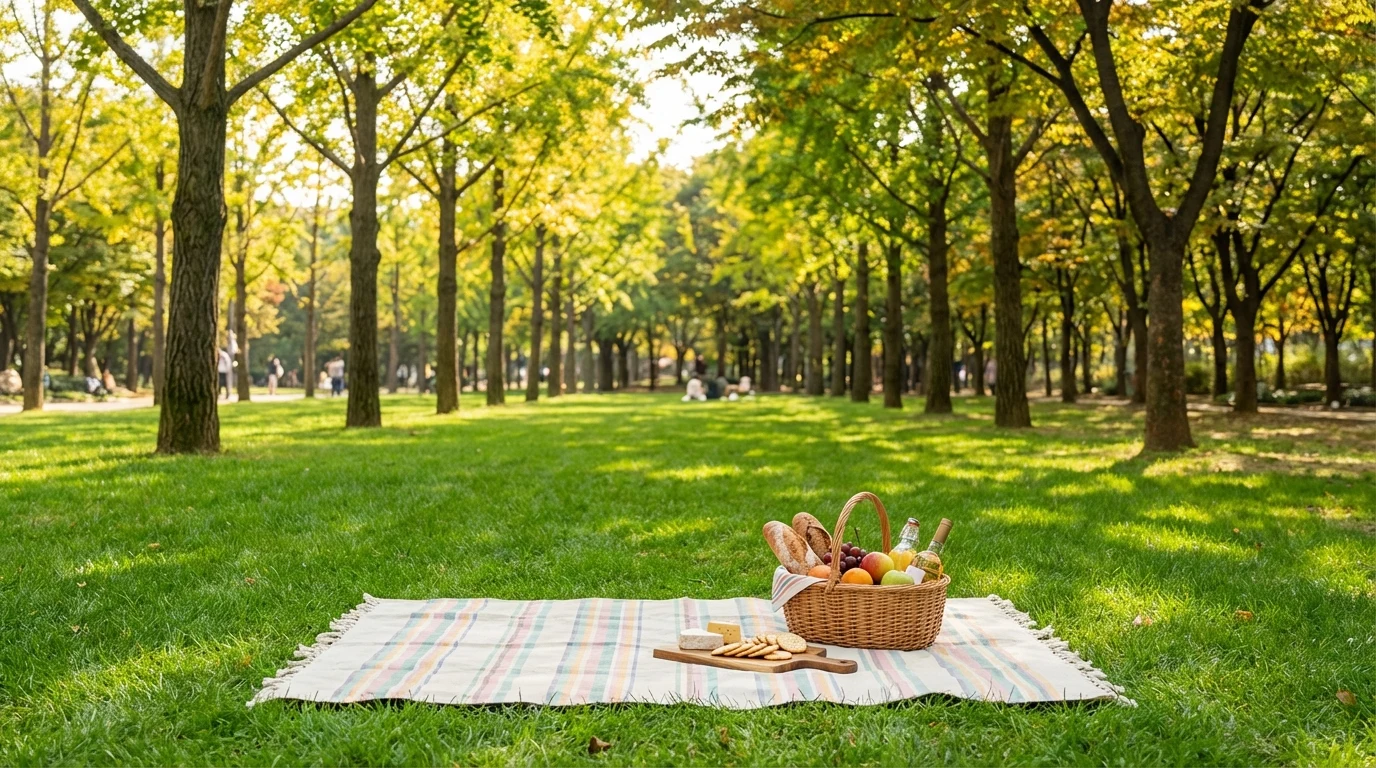
Best picnic logic: choose a grass section with tree cover nearby but enough distance from the busiest walking path.
-
Best for: relaxed park picnics, natural-light photos, slow walks, and half-day routes linked with Seongsu.
-
Best timing: late morning through the hours before sunset typically feels the most comfortable.
-
Best route tip: separate your resting spot from your main photo-walk area instead of expecting one place to do everything.
Seoul Forest is strongest when visitors stop treating the whole park as one flat green zone. Some sections are better for settling down, while others work better for walking and taking photos. The most comfortable picnic spot is frequently not directly under the biggest tree. Slightly offset grass with some tree cover typically works better because it stays usable for longer and feels calmer than a place pressed directly against a busy path.
— Which parts of Seoul Forest typically photograph the most naturally
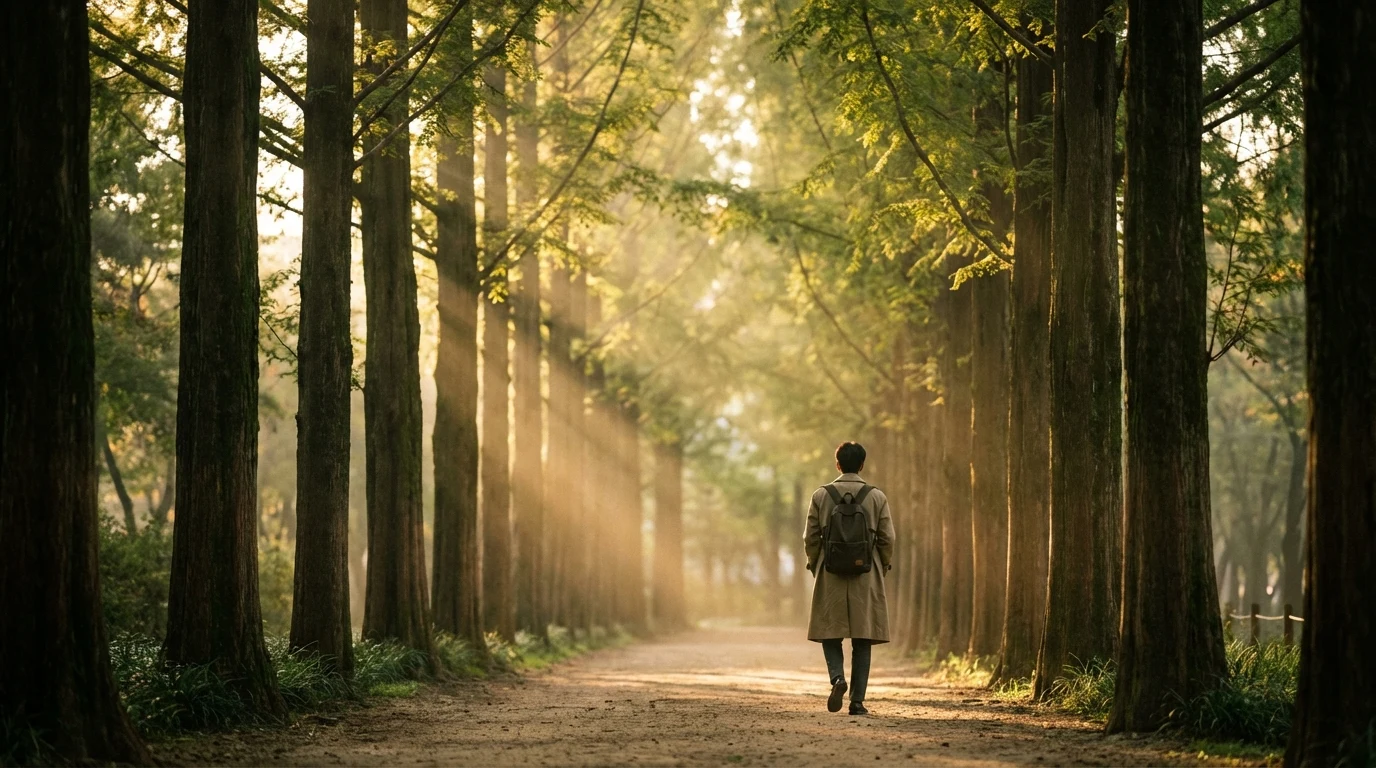
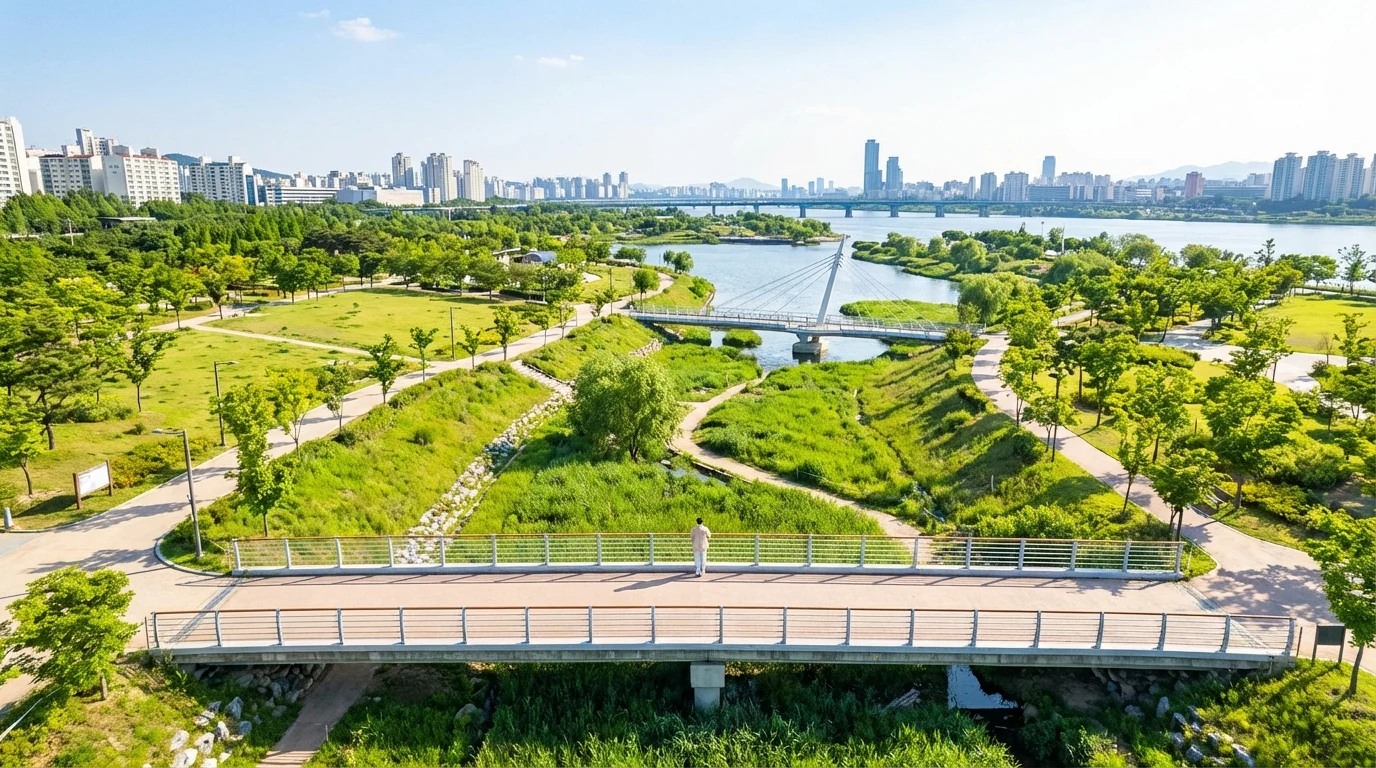
Seoul Forest photographs best where paths, trees, and open lawn stay balanced. The strongest images frequently come from tree-lined walks, open grass with breathing room, and places where people move naturally through the park instead of clustering around one fixed object.
That is why the park feels different from a dense alley district. It rewards openness, spacing, and light more than compression.
Angle matters as much as location. Straight-on frames can make the park feel flatter than it actually is, while side angles let the tree spacing, path direction, and lawn depth work together. If you are photographing a person, keeping a path edge, bench line, or low planting zone inside the frame typically helps the scene feel more like Seoul Forest and less like generic grass.
Light changes the park quickly as well. Late morning is frequently the clearest for wider park frames, while the hours before sunset soften skin tone and reduce harsh lawn reflection. Midday can still work, but it typically asks for more selective framing under partial shade or along side-lit paths instead of in the brightest open field.
Seasonal changes also reshape the park's best photo logic. Spring gives softer green and lighter picnic mood. Summer rewards shade planning much more strictly. Autumn pushes walking photos forward because the path color becomes richer. Winter typically works better as a space-and-branch landscape than as a blanket-style picnic setting.
— Why does combining Seoul Forest with Seongsu make the route stronger
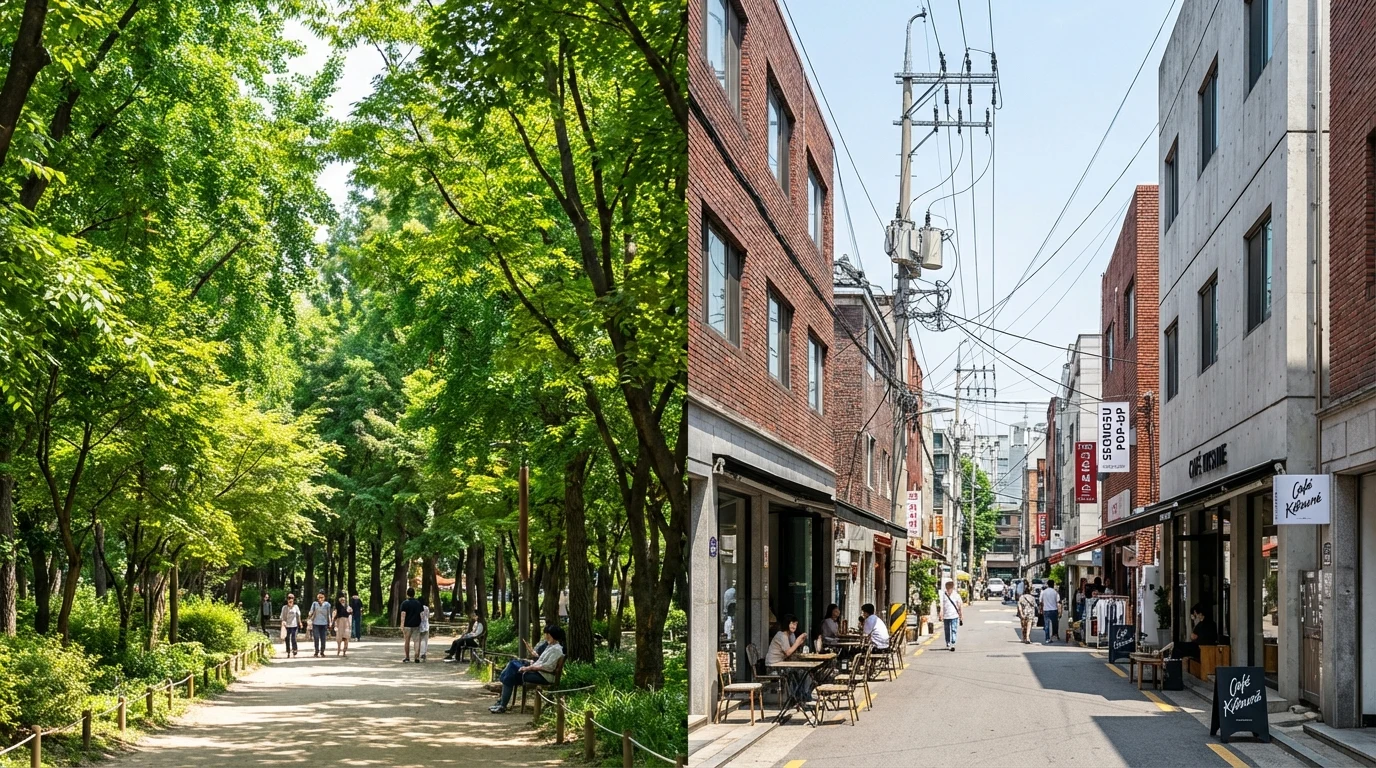
Seoul Forest and Seongsu work well together because they split one outing into two very different moods. Seoul Forest gives space, light, and slower park rhythm. Seongsu gives cafes, pop-ups, and a more urban street texture. Together they make one of the cleanest nature-to-city transitions in Seoul.
That is especially useful for first-time visitors. It makes the day feel full without forcing everything into one visual mode.
The order matters. Starting in the park and moving into Seongsu typically works better than doing the reverse, because the quietest part of the day comes first. If visitors begin in Seongsu, walk heavily, and then arrive at Seoul Forest already tired, the park can feel flatter than it should. Used in the other direction, Seoul Forest becomes the reset and Seongsu becomes the energetic finish.
It also helps to divide rest by setting. Use the park for slower sitting and open-air pauses, then leave indoor cafe time for Seongsu. That separation keeps picnic photos, walking photos, and cafe images from blending into one repetitive block.
If you want the clearest follow-up after the park, Seongsu-dong Guide is the most natural next stop.
— How should you think differently about picnic photos and walking photos
Picnic photos typically work best close to your setup: blankets, food, hands, grass, and low-angle park mood. Walking photos work better once visitors leave the picnic area and use paths, trees, and distance for cleaner movement and scale.
That difference matters because many visitors try to solve both kinds of photos from one fixed position. Seoul Forest works better when still moments and walking moments are separated.
Clothing reads differently in each situation too. Picnic images show more hand detail, objects, and upper-body texture, so small accessories and softer color combinations matter more. Walking images depend more on full-body proportion and stride, which means cleaner silhouettes typically outperform overly detailed styling.
The way you travel changes the result as well. Solo visitors frequently do better by finding one stable frame first and then moving a little around it. Pairs or small groups typically get better images while walking or turning, because Seoul Forest is stronger at natural movement than at heavily posed compositions.
If you want to turn that park mood into something more output-focused after the walk, the K-style profile flow is a natural bridge.
— What is the easiest first-time Seoul Forest route
A first-time Seoul Forest route typically is strongest when visitors set up on the grass first, rest there, then walk a loop through the tree-lined paths and more open sections before deciding whether to continue into Seongsu.
That structure keeps the park legible. It lets the outing start calm, expand into movement, and then connect outward only if the energy still feels right.
Approach matters more than many visitors expect. Whether you enter from the Seoul Forest Station side or the Ttukseom side, the first ten minutes are typically best used for reading the park instead of rushing inward. Decide early whether the day is picnic-first or walk-first. That one choice makes every later stop easier.
Weekend timing changes the strategy too. If you arrive late on a mild weekend afternoon, the most comfortable grass areas may already be taken. In that case, it frequently works better to begin with the walking loop, wait for the light to soften, and only then settle into a shorter picnic stop. On quieter weekday mornings, the opposite is frequently more comfortable.
Weather also changes the route logic. After rain, the air may be clearer and the photos may improve, but the grass can become inconvenient for a real picnic. Those days typically work better as tree-path and movement-focused outings with Seongsu moved earlier into the plan.
Seoul Forest is strongest when visitors let the day unfold in stages rather than trying to rush the whole park.
??How should season, crowd level, and transit change your Seoul Forest plan
Seoul Forest is easiest in spring and autumn, but the useful strategy changes by season. Spring typically means faster picnic crowd build-up, so earlier arrival matters more. Autumn makes walking especially good, but popular paths can feel busier because more people stop for photos. Summer shifts the outing toward shade management, while winter typically favors shorter walking loops over long sitting sessions.
Crowd handling is simpler when visitors stop chasing the emptiest lawn. Seoul Forest frequently looks best when a little human rhythm remains in the frame. Instead of waiting for a completely empty view, look for a place where people pass naturally without dominating the image. That approach fits the park better and saves time.
Transit access is one of the park's strengths. The Seoul Forest side makes the park itself easier to enter quickly, while the Ttukseom side can feel more useful if you plan to connect the outing with additional riverside or Seongsu movement. The key question is not which station is objectively best. It is what you want the final leg of the day to feel like.
Seoul Forest picnic routes typically work best when visitors choose a calmer grass area first and separate it from the main walking loop.
The park's strongest photo spots typically come from tree-lined walks, open lawns, and softer natural movement instead of one dramatic landmark.
Connecting Seoul Forest with Seongsu makes the route stronger by combining open park rhythm with nearby urban cafe energy.