EDITORIAL CHECK
Source and Review Basis
Seoul alley photo guides are checked against official Seoul tourism references for day-night mood, walking routes, and how old commercial areas mix with newer spaces.
Euljiro is not a list of old signs and neon corners. It is a layered texture district, with metal workshops, worn storefronts, older signs, narrow passages, and night reflections all overlapping to create the district's retro-newtro identity. This guide explains how to read Euljiro as a photo route instead of as a random set of gritty streets.
First route choice for Euljiro retro photos
- Best starting logic: begin from a larger street edge and narrow inward once the district's commercial texture becomes clear.
- Best for: retro alley photos, old signage, metal-lined streets, and night snapshots with dense reflections.
- Best route tip: alternate between outer structure and tighter inner alleys instead of starting at the narrowest point.
- Best timing: dusk into early night gives the strongest Euljiro mood.
- Time budget: allow 60 to 90 minutes for a first photo walk, or 30 minutes if you only want one compact alley section.
- Light rule: start before full darkness if you want metal texture, not only neon color.
Euljiro gets easier once visitors understand its materials first. The district does not depend on a clean central viewpoint. It depends on layers of worn structure getting denser as you move inward.
Start from a wider edge so the district has context. If you begin in the narrowest lane, every frame can look like the same rough wall. Beginning outside lets you see how storefronts, workshop traces, and sign density increase step by step.
Why Euljiro feels rougher than polished Seoul streets
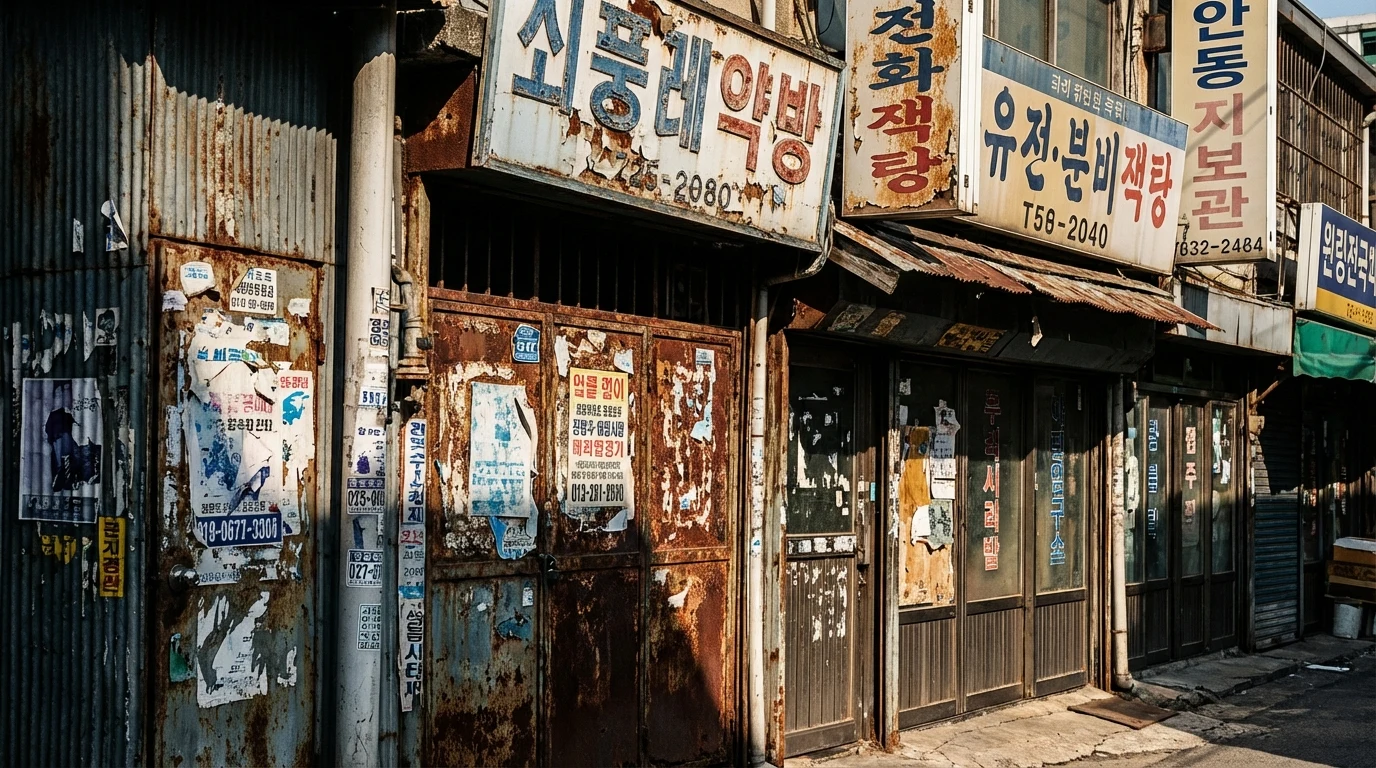
Euljiro feels rougher because its mood is not based on polished cafe presentation. It comes from metal surfaces, old shutters, workshop traces, uneven light, and older commercial repetition. The district feels less curated and more preserved through use.
That is exactly why it photographs differently. Where cleaner streets rely on visual order, Euljiro relies on density, wear, and friction between materials.
The roughness is not a flaw to hide. It is the reason the district reads differently from Seongsu, Hongdae, or Ikseon-dong. Keep dents, shutter lines, fluorescent spill, and older signs in the frame when they help explain the place. Removing too much context can make Euljiro look like a random dark alley instead of a working texture district.
Frames that look distinctly Euljiro
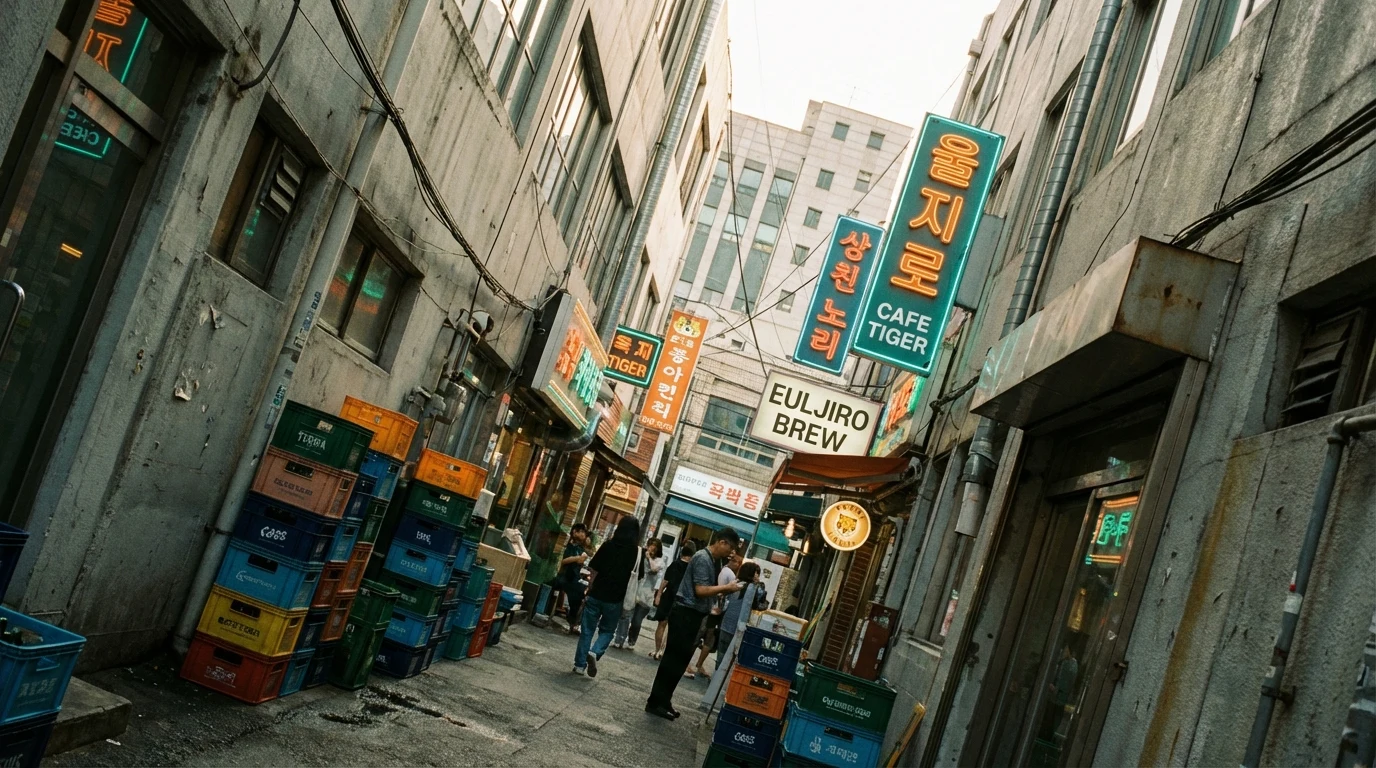
The most distinctly Euljiro frames combine old signs, metal texture, narrow passage depth, and practical light. One storefront alone can look interesting, but Euljiro becomes most legible when visitors keep the surrounding alley structure in the frame too.
That is why side angles and alley depth work better than front-on views. Euljiro's identity lives in the block, not just in one facade.
If you want the clearest contrast with a more international street route, Itaewon and Gyeongnidan-gil Walk Guide is a useful next read.
For phone photos, avoid relying only on the brightest sign. Tap exposure down slightly so the sign does not turn into a white block. For camera photos, choose a wider view when the surrounding shutters and alley edges are needed to explain the retro-newtro mood.
Human figures can help when they stay secondary. A passing silhouette, a worker moving through a doorway, or a small group at the edge can show scale. A heavily posed subject in the center can fight the district unless the background remains clearly readable.
Why Euljiro night photography feels stronger than daytime
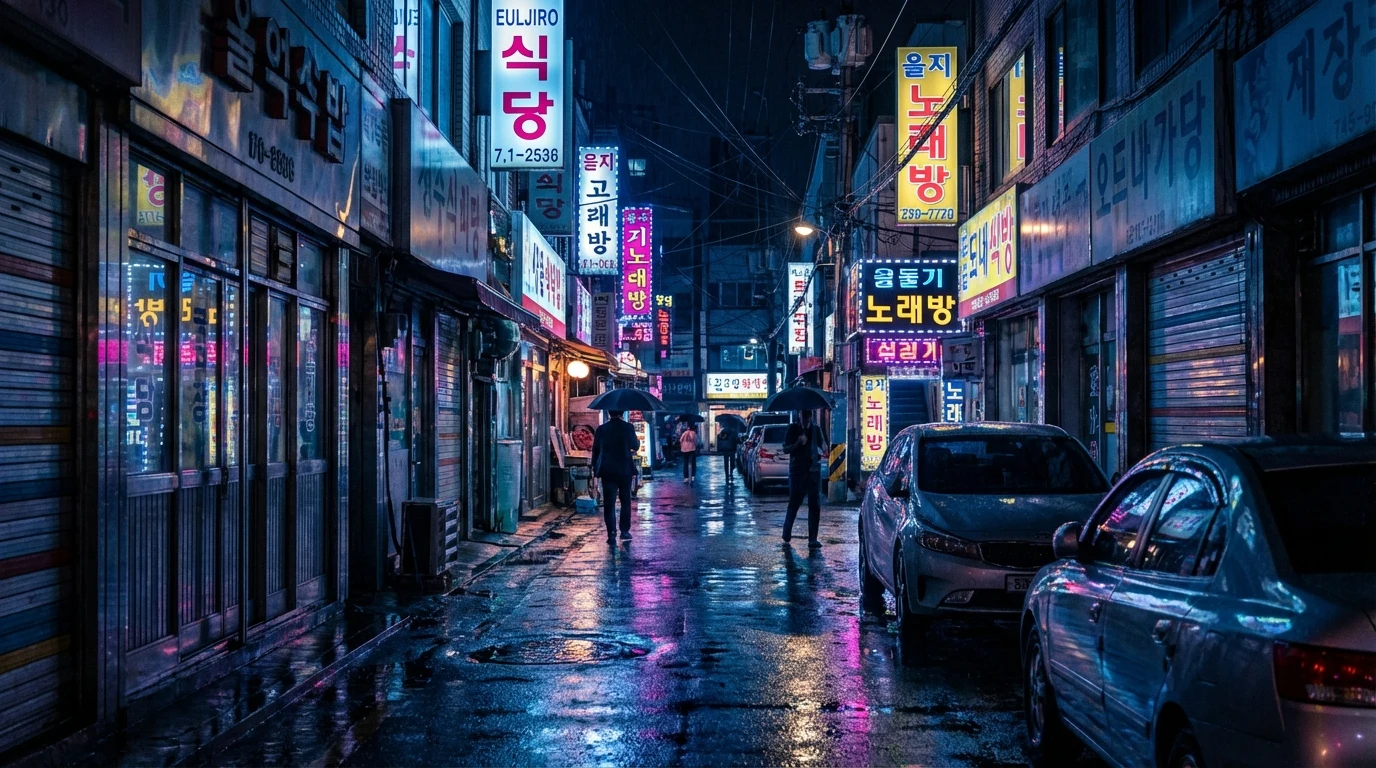
Daytime in Euljiro explains surfaces and structure. Nighttime compresses mood. Reflections, small signs, window light, and worn textures begin working together much more clearly once the district darkens.
That is why Euljiro night snaps feel stronger than daytime shots. The district rewards shorter sightlines, close reflections, and tighter frames more than skyline-style night views.
If you want to turn that alley mood into something more output-focused after the walk, the K-style profile flow is a natural bridge.
The best window is late afternoon into early night because you get both material and mood. At 4 or 5 p.m., surfaces are still visible. After dark, signs and reflections take over. If you arrive only at full night, the photos may look atmospheric but lose the workshop texture that makes Euljiro specific.
Rain can help, but it needs restraint. Wet streets add reflections, yet large puddles can turn the whole frame into a neon trick. Small reflections on metal, glass, and damp pavement feel more Euljiro than one dramatic puddle shot.
A first-time Euljiro photography route
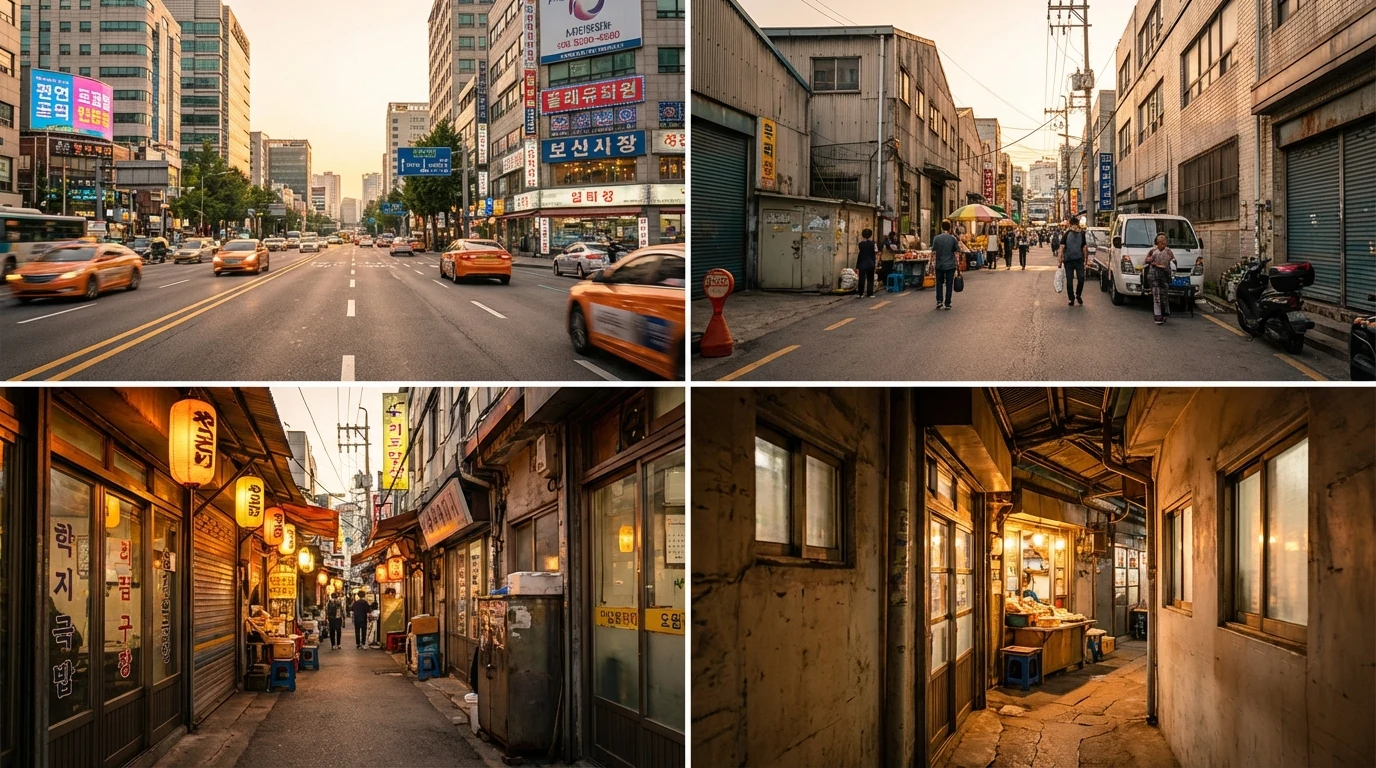
A practical first-time Euljiro route begins from the outer commercial structure, moves inward toward denser metal alleys and older signs, and then returns outward once the visual rhythm starts feeling repetitive.
That structure helps the district make sense. Going too deep too early can make Euljiro feel like one endless rough-texture zone instead of a layered route.
Euljiro photographs best when its density builds in stages.
The route should have 3 phases: outer commercial structure, dense inner alleys, and reflective night sections. Do not spend the whole visit in the first interesting lane. Walk 5 to 10 minutes, compare 2 or 3 narrow passages, then return to the one where sign light, metal texture, and walking depth overlap best.
Daytime and night in Euljiro
Euljiro is interesting in both, but the reasons differ. Daytime explains the district through surfaces: metal shutters, workshop edges, worn walls, and the physical structure of older commerce. Night compresses the mood instead. Small signs, uneven lighting, reflections, and tighter contrast make the same alleys feel much denser and more cinematic.
For many first-time visitors, late afternoon into early night is the most useful entry because it shows both. You can understand the rough physical structure first, then watch the district shift into the darker retro-newtro mood that people remember.
Mistakes that make Euljiro photos less convincing
One common mistake is moving too close to one sign or one wall and losing the wider alley context. Euljiro's texture needs surrounding space to stay readable. Another mistake is chasing the darkest possible night. Keep enough surface information alive so the light has rough metal, shutters, and pavement to land on.
- Alternate between larger street edges and tighter inner lanes instead of going fully narrow too early.
- Use side angles when the lane depth matters more than the sign face.
- Wet surfaces can help, but small reflections are easier to control than dramatic puddles.
- Keep human figures as working or moving silhouettes, not highly posed subjects.
Another mistake is over-editing the photo until the district looks cleaner than it felt. Euljiro can handle contrast and warmth, but if the metal texture disappears or every sign becomes equally bright, the route loses its material pressure. Keep some unevenness in the frame.
Follow-on routes that make Euljiro easier to understand
Euljiro becomes even clearer when it is contrasted with another Seoul photo mood. Pair it with Ikseon-dong and the difference in material, density, and tone becomes obvious. Pair it with Itaewon or Gyeongnidan-gil and Euljiro's workshop-like roughness stands out even more.
That is why Euljiro works well as one half of a contrast-based Seoul photo day rather than as the only street type on the schedule. Its identity sharpens when another route shows what it is not.
Weather and season changes on the route
Euljiro is not a blossom-driven or foliage-driven district, but weather still changes it a lot. Summer can make the alleys feel heavier and more compressed. Winter makes surfaces look clearer and harder. Rain is especially useful because wet metal, small reflections, and dim light all strengthen the district's rough identity.
That is why Euljiro is more interesting on a textured day than on a perfectly neutral one. The district likes atmosphere that lands on surfaces.
Simplest first-time route
For a first visit, divide Euljiro into three readable phases: outer commercial structure first, denser inner alleys second, and reflective night sections last. That route is easier than hunting for one perfect alley immediately.
- Start outside so the district has a clear baseline.
- Move inward once metal texture and older signs become easier to read.
- Save the stronger reflective mood for later light.
- Compare a few dense sections instead of chasing the whole area at once.
Euljiro becomes much easier once the texture is allowed to build in that order.
Euljiro looks weakest when it is approached as a hunt for one pretty backdrop. It gets stronger when visitors pay attention to how old surfaces, light, alley width, and workshop traces overlap. That shift in attention is what makes the district specific instead of generically gritty.
The district is less about one sign and more about accumulated material pressure. Once that logic becomes clear, the route starts making sense much faster, and even a short walk can produce a set of photos that feels connected rather than random.
Euljiro retro photos read most clearly when visitors begin at the outer edge and let the district's texture build inward.
The most distinctly Euljiro frames combine old signs, metal surfaces, narrow alleys, and practical light inside one dense image.
Night gives Euljiro a clearer retro identity because reflections and small sign light make the district more legible.