EDITORIAL CHECK
Source and Review Basis
Bukchon guides prioritize resident etiquette and visiting-hour limits, using official tourism and Seoul Hanok references for noise, route, and timing checks.
Most visitors searching for the best things to do in Bukchon Hanok Village need practical details: where to start, exactly how long it takes, and how to avoid the crowds. This guide strips away the vague advice and gives you concrete, observable facts for navigating Seoul's most famous traditional neighborhood.
Start Your Route at Anguk Station
- How to get there: Take Subway Line 3 to Anguk Station, Exit 2. Walk straight for 300 meters (about 5 minutes) to reach the main intersection.
- Recommended time to visit: Arrive between 8:30 AM and 9:30 AM to beat the massive tour groups, or aim for 3:00 PM to 4:00 PM for the best warm afternoon light on the roof tiles.
- Estimated duration: 1.5 to 2 hours of walking. Add 1 extra hour if you plan to rent a hanbok or stop at a local teahouse.
- Crowding & Precautions: Keep your voice down. The red "Silent Zone" signs mean real people live inside these hanoks. The main uphill alley (Bukchon-ro 11-gil) gets completely packed by 11:00 AM on weekends.
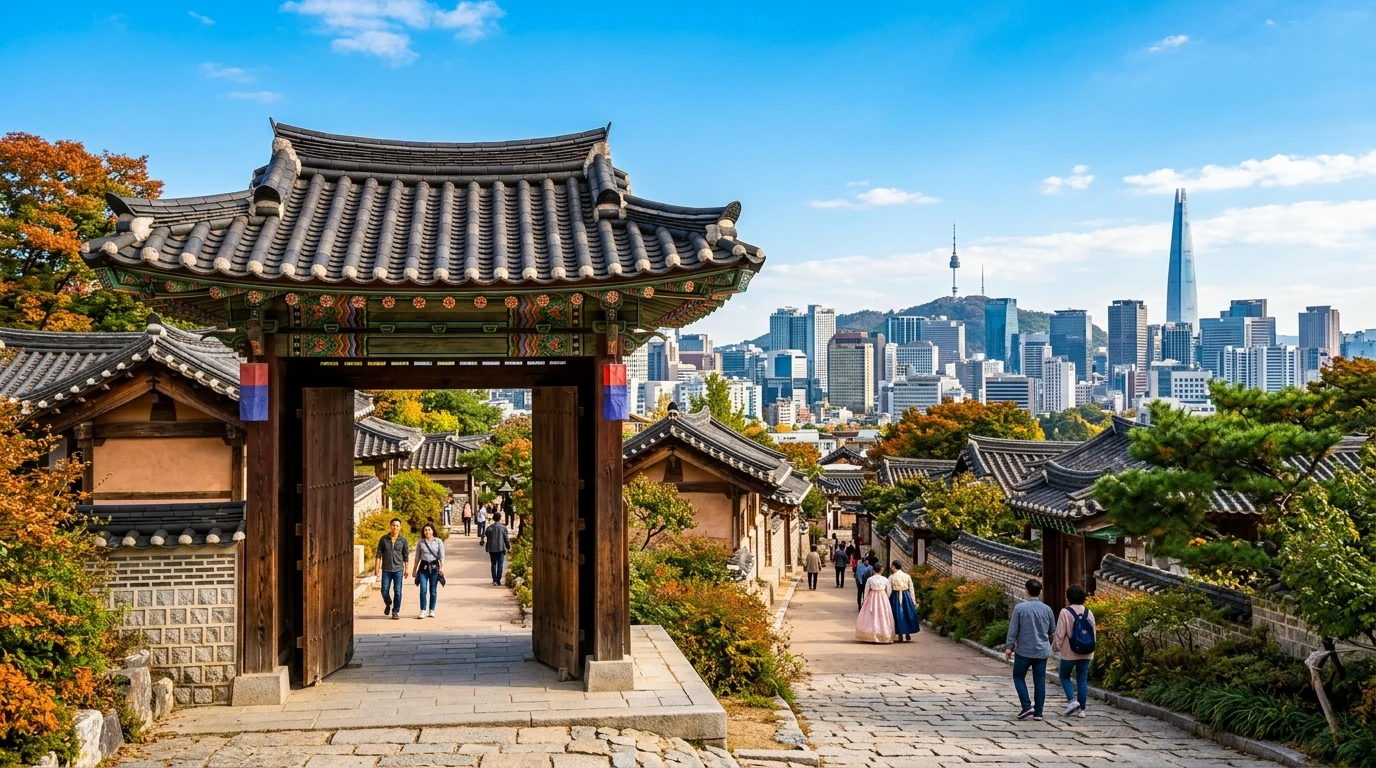
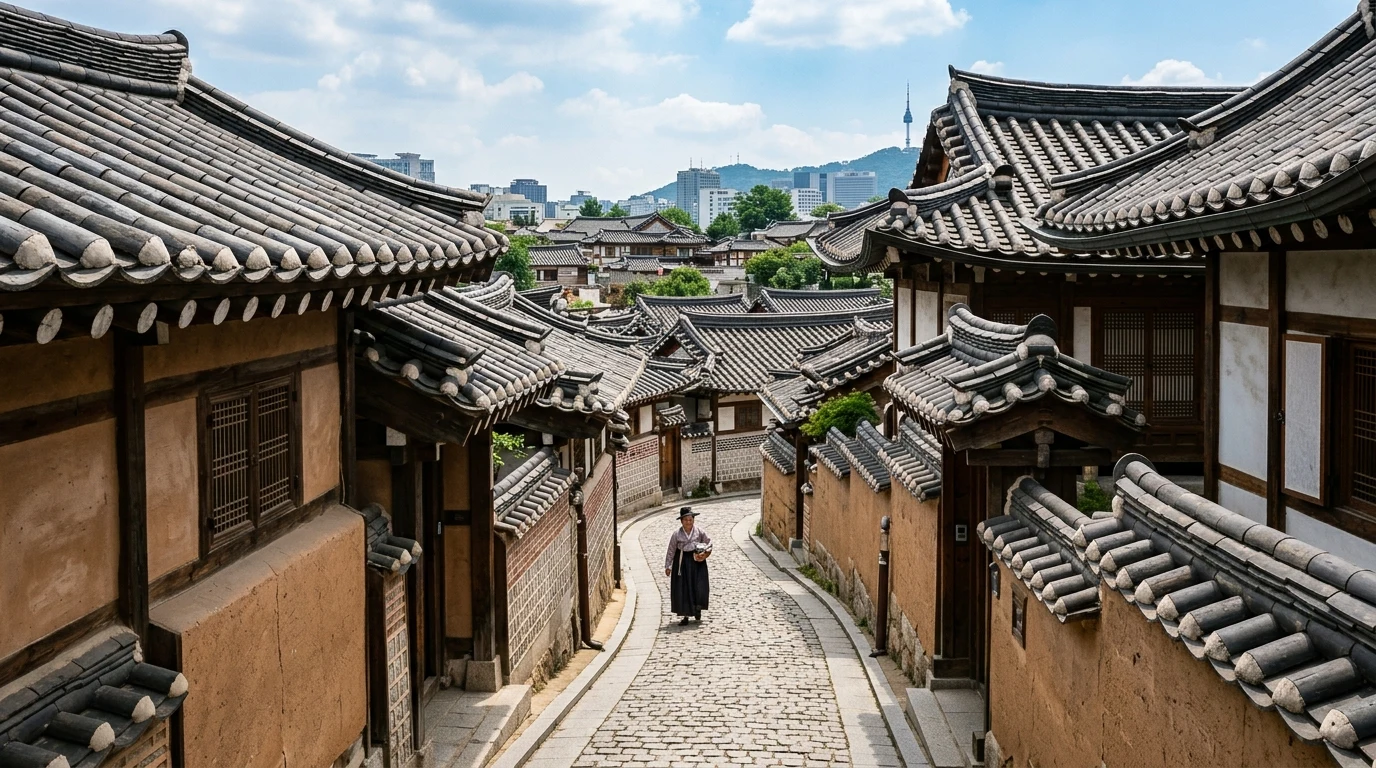
Starting from Anguk Station Exit 2 instantly simplifies your route. Instead of getting lost in steep, dead-end residential streets, this entry drops you directly at the base of the main uphill spine. The elevation changes quickly. Within a 10-minute walk up Bukchon-ro 11-gil, you reach the top of the ridge where the traditional tile roofs perfectly contrast against the modern N Seoul Tower in the distance.
Where to Find the Best Photo Spots
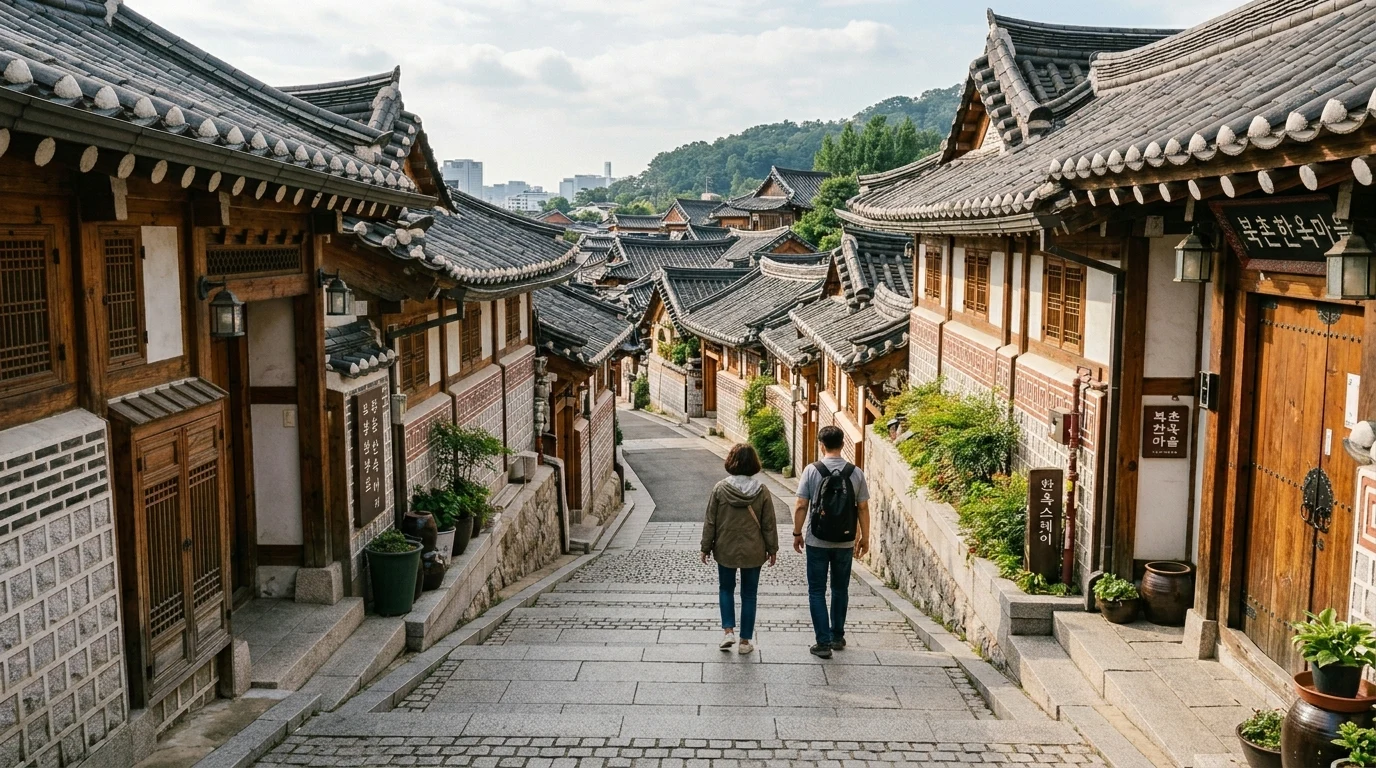
Bukchon has two highly specific vantage points that every visitor looks for. The first is looking up the slope at the traditional doors and brick walls. The second, and more famous, is looking down the slope toward the modern city skyline.
At 3:00 PM on a clear day, the sunlight hits the curved clay tiles perfectly, creating deep shadows that make the hanok walls pop in photographs. Rather than randomly wandering, head straight for the top of Bukchon-ro 11-gil. From there, wait for a 30-second gap in the crowd, stand directly in the center of the 4-meter-wide alley, and shoot downhill.
If you want a quieter photo, walk 5 minutes east to the Gye-dong area (Bukchon-ro 4-gil). It receives 70% less foot traffic, making it vastly easier to capture uninterrupted shots of wooden doors and flower pots.
Is a Hanbok Walk Worth It?
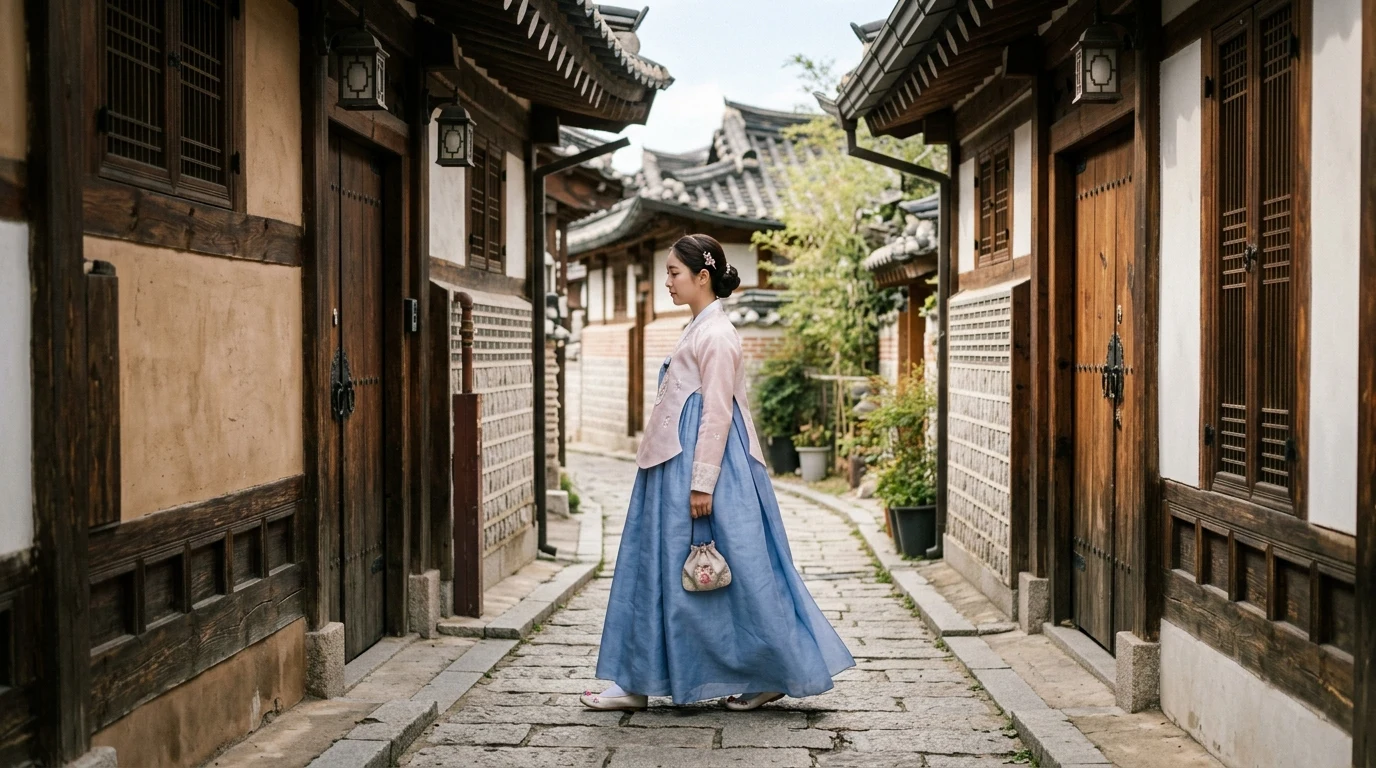
Hanbok rentals around Anguk Station typically cost between 15,000 to 20,000 KRW for 2 hours, or up to 35,000 KRW for a full 4-hour rental including hair styling. Walking in a hanbok here is physically different than walking through Gyeongbokgung Palace.
The alleys in Bukchon are narrow, and the 15-degree inclines require lifting the front of your skirt. Avoid renting heavy, multi-layered premium hanboks if you plan on walking the entire 2-hour loop in July or August. The standard, lighter traditional skirts are much more practical for navigating the stone steps and tight residential turns.
Navigating the Slopes and Cafes
After 45 minutes of uphill walking, your legs will feel the 30-meter elevation gain. Most visitors break their walk by heading toward Samcheong-dong, the neighborhood located at the bottom of the western stone stairs.
These steps drop you directly onto a cafe street where Americanos cost around 5,500 KRW. Taking this route turns a simple up-and-down hike into a logical loop: start at Anguk, walk up Bukchon-ro 11-gil, cross the ridge, and descend into Samcheong-dong for a cold drink by 11:30 AM.
Final Practical Tips
Wear sneakers. The asphalt is uneven, and the traditional stone steps down to Samcheong-dong have no handrails. If you need a restroom, there is a clean, public tourist facility located 200 meters from the Anguk intersection on the main road.
By sticking to specific times and entering through Anguk, you bypass the confusion and experience Bukchon as a structured, visually striking neighborhood rather than a crowded tourist trap.
Start at Anguk Station Exit 2 and walk up Bukchon-ro 11-gil to find the clearest uphill route.
Arrive before 9:30 AM or around 3:00 PM to avoid peak crowds and get the best lighting on the roof tiles.
Expect 1.5 to 2 hours of walking with steep inclines; wear sneakers and skip the heavy hanboks in summer.