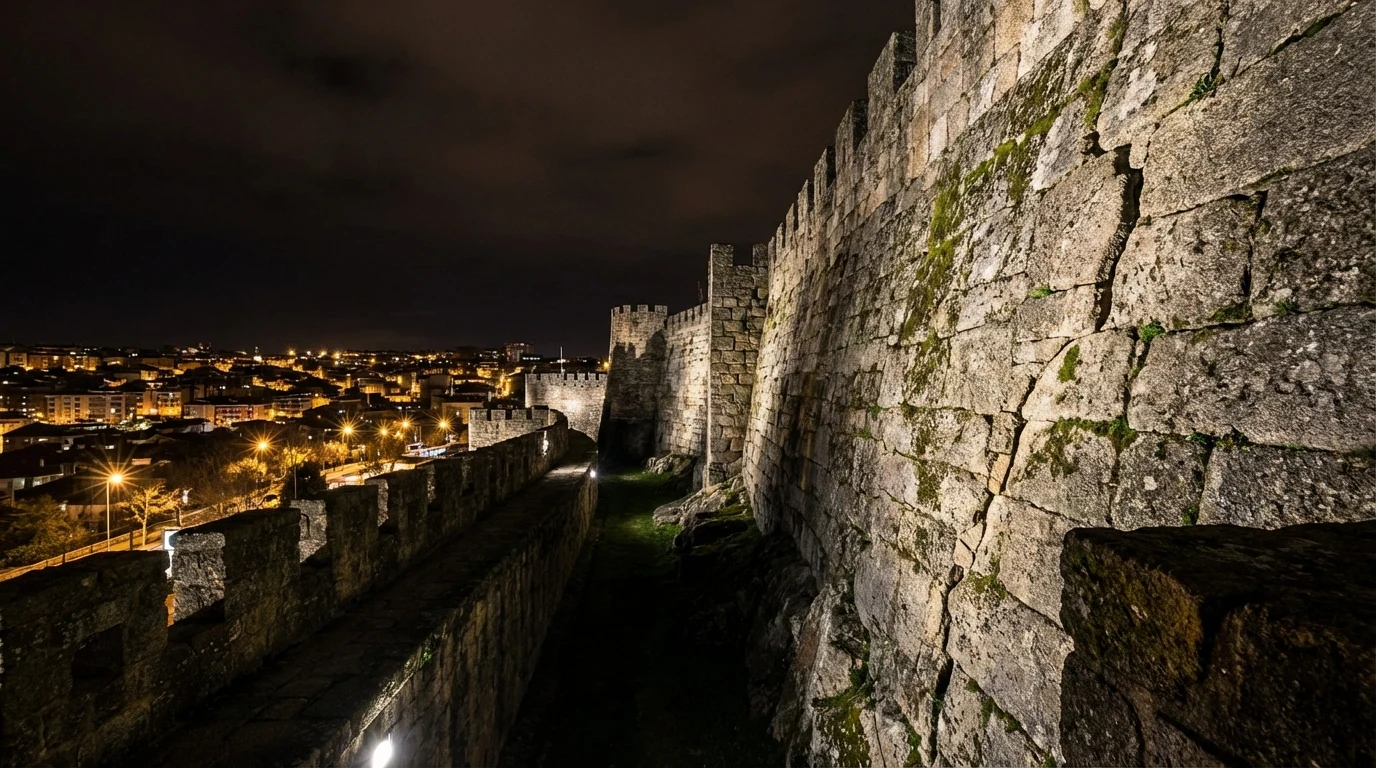
Naksan Park works better as a Seoul wall walk than as a single observation point. The mood builds through slope, wall line, city lights, and walking rhythm, especially when visitors begin from the Hyehwa side and let the view open in stages. This guide uses the wider Seoul Photo Spot Guide as a base and explains how to read Naksan as a night route rather than as one fixed skyline stop.
— Where should you start if you want the smoothest Naksan night route
Verified date: 2026-10-11. Facility and transit details may change depending on operating authorities.
| Item | Details | | :--- | :--- | | Public Transit | Hyehwa Station (Line 4) Exit 2 (approx. 10–15 min walk via Marronnier Park trail) | | Operating Hours | Park open 24/7 year-round (Naksan Exhibition Hall 09:00 – 17:00) | | Parking Info | Naksan Park Public Parking (29 spots, 300 KRW / 10 min; public transit recommended) | | Inquiries | Jongno-gu Office Parks Division / Jungbu Parks & Leisure Center |
-
How to get there: A 5 to 10-minute walk from the nearest subway station exit.
-
Best time to visit: Between 2:00 PM and 4:00 PM for optimal natural lighting.
-
Estimated duration: 1 to 2.5 hours depending on crowds.
-
Budget & Tips: Expect to spend around 15,000 KRW per person on average.
-
Best starting logic: begin from the Hyehwa side so the wall path, slope, and city lights open gradually.
-
Best for: city wall photos, easy night walks, first-time Seoul hillside routes, and softer skyline views.
-
Best route tip: do not rush straight to the highest viewpoint; let the wall line build the mood first.
-
Best timing: just after sunset into early evening usually gives the most balanced light.
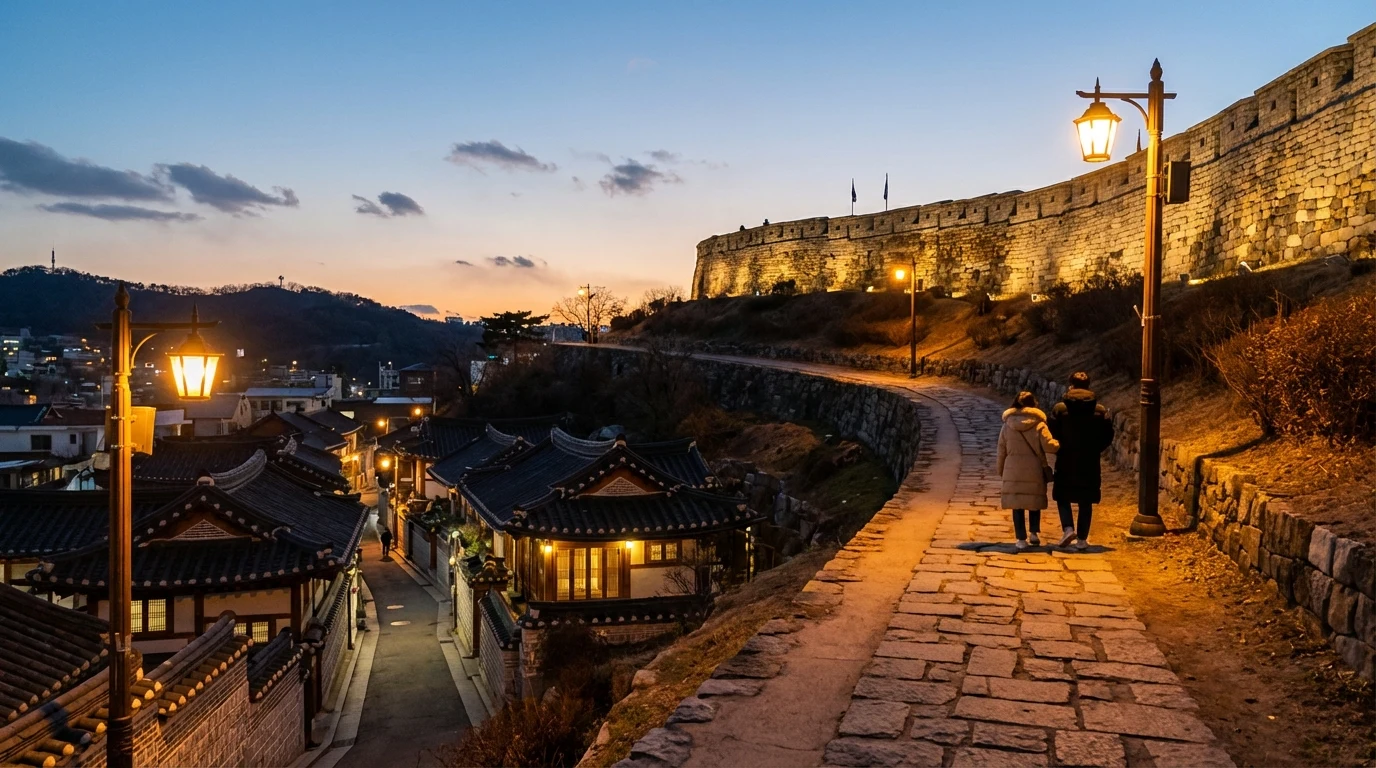
Starting from Hyehwa makes the Naksan Park night view easier to read. The route introduces alley texture first, then wall structure, then wider light, which helps first-time visitors understand how the Seoul wall walk actually unfolds.
Starting from the hillside too deep or trying to jump straight to the highest section usually removes part of the park's identity. Naksan is not mainly a rush-to-the-top viewpoint. It is a route where wall line, dim residential light, and city spread become legible step by step. The climb matters because it teaches the eye how to read the later view.
The Hyehwa side also works well because the neighborhood mood does not break too sharply. Theater streets, smaller lanes, and the uphill wall path transition in a way that naturally slows the walking pace. For first-time visitors, that softer change in rhythm makes the night route easier to remember and easier to repeat.
— What kind of wall path frame looks the most clearly Naksan
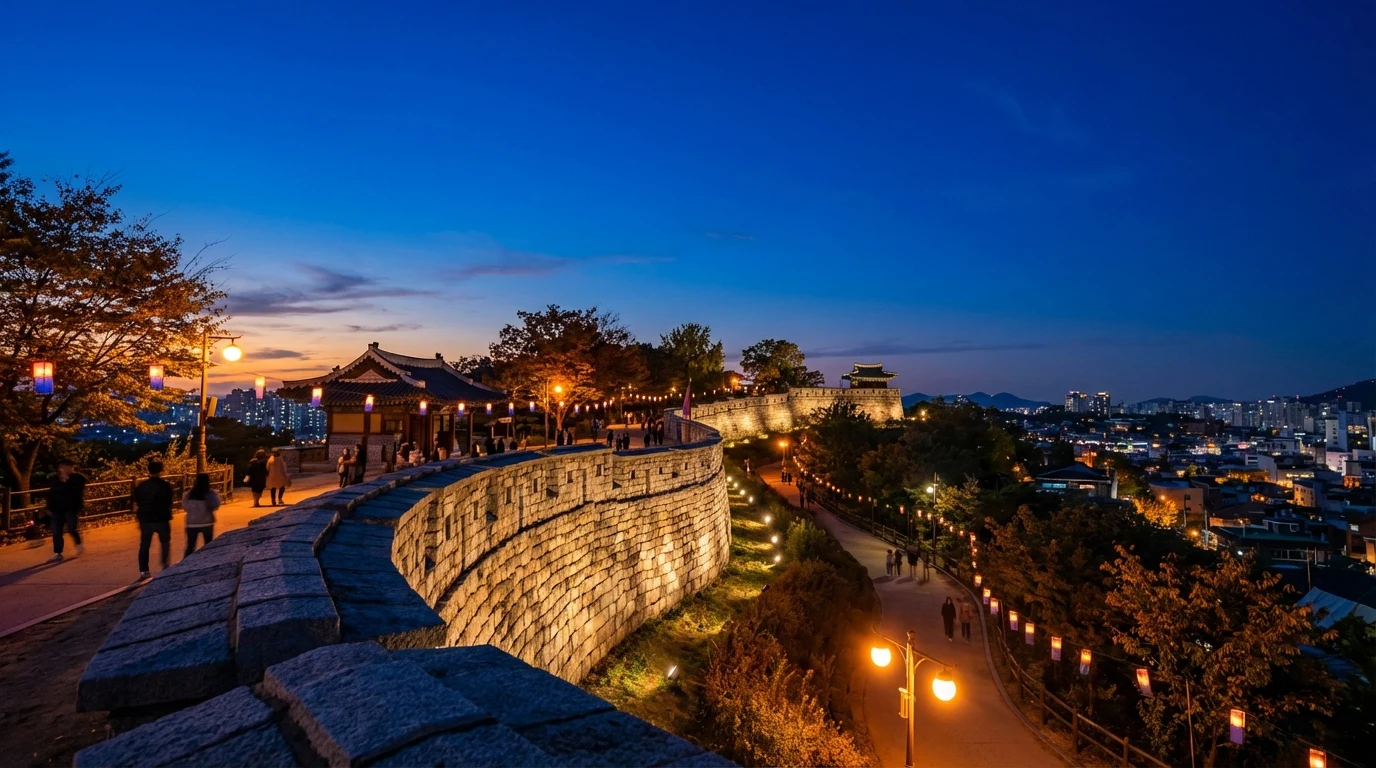
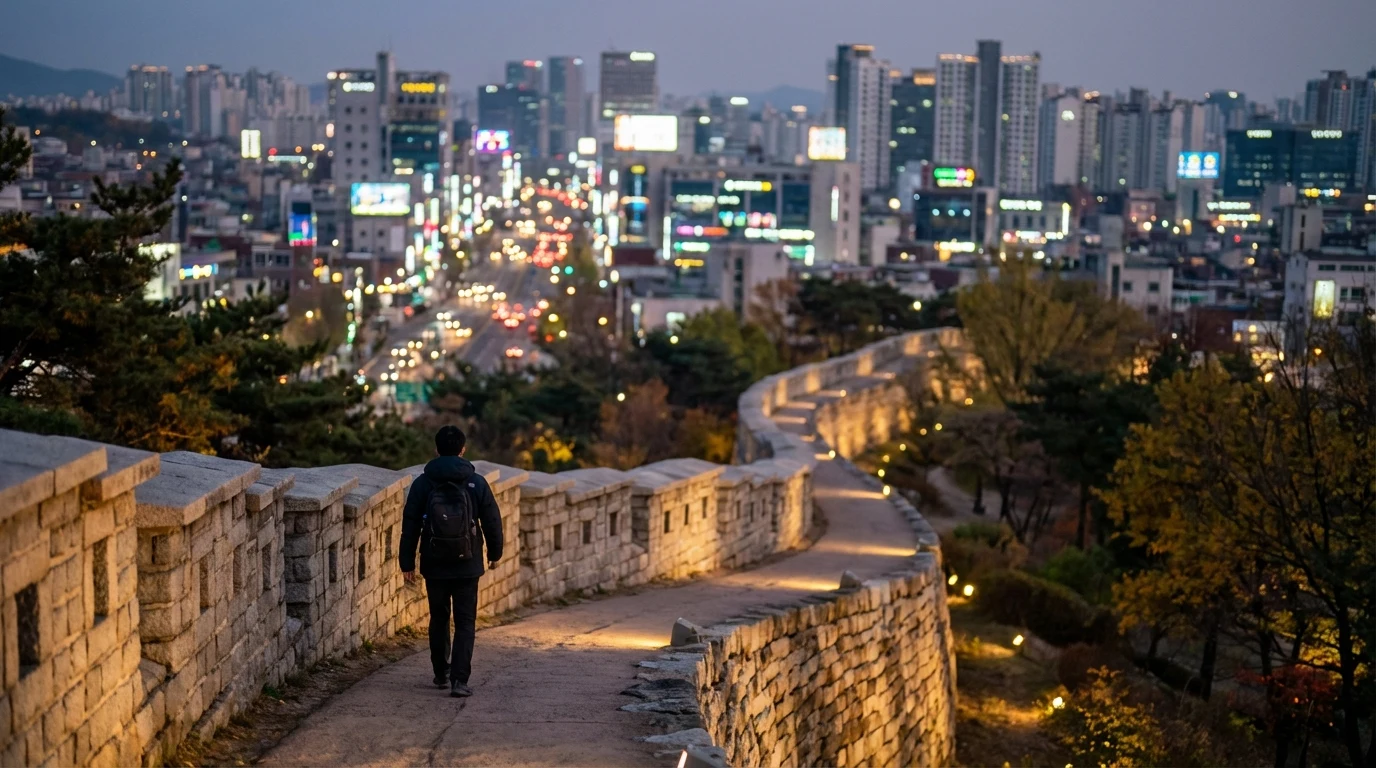
The clearest Naksan frames usually keep three things together: the wall line, the walking path, and the city lights below. If the wall fills the frame alone, the route loses its night atmosphere. If the skyline takes over completely, the place stops feeling specific to Naksan.
That is why mid-distance compositions usually work best here. They keep the Seoul wall walk visible while still letting the night view breathe.
It also helps not to chase the widest possible skyline every time. At Naksan, too much distant light can weaken the site's identity. The wall needs to stay present enough to explain where you are, while the city lights remain far enough back to create depth. That balance is what makes the location feel specific instead of interchangeable.
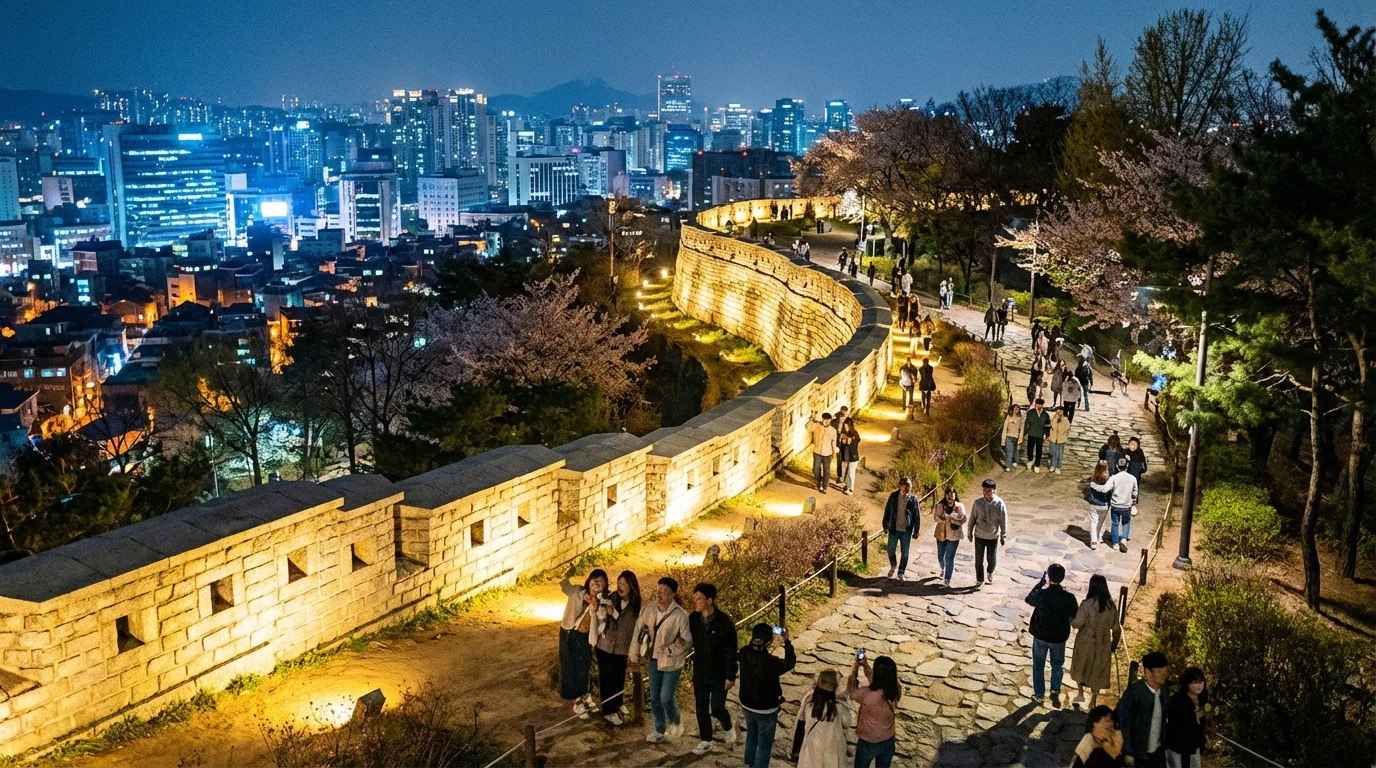
Crowd conditions change the frame too. On busier evenings, the path can fill with walkers and the image starts shifting toward street snapshot territory. On quieter weekday evenings, the path line and wall texture usually stay clearer. That makes timing part of composition, not just part of scheduling.
— Why is it better to think of Hyehwa and Naksan as one night walk
Hyehwa and Naksan work better as one connected night walk because the mood shifts in layers instead of changing all at once. Street light, theater-area rhythm, hillside quiet, and wall-path darkness gradually replace one another as visitors climb.
That transition is a big part of why the route feels memorable. Naksan is not only about what the city looks like from above. It is also about how the city thins out behind the wall.
That is why Hyehwa and Naksan often work better as one route than as two names on a list. The brighter commercial energy below makes the upper quiet feel more distinct. Without that transition, the wall path can still be beautiful, but it loses some of the contrast that gives the walk its narrative.
This matters for date walks too. Visitors often want a route that can start with conversation and movement before shifting toward a slower, darker mood. Hyehwa into Naksan provides exactly that. The experience feels paced rather than abrupt, which is part of why it remains such a reliable evening route.
If you want the clearest contrast after Naksan, Ikseon-dong Hanok Alley Photo Guide is a useful next read.
— How does a Seoul wall walk feel different from a standard lookout night view
A standard lookout is mostly about stopping and looking outward. A Seoul wall walk is about how the night changes while you keep moving. At Naksan, darkness, wall texture, and lower-city light keep changing their balance from one section to the next.
That makes the route feel less like a single destination and more like a sequence. The best Naksan Park night view is usually not one frame but a progression of smaller light-and-wall moments.
The walking rhythm is what separates it from standard observation points. Some sections ask for slow movement so the wall texture can stay visible, while others reward a full stop so the lower city opens more clearly. If visitors vary their pace instead of treating the whole path the same way, the route feels much richer.
Season matters too. In spring and early summer, the walk feels softer and more atmospheric because the hillside and darkness blend more gently. In fall and winter, the view often becomes clearer and more light-driven. Naksan changes less through landmarks than through how the air and path shape the night's readability.
If you want to turn that Seoul night mood into something more output-focused after the walk, the K-style profile flow is a natural next step.
— What is the easiest first-time Naksan Park night route
A first-time route usually works best when visitors begin from the Hyehwa side, climb gradually, pause once the wall line and city lights first overlap clearly, and then continue a little farther before turning back. That sequence lets the park explain itself without making the walk feel repetitive too early.
Going only for the highest point can flatten the experience into one quick viewpoint stop. Walking through the middle sections first makes the wall path and night mood much easier to understand.
Pausing once in the middle before pushing higher usually makes the route feel more legible and less rushed.
It also helps to think about the return route. Walking back down toward Hyehwa shows the same sections with a different balance between wall darkness and neighborhood light, which often makes the city feel closer and more lived-in. The descent is not just the exit. It is part of the route's second reading.
Access is another reason this remains practical. Starting near Hyehwa keeps the transit side simple and makes it easy to connect the walk with nearby streets before or after. For visitors who want a manageable Seoul night route without too many transfers or decisions, that convenience matters.
In practice, Naksan works best when visitors treat it as a paced night route rather than as a rushed skyline checkpoint.
— How do crowds and seasons change the Naksan night experience
Naksan is a popular night route, but it is still more distributed than a single viewing deck. Even so, the middle sections where the wall and lower city overlap most clearly can get crowded on weekend evenings. In those moments, it usually works better to step a little forward or backward along the path than to wait too long at one famous pause point. Because the view develops continuously, nearby sections often offer nearly the same value with less pressure. The
Season changes the route more than many first-time visitors expect. Warm spring evenings are comfortable but busier. Cold months often make the light feel sharper, but they also make long stops less comfortable, especially along wind-exposed wall sections. On rainy or recently wet evenings, the air can become clearer and the lower lights slightly more reflective, though the path deserves more cautious footing.
What matters most is that Naksan rewards flexibility. It is not a place where one exact minute or one exact platform determines success. The route becomes easier when visitors treat time, weather, and crowd density as things to adjust around rather than things that ruin the walk.
Naksan usually works best from the Hyehwa side because the wall path and city lights open gradually instead of all at once.
The most legible Naksan frames usually keep the wall line, the path, and the lower city lights inside one balanced view.
Naksan feels strongest when visitors treat it as a moving Seoul wall walk, not just as one overlook for a skyline shot.