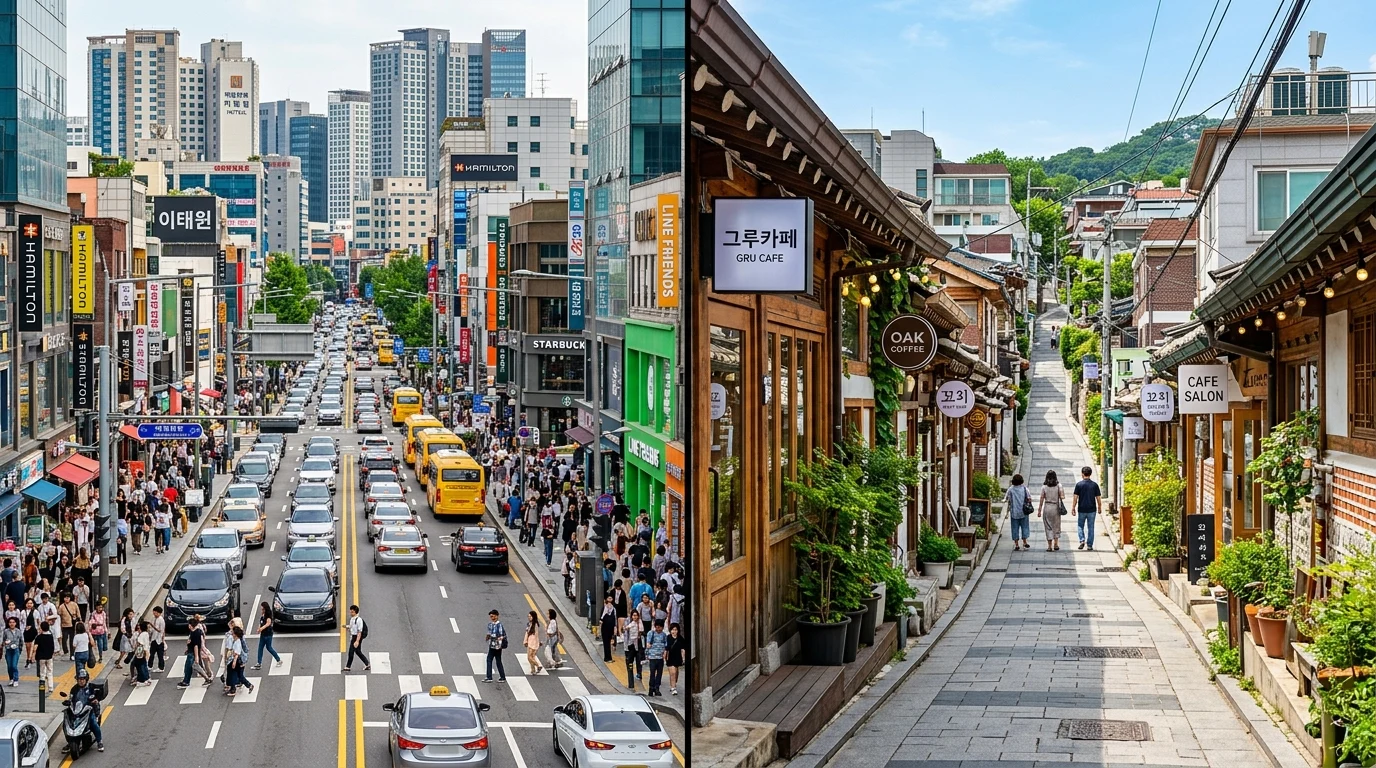
Itaewon and Gyeongnidan-gil sit in the same district but produce very different walking experiences. Itaewon reads broader, busier, and more international from the start, while Gyeongnidan-gil compresses into hillside cafes, narrower turns, and a slower street rhythm. This guide uses the wider Seoul Photo Spot Guide as a base and explains how to walk the two areas in a way that keeps their differences readable instead of blurred together.
— Where should you begin an Itaewon and Gyeongnidan-gil walk
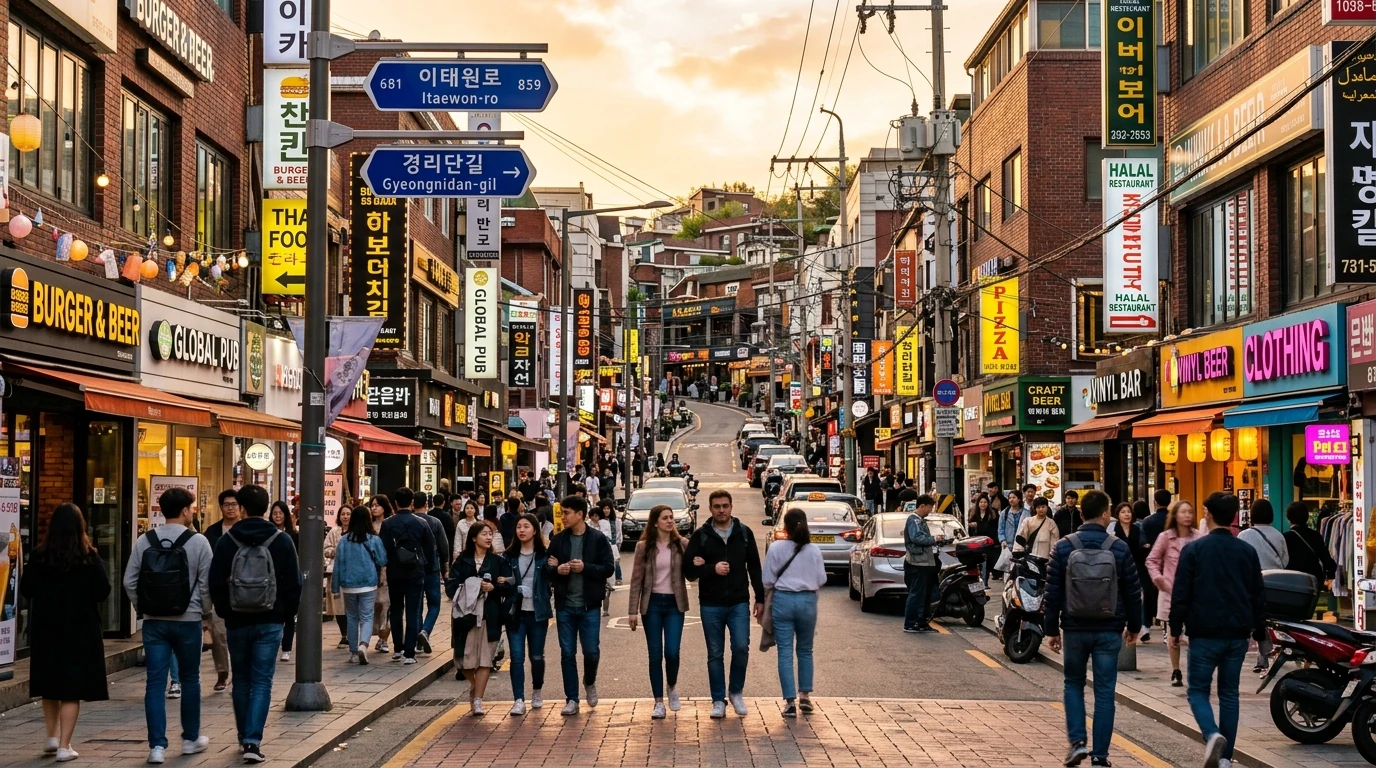
- Best starting logic: read Itaewon's main street first, then move toward Gyeongnidan-gil once the wider district feels clear.
- Best for: international street atmosphere, cafe-heavy alley walks, hillside photo stops, and mixed Seoul neighborhood texture.
- Best timing: late afternoon through the hours before night usually makes storefront rhythm and alley contrast easiest to read.
- First-visit tip: do not begin with the smaller hills alone; the larger street context helps the inner alleys make sense.
The route gets easier once visitors understand that Itaewon and Gyeongnidan-gil should not be read at the same speed. The main street establishes scale and contrast first. The hillside alleys work better after that because they feel like a shift in rhythm instead of a confusing detour.
This order is practical from a transit perspective too. Starting closer to the main Itaewon flow gives first-time visitors an immediate sense of the district's wider energy before the walk narrows into the hillside. If the route starts too deep inside the smaller lanes, the area can feel interesting but contextless.
That context matters because Itaewon is not a neighborhood with one obvious focal point. It is a mixed district where signage, language, storefront type, and crowd rhythm all compete for attention. Reading the wider street first helps the smaller Gyeongnidan-gil spaces make more sense later.
— Why do Itaewon and Gyeongnidan-gil feel so different even though they connect
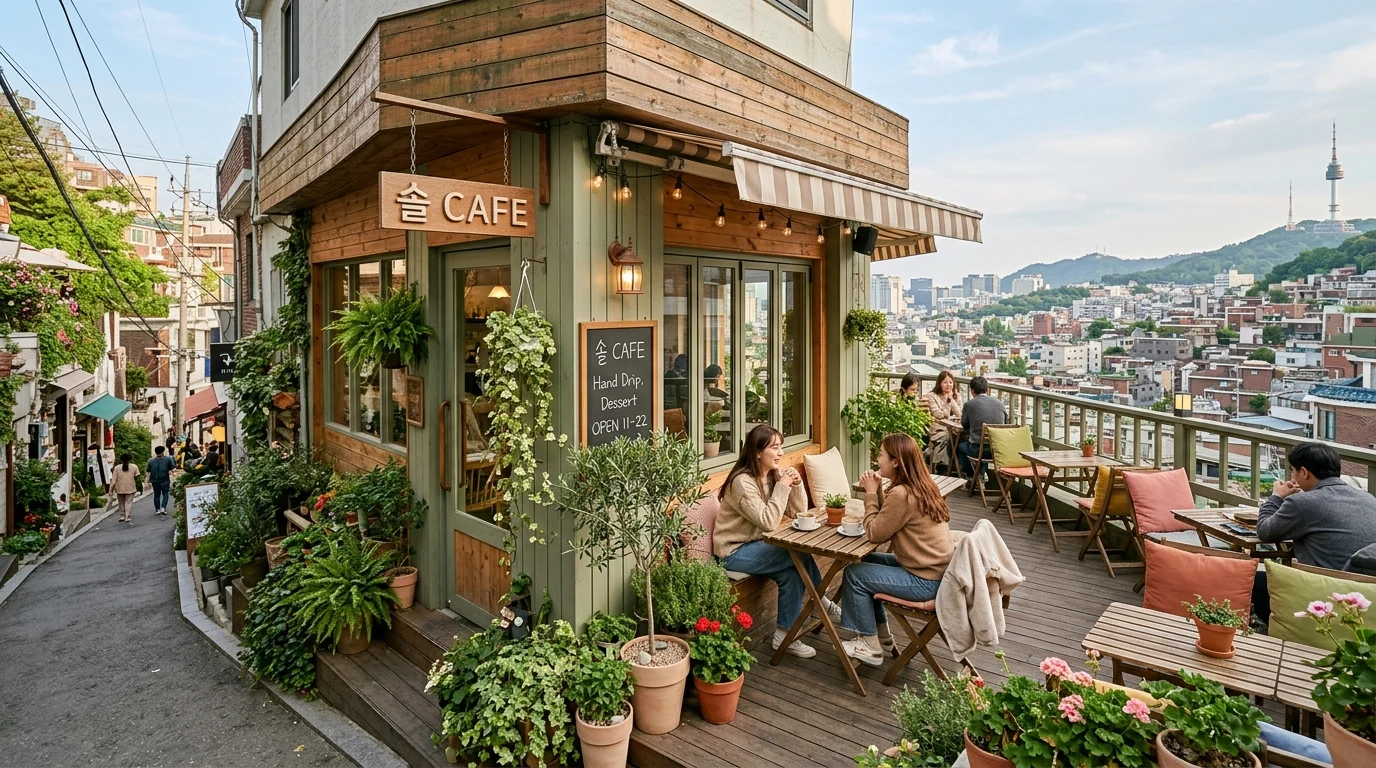
Itaewon feels wide, mixed, and highly visible. Language, signage, and storefront turnover create a stronger sense of urban contrast. Gyeongnidan-gil, by comparison, narrows into slopes, smaller shops, cafes, and quieter side-angle views. The atmosphere becomes more compressed and more personal.
That is why the same walk can feel like two routes. One is about contrast in plain view, while the other is about finding mood through elevation, turns, and slower cafe density.
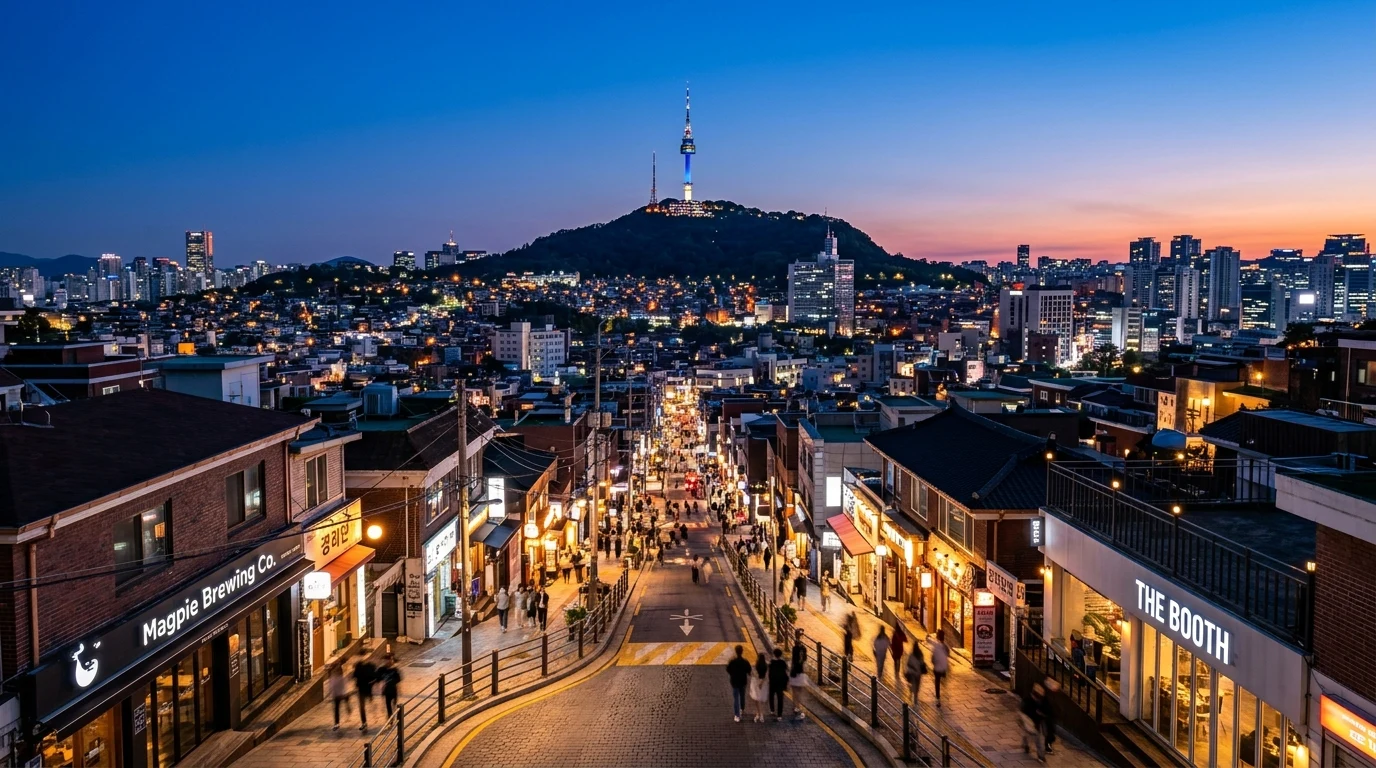
Time of day increases that split. Earlier hours make Itaewon's openness and mix easier to read, while late afternoon and early evening usually favor Gyeongnidan-gil because cafe lights and compressed alley views begin to stand out more clearly. Visitors walking both areas on the same day often end up reading two different versions of Seoul within one district.
That also means photo goals and walking goals do not always match. If the priority is broad urban contrast, more time should stay on the Itaewon side. If the goal is slower cafe mood and tighter framing, Gyeongnidan-gil deserves more of the route.
— Why does Gyeongnidan-gil cafe walking feel denser than other Seoul streets
Gyeongnidan-gil feels denser because the route keeps changing through slope and corner angle rather than through one long commercial strip. Visitors see storefronts, terraces, stairs, windows, and side walls in shorter succession, so the walk feels visually packed even when the distance stays modest.
That density is the core appeal. Instead of depending on one major landmark, the area rewards small discoveries and repeated changes in view. That makes it one of the more compressed cafe-walk neighborhoods in Seoul.
Because of that, success here is less about the number of places visited and more about where the walking pace changes. One pause near an uphill terrace, one at a turning corner, and one along a quieter cafe frontage often teach more about the neighborhood than rushing through many storefronts. If visitors move too quickly, the density can start feeling cramped instead of atmospheric.
Weather changes the read as well. Bright afternoons bring out wall texture, steps, and the geometry of the slope. Cloudier evenings or pre-night hours often make cafe windows and signs stronger, which shifts the route toward a more mood-driven walk. Gyeongnidan-gil is especially sensitive to light because the streets are short and angled rather than broad and linear.
If you want the clearest contrast with a rougher retro street route, Euljiro Retro Photo Spot Guide is a strong next read.
— How should you think about photos in Itaewon versus Gyeongnidan-gil
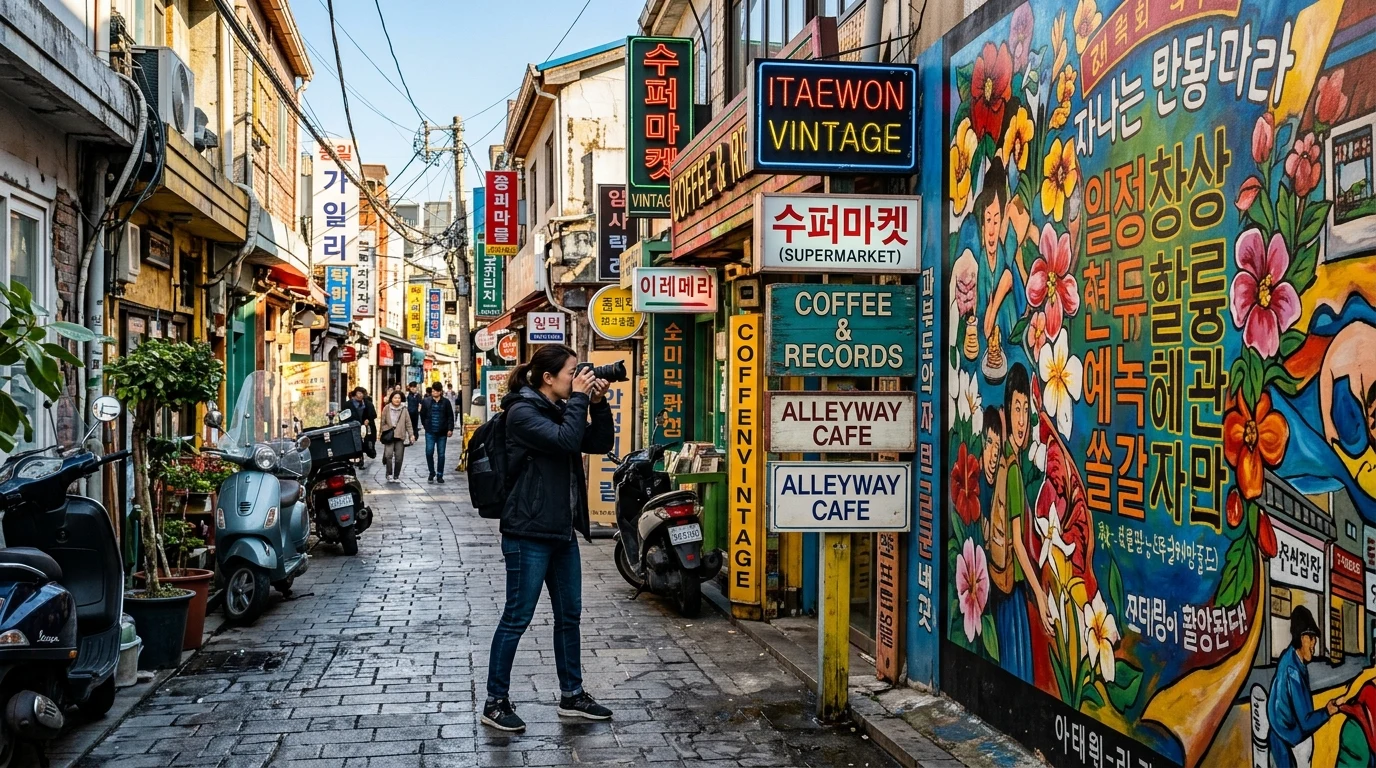
Itaewon works better for broader street contrast, visible movement, and mixed storefront scenes. Gyeongnidan-gil works better for cafe exteriors, side-corner framing, and uphill depth. The two areas can support the same walk, but they do not support the same image type.
That matters because many visitors try to solve the whole route with one photo approach. The better choice is to let Itaewon handle wider international street scenes and let Gyeongnidan-gil handle slower alley mood and compressed visual detail.
Crowd conditions matter here too. On busy weekend nights, the main Itaewon stretch can become more useful for people-watching than for clean frames, while only certain Gyeongnidan-gil cafe corners stay visually manageable. In those moments, selecting two or three smaller sections is often better than trying to cover the whole route.
Weekday late afternoons are usually easier if the goal is comparison. The wider street still has enough activity to feel like Itaewon, and the hillside side streets remain open enough to read their shape. The neighborhood changes noticeably with timing, so route quality is tied to scheduling more than first-time visitors expect.
If you want to translate that street mood into something more output-focused after the walk, the K-style profile flow is a natural bridge.
— What is the easiest first-time route through Itaewon and Gyeongnidan-gil
A first-time route usually works best when visitors begin on the Itaewon main street, take in the wider flow first, then move uphill into Gyeongnidan-gil for slower cafe alleys before returning toward the larger street network.
That sequence lets the neighborhood explain itself in layers. If visitors start too deep in the hillside alleys, the district can feel fragmented. If they stay only on the main street, they miss the compressed atmosphere that makes Gyeongnidan-gil distinct.
The route works best when people treat it as one contrast-driven walk instead of two disconnected checkpoints.
— Where should first-time visitors pause and where should they cut the route short
First-time visitors usually do better when they remember only the major rhythm changes. One pause on the main street, one near the first uphill transition into Gyeongnidan-gil, and one in the middle of the cafe-heavy slope is often enough to make the district legible. The walk is stronger as a contrast experience than as a long checklist of side alleys.
Energy management matters too. Gyeongnidan-gil does not look especially long on a map, but the incline and repeated turns can make the route feel heavier than expected. Unless the plan includes a long cafe stop, shorter pauses often preserve the neighborhood mood better than sitting too long and restarting from zero.
Compared with other Seoul alley districts, Itaewon and Gyeongnidan-gil reward people who watch transitions rather than hunt for one perfect lane. The memorable part is usually the shift from open international street to tighter hillside mood, not a single stop isolated from the rest of the walk.
Itaewon and Gyeongnidan-gil work best when visitors read the main street first and the hillside cafe alleys second.
Itaewon is stronger for wide international street contrast, while Gyeongnidan-gil is stronger for compressed cafe mood and uphill alley framing.
First-time visitors usually do better when they walk the area as one layered route instead of two separate names on a list.