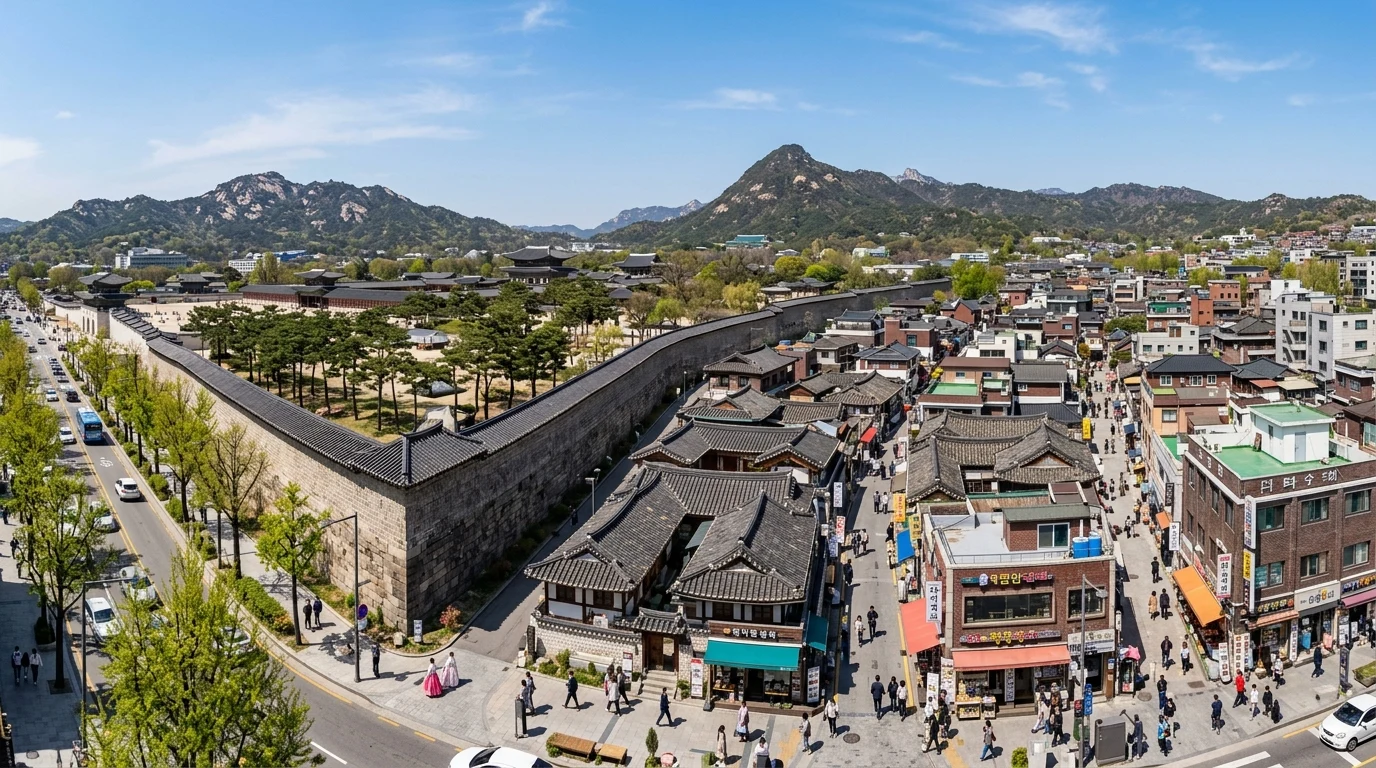
Seochon works best when a date walk follows daily neighborhood texture, small turns, quieter storefronts, and photo moments that do not need a dramatic setup. This guide uses the wider Seoul Photo Spot Guide as a base and explains how to build a date route through Seochon that feels easy, photogenic, and calm rather than overplanned.
That is exactly why the area works well for people who are visiting for the first time. Seochon does not demand one perfect reservation or one famous facade to feel successful. It works best when the route stays proportional, with enough room for conversation, one or two cafe pauses, and short photo moments that grow naturally out of the walk.
The real goal is not to cover every alley. It is to keep the outing from becoming stiff. Seochon is very good at that because the neighborhood keeps changing in small ways without forcing a fast pace.
— Where should you start a Seochon date route if you want it to feel easy
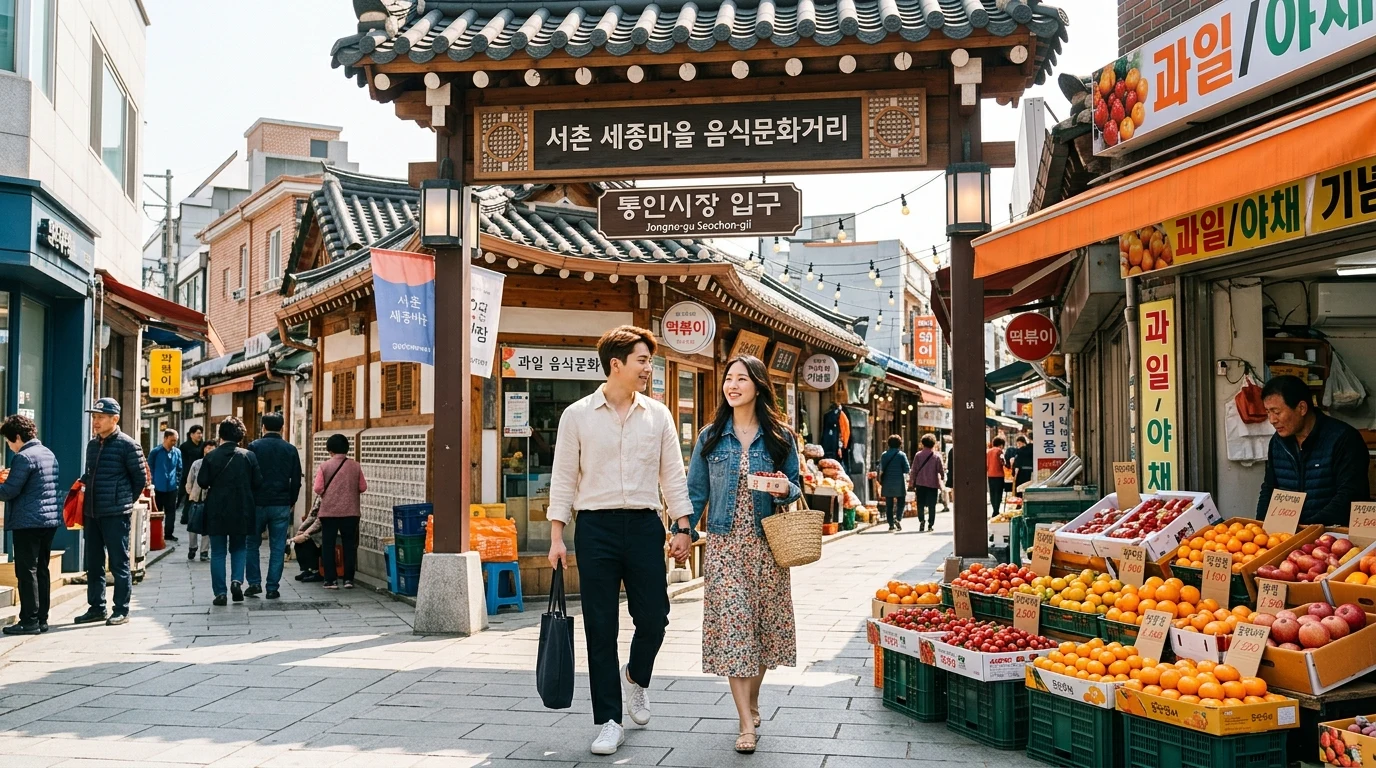
- Best starting point: the Tongin Market side usually gives the smoothest first entry into Seochon's walking rhythm.
- Best for: slower alley dates, cafe pauses, small neighborhood photo stops, and west-of-Gyeongbokgung walking.
- Best route logic: alternate between busier outer edges and quieter inner alleys instead of going deep immediately.
- Best expectation: Seochon works better as a mood route than as a landmark checklist.
The route feels easiest when it starts without pressure. The Tongin Market side gives visitors enough movement first, then lets the neighborhood narrow gradually into calmer alley sections.
That beginning also helps the social rhythm of the date. Starting near everyday market movement keeps the first minutes from feeling overly formal, and then the route can soften naturally as the alleys get quieter. In practical terms, that makes Seochon easier than routes that begin with a single dramatic landmark.
It also makes route adjustments easier. If a cafe line is long or one outer street feels too busy, visitors can redirect without losing the basic structure of the walk.
— Why does Seochon work so well as a date neighborhood
Seochon fits date walks because it does not force speed. The area is shaped by smaller turns, local storefronts, quieter side streets, and enough visual change to keep the walk interesting without making it hectic. That helps conversation and pacing more than a district built around one dominant attraction.
It also rewards people who stop briefly and then continue. Instead of asking visitors to commit to one oversized destination, Seochon keeps offering softer transitions, which is why it often feels more intimate than bigger Seoul routes.
Season supports that flexibility too. Spring and autumn are usually the easiest because longer walks feel comfortable without much planning. Summer still works, but it benefits from more shade and more breaks. Winter often feels strongest as a shorter walk with one warm indoor stop rather than a long continuous route.
That is why Seochon often performs best at a moderate length. Many visitors enjoy it more as a sixty- to ninety-minute walk than as an overextended half-day project.
— Which photo spots feel the most naturally Seochon
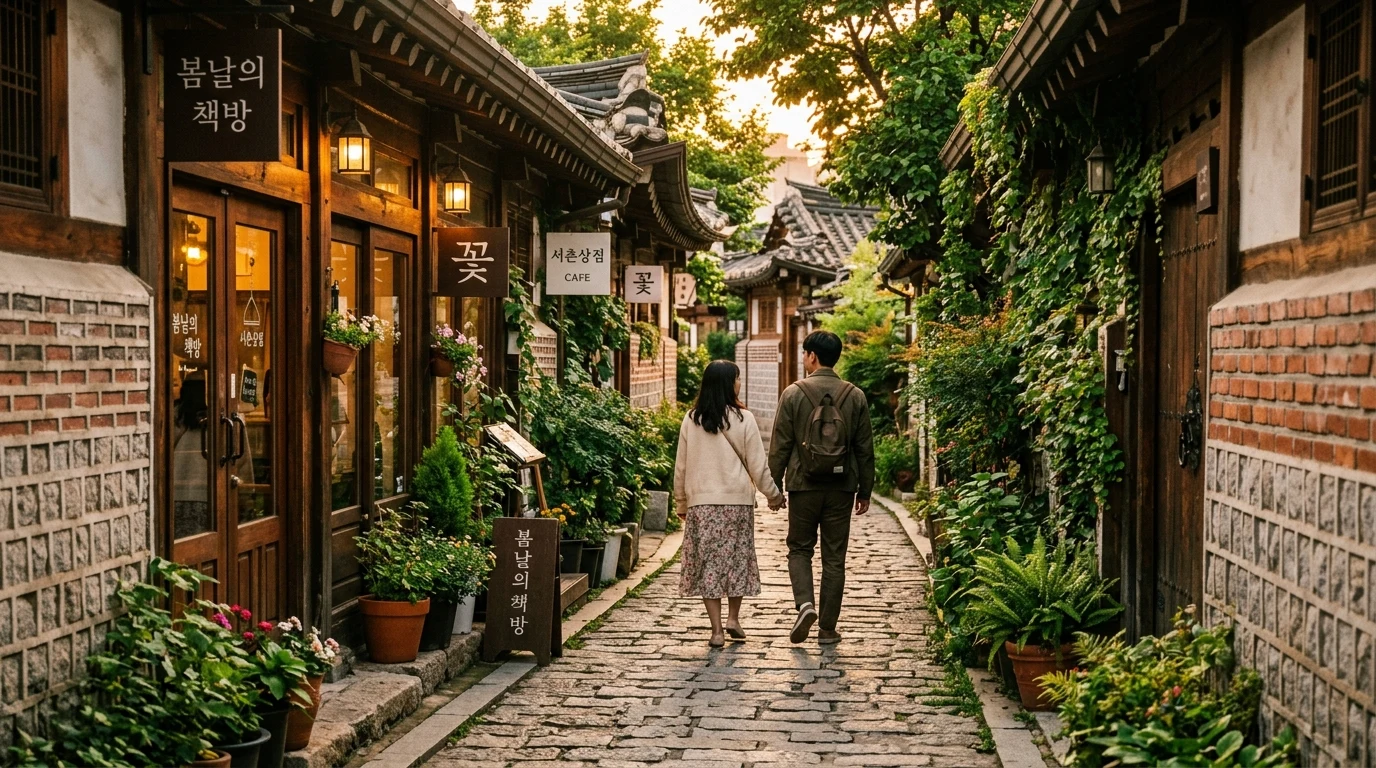
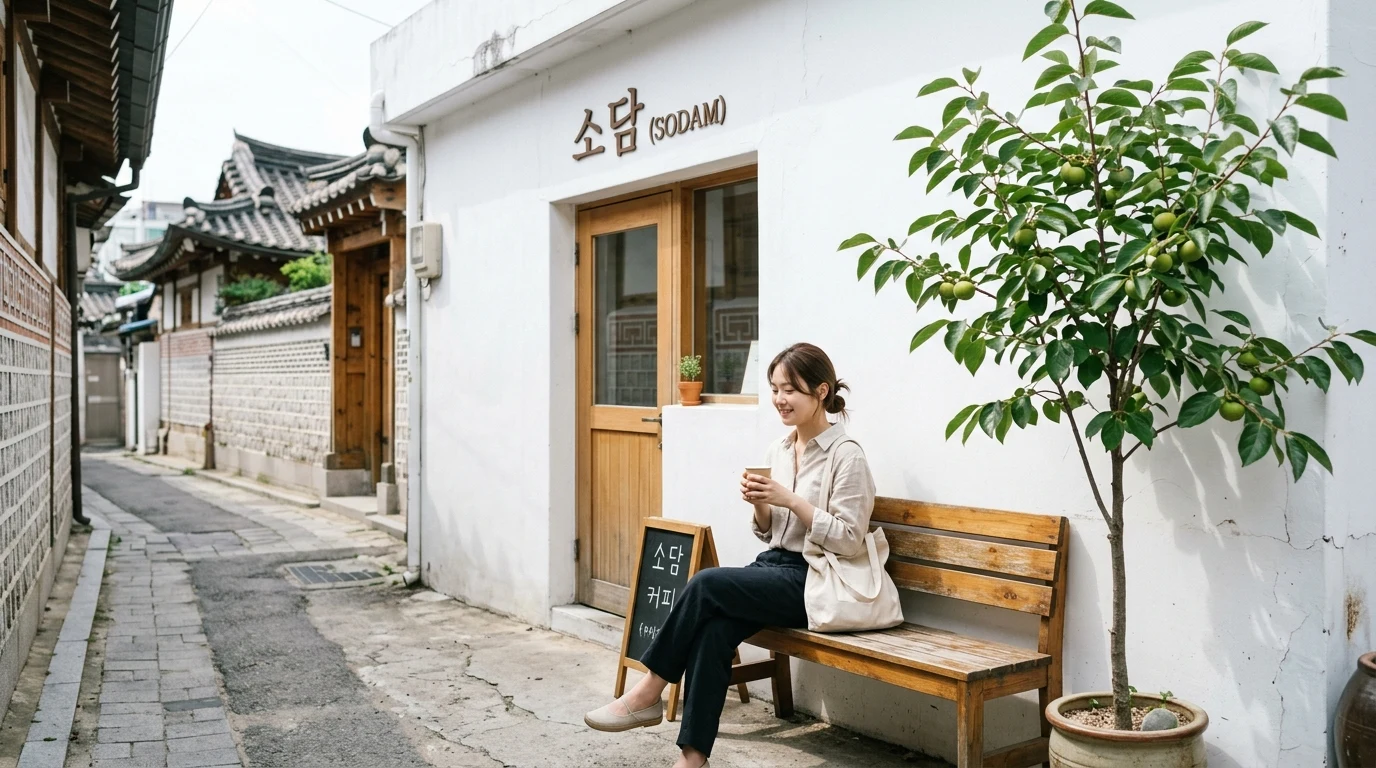
Seochon photo spots work best where the neighborhood still feels lived-in. Small storefront edges, low walls, alley corners, older textures, and gentle side-angle views usually leave a stronger impression than any attempt to chase one perfect frame.
That makes Seochon especially good for date photography that feels casual instead of staged. The strongest images often come from walking pauses, not from building the route around one fixed photo target.
If you want the clearest night-walk contrast after Seochon, Naksan Park Night View Guide is a useful next step.
If you want to turn that neighborhood mood into something more output-focused after the walk, the K-style profile flow is a natural bridge.
Angle matters here. Side angles usually work better than front-facing ones because Seochon's low walls, storefront edges, and alley bends create depth through movement rather than through symmetry. Couple photos tend to look more natural when people are turning, pausing, or sharing attention with the street instead of standing in a rigid pose.
Crowd handling is also simpler than it may seem. If one cafe frontage looks too busy on a weekend afternoon, moving one alley inward often solves the problem. Seochon rewards small detours much more than patient waiting in the most obvious location.
— Why does pairing Seochon with west-of-Gyeongbokgung make the route easier
Seochon gets easier once visitors understand how it sits west of Gyeongbokgung. Palace areas give open views, stronger symbolism, and formal space. Seochon shifts the mood into everyday alleys, smaller storefronts, and a more personal walking scale. That contrast helps first-time visitors read the neighborhood more clearly.
It also gives the route a cleaner story. Visitors can move from symbolic Seoul into lived-in Seoul without needing a complicated transition.
That shift matters emotionally as well. Gyeongbokgung's western edge feels more open, formal, and representative. Seochon feels smaller, slower, and more personal. The route becomes memorable because the city itself changes scale in a very readable way.
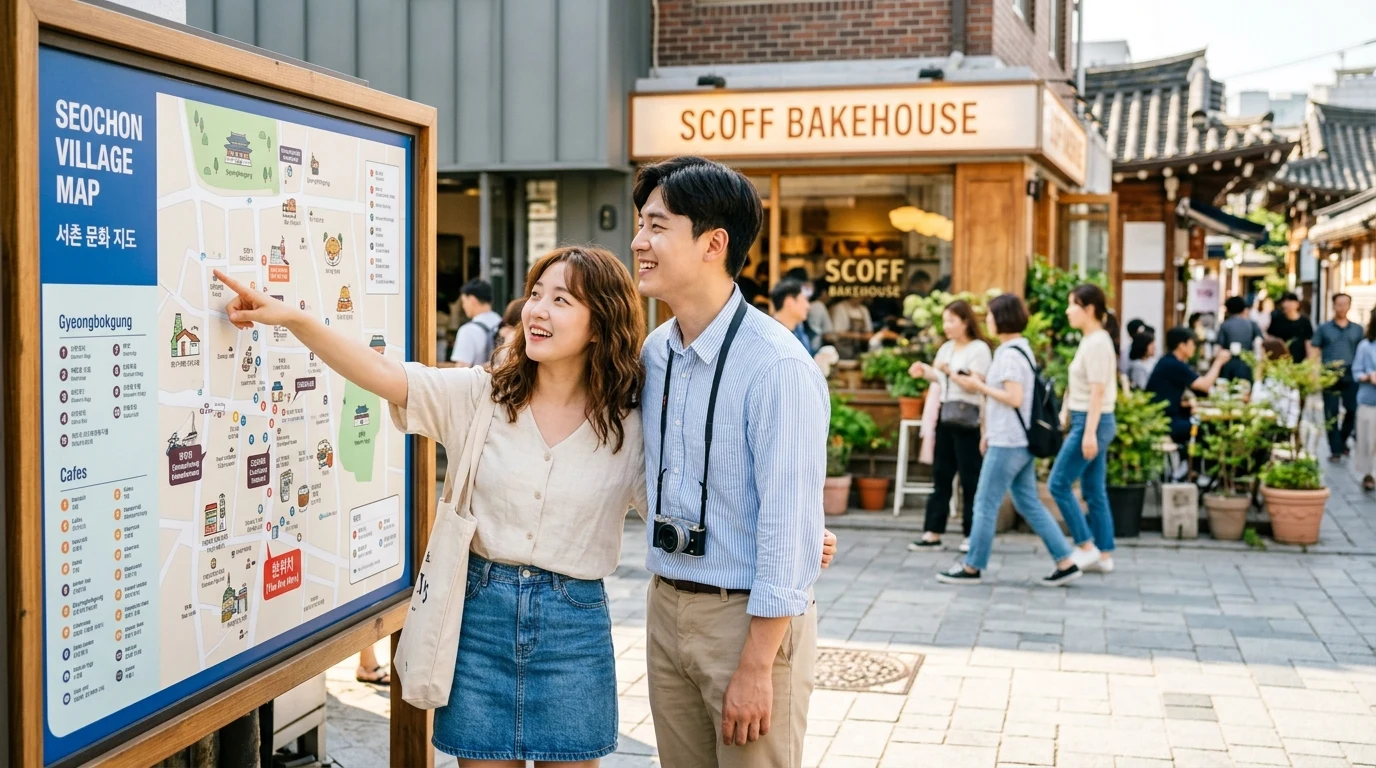
It also helps with navigation. First-time visitors can use the palace edge as an anchor, which makes Seochon's inner streets feel easier to trust.
— What is the easiest first-time Seochon date route
A first-time Seochon date route usually works best when visitors begin near Tongin Market, follow the more active edge first, move into quieter alleys for the most relaxed photo moments, and then return toward the larger street flow before the route starts feeling repetitive.
That structure keeps the date easy to manage because it mixes movement, pauses, and photos in the right order. It avoids the common mistake of going too deep too early and losing the neighborhood's gentler rhythm.
Seochon works best when the walk feels discovered rather than forced.
It usually helps to choose only one essential cafe stop and leave the rest flexible. Seochon is full of smaller places that are easy to enter on instinct, so an overly rigid reservation-heavy route can remove one of the neighborhood's biggest strengths.
The ending matters too. Returning toward a slightly larger street before finishing the outing makes the route feel more complete and makes it easier to connect Seochon with the next part of the day.
— How do crowd level and season change the best Seochon date route
Seochon has a calm reputation, but mild weekend afternoons can still bring visible crowding around popular cafes and outer-edge streets. The useful response is usually not to stay in the busiest lane. It is to turn inward. Because the district's strength comes from repeated alley texture, a small detour usually improves the route immediately.
Weather changes the pacing as well. Clear spring and autumn days are the easiest for longer walks. Summer often works better when the route starts later and mixes shade with indoor stops. Winter benefits from shorter movement and more selective photo pauses. In every case, Seochon works best when the route stays adaptable instead of trying to prove how much of the neighborhood can be covered.
Seochon date routes usually work best when they begin near Tongin Market and narrow into quieter alleys gradually.
The strongest Seochon photo spots usually come from lived-in alley texture, low walls, storefront edges, and walking pauses.
First-time visitors usually get a better route by combining west-of-Gyeongbokgung context with Seochon's softer neighborhood pace.