An AI Hanbok generator works best when the goal is not fake proof of being on-site, but a believable traditional Seoul mood. This guide explains how virtual hanbok try-on images become more convincing when symmetry, outfit tone, pose, frame discipline, and a cleaner Gyeongbokgung-inspired background all point in the same direction. If you want the real palace context first, start with Gyeongbokgung Palace Tour Guide — Route and Visit Basics and Best Photo Spots in Gyeongbokgung — Hanbok Route Guide.
— What Should You Set First in an AI Hanbok Generator Result
- Background first: use symmetry, roofline rhythm, and open court logic before adding decorative detail.
- Styling next: quieter tones usually work better than high-saturation outfits against a palace-inspired frame.
- Pose rule: restrained posture is usually more convincing than dramatic motion in a virtual traditional setup.
Those choices matter because viewers read overall order before they notice ornament. Once the structure feels calm and consistent, the image becomes easier to accept as a coherent virtual Seoul mood.
Beginners usually do better when they reduce ambition here. A virtual palace scene does not become more convincing just because more decorative pieces are added. If axis, open space, and posture already feel stable, the image often reads far better than a crowded scene built from many palace symbols at once.
— Why Does Structure Matter More Than Detail Here
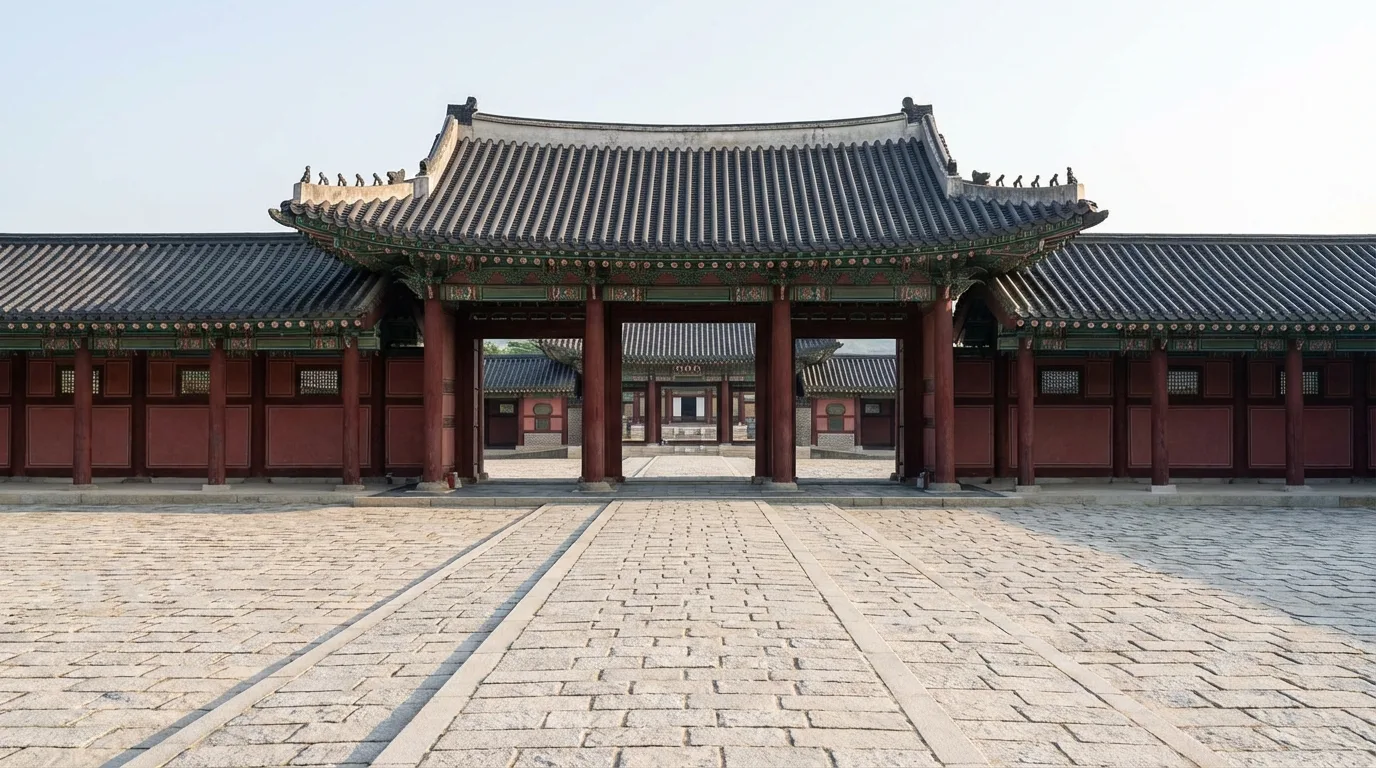
The first thing a virtual Gyeongbokgung background needs is structure, not decoration. Gyeongbokgung is remembered through symmetry, open courts, repeated gates, long rooflines, and a strong central axis. If those visual traits are present, the background can feel convincing even without reproducing one exact palace building.
That is why overdecorating usually hurts the result. Too many painted details, props, and symbolic extras can make the image feel less believable than a simpler frame with clear balance. Viewers read order first and ornament second.
This is also where many composite-style images fail. Gates, courts, mountain layers, blossoms, and extra ornament can all be attractive on their own, but too many of them erase the center of attention. The strongest virtual Gyeongbokgung backgrounds usually keep one readable axis rather than many competing palace references.
— Why Outfit Tone Matters in Virtual Hanbok Try-On Images
Virtual Gyeongbokgung background photos fall apart when styling fights the setting. The goal is not necessarily to copy historical dress, but to keep color, fabric, and silhouette calm enough that the subject feels compatible with the palace-inspired background.
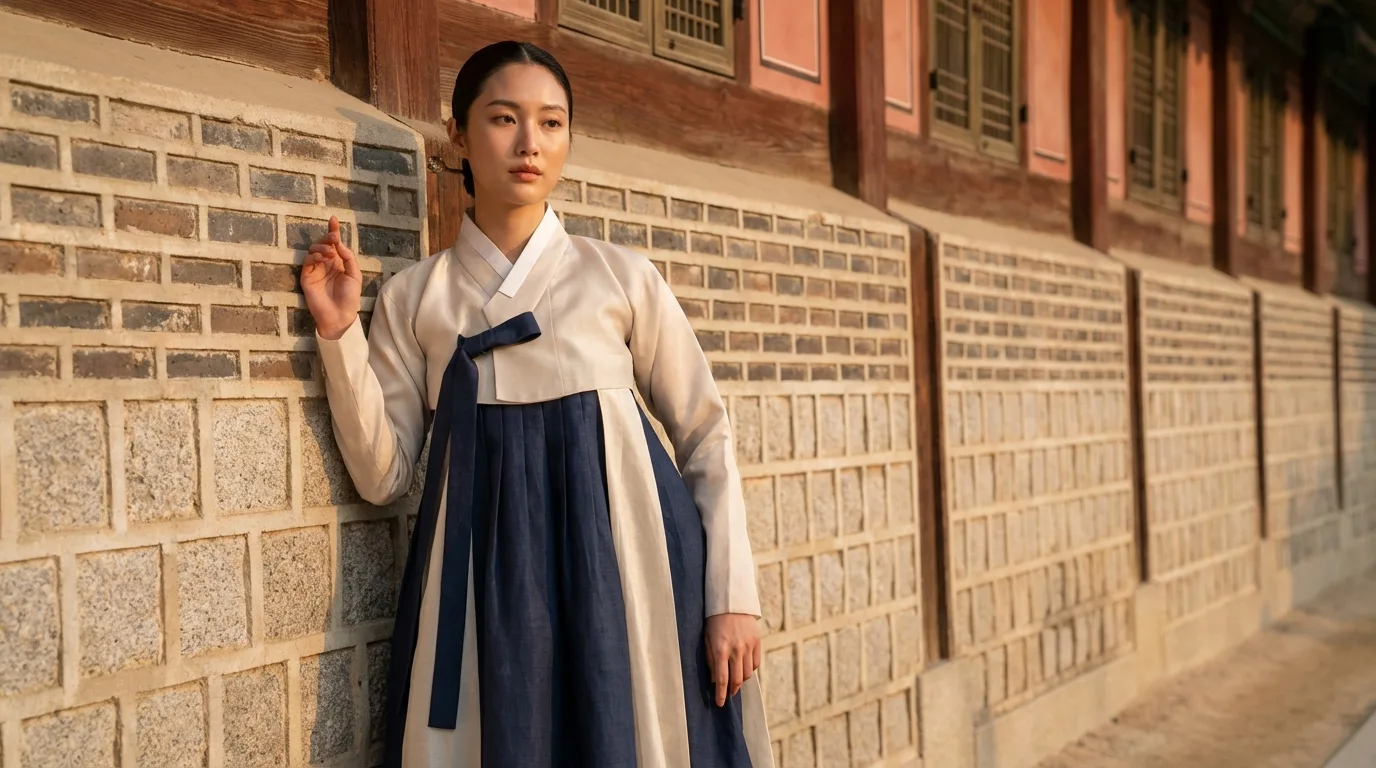
Warm ivory, navy, charcoal, muted pink, or other restrained tones usually work better than highly saturated street styling. When clothing supports the frame instead of competing with it, the final image feels less staged and more coherent.
Fabric finish matters too. Very reflective materials can push the subject away from the calm architectural mood and make the composite feel more artificial. Softer textures usually blend into the palace logic more easily because they support structure rather than interrupt it.
— Which Poses Make the Result Feel Less Artificial
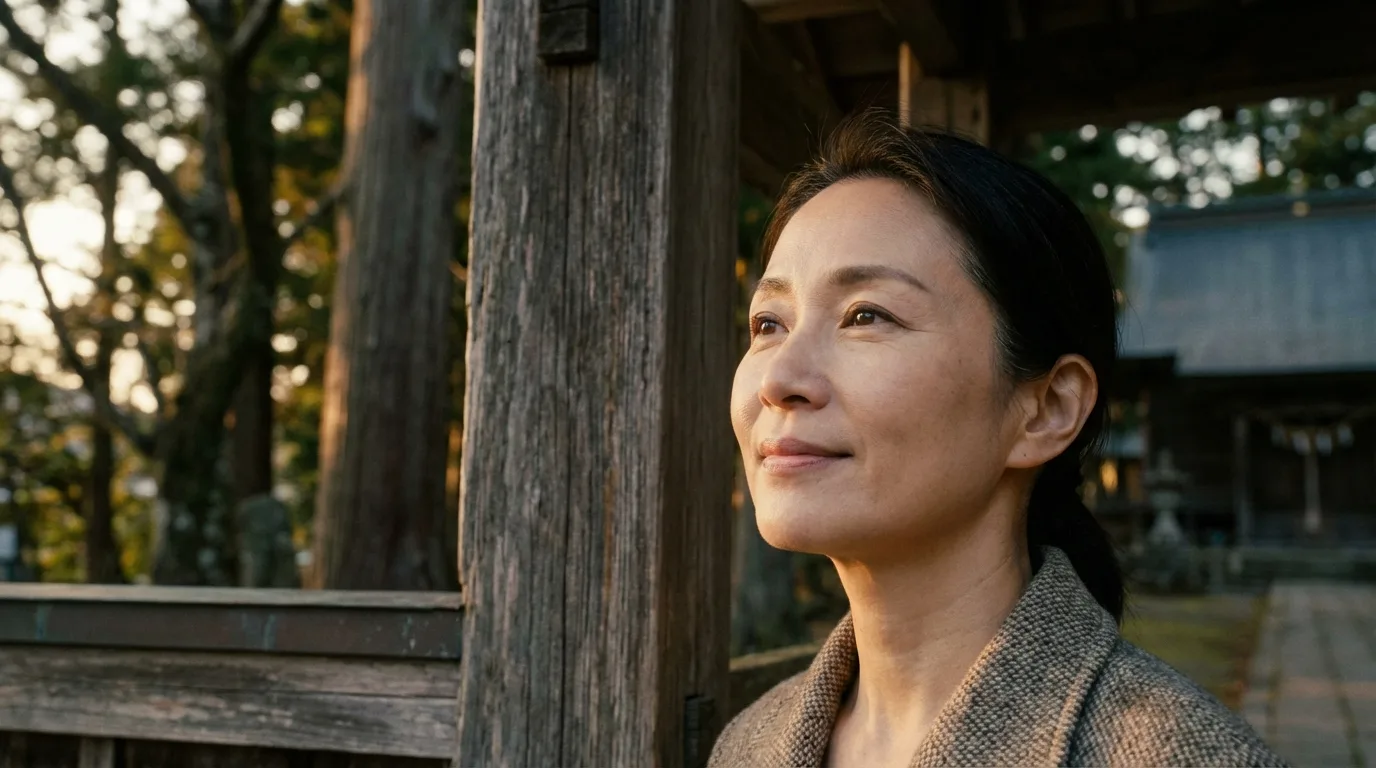
Pose matters because Gyeongbokgung is associated with composure and visual order. If the subject twists too dramatically or pushes too much motion into the frame, the background starts to feel like a decorative panel. More restrained posture usually gives the virtual concept a stronger connection to the palace mood.
Front-facing stance, small angle shifts, quieter arm placement, and a redirected gaze tend to work better than overtly dramatic fashion poses. The calmer the gesture, the easier it is for the background and subject to read as one image.
Hand placement affects this more than people expect. Wide gestures or strong prop use can pull attention away from the background order and make the image feel performative. Hands usually work best when they stay close to the body or inside the flow of the clothing.
— Why Cleaner Framing Reduces the Composite Feeling
One of the fastest ways to make a virtual setup look artificial is to include too much at once. Roofs, gates, blossoms, mountains, courts, and decorative elements can overload the frame and make the image feel assembled rather than composed. Cleaner framing usually creates a better result.
A readable axis, one roof silhouette, or one open court often does more than a crowded collage of palace references. If the frame feels disciplined, the virtual background becomes easier to accept as a coherent Seoul mood image.
It also helps to limit the number of color families inside the frame. If the outfit, background, accessories, and hair details all compete chromatically, the result starts feeling assembled piece by piece. A narrower palette usually makes the image feel much more unified.
— Why Traditional Seoul Mood Can Work Without Being in Seoul
What most people want from this concept is not literal documentary evidence of location. They want the symbolic mood of royal order, restraint, and traditional Seoul identity. That is why a virtual Gyeongbokgung background can still work even when it is not tied to physical presence.
If structure, styling, pose, and framing align, the final image can feel more intentional than a rushed on-site snapshot. The most convincing result comes from interpreting Gyeongbokgung clearly, not from copying every visible surface.
— What should you remove first if the result still feels composited
If the image still looks artificial, the first step is usually subtraction rather than addition. Harsh mismatched shadows, an eye level that does not fit the architecture, overly shiny clothing, or too many decorative extras are common reasons the frame stops feeling coherent. Removing even one of those issues can improve the result quickly.
The most useful additions are often subtle ones: a cleaner gaze direction, a more controlled outfit tone, a simpler background plane, or more empty space around the figure. Virtual hanbok images work less like collage projects and more like editing decisions about what should remain visible.
— What is the easiest review order for first-time users
The safest review order is structure first, pose second, outfit tone third, and small accessories last. Start by checking whether the axis, roofline rhythm, and empty space already feel stable. Then confirm that the pose supports that structure, that the outfit does not fight the background, and only after that decide whether any small detail should be added.
This order works because beginners often try to fix a weak image by adding more visible details too early. In practice, most virtual hanbok images improve faster when the large balance is corrected first. Once the main geometry and tone feel coherent, the smaller styling choices become much easier.
Start with symmetry, axis, and open space because structure matters more than decorative palace detail.
Keep outfit tone and pose restrained so the subject stays aligned with the palace-inspired background.
Virtual Gyeongbokgung background photos work best when they interpret traditional Seoul mood instead of imitating every surface literally.