EDITORIAL CHECK
Source and Review Basis
Gyeongbokgung guides are checked against official palace and Seoul tourism references for hours, closed days, admission conditions, hanbok entry, and route decisions that affect a real visit.
Choosing the best time to photograph Gyeongbokgung is less about one perfect hour and more about matching light to the kind of frame you want. Morning makes the main axis clearer, later hours strengthen shadows and mood, and sunset starts the transition toward a more atmospheric palace read. If you want the broader palace context first, start with Gyeongbokgung Palace Tour Guide — Route and Visit Basics, and if you want to pair timing with location choices, continue with Best Photo Spots in Gyeongbokgung — Hanbok Route Guide.
First timing decision for Gyeongbokgung photos
💡 Gyeongbokgung Light Timing & Visit Fact Check (Verified Oct 2026)
※ Verified on: 2026-10-11. Operating hours and night viewing sessions are subject to change by season and management policies.
| Category | Verified Details (Korea Heritage Service Royal Palaces Headquarters) | Official Source | |:---|:---|:---| | Operating Hours | Mar–May & Sep–Oct 09:00–18:00 (last entry 17:00) / Jun–Aug ~18:30 / Nov–Feb ~17:00 (Closed Tuesdays) | Operating Hours | | Admission Fees | Adults (ages 25–64) 3,000 KRW (Free for ages 24 and under, 65+, and visitors in full hanbok) | Admission Info | | Subway Access | Line 3 Gyeongbokgung Station Exit 5 (5-min walk), Line 5 Gwanghwamun Station Exit 2 (approx. 10-min walk) | Directions | | Guard Changing Ceremony | 2 times daily (10:00, 14:00, approx. 20 min / between Gwanghwamun & Heungnyemun) | Palace Guide |
- Best time: choose morning first if you want the clearest signature palace view, and later hours if you want more shadow and mood.
- Night planning: if you are aiming for a Gyeongbokgung night visit, check seasonal access and timing before you build the route.
- Route logic: many first-time visitors do best by capturing the main axis first, then moving toward side spaces or waterside zones as light softens.
- Time budget: allow 90 to 120 minutes if you want the main axis, Geunjeongjeon, and at least one waterside scene without rushing.
- Practical start: arrive near opening time when you need clean court spacing, or save the final 60 to 90 minutes of daylight for stronger shadows.
Those checks matter because the same palace can read as formal, flat, reflective, or dramatic depending on when you arrive. Once you decide what kind of image you want first, timing decisions become much easier.
The first timing decision should be about purpose, not only weather. If the goal is a representative palace photo, morning gives the strongest structure. If the goal is mood, later light gives better texture. If the goal is a night-visit memory, the route should leave time for the palace to change gradually instead of arriving only when everything is already dark.
Morning structure before a night visit
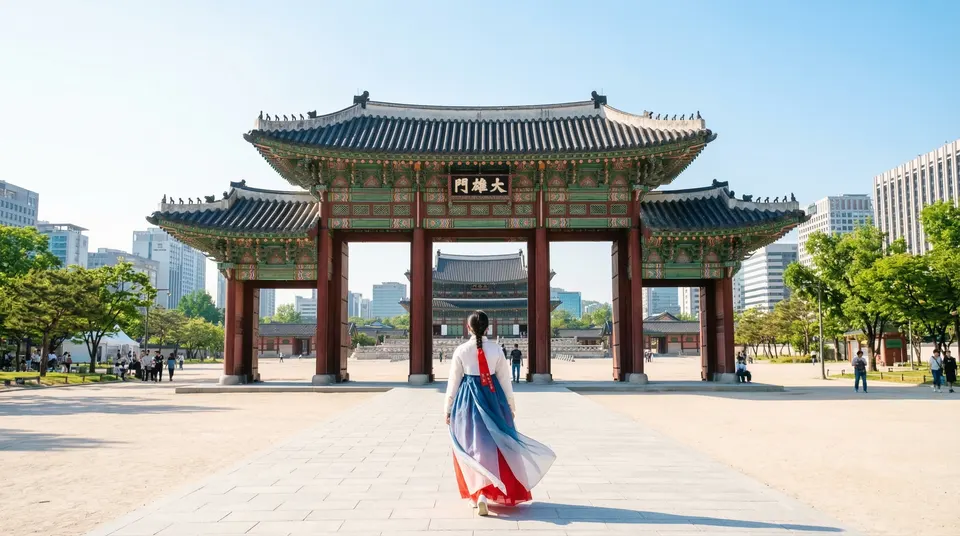
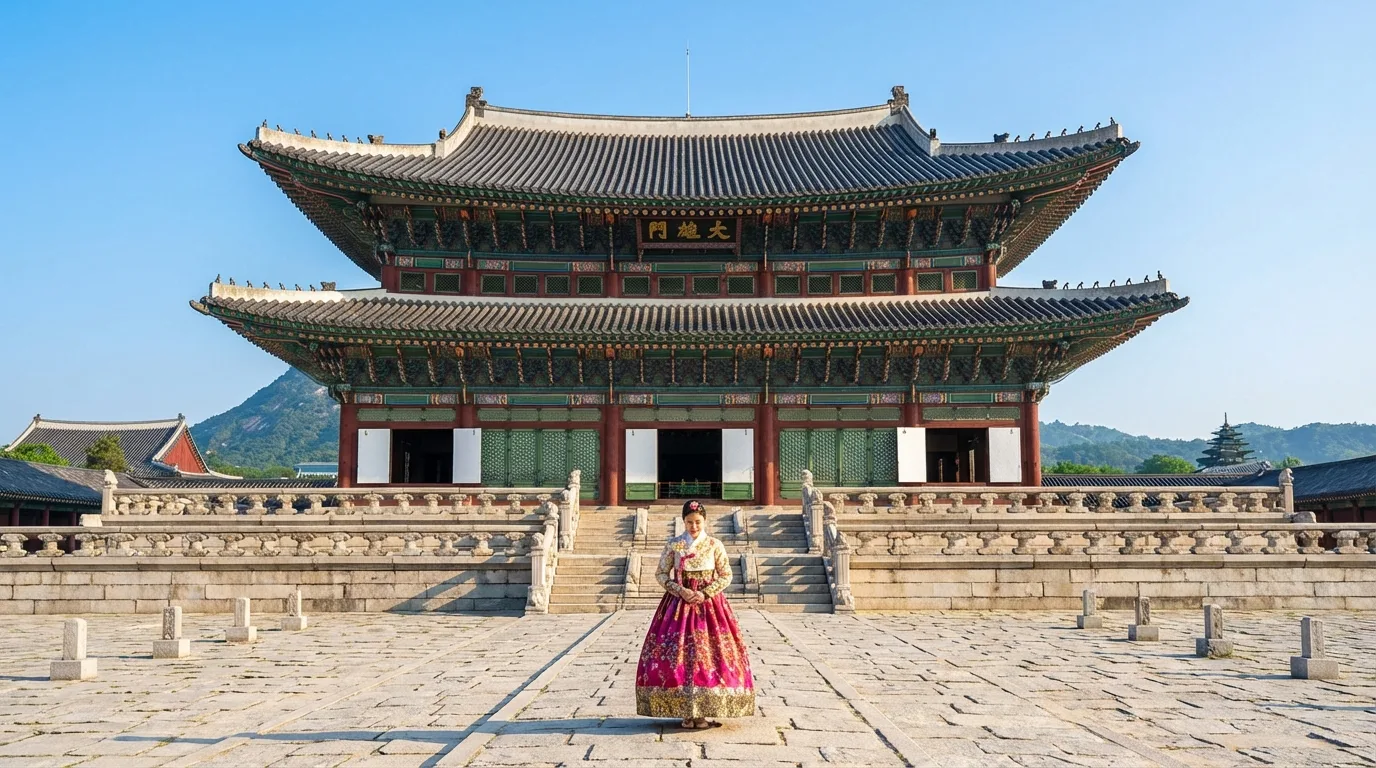
Morning is the best time to photograph Gyeongbokgung when your priority is the palace's main ceremonial image. The route from Gwanghwamun toward Geunjeongjeon tends to read more clearly, with rooflines, gateways, and court spacing appearing easier to organize inside one frame. For first-time visitors, this produces the most representative palace view with the least visual confusion.
That matters because many visitors are not trying to make an abstract mood piece first. They want a frame that immediately reads as Seoul's best-known royal palace. Earlier light supports that goal by making structure more legible than atmosphere, which is why morning remains the safest choice for signature images.
If you are entering from the Gwanghwamun side, use the first 20 to 30 minutes for the main approach and the Geunjeongjeon area before moving into smaller side angles. The court opens wide, so even a small crowd can spread across the background. Early light also keeps rooflines and stone ground easier to separate before harsh brightness reduces the depth.
Morning is not only for clear skies. On a hazy or lightly overcast day, the main axis can still photograph well because the architecture stays readable without hard contrast. The warning sign is not cloud cover; it is whether the palace roof and pale sky have become the same tone. If that happens, include darker gates, columns, or visitors in hanbok to restore separation.
Midday flattening and how to use it
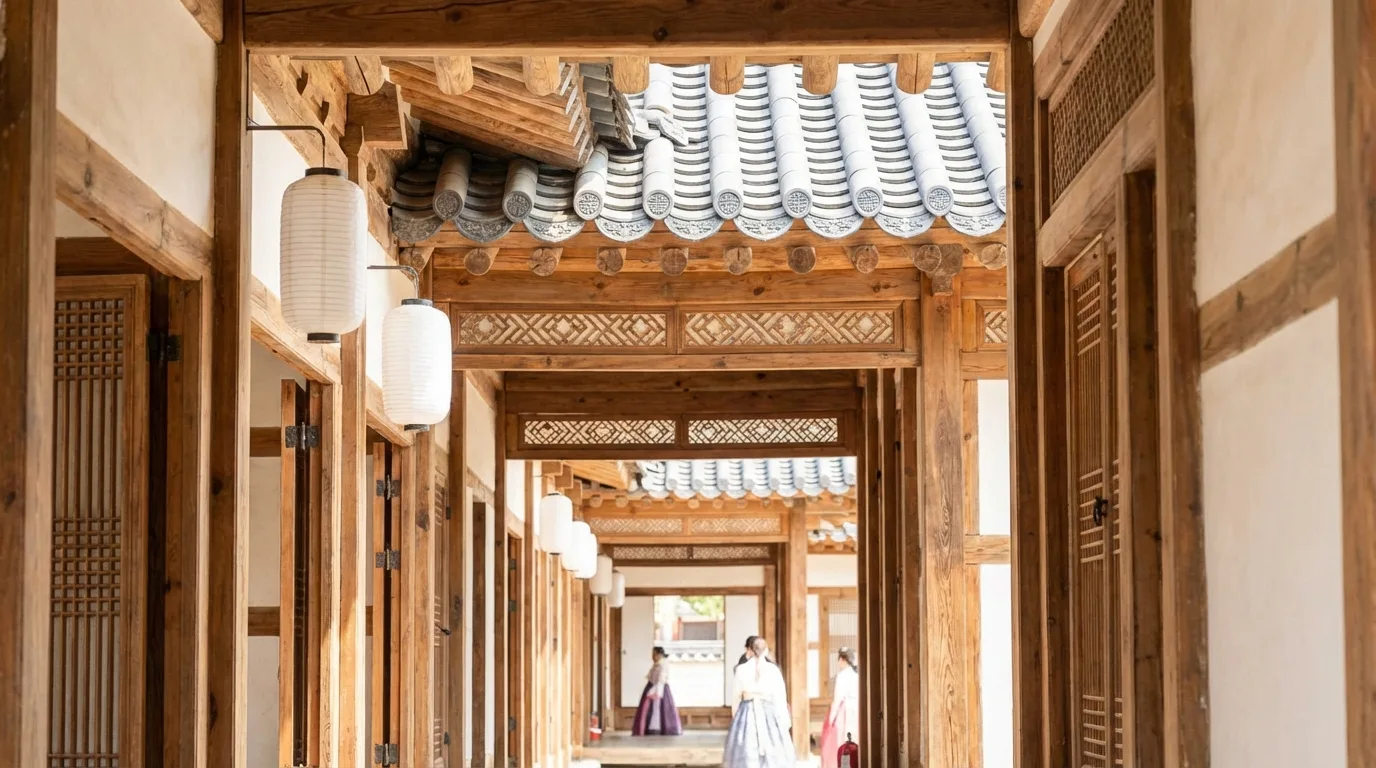
Midday can make Gyeongbokgung feel open and evenly lit, but the same brightness reduces depth. Gates, columns, and overlapping thresholds lose some separation, so the palace can appear broader and more descriptive while feeling less dimensional. This is one of the biggest Gyeongbokgung light changes visitors notice when comparing hours.
That does not make midday useless. It can still work well for travel documentation, outfit visibility, or cleaner face detail. But if you want to emphasize hierarchy and rhythm, midday needs more intentional framing, especially through side corridors, partial views, and layered edges instead of a fully frontal shot.
Midday is useful when faces, hanbok colors, or travel documentation matter more than atmosphere. It is also a practical backup if the visit schedule cannot move. The stronger move is to avoid a flat wide shot and look for shade edges, door frames, column rhythm, and partial rooflines. A side corridor can make noon light feel organized because the shadow line gives the frame structure.
For phone cameras, midday over-brightens stone ground and pale walls. Tap exposure down slightly before shooting a wide court view, or include a darker element near the edge of the frame so the palace does not wash out. A direct front composition can look too descriptive at noon; a 30-degree angle keeps more depth.
Later shadows change the mood more than the location
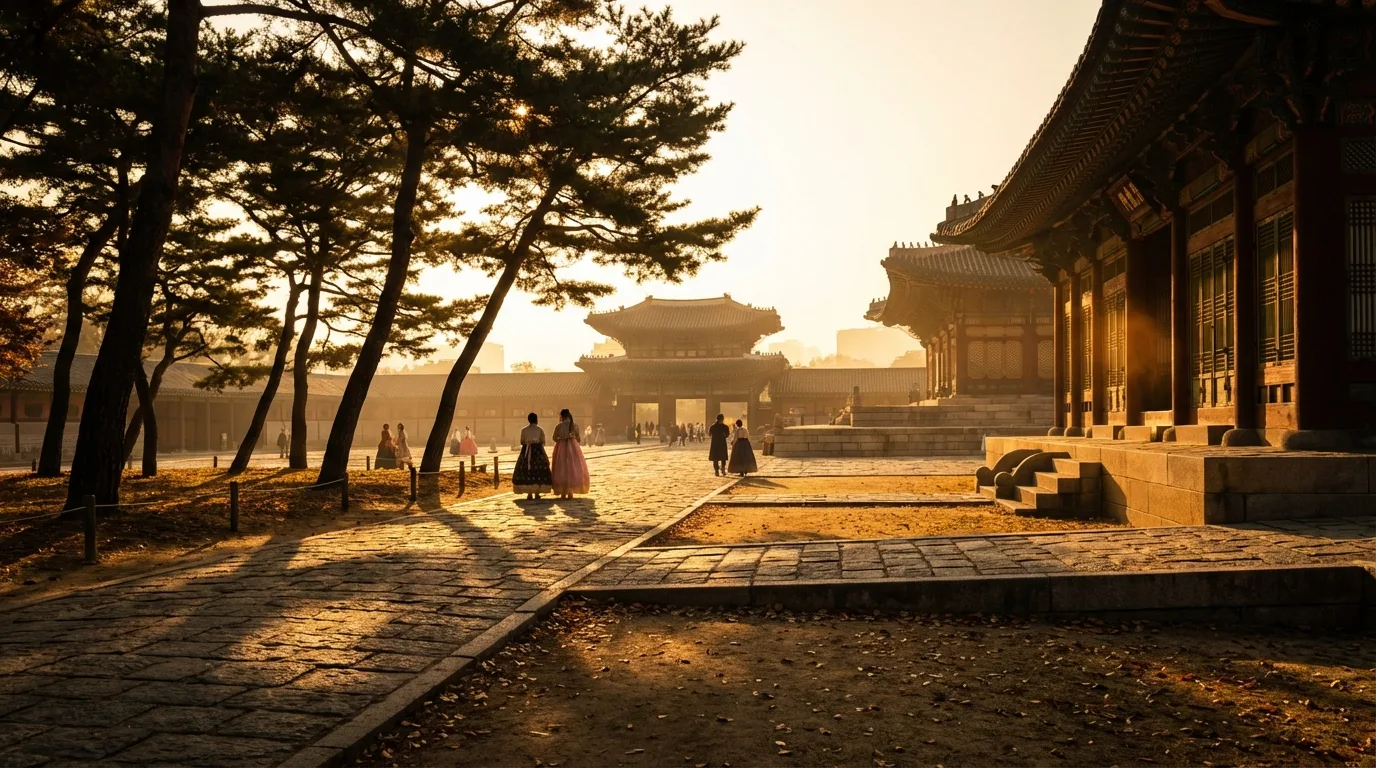
Later in the day, the palace begins to feel more sculpted because shadows stretch across stone surfaces, columns, and thresholds. The same court that looked orderly and descriptive in the morning can start to feel dramatic and emotionally charged. If you are comparing the best time to photograph Gyeongbokgung for atmosphere rather than pure clarity, this is where the answer shifts.
Still, later light is not ideal in every zone. Some frontal views can become too heavy if dark areas dominate the frame, while side spaces and corridors improve because diagonal light adds depth. In practice, later hours are stronger for mood than for the cleanest representative view.
Late light rewards a slower route. Instead of chasing every landmark, choose 2 or 3 zones and wait for the scene to settle. Shadows from columns, roof eaves, and gates can become the subject themselves. If the frame starts looking too dark, move toward areas where the stone ground still reflects light upward into the architecture.
This is also when hanbok portraits can become more expressive. Stronger shadows help the outfit separate from the palace background, but the face still needs usable light. Keep the subject turned slightly toward open sky rather than fully into a dark corridor.
Gyeonghoeru and Hyangwonjeong depend on light texture
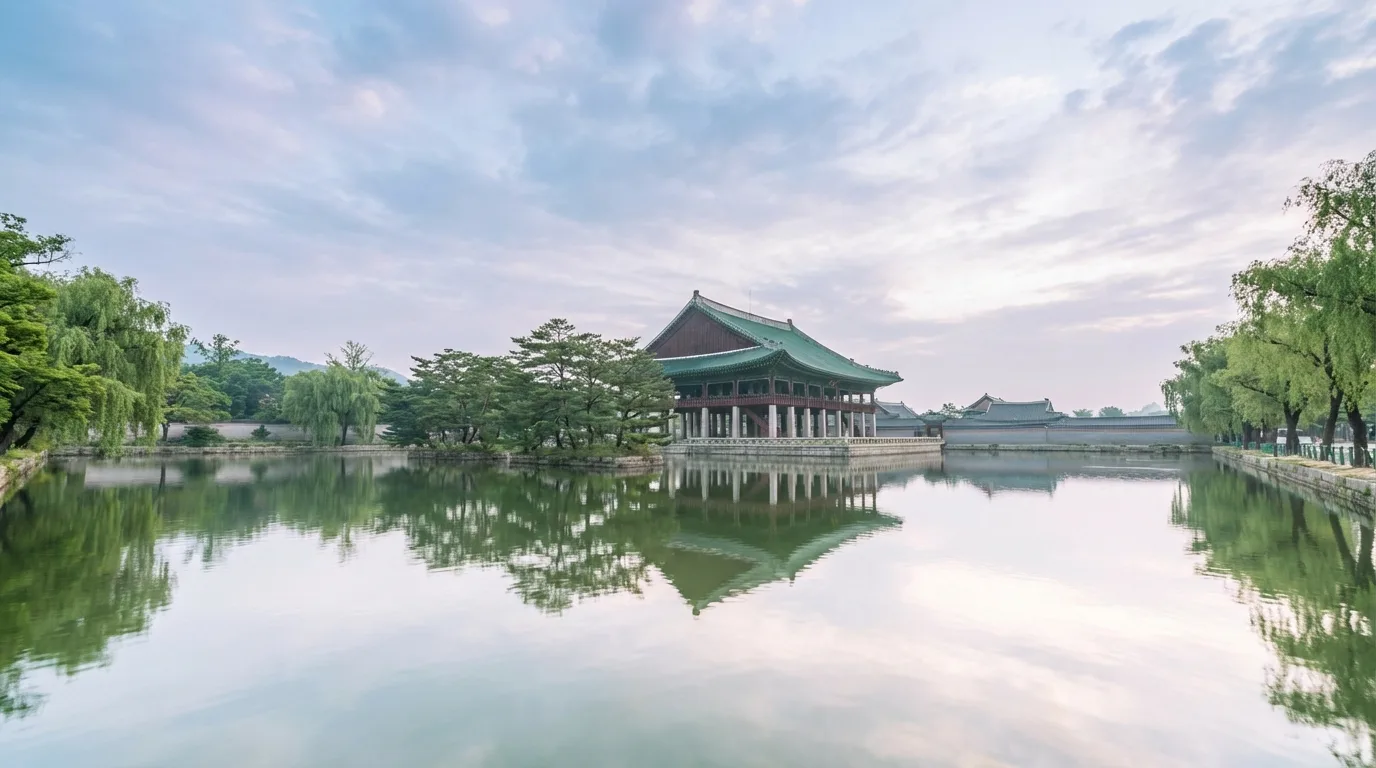
Gyeonghoeru and Hyangwonjeong respond differently from the front palace courts because their appeal depends less on frontal symmetry and more on reflection, spacing, and how light settles on water. In these areas, the best time to photograph Gyeongbokgung is not only about clock time but about whether the scene feels calm, balanced, and readable.
Too much glare can flatten Gyeonghoeru, while overly hard contrast can make quieter waterside scenes feel less refined. That is why these zones reward observation more than schedule obsession. If you want to continue that softer visual route outside the palace, Hanok Photo Spots Near Gyeongbokgung: Alley Guide is the natural next step.
For Gyeonghoeru, watch the water first. If the reflection is broken by glare, step sideways before changing the whole plan. If the water surface is calm, keep more negative space in the frame so the pavilion does not feel cramped. Hyangwonjeong needs a quieter approach; crowded foregrounds can make the pavilion lose its delicate scale.
Around sunset, these zones can outperform the main court because water and trees catch light differently from stone. Give them at least 15 to 20 minutes rather than treating them as a quick final stop.
After sunset and night-visit planning
The key difference in a Gyeongbokgung Palace night view is not that every part of the site becomes dramatic at once. What changes is contrast. Rooflines, court edges, and selected lit areas separate more clearly from the dark, while reflective zones such as Gyeonghoeru can feel calmer and more precise than they do earlier in the day. That is why sunset timing matters so much if you want the palace to read as atmosphere rather than pure documentation.
For most visitors, the best strategy is to separate goals by sequence. Use morning for the clearest signature frames, then revisit side spaces or waterside zones around sunset or later if you want a more interpretive finish. That approach turns the best time to visit Gyeongbokgung Palace into a decision about what kind of Seoul image you want to create.
Night access is seasonal and should be checked before planning the visit, because the palace is not simply open late every ordinary day. When night viewing is available, arrive early enough to understand the layout in fading light. A first-time visitor who arrives only after dark may spend the best period figuring out direction instead of composing.
The safest night sequence is simple: main axis for orientation, one side corridor for depth, then a reflective or quieter zone for atmosphere. That order prevents the visit from becoming a set of disconnected dark scenes.
Morning is the best time to photograph Gyeongbokgung when you want clear, iconic views of the main axis.
Midday stays bright but can flatten layers, while later shadows create stronger mood in corridors and transitional spaces.
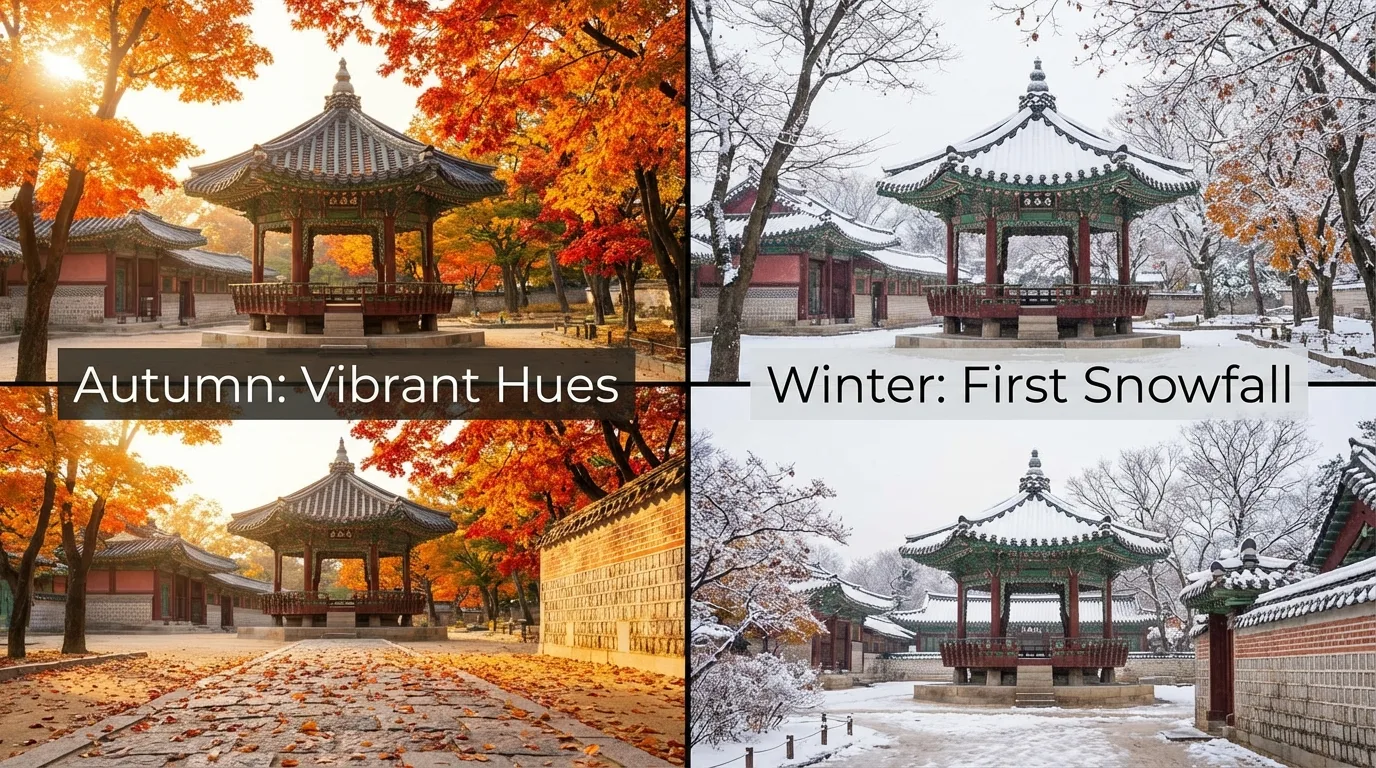
Gyeonghoeru and Hyangwonjeong depend on light texture and season as much as clock time, especially around water and reflection.