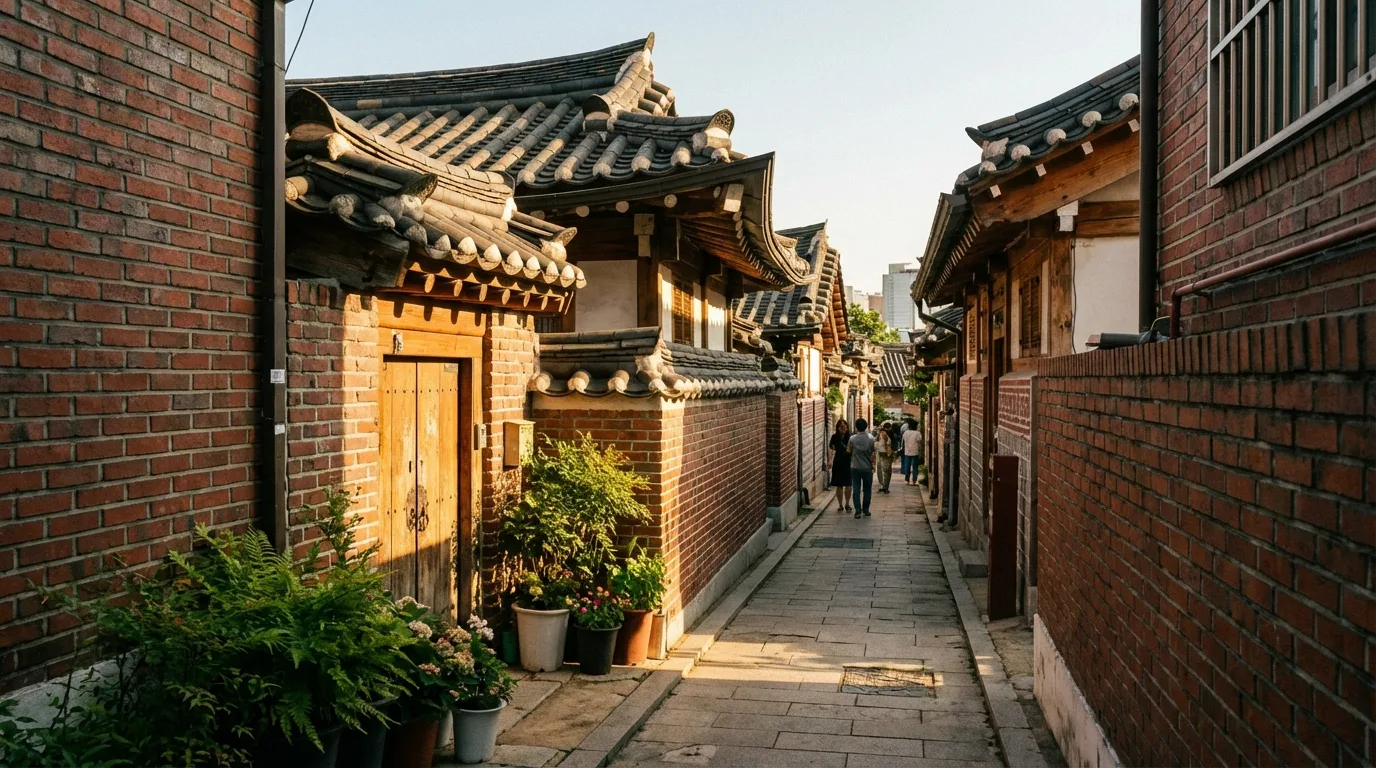
Bukchon Hanok Village photo spots near Gyeongbokgung reveal a quieter and more lived-in version of traditional Seoul than the palace grounds alone. This guide treats the nearby streets as a connected Seochon village walk and alley route, so visitors can understand where hanok rooflines, walls, slope changes, and residential rhythm create the strongest frames. If you want the palace structure first, begin with Gyeongbokgung Palace Tour Guide — Route and Visit Basics and Best Photo Spots in Gyeongbokgung — Hanbok Route Guide before stepping into the surrounding alleys.
Seochon Village Walk Starting Point Near Gyeongbokgung
💡 Hanok Photo Spots Near Gyeongbokgung Fact Check (Verified Oct 2026)
※ Verified on: 2026-10-11. Hanok alleys are active residential neighborhoods; visitors must maintain quiet and respect residential etiquette.
| Category | Verified Details (Seoul Hanok Portal & Korea Heritage Service) | Official Source | |:---|:---|:---| | Subway Access | Line 3 Gyeongbokgung Station Exits 2/3/4 (Seochon area), Exit 5 (Palace), Line 3 Anguk Station (Bukchon area) | Directions | | Alley Etiquette | Active residential area: keep noise low, do not enter private properties, avoid shooting through private windows | Seoul Hanok Portal | | Gyeongbokgung Hours | Mar–May & Sep–Oct 09:00–18:00 (last entry 17:00) / Closed Tuesdays | Operating Hours | | Gyeongbokgung Fees | Adults (ages 25–64) 3,000 KRW (Free for ages 24 and under, 65+, and visitors in full hanbok) | Admission Info |
- Start point: the west side of Gyeongbokgung is usually the easiest transition if you are moving out from the palace into quieter alleys.
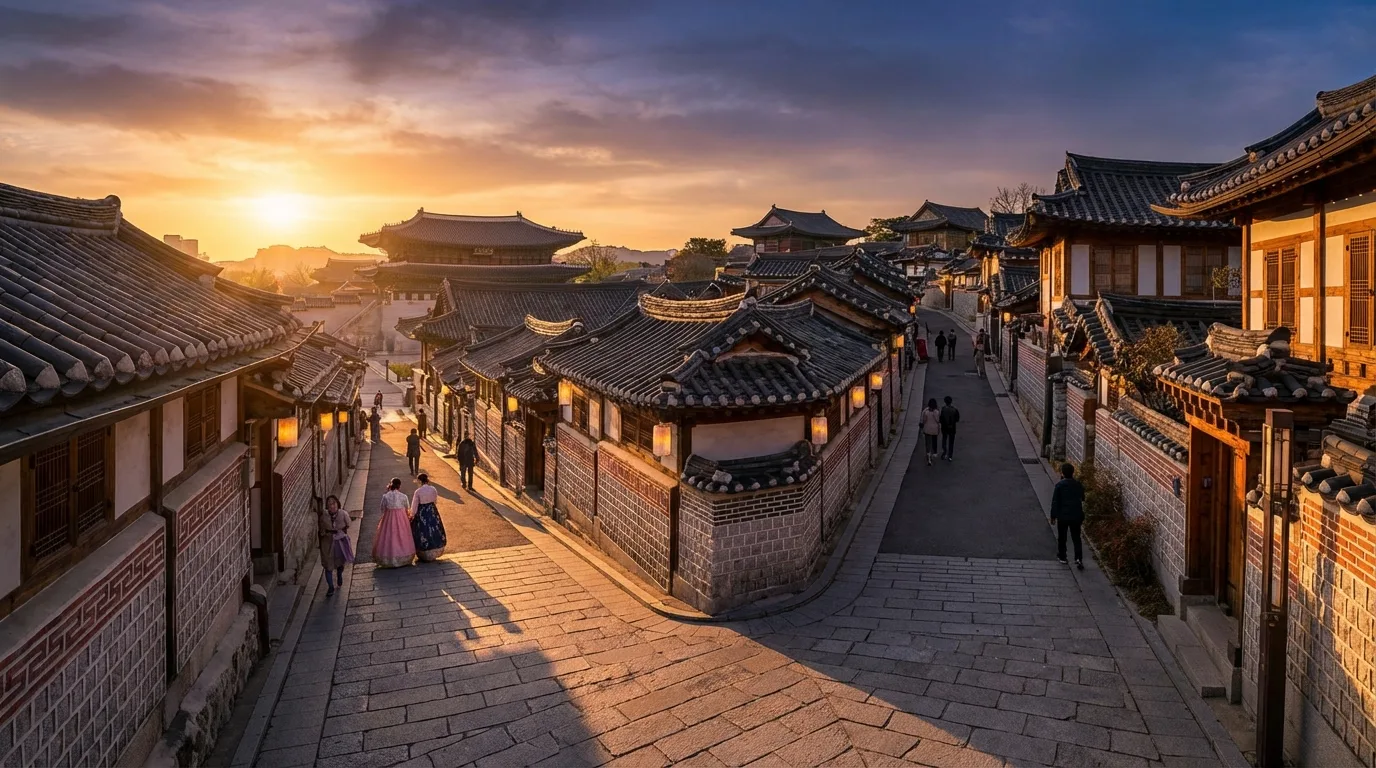
- Best time: softer morning or later-afternoon light gives cleaner wall texture than harsh midday brightness on roof edges.
- Time budget: allow 60 to 90 minutes if you want palace exit, Seochon lanes, one Bukchon edge, and a quieter residential finish.
- Walking logic: treat the route as a sequence of connected frames rather than one famous viewpoint.
Those checks help because the surrounding hanok route is less about one destination and more about how the palace mood relaxes into residential texture. A first-time route works more smoothly when the palace is treated as the formal opening scene and the west-side lanes become the slower middle section. If you leave the palace around late morning, wait for the first crowded wave to move toward the main road before taking portraits in narrower residential streets.
Seochon Lanes Give the Cleanest First Frames
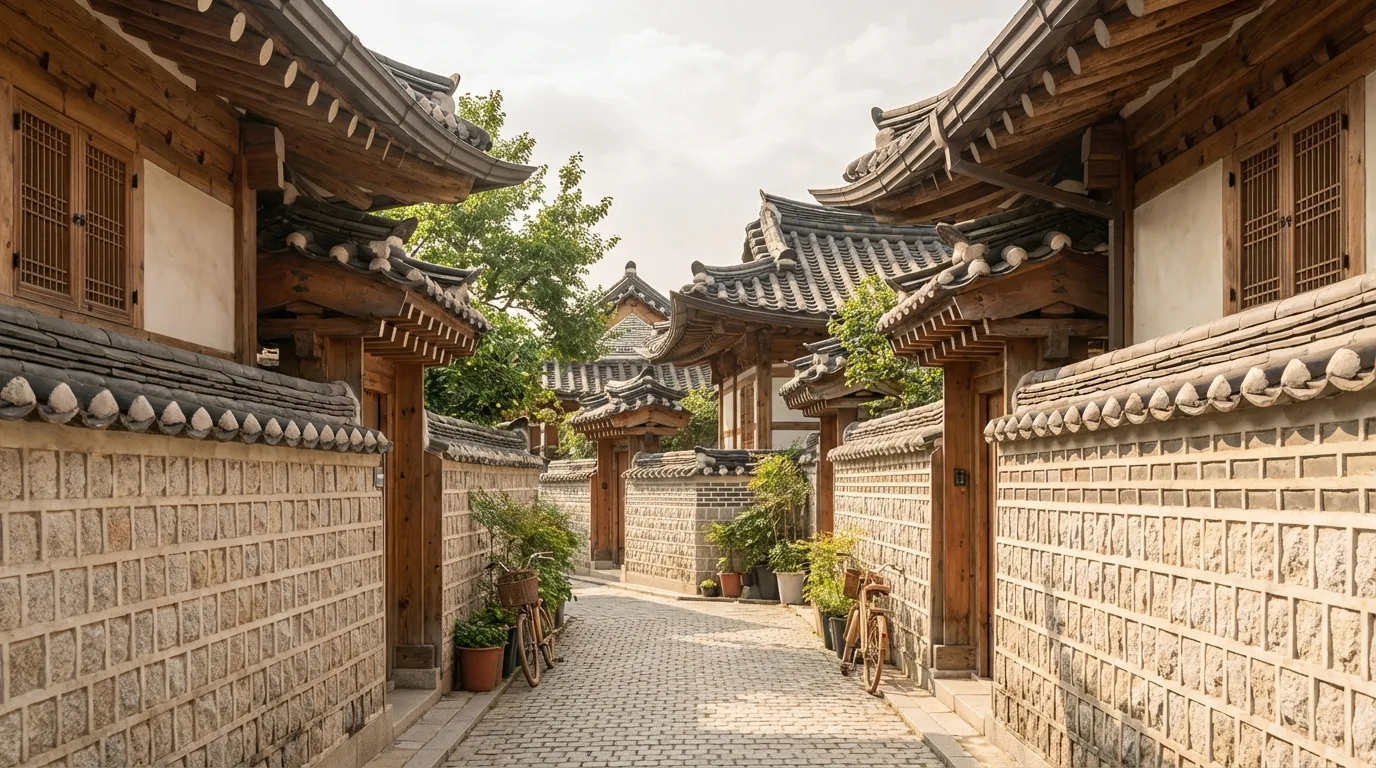
The lanes toward Seochon just west of Gyeongbokgung Station are the easiest place to begin if you want hanok photo spots near Gyeongbokgung Palace without the pressure of a major landmark view. Their strength comes from repetition: low walls, measured street width, and steady eave lines create a calm visual rhythm that works well for portraits and detail shots.
This area is especially useful after the palace because it lowers the visual volume. Instead of formal ceremonial architecture, you get a softer residential texture, which makes the images feel less official and more connected to everyday Seoul.
For portraits, stand far enough back to keep both the wall line and the eave line in the frame. A distance of about three to five meters from the subject is often enough in the wider lanes; in tighter corners, use a half-body crop rather than forcing a full-body shot that cuts off the roofline. If parked cars or delivery scooters interrupt the lower frame, lift the composition slightly and let the upper wall, window trim, and roof edge carry the hanok signal.
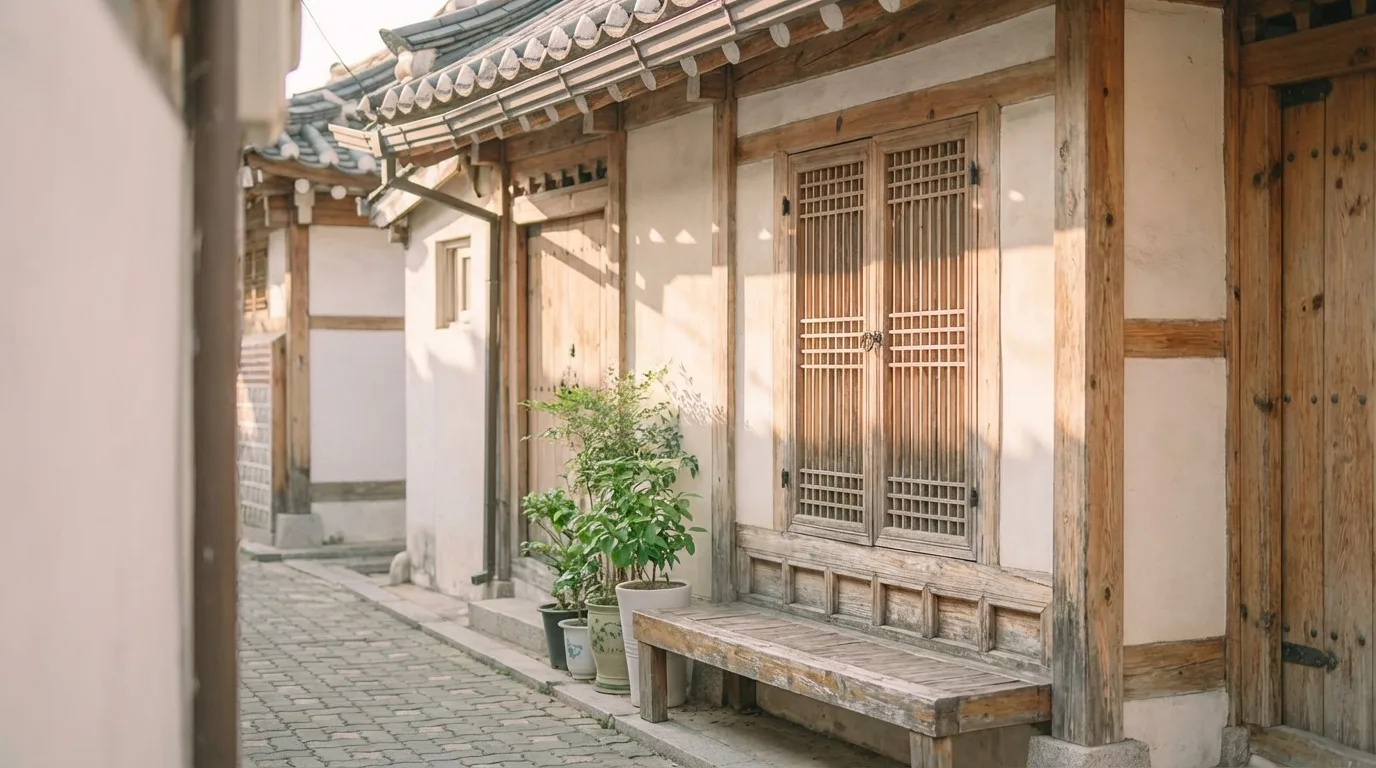
Midday can still work here if the plan changes, but the framing has to be stricter. Avoid white walls that reflect too sharply into the face, and choose shaded corners where the wall texture stays visible. On cloudy days, the same lanes become flatter, so small foreground details such as door handles, stone thresholds, or potted plants help keep the image from looking empty.
Hyoja-dong Adds Everyday Texture to Hanok Alley Photography
Around Hyoja-dong, the appeal comes from overlap rather than purity. Hanok roof edges appear behind newer walls, planted corners interrupt older textures, and modest entrances create a more layered reading of the neighborhood. That makes this one of the most useful places for hanok alley photography when you want traditional Seoul to feel inhabited rather than staged.
Because of that mix, longer alley views usually work better than isolating one building. Letting several surfaces and slight changes in elevation stay inside the frame gives the area a gradual narrative that differs clearly from the palace's frontal symbolism.
Hyoja-dong is also where walking etiquette matters more. Many of the strongest textures sit near real homes and small local businesses, so the safer frame is taken from the public lane without blocking gates or windows. If a doorway feels too private, use it as background texture rather than as the center of the image. That choice keeps the photo readable without turning a residential detail into a staged prop.
Bukchon Needs More Selective Framing
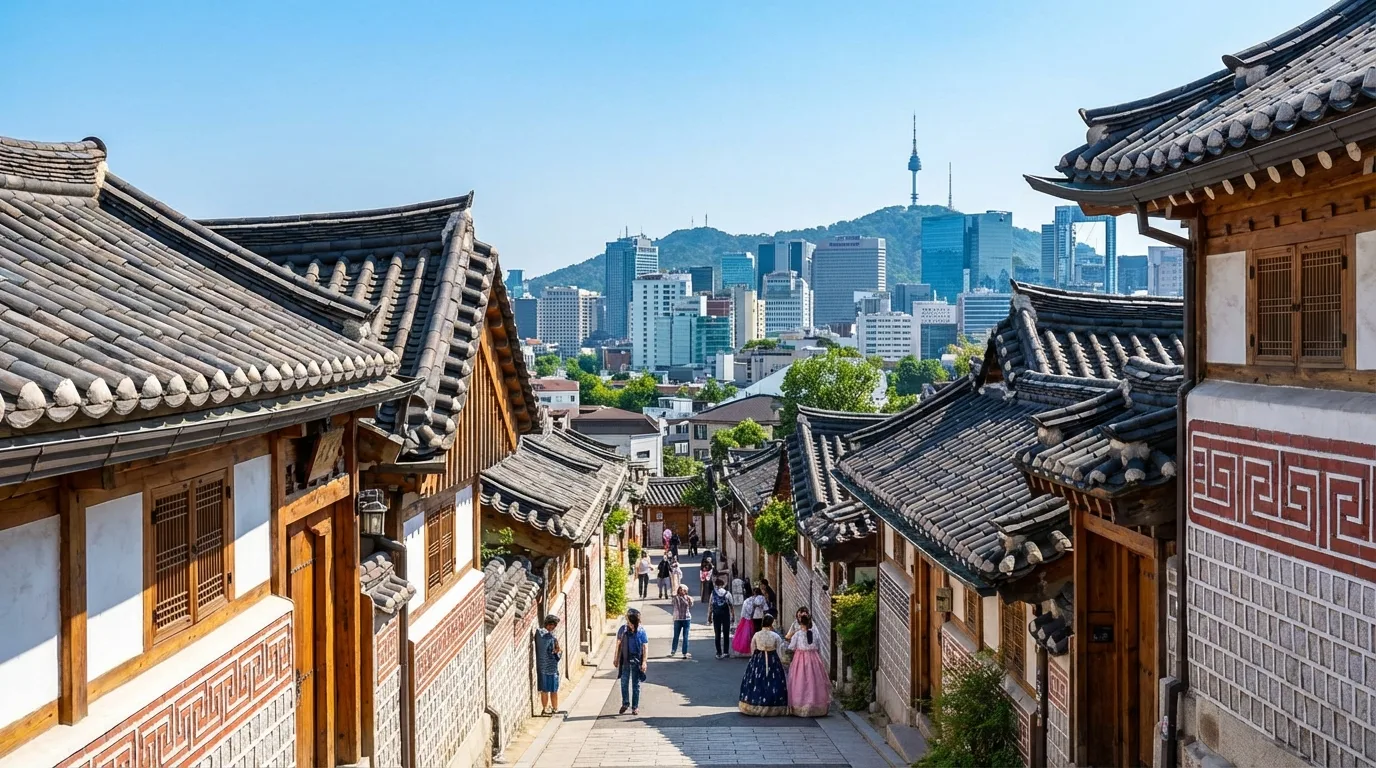
Bukchon is familiar, but as part of a Gyeongbokgung route it works best when you focus less on headline viewpoints and more on how rooflines, slope, and distant city background align in one frame. This makes it one of the stronger nearby alleys for visitors who want to show how traditional Seoul and the modern city sit inside the same view.
The challenge is visual density. Because the area is busy, editing the frame matters more than simply arriving at a famous overlook. Treated this way, Bukchon becomes less a single attraction and more a transition zone where palace heritage expands into a layered urban neighborhood.
The practical rule is to decide what the frame is about before raising the camera. If the roofline is the subject, keep the street floor quieter and leave extra sky or distant city texture above the eaves. If the slope is the subject, use the lane direction as a diagonal and let the person walk through the frame rather than stand squarely in the middle. When the area is crowded, detail shots of tiles, wall shadows, and side windows often preserve the Bukchon mood better than a wide shot full of visitors.
Tongui-dong and Nuha-dong Fit a Slower Nearby Alley Walk
Tongui-dong and Nuha-dong are less about recognition and more about pace. The visual pleasure comes from smaller elements such as windows, wall texture, planted edges, and low roof corners, which makes these alleys ideal when you want a softer nearby alley walk instead of a sightseeing highlight.
The right approach here is to slow down rather than chase a single famous backdrop. In these streets, continuity matters more than one perfect spot, and that continuity gives travel photos a calmer mood that is hard to get around busier palace-adjacent lanes.
This slower section is useful when the group has already taken the obvious palace and Bukchon photos. A 20-minute loop through smaller lanes can add quieter material: a hand on a low wall, a side profile beside a window, a detail crop of a tiled roof, or a walking shot where the person occupies only one third of the frame. Those images make the final set feel less repetitive than a sequence of front-facing landmark portraits.
Hanok Photo Spots Near Gyeongbokgung Work Better as One Route
The most useful way to think about hanok photo spots near Gyeongbokgung Palace is not as isolated pins on a map. What matters is the transition from the palace's formal symbolism into the softer grammar of nearby neighborhoods. Walls become lower, streets narrower, and the sense of heritage becomes less monumental and more atmospheric.
A strong route often starts with the palace's major axis, moves through Seochon-side lanes, brushes the edge of Bukchon, and ends in quieter residential passages like Tongui-dong or Nuha-dong. If you want to compare how these nearby alleys change with light, continue to Best Time to Photograph Gyeongbokgung — Light Guide.
Weather changes the order. After rain, polished stone and darker roof tiles look richer, so detail-heavy streets can move earlier in the route. On windy days, hanbok sleeves and hair move too much in open palace spaces, while narrower lanes give more protection. In peak tourist hours, start with Seochon or Tongui-dong first and return toward palace-adjacent views later, once the main gate area has thinned out.
Seochon-side lanes are the easiest starting point for clean wall and roofline frames near Gyeongbokgung Palace.
Hyoja-dong and the edge of Bukchon add more lived-in texture and stronger overlap between old and new Seoul.
Tongui-dong and Nuha-dong work best when treated as a slow sequence of quieter frames rather than one landmark stop.