EDITORIAL CHECK
Source and Review Basis
Gyeongbokgung guides are checked against official palace and Seoul tourism references for hours, closed days, admission conditions, hanbok entry, and route decisions that affect a real visit.
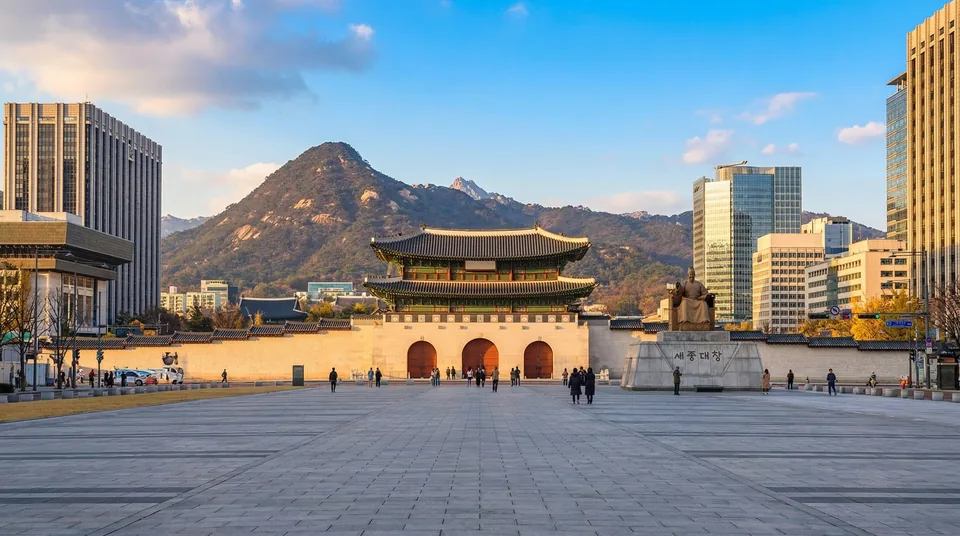
Planning a visit to Gyeongbokgung Palace requires logistical preparation. The palace covers 432,703 square meters, stretching from Gwanghwamun Gate in the south to Geoncheongung Residence in the north. This guide breaks down exact transit routes, the 3,000 KRW ticketing fees, hanbok free entry requirements, guard-changing schedules, and 60-minute versus 120-minute walking routes.
How to Get to Gyeongbokgung Palace?
- How to get there: Take Seoul Subway Line 3 to Gyeongbokgung Station, Exit 5. It offers a covered 3-minute walk directly into the palace grounds past the National Palace Museum. Alternatively, take Line 5 to Gwanghwamun Station, Exit 2, and walk 8 minutes north across Gwanghwamun Plaza.
- Recommended time to visit: 9:30 AM to catch the 10:00 AM guard change, or 3:00 PM when the afternoon sun illuminates the western ridges of Mount Inwangsan.
- Estimated duration: 1 to 2 hours for walking the palace grounds, plus 45 minutes if renting a hanbok.
- Crowding/Precautions: Expect peak crowds from 10:00 AM to 11:30 AM. Lockers at Gyeongbokgung Station fill up by 11:00 AM. Wear flat sneakers; the 1.5 km walking route involves uneven stone paving and packed dirt.
The palace opens daily at 9:00 AM. Closing times are 5:00 PM (Nov-Feb), 6:00 PM (Mar-May, Sep-Oct), and 6:30 PM (Jun-Aug). Final admission is exactly 1 hour before closing. Gyeongbokgung is closed every Tuesday. Standard adult admission (ages 19-64) is 3,000 KRW. Visitors under 6, ages 7-18, and 65+ enter free with a valid passport.
What is the Guard-Changing Ceremony Schedule?
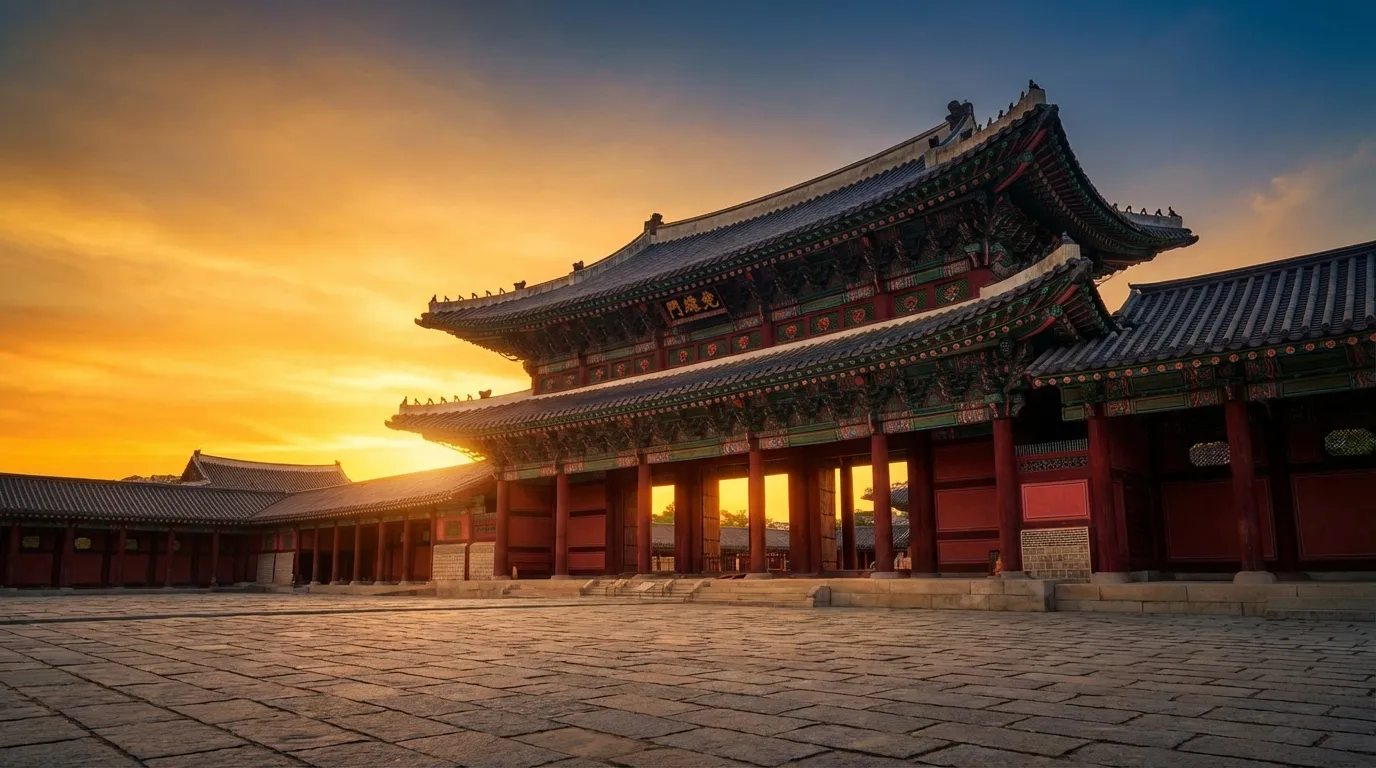
The Royal Guard-Changing Ceremony (Sumunjang) takes place at the Heungnyemun Gate courtyard twice daily at exactly 10:00 AM and 2:00 PM. It lasts 20 minutes. A shorter Gwanghwamun Gate Guard Duty ceremony occurs at 11:00 AM and 1:00 PM.
Arrive at the courtyard 15 minutes early. By 9:55 AM, crowds are 4 rows deep. Stand on the east side of the courtyard facing Gwanghwamun for an unobstructed 50-meter line of sight of the guards. Once the ceremony ends at 10:20 AM, hundreds of tourists rush the ticket gates. Wait 5 minutes by the Yeongjegyo stone bridge to let the queue clear.
— Hanbok Free Entry Regulations and Rental Prices
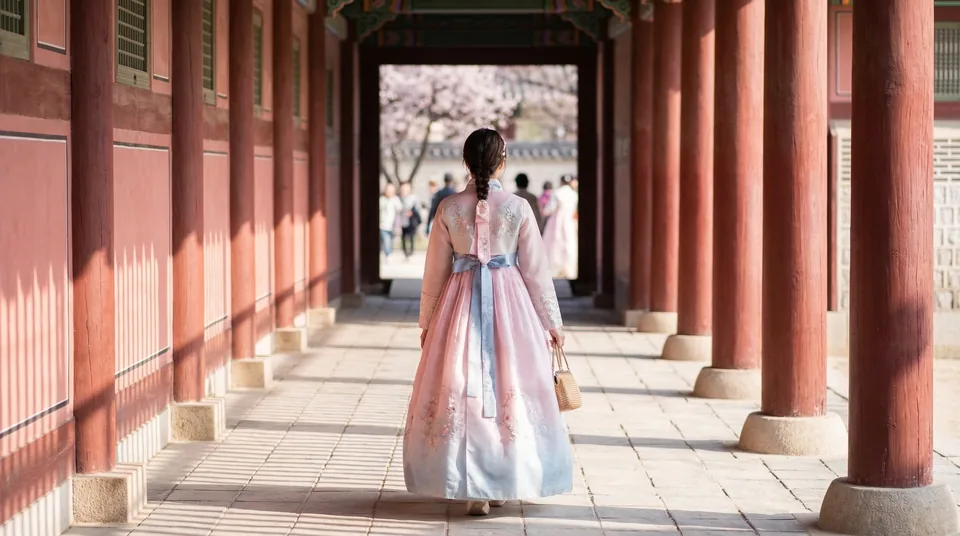
Wearing a traditional Korean hanbok grants 100% free admission and lets you bypass the 3,000 KRW ticket line. You must wear a complete two-piece set. Men need a jacket (jeogori) and pants (baji); women need a jacket (jeogori) and skirt (chima). Jeans paired with a hanbok top will be rejected by the gate staff.
Hanbok rental shops are clustered outside Gyeongbokgung Station Exits 3 and 4. A 2-hour basic rental costs 15,000 to 20,000 KRW. Premium designs with gold embroidery run 30,000 to 45,000 KRW. Fitting and hair styling take 30 to 45 minutes, so a 4-hour rental (typically 5,000 KRW extra) is recommended if you plan to walk the full 2-hour palace route.
Which Walking Route Should You Take?
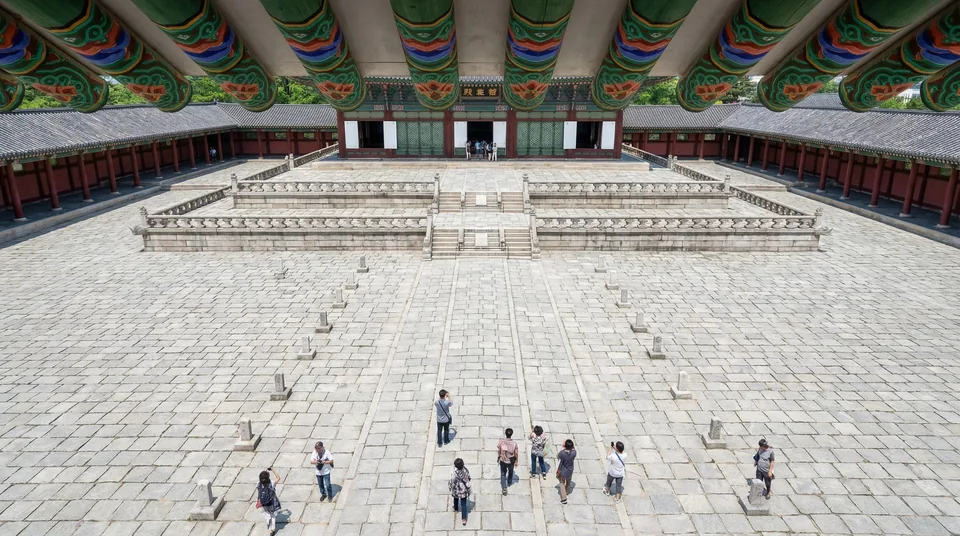
[The 60-Minute Essential Route]
- Stops: Gwanghwamun Gate → Heungnyemun Gate → Geunjeongjeon Throne Hall → Gyeonghoeru Pavilion → Exit West via Yeongchumun Gate.
- Details: This 1.2 km loop covers the double-tiered Geunjeongjeon courtyard and the 933-square-meter Gyeonghoeru pavilion pond. Exiting west deposits you directly into the Seochon neighborhood in 2 minutes.
[The 120-Minute In-Depth Route]
- Stops: Gwanghwamun Gate → Geunjeongjeon → Gyotaejeon (Amisan Chimneys) → Gyeonghoeru Pavilion → Jagyeongjeon → Hyangwonjeong Pavilion → Exit North via Sinmumun.
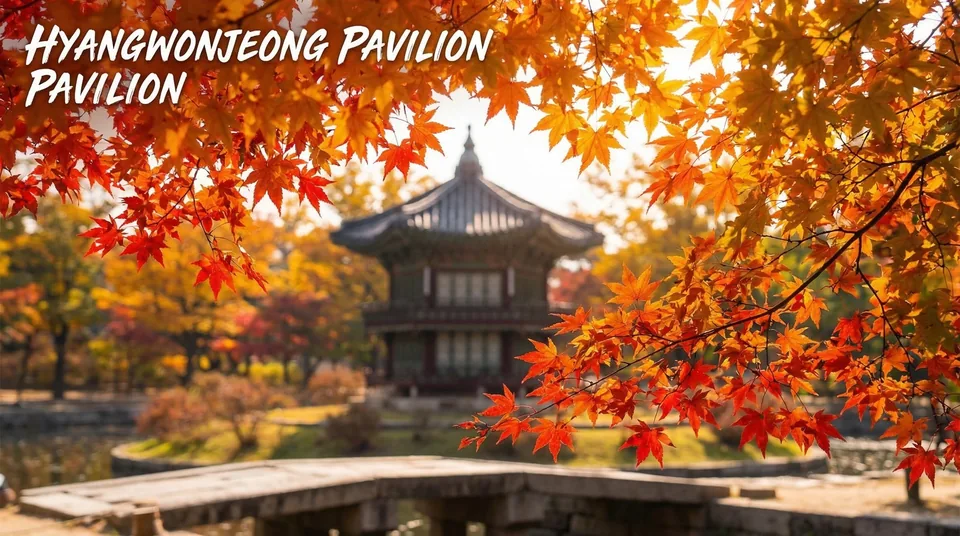
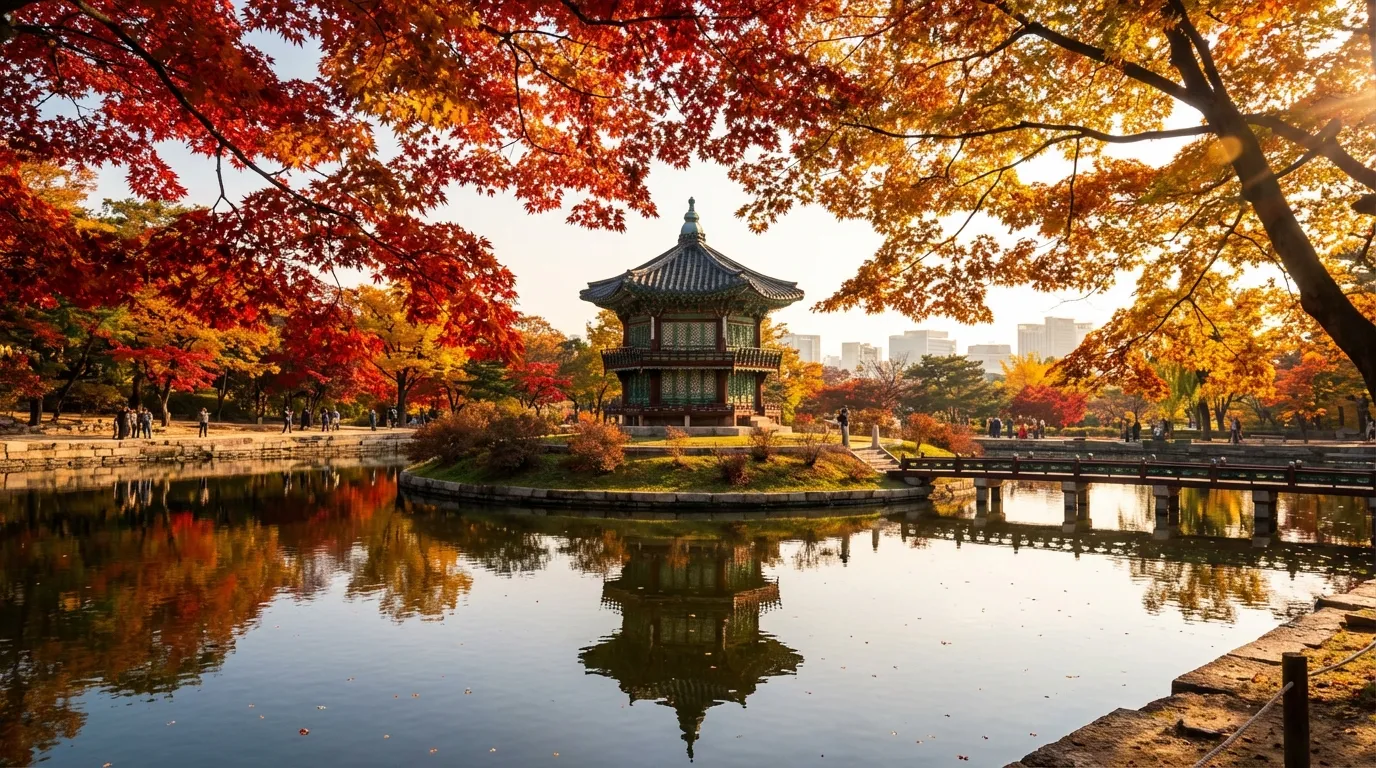
- Details: This 2.5 km path pushes 800 meters north past the main halls. The highlight is Hyangwonjeong, a hexagonal pavilion on a 4,600-square-meter lotus pond. Exit north to reach the Blue House (Cheong Wa Dae) in a 1-minute walk.
For specific camera angles, see our Best Photo Spots in Gyeongbokgung — Hanbok Route Guide. For seasonal light analysis, read the Best Time to Photograph Gyeongbokgung — Light Guide.
Where Are the Best Photo Angles?
- Geunjeongjeon Cloisters: Stand in the wooden corridors on the east or west sides. The repeating 3-meter red pillars block the 500+ tourists in the main plaza.
- Gyeonghoeru Reflections: At 10:30 AM, shoot from the southeast corner of the pond. By 3:00 PM, the sun drops behind Inwangsan, casting a 100-meter shadow over the pavilion and ruining water reflections.
- Hyangwonjeong Bridge: Frame your shot with the drooping willow branches on the southern bank to create depth. The wooden bridge is 32 meters long and holds a maximum of 20 people.
Critical Rules to Remember
- No Re-Entry: Leaving the gates to buy a 5,000 KRW coffee in Bukchon voids your ticket. You must buy a new 3,000 KRW pass to return.
- No Food: Convenience stores are banned inside. Bring a 500ml water bottle, as the only cafe is a 15-minute walk from the north end.
- No Tripods on Wood: Park rangers actively enforce a ban on placing metal tripod legs on the wooden verandas. Flash photography inside is prohibited to protect the 600-year-old pigments.
- Tuesday Closures: Gyeongbokgung and Jongmyo are closed Tuesdays. Changdeokgung, Changgyeonggung, and Deoksugung are closed Mondays.
Use Subway Line 3, Exit 5. Admission is 3,000 KRW, or free with a complete two-piece hanbok.
The guard change happens at 10:00 AM and 2:00 PM. Arrive by 9:45 AM for a clear view.
Walking to the northern Hyangwonjeong pond requires a 2.5 km, 120-minute route. Wear flat sneakers.