Anyone searching for a Myeongdong travel guide wants to know exactly where to walk and what time to show up. This guide strips away the vague advice. You will find exact subway exits, the exact time the food carts roll in, and precise prices for street snacks.
Where to Start: The 15-Minute Main Street Walk
- How to get there: Myeongdong Station (Line 4), Exit 6 or 8.
- Recommended time to visit: 3:30 PM for shopping, 6:00 PM for food and night views.
- Estimated duration: 2 to 3 hours.
- Crowding/Precautions: Keep your bag close. The main street gets shoulder-to-shoulder by 7:00 PM on weekends. Bring around 30,000 KRW in cash for street food.
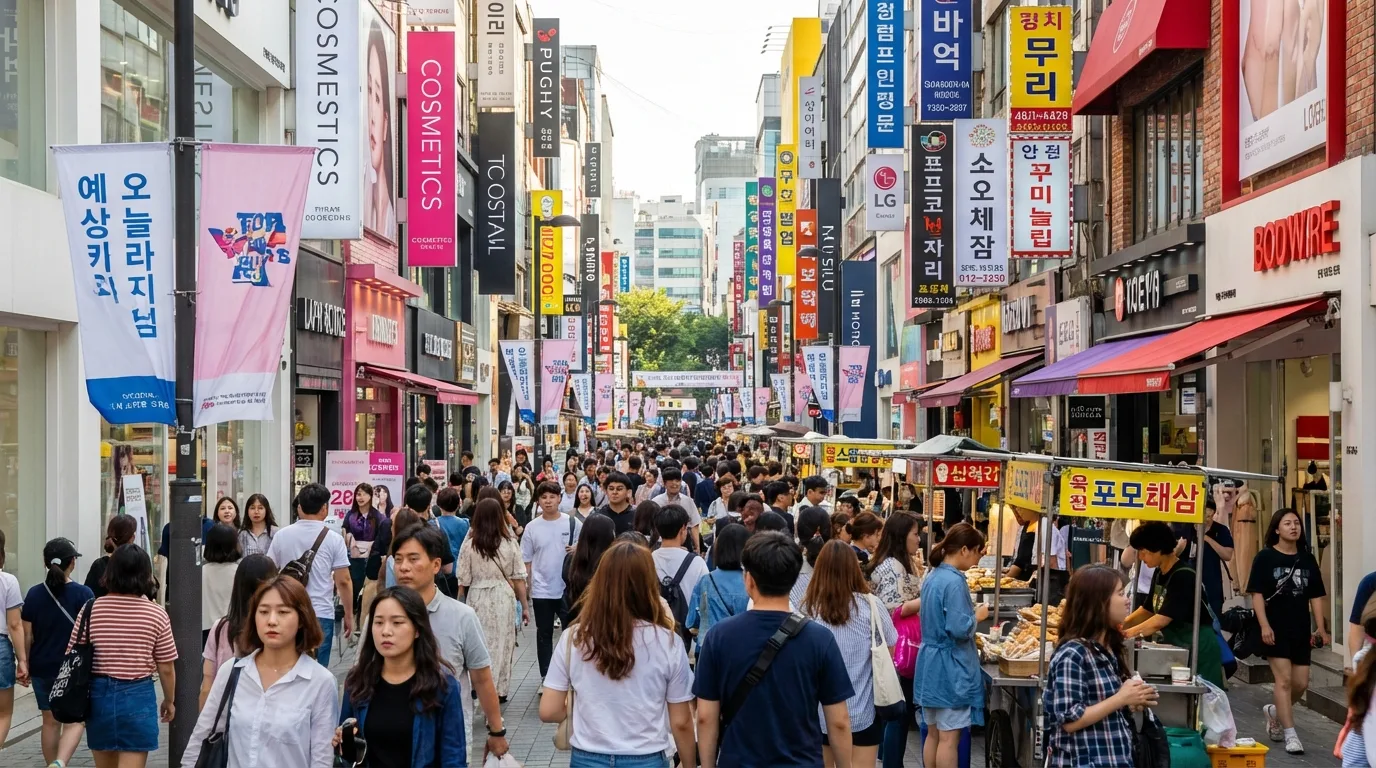
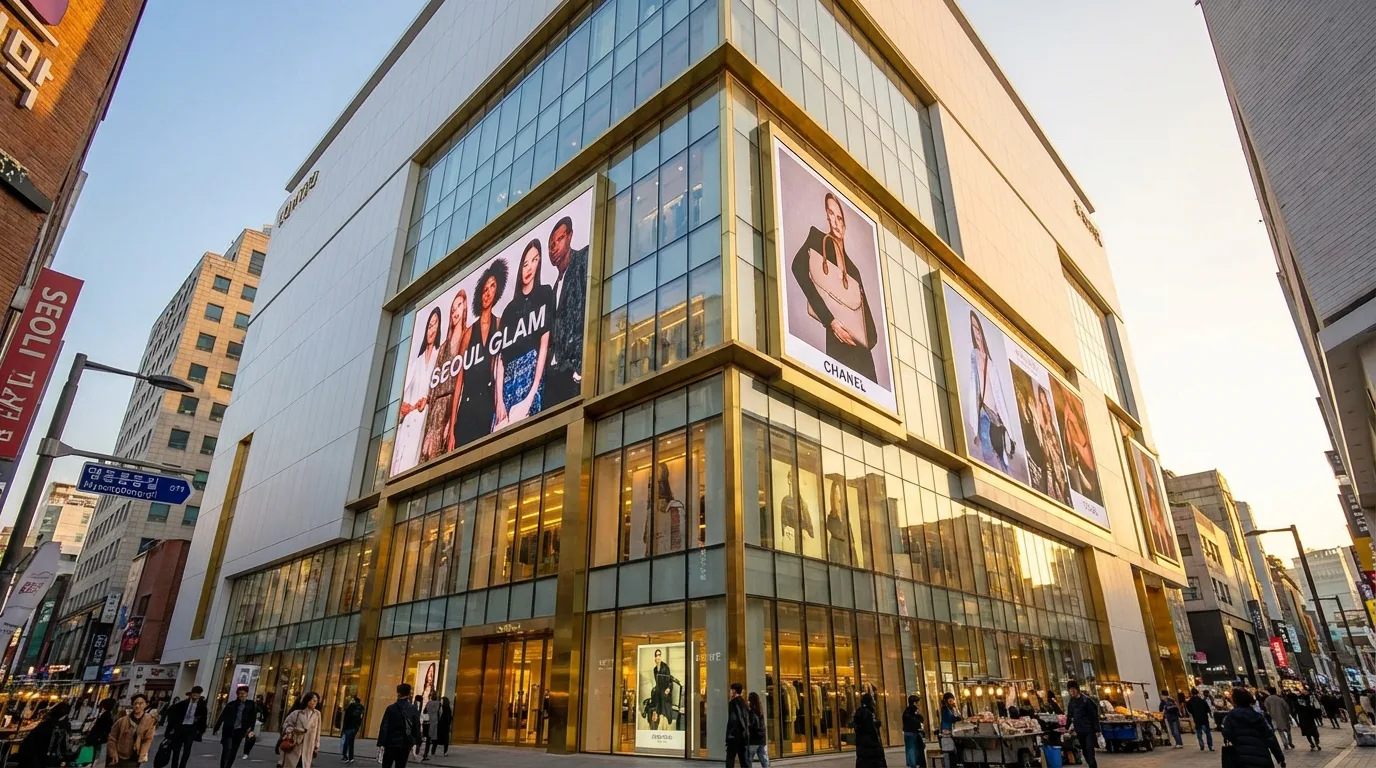
Step out of Myeongdong Station (Line 4) at Exit 6. You are immediately on the main pedestrian artery. If you walk straight down without stopping, it takes exactly 10 to 12 minutes to reach the end near Euljiro 1-ga Station. But you will stop. The blocks are short, packing over 50 cosmetic stores and clothing flagships into a 600-meter stretch.
If you arrive at 2:00 PM, the street is relatively clear. Delivery trucks are finishing their routes, and store employees are stocking shelves. By 3:30 PM, the walkways fill with tourists carrying multiple shopping bags.
Why Myeongdong Retail Works So Fast
Myeongdong packs over 100 retail spaces into a 0.5 square kilometer grid. Unlike sprawling neighborhoods, you can check prices at three different shoe stores in under 8 minutes. At 3 PM, the sunlight hits the tile storefronts perfectly, making the displays gleam and illuminating the 50% off signs in the windows. It’s built for volume and speed.
The Best Time for Street Food is 5:30 PM
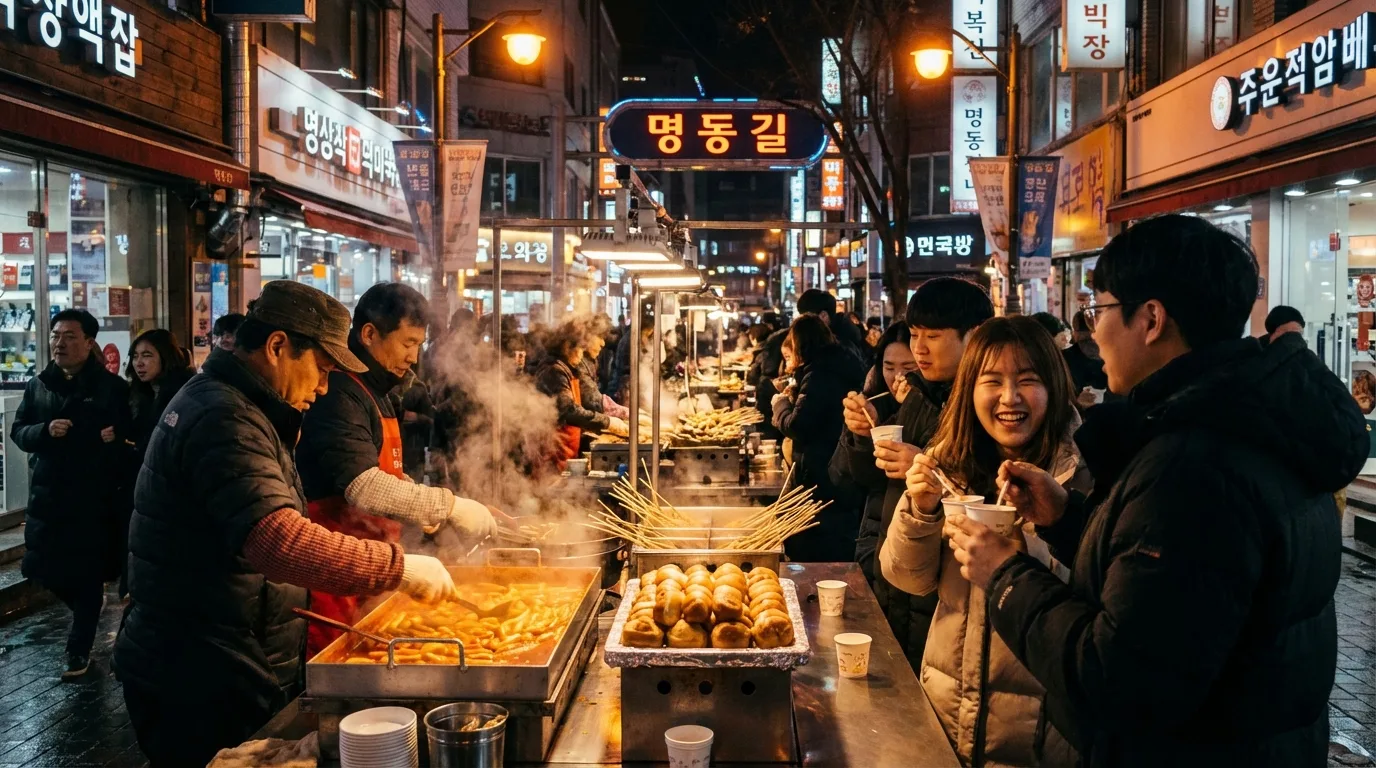
Exactly around 4:00 PM, the food carts begin rolling out of the side alleys and taking their assigned spots down the center of the main road. The street transforms from a 10-meter wide path into two 3-meter wide lanes.
If you want hot, fresh street food without waiting in 20-minute lines, show up between 5:00 PM and 5:30 PM. Prices typically range from 4,000 KRW for a basic hotteok (sweet pancake) to 15,000 KRW for grilled lobster tails with cheese. You will find tornado potatoes for 5,000 KRW, towering 30cm soft serve ice cream, and spicy tteokbokki. Grab a skewer, stand off to the side so you don't block traffic, and eat. Trash bins are rare; hand your empty skewers back to the vendor you bought them from.
K-Beauty Shopping Strategies: 3 Blocks of Repetition
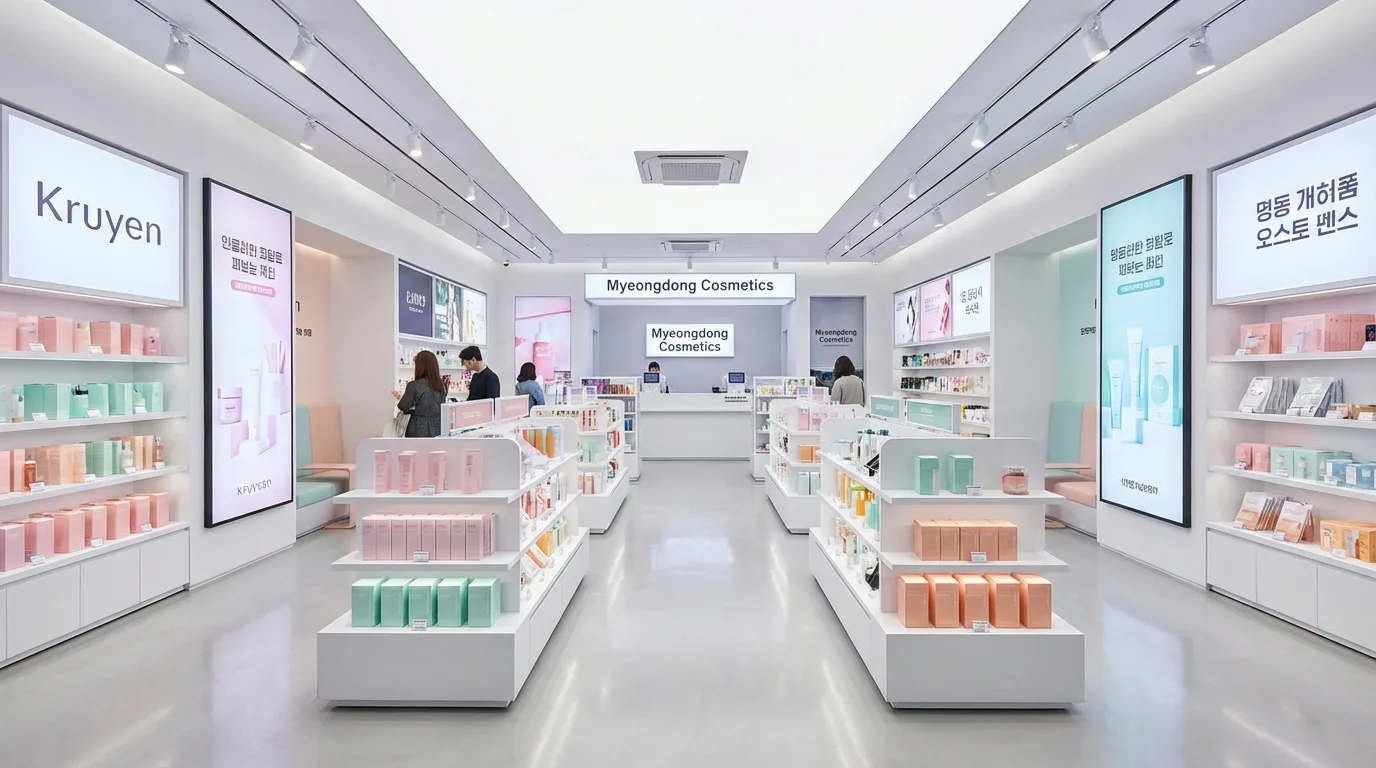
Myeongdong is dense. You will pass three different Olive Young branches within a 5-minute walk. The flagship store near the center has two floors and carries over 200 brands, but the checkout line can easily take 25 minutes on a Saturday afternoon. If you only need a specific sunscreen or sheet mask, walk 150 meters further down to one of the smaller branches where you can pay and leave in 3 minutes.
Cosmetics stores cluster aggressively. Stand at the intersection near the Myeongdong Theater, and you will see innisfree, Laneige, and Nature Republic within 50 meters of each other.
How Dense Does the Weekend Crowd Get?
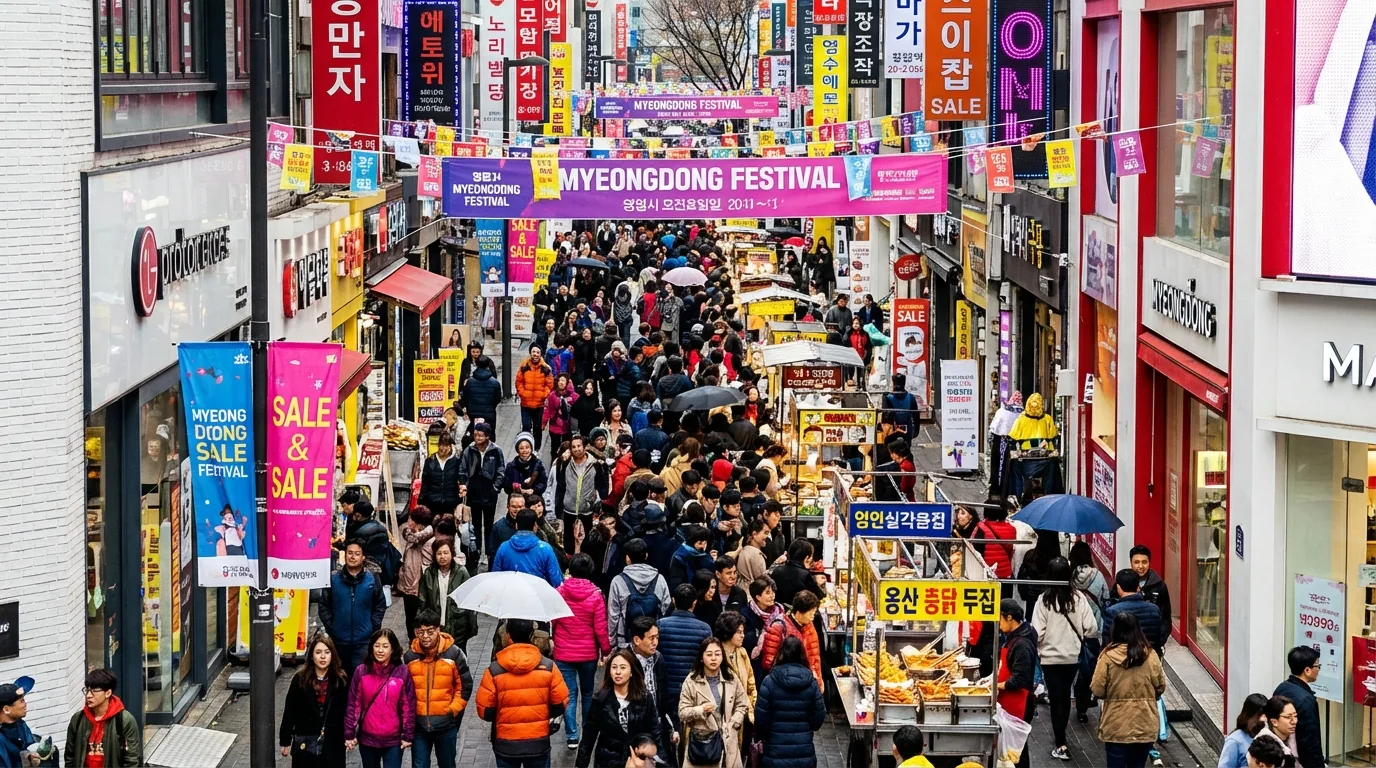
By 7:00 PM on a Saturday, foot traffic drops to a speed of 1 kilometer per hour. The space between people shrinks to a few inches. If you need to cross the main street laterally to reach a store on the other side, it will take you a full 2 minutes just to weave through the eating and walking crowds. It is loud, with overlapping pop music blasting from store speakers competing with the sizzle of grills.
What happens after 8:00 PM?
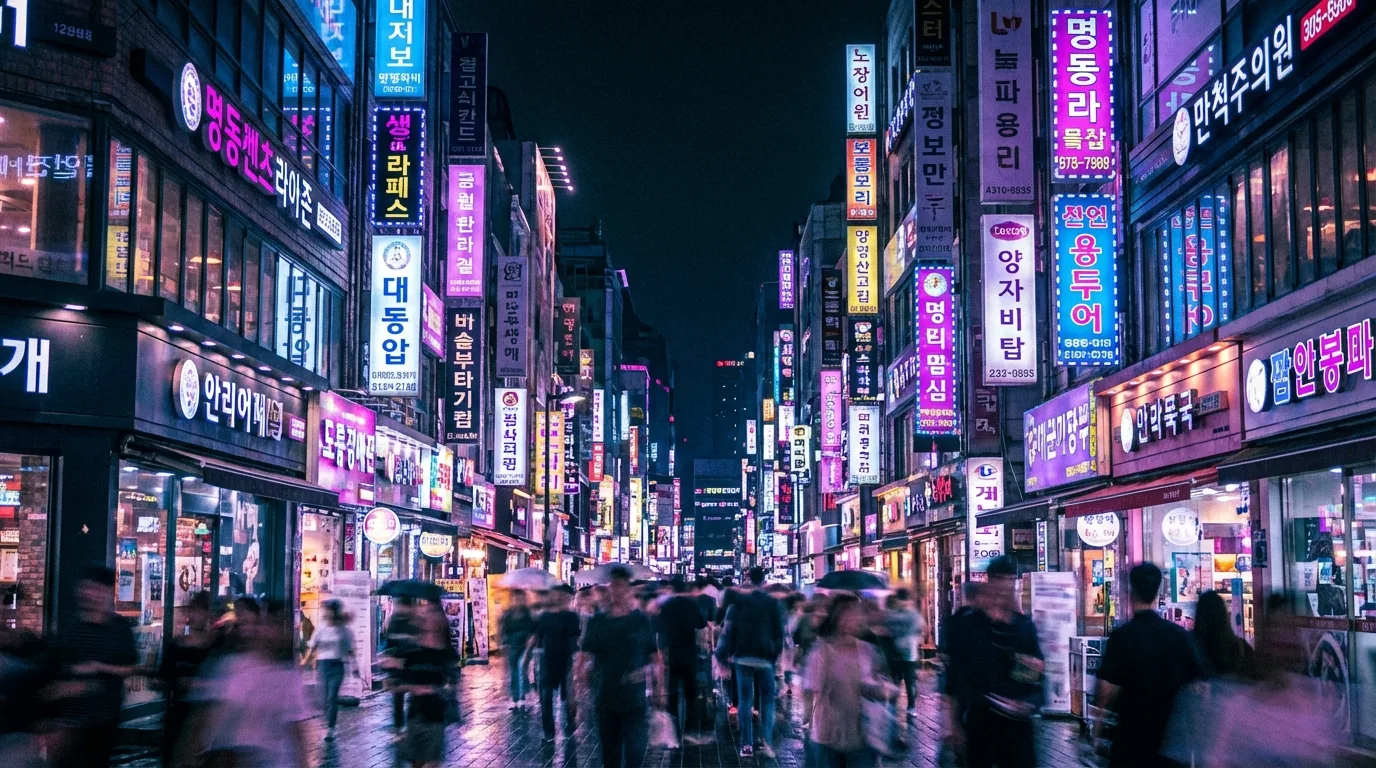
By 8:00 PM, the LED signs and neon banners dominate the visual space. The street food smoke mixes with the glowing red and white signs of the 4-story cosmetics flagships. This is when the area hits maximum density. If you are taking photos, set your camera to capture the layered neon signs above the heads of the crowd. The food vendors start packing up around 11:00 PM, and by midnight, the streets return to a quiet grid of closed shutters.
Start at Myeongdong Station Exit 6 for the most direct 600-meter walk through the main shopping artery.
Arrive at 3:30 PM for relaxed shopping, and stick around until 5:30 PM when the 4,000 to 15,000 KRW street food carts are fully set up.
Skip the 25-minute checkout lines at the main Olive Young flagship and use the smaller branches located every 150 meters for quick purchases.