EDITORIAL CHECK
Source and Review Basis
Base-makeup guides prioritize label reading, sun protection, and failure signals by skin condition rather than product claims. Ingredient and function wording is checked against cosmetic-label and dermatology references.
Most people searching for K-beauty base makeup tips are trying to solve the same problem from different angles. They want smoother skin that still looks natural, longer wear without obvious cracking, and a clearer way to choose between cushion foundation, dewy base makeup, and more controlled finishes. This hub explains the structure behind a stable K-beauty base so the later product choices make more sense.
Skin prep checks before a longer-lasting base
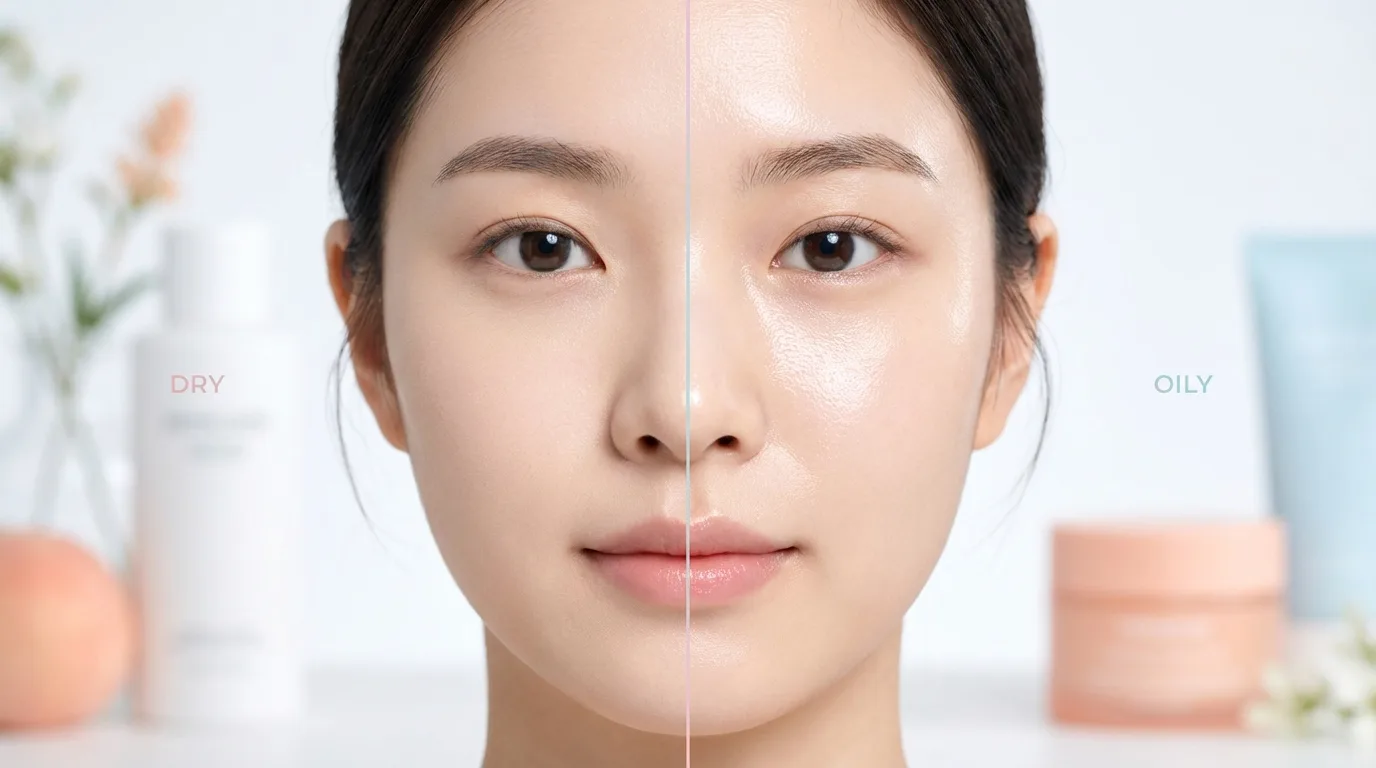
- Skin type first: dry skin typically struggles with lifting and cracking, while oily skin typically struggles with movement and shine.
- Finish goal next: dewy base makeup and semi-matte skin need different prep and different layer weight.
- Product count control: stacking primer, cushion foundation, concealer, and powder too heavily can weaken base adhesion instead of improving it.
- Wear test focus: the useful check is not the first ten minutes, but how the nose, chin, and under-eye area look several hours later.
- Prep timing: give skincare 5 to 10 minutes to settle before judging whether the surface is ready for base.
- Layer target: start with less than one full cushion puff load for the whole face, then add only where redness or uneven tone still shows.
Base makeup frequently breaks down because the skin prep and the layer weight are mismatched, not because one single product failed. Trying to force glow onto an oily day or forcing oil control onto already dry skin typically looks fine at first and worse by midday.
That is why the best K-beauty base makeup tips start with reading how your makeup actually wears, not with copying a fixed routine.
The easiest prep check is touch, not shine. If the skin feels slippery, wait longer or blot lightly before base. If the skin feels tight or rough, add comfort before trying to cover the texture. Hydrating ingredients such as glycerin, hyaluronic acid, and panthenol can make prep feel smoother, but they still need the right amount. Too much humectant under makeup can stay tacky; too little leaves the base catching on dry patches.
Thin K-beauty base layers and why they hold cleaner
K-beauty base makeup tends to work best when coverage is built in smaller layers instead of one dense coat. That gives you more control over texture smoothing, glow level, and local correction without making the whole face feel heavy. Cushion foundation especially fits this method because it is easy to tap on in light rounds rather than pushing one thick layer across the skin.
This matters because skin does not stay identical all day. Makeup that looks polished in the morning can crack near the nose later or shift along the jaw once friction builds. Thinner layers make touch-ups easier because you can correct one area without restarting the entire base.
A practical layering rule is to build the center of the face first and leave the outer face lighter. The nose, inner cheeks, and chin frequently need more correction, while the forehead edge, jawline, and hairline look more natural with less product. When the outer face is too covered, the base can look mask-like even if the formula itself is good.
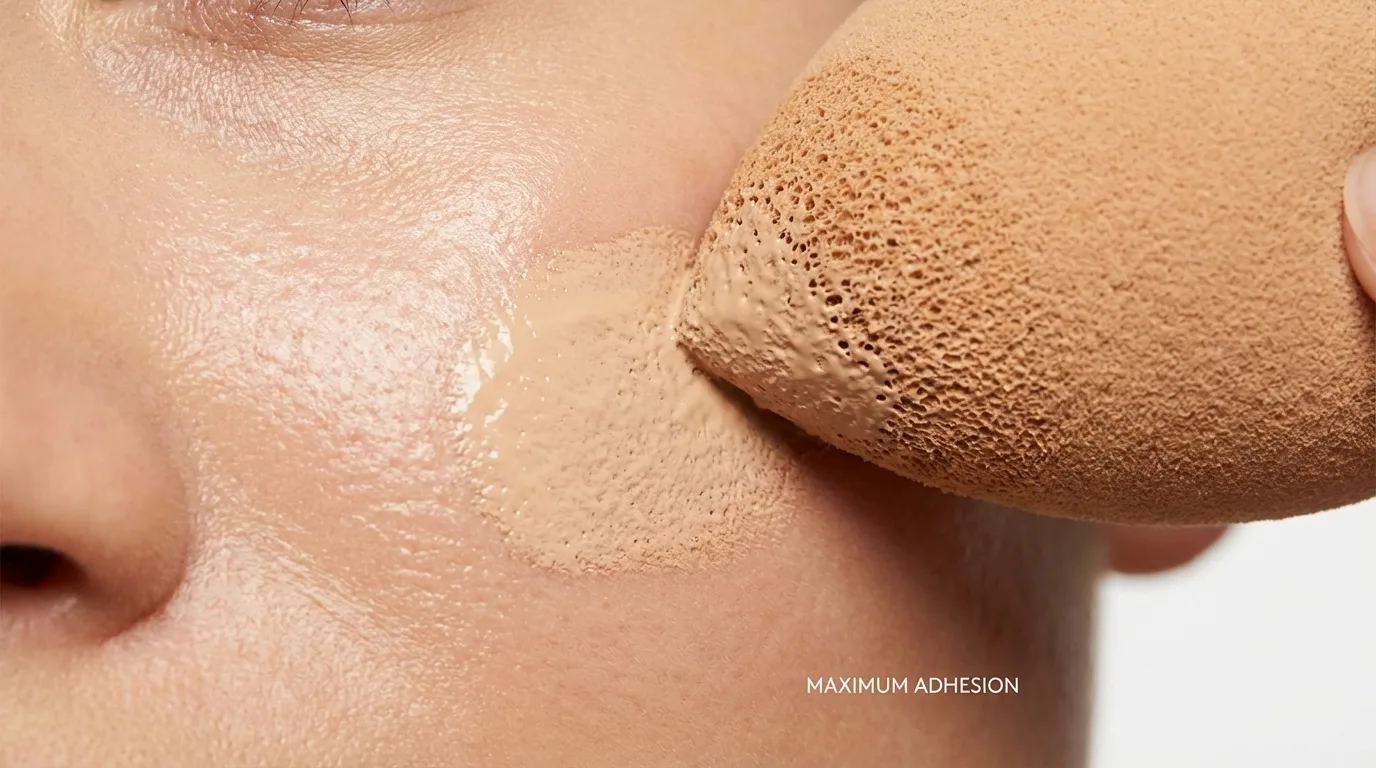
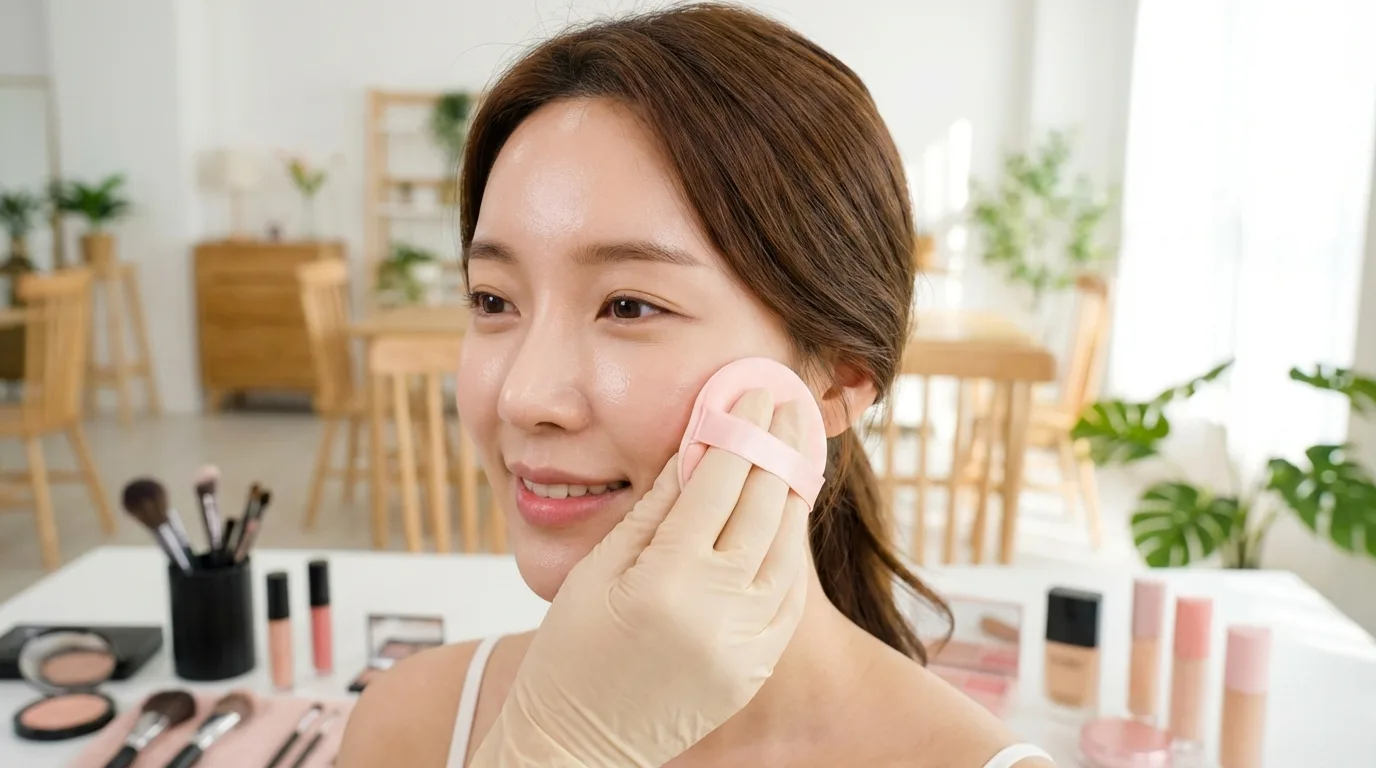
Pressing also changes the finish. After tapping cushion or foundation, use the clean side of the puff or sponge to press the surface for 10 to 20 seconds. That step removes excess movement and shows which areas actually need more product. It is more reliable than adding powder before the base has settled.
Cushion foundation and liquid foundation serve different jobs
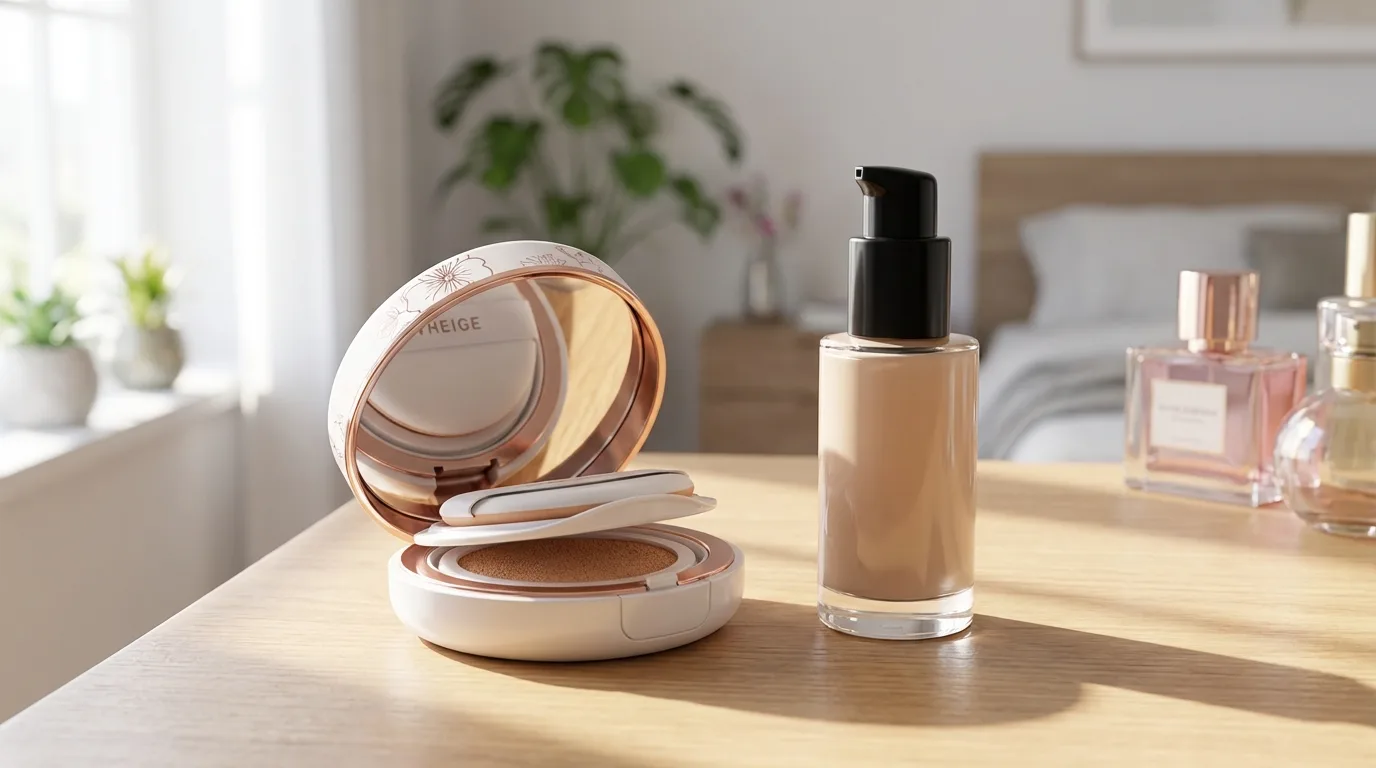
Cushion foundation typically makes more sense when speed, easy touch-ups, and dewy base makeup are the main goals. Liquid foundation frequently makes more sense when you want tighter control over coverage, finish, and placement. Neither one is automatically better. The better choice depends on how your skin behaves and how precise you want the final surface to feel.
The product-choice side is narrowed down in How to Choose a Cushion Foundation by Skin Type. This hub stays focused on the larger structure first so the later sub-guides can be more specific.
Cushions are strongest when the routine needs portability, light correction, and a finish that can be refreshed without tools. Liquid foundation gives more control when the face needs different amounts of coverage in different zones. If you use liquid, a half-pump can be enough for the first layer on many daily looks; the rest should come from targeted concealer, not from spreading a second full layer everywhere.
Texture ingredients also affect the choice. Dimethicone and other silicone-based textures can help slip and smoothing when used in a thin layer. Silica or oil-absorbing powders can calm shine, but too much can make dry zones look papery. Niacinamide in prep products may help oil-balance routines, but it does not replace good layer control.
Dewy base makeup with controlled wear
Dewy base makeup does not require every step to stay glossy. In practice, longer wear typically comes from dividing the face by need. The cheeks and upper face can keep more light, while the sides of the nose and chin frequently need a lighter, more settled finish. That balance gives you a glow impression without turning the whole base slippery.
Glow and longevity typically start fighting when the surface gets too mobile, not because glow itself is the problem. When the surface keeps sliding, adhesion drops and touch-ups become messy. When hydration stays inside a thin structure, the skin can still look fresh without losing control.
If you want a finish that leans softer and less reflective, Semi-Matte Base Makeup Guide for Balanced Soft Skin is the next practical branch from this hub.
The most useful split is by zone. Keep controlled radiance on the upper cheeks or high points where light reads as healthy skin. Keep the sides of the nose, upper lip, and chin quieter because those areas move, crease, and collect oil faster. This is why a face can still look dewy even when the T-zone is not glossy.
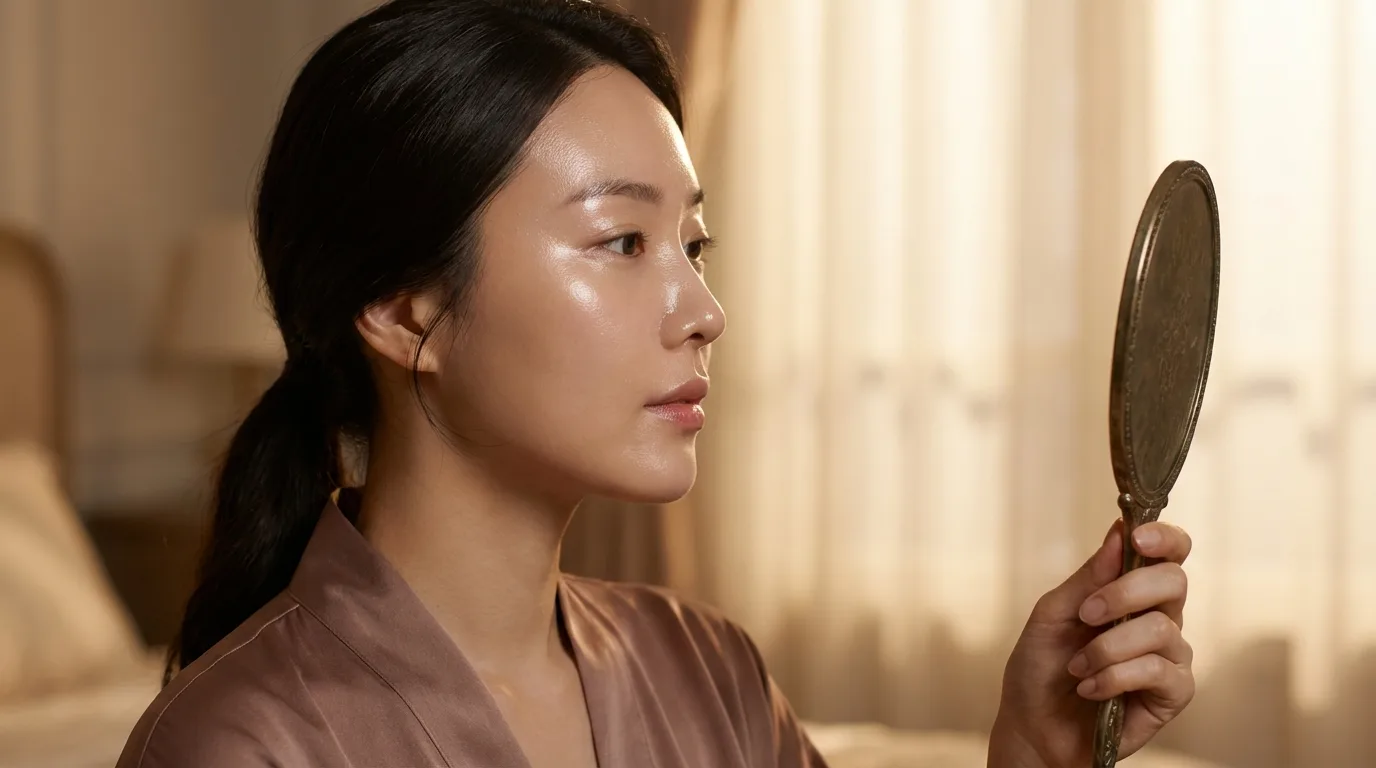
For photo days, check the base under both window light and bathroom light before leaving. If the cheeks look fresh but the nose already looks wet, the finish is not dewy in a controlled way; it is already moving. Blot first, then press a thin correction layer only where the surface has opened.
Pressing and settling change base longevity the most
The step that changes longevity the most is frequently the brief pressing stage between application and finish. If skincare is still moving on the skin, base products can slip. If the base is spread but never pressed back into place, the surface stays more mobile than it looks. A light pressing pass with a puff or sponge frequently does more for wear time than adding another heavy setting layer.
It also helps to stop fixing every area the same way. Oily zones typically need light control, while dry zones need less powder and less friction. If heat and humidity are part of the problem, Long-Lasting Summer Makeup Guide for Heat and Oil covers that seasonal branch in more detail.
For longer wear, treat powder as placement rather than a blanket. A small amount near the nostrils, under the lower lip, and on the center of the chin can be enough on many faces. Under the eyes, powder should be minimal because too much can make concealer look dry and older than the rest of the base.
Touch-ups should start with removal. Blot oil or sweat first, wait a few seconds, then tap a tiny amount of cushion or concealer only where the base has separated. Adding fresh product onto oil is one of the fastest ways to make a K-beauty base look thick by afternoon.
The main rule behind K-beauty base makeup tips
Good base makeup is less about maximum coverage than about whether the skin still looks organized hours later. That is why the most reliable K-beauty base makeup tips come back to the same structure: choose textures by skin behavior, keep the layers thin, and adjust only where the face actually needs control.
If you want the skincare side of the prep to feel clearer first, Complete Korean Skincare Routine Guide for Clear Skin pairs naturally with this hub. Base makeup sits on top of skin condition, so steadier prep typically makes makeup results easier to predict.
The base is working when it still looks like skin after 3 to 5 hours. Some shine is normal. A small amount of fading is normal. The warning signs are patchy nostril edges, thick chin buildup, cracking around smile lines, and a forehead that looks coated rather than softly even. Those signs tell you more than the finish name on the product.
The best K-beauty base makeup tips begin with reading skin type and wear pattern before choosing finish or coverage level.
Cushion foundation typically favors speed and glow, while liquid foundation typically gives more detailed control over adhesion and finish.
Longer wear typically comes from thinner layers and targeted pressing, not from making every part of the face heavier.