EDITORIAL CHECK
Source and Review Basis
Base-makeup guides prioritize label reading, sun protection, and failure signals by skin condition rather than product claims. Ingredient and function wording is checked against cosmetic-label and dermatology references.
People looking for a long-lasting summer makeup guide typically want sweat-proof makeup, but the real problem is frequently that heavier fixing makes the base break down in a messier way later. If you do not separate oil control, setting spray balance, and touch-up strategy, makeup can look polished in the morning and collapse around the nose, chin, and under-eye area by midday. This guide explains what actually helps summer makeup last longer and what tends to make it heavier without making it better.
First adjustments for long-lasting summer makeup
- Keep skincare and base layers lighter before trying to lock everything down.
- Stop treating oily zones and drier zones like they need the same amount of fixing.
- Focus oil control on the areas that move first instead of powdering the entire face heavily.
- Sweat-proof makeup is more stable when the base starts thinner, not thicker.
- Settling time: give skincare 5 to 10 minutes before base so sunscreen or moisturizer is not still sliding.
- Checkpoint: judge the base after 3 to 4 hours around the nostrils, upper lip, chin, and lower eyelids.
Summer makeup breaks down less because of one bad product and more because the surface keeps moving. When skincare, glow, and fixing steps all stay heavy at once, the layers can separate once heat, oil, and sweat build up. That is why real wear typically improves when the surface feels lighter and easier to manage from the beginning.
If you want the wider structure behind that before focusing on heat-specific wear, start with K-Beauty Base Makeup Tips for Smooth Skin That Lasts. This article narrows the discussion to summer longevity specifically.
The first adjustment should happen before foundation. A rich cream, glossy sunscreen, and glow primer can all be good products separately, but together they can leave the base with nowhere to grip. In summer, a lighter gel moisturizer, a sunscreen that sets cleanly, and a small amount of primer only where needed frequently create a more stable surface than a full heavy prep routine.
Why heavier fixing fails in sweat-proof makeup
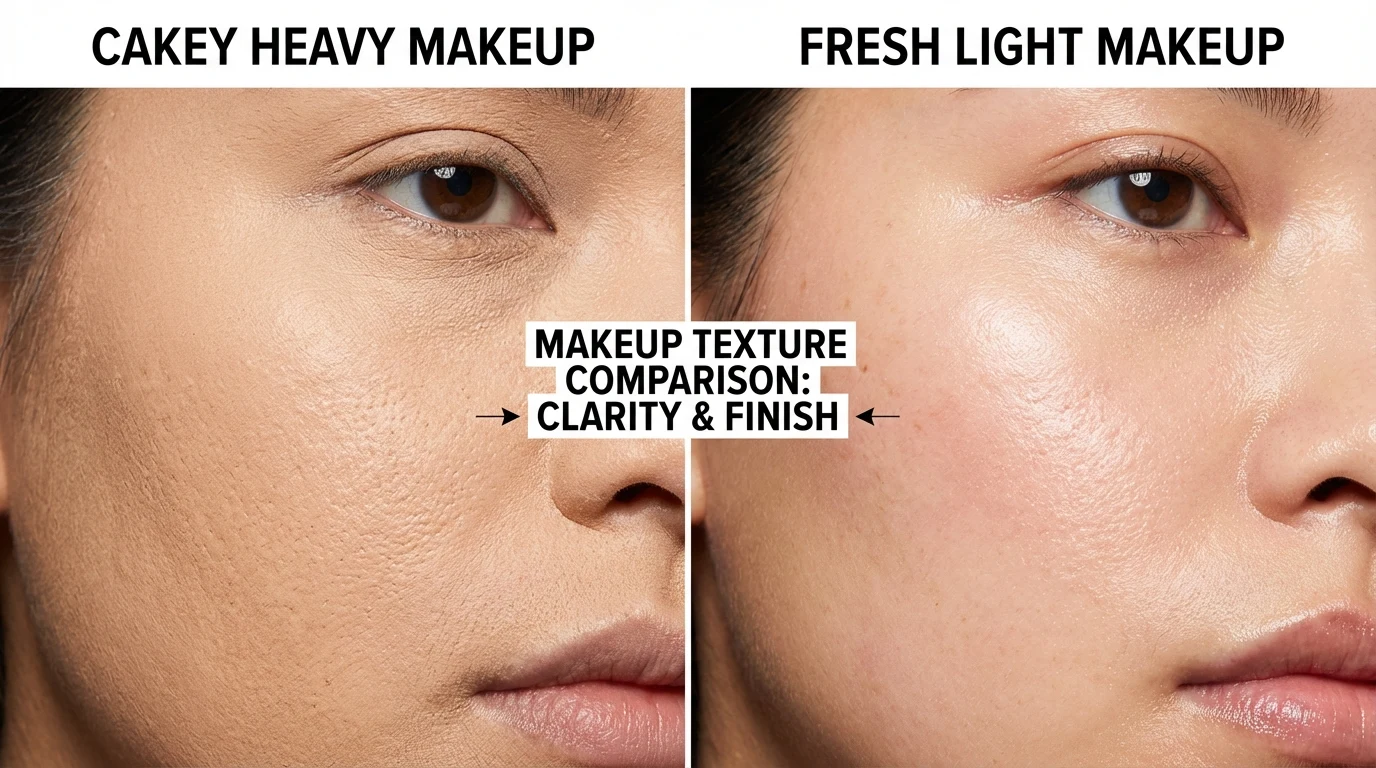
Many people assume summer makeup lasts longer if every layer is made heavier and more sealed. In practice, thicker coverage frequently cracks and shifts faster once sweat starts pushing through. Areas like the sides of the nose, the upper lip, and the chin typically reveal this first because they combine movement with oil and heat.
That is why sweat-proof makeup frequently performs better when the base is thinner. Even if the coverage is a little softer at the start, the face typically looks cleaner later. This also connects naturally to Semi-Matte Base Makeup Guide for Balanced Soft Skin, since calmer surface movement is frequently more useful than maximum glow in hot weather.
Ingredient and texture choices matter here. Dimethicone can help a thin base spread more evenly, while silica or other oil-absorbing powders can reduce shine when they are used lightly. Niacinamide in skincare may support oil-balance routines over time, but it will not save a base that is applied too thickly. If the base already feels heavy before powder, the fixing stage is starting from the wrong place.
For a practical first layer, use less product than you would in winter. Apply the main base through the center of the face, press it in, and leave the outer cheeks and jawline thinner. The summer version should still look like skin after a few hours, not like a perfect morning layer trapped under sweat.
Where setting spray makes the biggest difference
Setting spray is strongest as a final surface-balancing step, not as a rescue for a heavy base underneath. If the prep and base layers are already overloaded, more spray does not automatically create better wear. The cleanest result comes when the makeup is already thin and settled first.
The useful variable is typically not how much spray you use, but how lightly and evenly it lands. If the face becomes too wet again, the surface can start moving all over. A lighter pass that dries down cleanly frequently does more for long-lasting summer makeup than over-saturating the skin.
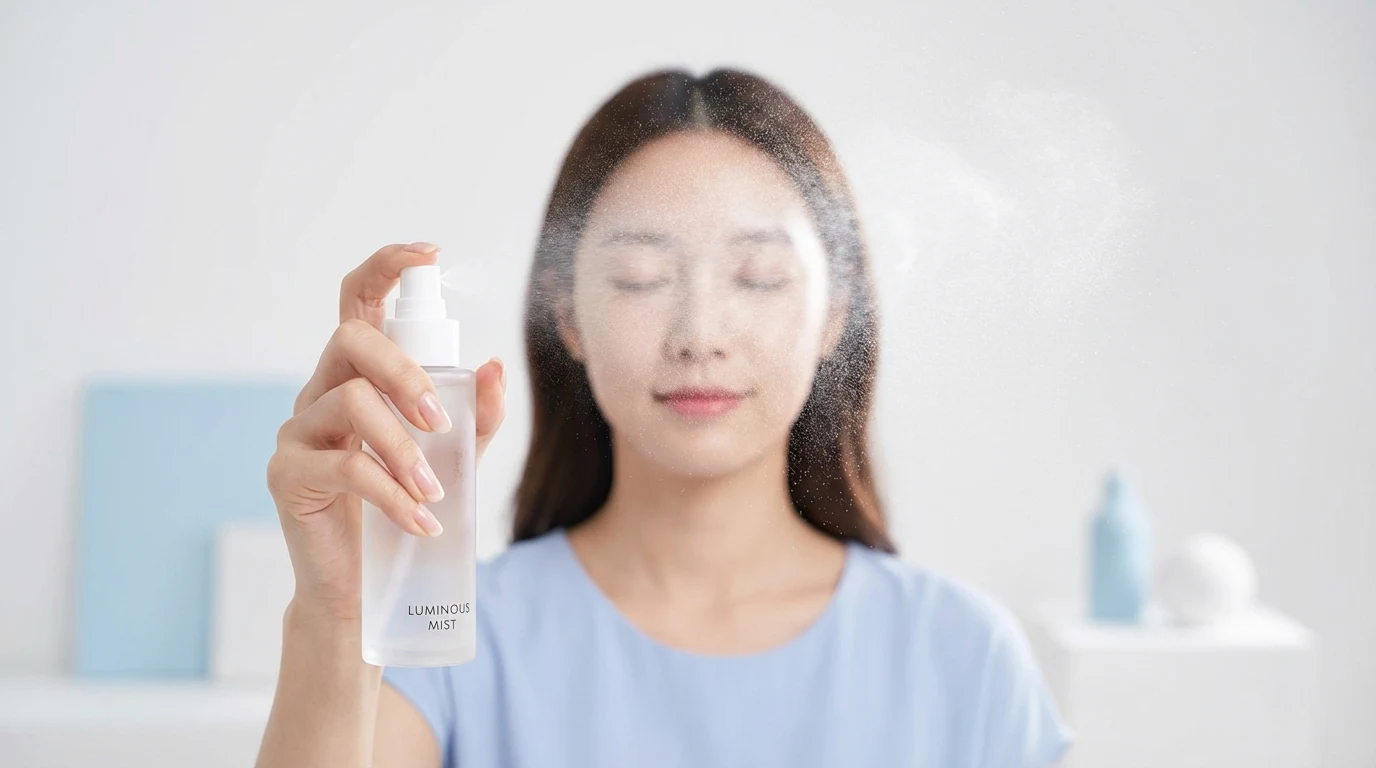
Hold the bottle far enough away that the mist lands evenly rather than in wet spots. After spraying, give it 30 to 60 seconds before touching the face. If you immediately press powder or cushion into a still-wet surface, the base can lift in small patches. Setting spray is strongest when it finishes a thin structure, not when it turns the face damp again.
There is also a difference between setting spray and facial mist. A hydrating mist can feel refreshing, but it may soften the base and restart movement if used repeatedly through the day. For summer makeup, the better habit is to blot first, then decide whether the surface needs a tiny correction or only a cooling pause.
Oil control and touch-ups in summer
Oil control is typically cleaner when you remove before you reapply. If shine shows up and you immediately add more cushion, powder, or coverage, the surface can get thicker and more uneven. It typically looks better when excess oil is reduced first and only the parts that truly need help are corrected afterward.
This matters because touch-ups are where summer makeup frequently becomes messy. The goal is not to rebuild the whole face in the afternoon. It is to keep the faster-breaking zones readable and easier to reset.
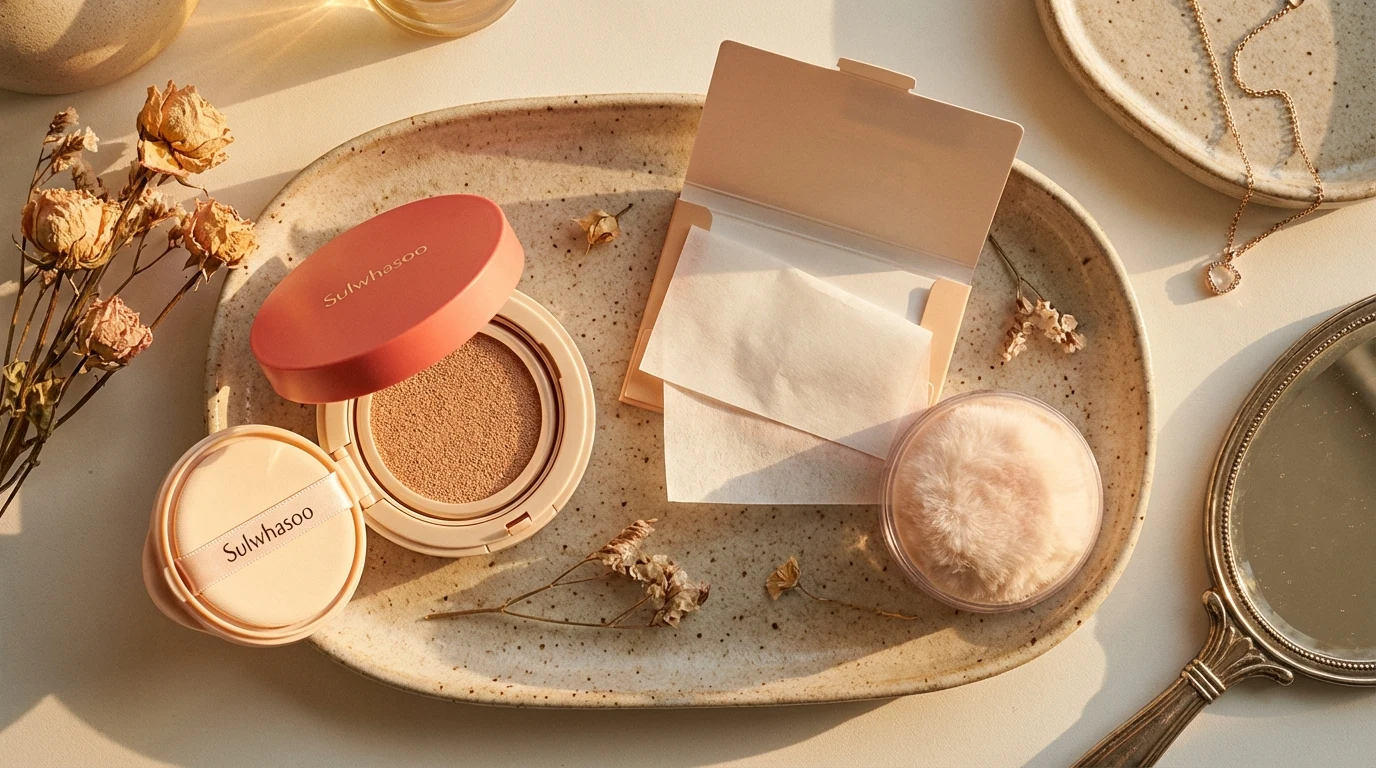
The cleanest touch-up order is blot, wait, press, then add. Blotting paper or a clean tissue should lift surface oil without dragging. After that, press the area with a puff before adding new product. If the base reconnects after pressing, skip extra coverage. If redness or separation still shows, tap a very small amount of cushion only on that spot.
Powder should be targeted. The nostril folds, upper lip, and center chin frequently need more help than the cheeks. Under the eyes, too much powder can make creasing look sharper, especially when sweat mixes with concealer. A tiny amount on the lower outer corner may be enough if the inner under-eye area already looks dry.
Signs that summer makeup has become too heavy
If the skin looks neat at first and then starts feeling dull, thick, or stuffy after a few hours, the fixing stage may already be too aggressive. In that case, the makeup is not really lasting better. It is simply staying on the face in a heavier way until sweat and oil push through it.
That is why long-lasting summer makeup should aim for a base that still looks manageable later, not a base that tries to stay untouched forever. In hot weather, easier correction is frequently more realistic than perfect stillness.
Another warning sign is edge buildup. If the foundation gathers near the sides of the nose, around the mouth, or under the lower lip, adding powder will make the outline more visible. Remove or press first. If the forehead looks coated but still shiny, the problem is typically layer thickness, not lack of fixing.
Heat also changes color perception. A base that oxidizes slightly, mixes with oil, or sits over flushed skin can look darker by midday. Choosing a slightly thinner, more flexible base frequently keeps the color cleaner than trying to lock down a full-coverage layer.
Main rule behind the long-lasting summer makeup guide
Good long-lasting summer makeup is less about freezing the face and more about making breakdown simpler. If you want better wear in heat, thin layers, lighter setting, and targeted oil control typically matter more than stronger coverage alone. Once that balance is right, touch-ups stay cleaner and the skin keeps looking more organized through the day.
From here, the natural opposite branch is Winter Glow Makeup Guide for Dry-Skin Radiance, where dryness and radiance matter more than oil and sweat. Summer longevity is not really about erasing glow. It is about keeping the surface readable in heat.
The best summer result passes two checks. First, the base should still be easy to reset after several hours. Second, the skin should not feel sealed, hot, or trapped under product. When both checks are true, makeup can move a little without looking like it has failed.
Long-lasting summer makeup holds cleaner with thinner layers and lighter setting than with heavier sealing.
Setting spray helps most when the base is already settled, and oil control is strongest when removal comes before reapplication.
The realistic goal is makeup that breaks down more cleanly and resets more easily, not makeup that never moves at all.