EDITORIAL CHECK
Source and Review Basis
Skincare guides prioritize cleansing, moisturizing, irritation signs, and label reading over trend terms. Toner pad, glass-skin, and sheet-mask wording is checked against cosmetic-label and dermatology references.
A useful Korean skincare routine is less about collecting famous products and more about knowing what each step is supposed to do for your skin on an ordinary day. Most readers searching this topic want the same thing: a routine order that feels clear, flexible, and realistic enough to keep using. This guide explains the step logic, how to simplify the routine by skin condition, and where common confusion starts.
Skin checks before building a Korean skincare routine
- Skin condition first: dry, oily, sensitive, and combination skin need different textures long before they need different trends.
- Routine goal second: hydration, calming, breakout control, and barrier repair should shape the order you emphasize.
- Day and night split: mornings typically stay lighter, while evenings are where cleansing and treatment steps matter more.
- Product count rule: if you cannot explain why a step is there, it typically does not belong in the routine yet.
- Adjustment window: judge a basic routine over 7 to 14 days before changing several products at once.
- Active limit: introduce only one stronger treatment at a time so irritation has a clear cause.
The biggest mistake is treating every step as mandatory every day. A Korean skincare routine is strongest when the structure is stable but the intensity changes with weather, irritation, oil level, and how your skin handled the previous few days.
That is why routine order matters. Once the order is readable, adding or removing one product becomes much easier than rebuilding the whole shelf from scratch.
If the face feels tight within 10 minutes after cleansing, the routine is asking for gentler cleansing and stronger moisture retention before any new active. If the forehead shines quickly but the cheeks still feel dry, the issue is frequently water balance rather than simple oiliness. That distinction matters because a stripping cleanser can make the T-zone look cleaner for one hour and still leave the whole routine less stable by evening.
Korean skincare steps by skin response, not product hype
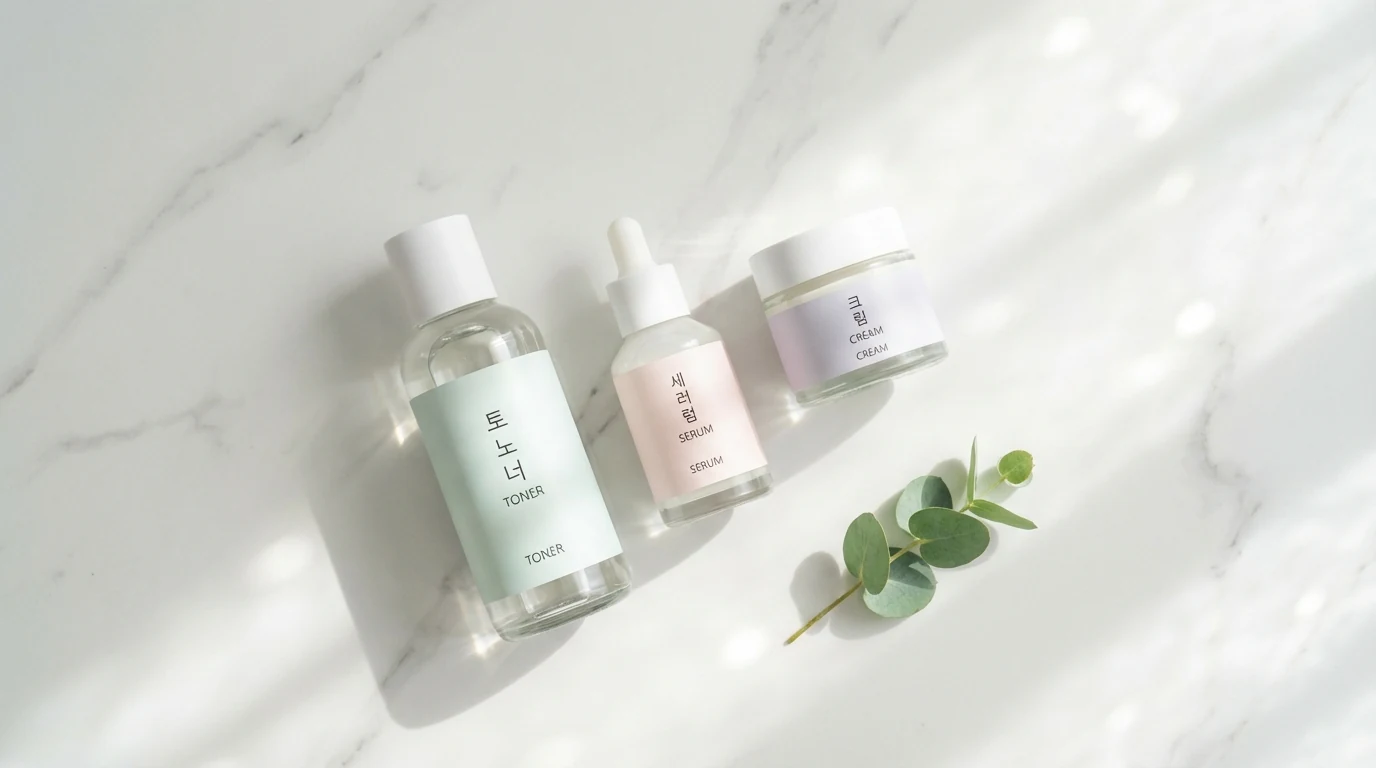
K-beauty routine advice frequently sounds product-heavy from the outside, but the stronger logic is actually skin-response based. Cleansing, hydration, calming, sealing, and treatment are functional roles, not trend labels. If your skin is tight and reactive, the routine should reduce friction and focus on barrier comfort. If your skin gets oily but dehydrated, lighter hydrating layers typically make more sense than harsh stripping.
This is why the same product can feel excellent for one person and unnecessary for another. The routine is not successful because it copies a fixed number of steps. It works when the products answer a visible need in the right sequence.
Ingredient roles make this easier to read. Glycerin and hyaluronic acid are humectants, so they help hold water in the upper layers of the skin when the routine is sealed properly. Panthenol, beta-glucan, and allantoin are useful comfort ingredients when the skin feels easily irritated. Ceramides support the barrier side of the routine, while niacinamide can help with tone and oil balance when the skin already tolerates it.
The mistake is using ingredient names as decoration. A toner with glycerin still needs a moisturizer if the skin loses water quickly. A niacinamide serum can be helpful, but a high-strength product used during a reactive week can make the routine feel sharper than expected. Read ingredients as jobs inside the routine, not as trophies on the label.
Morning and night routine split
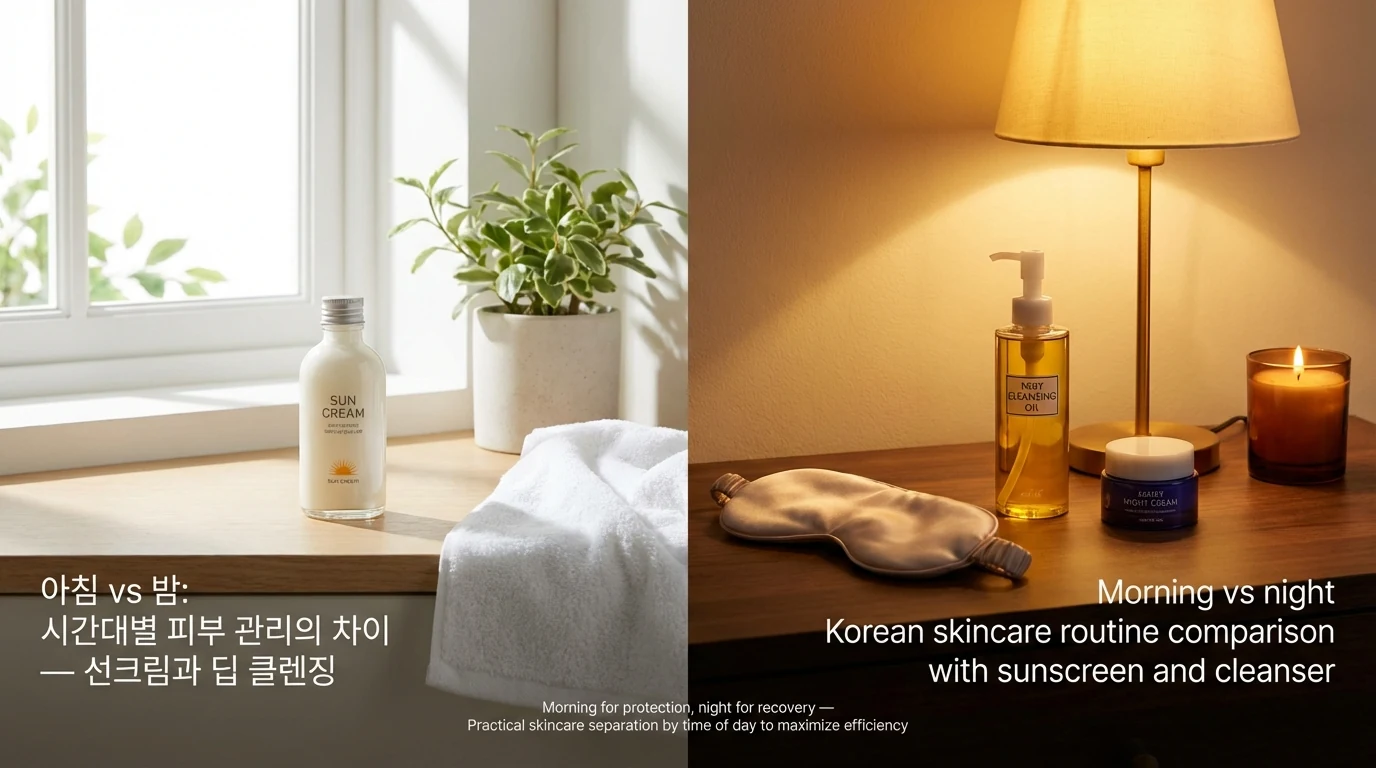
Morning skincare typically needs restraint. A gentle cleanse if needed, hydration that sits well under sunscreen, and a finish that does not feel heavy are enough for most people. Night routines have more room for removal, treatment, and recovery because you are undoing sunscreen, sweat, makeup, and daily buildup before your skin settles again.
That shift is where many beginners overcomplicate the process. They repeat the same long structure twice a day, then blame the products when the routine becomes exhausting. In practice, morning should protect and steady the skin, while night should reset and support it.
For a realistic morning routine, cleanser can be optional if the skin wakes up calm and not oily. Hydrating toner or essence should absorb without leaving a slippery film under sunscreen. Sunscreen is not the last optional decoration; it is the daytime protection step that makes brightening and texture work more meaningful.
At night, double cleansing only belongs when there is sunscreen, makeup, or heavier outdoor buildup to remove. A cleansing oil or balm followed by a gentle water-based cleanser can be useful on those days, but repeating that intensity on a bare-face indoor day may be unnecessary. After cleansing, keep treatment frequency modest: many beginners do better with 2 or 3 treatment nights per week than with a strong active every night.
Glass skin without over-layering
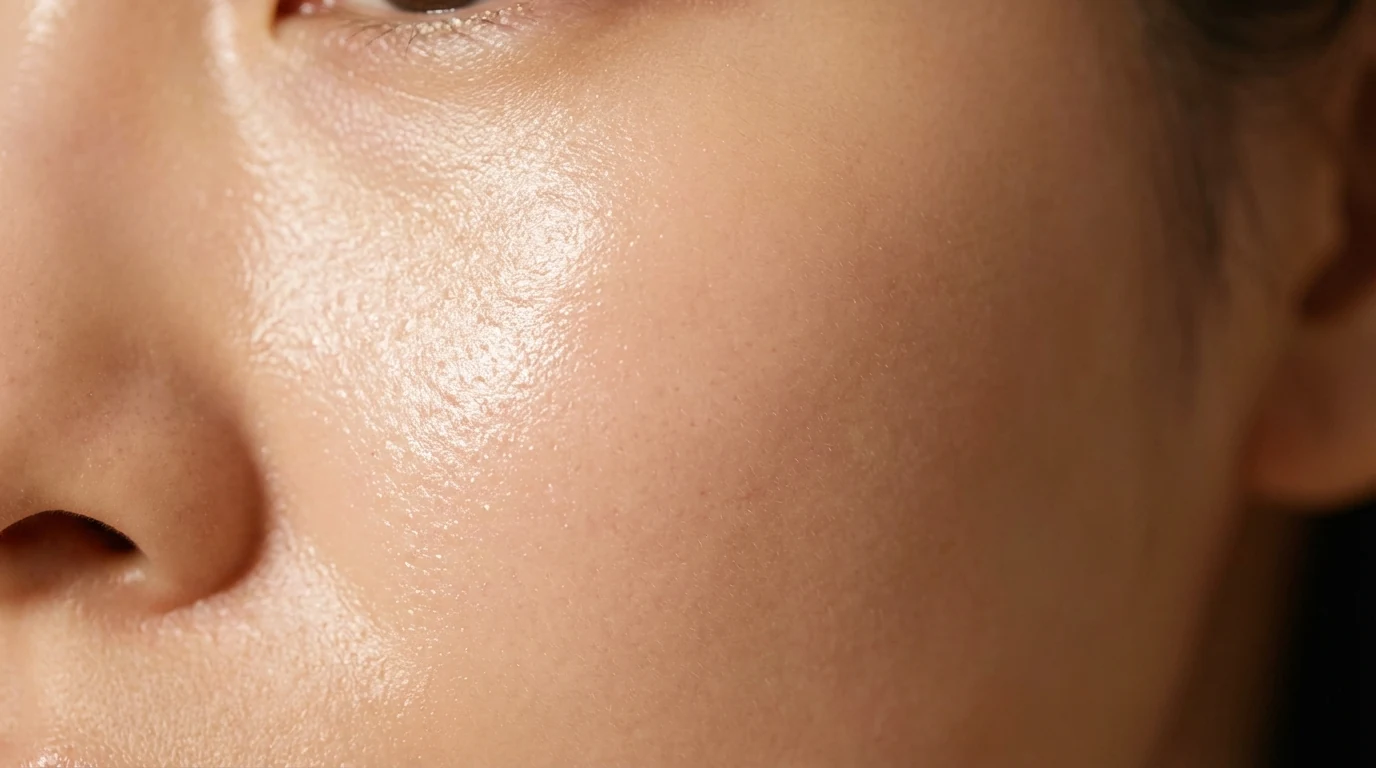
Glass skin routine searches typically come from a good instinct: people want skin that looks hydrated, smooth, and light-reflective rather than dry or rough. The useful part of that idea is consistent hydration layering and reduced irritation. The unhelpful part is assuming that more layers automatically create better skin texture.
If your skin already feels congested, overheated, or sting-prone, pushing too many layers can make the routine feel impressive but less stable. A clearer routine with fewer well-chosen steps frequently gets closer to the finish people associate with healthy glow anyway.
The practical test is the 30-minute check. After the routine settles, the skin should feel flexible and comfortable, not hot, tacky, or trapped. If the cheek looks shiny but the skin underneath still feels tight, add barrier support before adding another glow layer. If the T-zone turns slick while the cheeks stay comfortable, reduce the richness only in the faster-moving area instead of flattening the whole face.
If you want that polished result to match the rest of your look, trying a K-style profile can help translate skin mood into hair, outfit, and full styling direction instead of stopping at skincare alone.
Beginner Korean skincare steps that carry the routine
Beginners typically do better with a short structure they can repeat for several weeks. Cleanser, one hydrating layer, moisturizer, and sunscreen in the daytime already cover most of the routine logic. At night, adding a treatment step only makes sense when you know what problem it is solving and how frequently your skin can tolerate it.
That is also why consistency beats novelty. Clear skin tends to improve when irritation drops, moisture balance stays steadier, and product switching slows down enough for you to notice cause and effect. A Korean skincare routine becomes easier once you stop reading it as a performance and start reading it as maintenance.
A beginner routine should also have a rescue mode. On days when the face stings, flushes, or feels unusually dry, skip exfoliating acids, retinoid-style treatments, and strong brightening steps. Use a gentle cleanse, a simple hydrating layer, and a moisturizer with barrier-supportive ingredients such as ceramides or panthenol. That kind of temporary reduction is not failure; it is how the routine stays usable instead of becoming a source of new irritation.
For oily or breakout-prone skin, simplicity still matters. Salicylic acid can be useful for clogged pores, but daily use is not automatically better. If dryness, peeling, or extra shine appears after starting it, reduce frequency before adding more products to correct the side effects.
Long-term routine rules when trends change
Trend language changes fast, but skin still responds to familiar fundamentals: cleanse without over-stripping, hydrate with intention, protect during the day, and repair when the barrier is stressed. That is why the routine remains useful even as individual ingredients or formats cycle in and out of attention.
The best long-term version is not the most complete one. It is the version you can adjust without confusion when seasons shift, breakouts flare up, or your skin becomes temporarily more sensitive. Once that framework is clear, every later product decision becomes easier.
Seasonal adjustment should be small and specific. In winter, reduce the gap between hydrating steps and choose a moisturizer that leaves the skin comfortable for several hours. In summer, keep hydration light but do not remove moisturizer completely if sunscreen starts pilling or the skin feels tight underneath oil. During transition seasons, calming ingredients such as centella asiatica, madecassoside, and allantoin can be more useful than chasing extra exfoliation every time texture appears.
The routine is working when cause and effect become visible. You should be able to tell which product cleanses, which product hydrates, which step calms, which step seals, and which step protects. Once that map is clear, a Korean skincare routine stops feeling like a long checklist and becomes a set of controlled adjustments.
A Korean skincare routine is strongest when skin condition and routine goal decide the structure before trends do.
Morning routines typically protect and steady the skin, while night routines handle removal, treatment, and recovery.
Beginners typically get better results from a short routine they can repeat consistently than from copying every possible step.