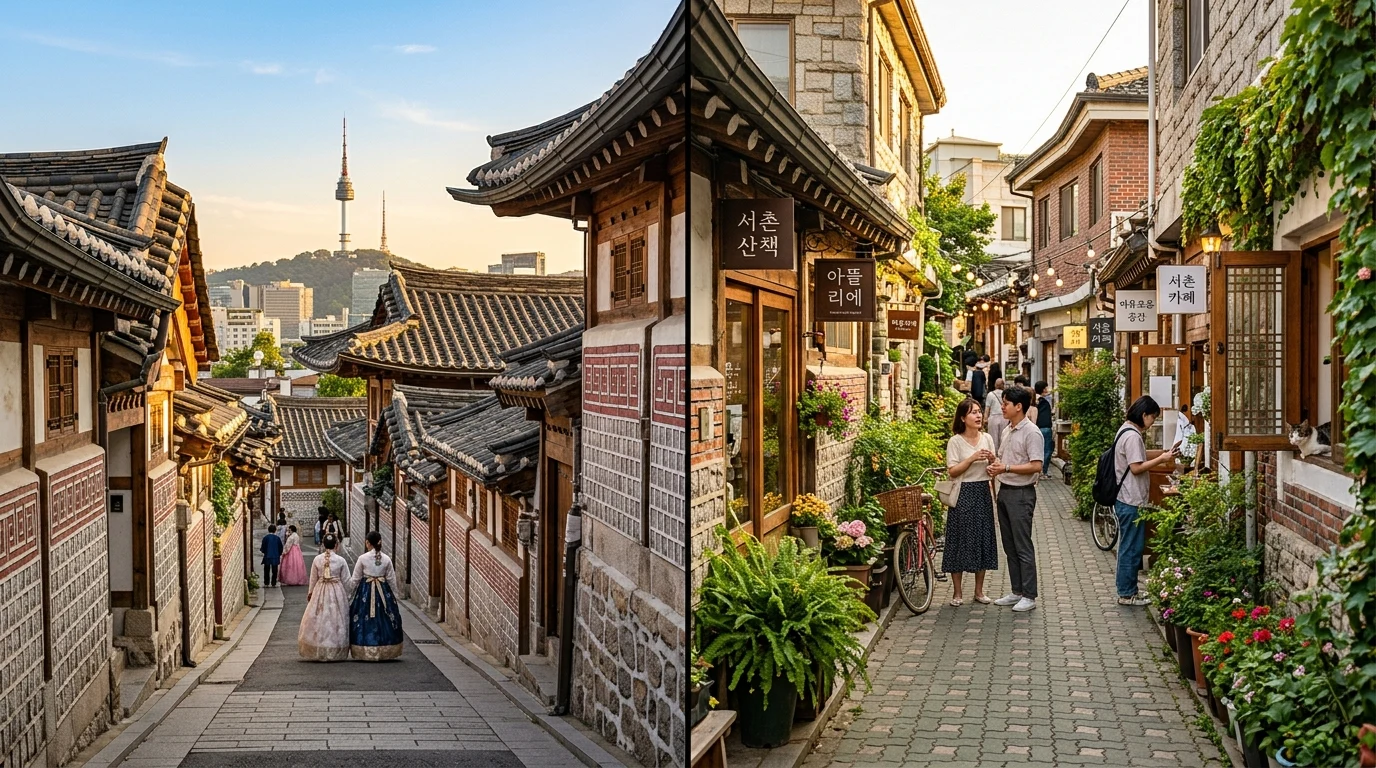
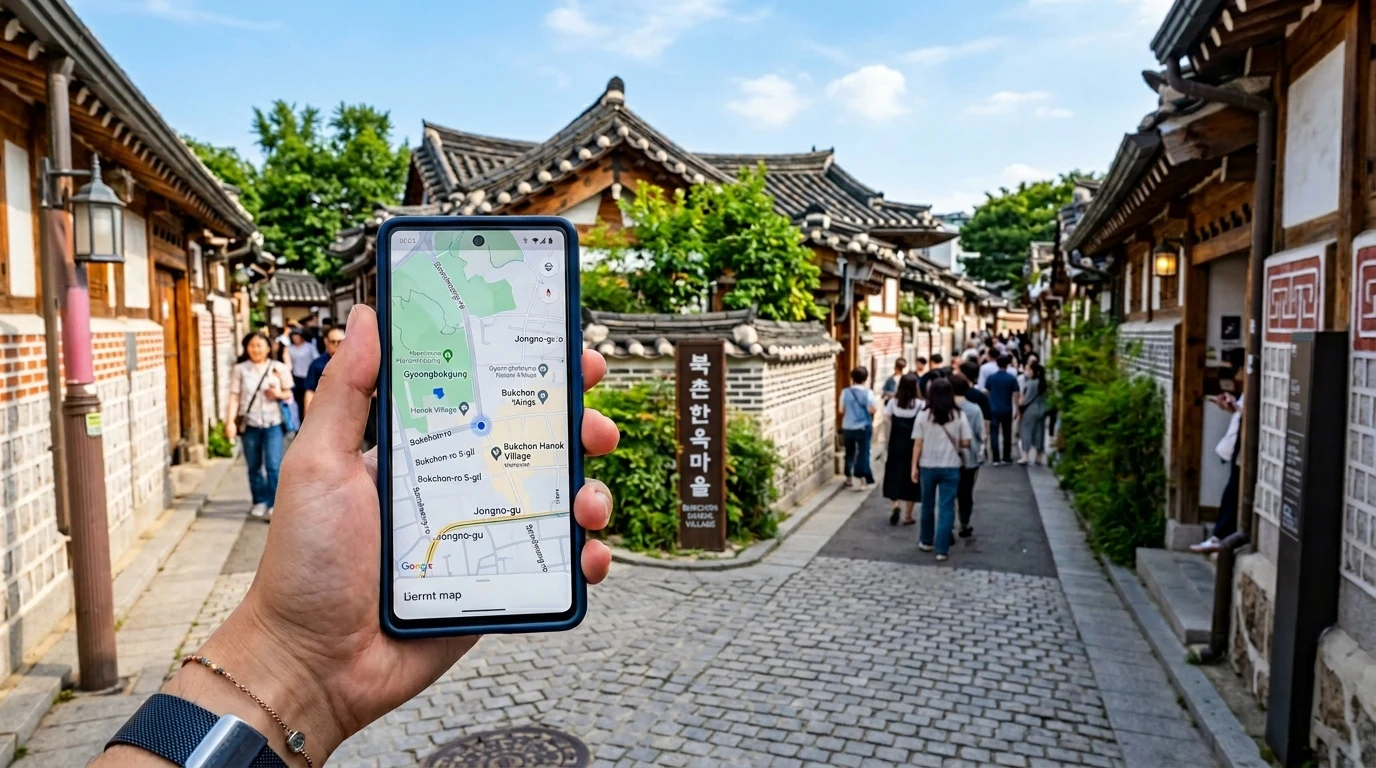
People comparing a Bukchon vs Seochon walking guide are usually not choosing between two identical traditional Seoul areas. Bukchon feels more ordered through uphill hanok alleys, rooflines, and quieter portrait-friendly turns, while Seochon reads more like a lived neighborhood west of Gyeongbokgung where cafes, low-key shops, and local streets mix into the walk. This guide uses the wider Bukchon Hanok Village guide as a base and explains which route fits better depending on pace, photos, and first-visit walking style.
At first glance, both areas can look like versions of the same Jongno experience. They are not. Bukchon tends to tell you quickly where to look, while Seochon asks you to keep walking until the mood builds. That difference changes not only the route but also the type of memory visitors take away from it.
This is why the comparison matters most for first-time visitors. Bukchon gives a clearer visual identity early. Seochon gives a softer neighborhood rhythm that reveals itself more gradually. Both are strong, but they are strong in very different ways.
— Where does the Bukchon vs Seochon difference show up first
- Choose Bukchon if you want clearer hanok framing, quieter uphill alleys, and a more structured traditional walk.
- Choose Seochon if you want daily neighborhood texture, cafe stops, and a looser walking rhythm.
- Best starting logic: Bukchon is easiest from the Anguk side, while Seochon is easier from the west side of Gyeongbokgung or the Tongin Market area.
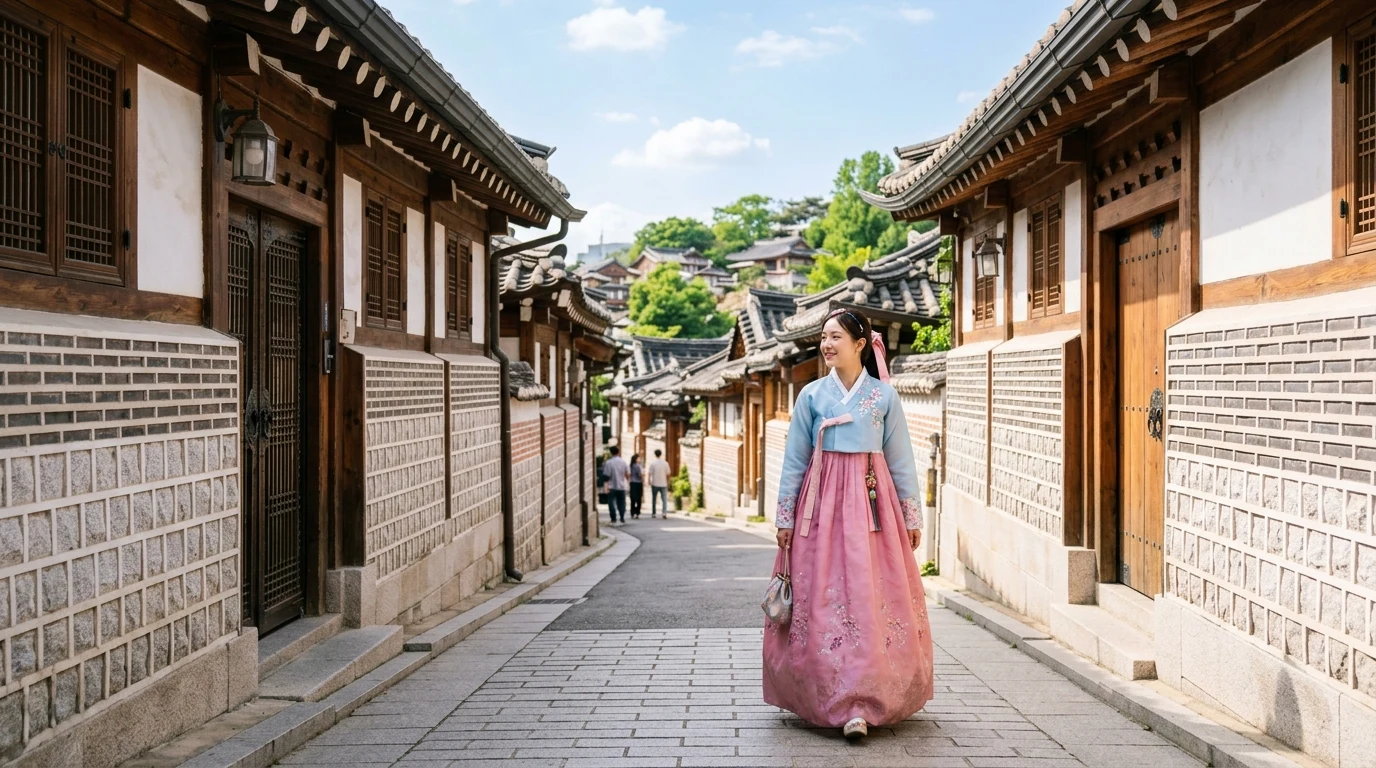
- Photo expectation: Bukchon suits hanok portraits better, while Seochon suits neighborhood mood shots and slower walking scenes.
The difference appears almost immediately. Bukchon introduces walls, rooflines, and slope as the main organizing elements, while Seochon introduces lived streets first and lets atmosphere build more gradually.
Topography is part of that difference. Bukchon's uphill turns and roofline layers naturally structure the walk into more photographic stages. Seochon stays flatter and more mixed, so the route feels less like climbing into a view and more like moving through a neighborhood texture that keeps shifting.
That also changes how visitors orient themselves. Bukchon is easier to predict visually. Seochon is easier to adapt within.
— Who will usually prefer Bukchon more
Bukchon is usually the better choice for visitors who want hanok structure to lead the walk. If the goal is portrait-friendly backgrounds, quieter traditional alleys, or a route that feels visually organized from the start, Bukchon is easier to read.
It also works better for travelers who want a clearer sense of progression. One alley leads into the next with enough visual continuity that the route feels planned even when it stays simple.
It is also the stronger option when traditional Seoul imagery matters more than local daily rhythm. Hanbok photos, roofline portraits, and clean wall-backed scenes all become easier when the route itself keeps producing ordered backgrounds.
The tradeoff is that timing matters more. Bukchon becomes noticeably more crowded in its best-known alleys, so visitors who want calm photos and a quieter walk usually benefit from earlier hours or less congested days.
— Why does Seochon feel more lived-in than scenic
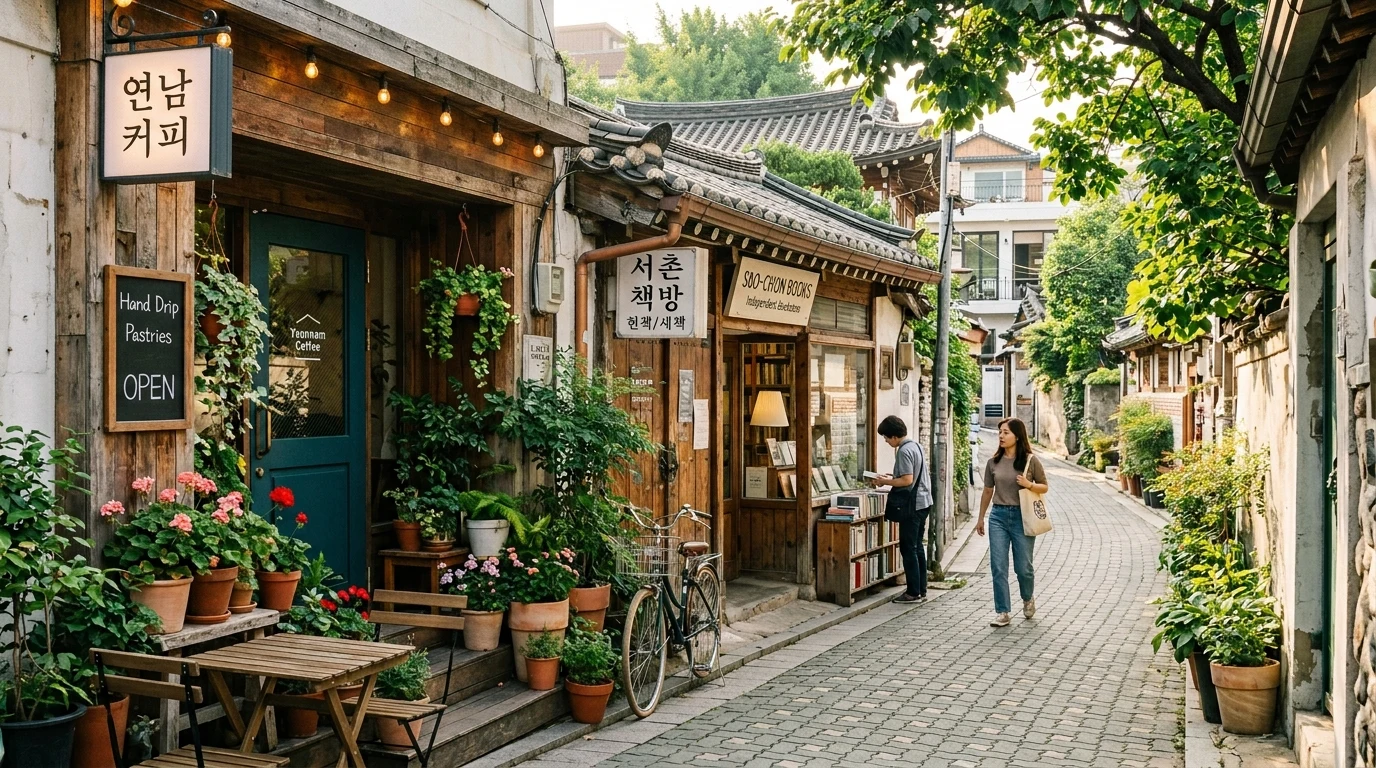
Seochon is not defined by one continuous hanok frame. It feels more mixed, with older alleys, neighborhood storefronts, residential pockets, and everyday pace layered into the route. That makes the walk feel less ceremonial and more like moving through a real local district.
Because of that, Seochon often leaves a stronger impression on people who like wandering without needing every stop to become a photo target. The appeal comes from rhythm and texture more than from one repeated visual formula.
For some visitors, that lived-in quality is exactly why Seochon feels easier. It gives more room for cafe breaks, small discoveries, and a softer walking pace than Bukchon's more photo-readable hanok slopes.
Seochon also connects naturally with west-of-Gyeongbokgung movement, which helps visitors understand it as part of a wider neighborhood rather than as a single attraction zone. That gives the walk a more relaxed narrative shape.
For dates, casual strolling, or lower-pressure first visits, this often makes Seochon feel more forgiving than Bukchon.
— How should you choose between photos, hanbok, and a quieter walk
If photos come first, Bukchon is usually the simpler answer. Walls, rooflines, and controlled alley depth keep backgrounds more stable, which is why Best Bukchon Hanok Photo Spots works as the clearest companion read.
If hanbok mood matters most, Bukchon still has the edge because the route holds traditional framing more consistently. But if you want cafes, everyday streets, and a less structured Jongno walk, Seochon usually feels more natural.
If quiet walking matters more than formal imagery, the choice often becomes easier. Bukchon suits people who want a strong visual payoff from the route itself. Seochon suits people who want the walk to stay comfortable even when there is no major landmark in front of them.
Physical rhythm matters too. Bukchon can feel steeper and more stop-and-start than it first appears. Seochon usually spreads effort more gently across the route.
— Which area should a first-time visitor do first
A first-time visitor should usually start with Bukchon if the goal is to understand Seoul's hanok alley image as clearly as possible. Start with Seochon first if the goal is a softer neighborhood walk that mixes local street life with traditional atmosphere.
Bukchon gives a stronger visual reference point for hanok lines, slopes, and portrait framing. Seochon gives a broader sense of how traditional texture blends into ordinary neighborhood movement.
If you still are not sure which mood fits better, checking the K-style profile flow before choosing a route can make the decision easier because it forces the walk to match the result you want.
Starting stations matter as well. Bukchon is easiest when approached from the Anguk side, where the hanok identity comes forward quickly. Seochon usually becomes legible faster from the Gyeongbokgung side or near Tongin Market, where the neighborhood rhythm opens more gradually.
If you plan to do both in one day, Bukchon often works better first and Seochon later. Bukchon asks for more visual attention and often a little more physical effort. Seochon is easier as the softer second half.
— How do timing and crowd level change the Bukchon vs Seochon choice
Bukchon is usually strongest in the morning or earlier part of the afternoon, when rooflines, wall textures, and alley framing stay clear without the busiest crowd pressure. Seochon tends to feel especially comfortable from afternoon into early evening, when storefront edges, cafe pauses, and shadow patterns make the neighborhood feel warmer and more settled.
Crowd handling also differs. Bukchon is best managed by timing because its most recognisable alleys are harder to avoid entirely. Seochon is easier to manage by route adjustment because stepping one block inward often restores a quieter pace. That makes Bukchon better for planned visits and Seochon better for more flexible wandering. Once you understand that split, choosing between them becomes much simpler.
Bukchon feels more structured through hanok rooflines, uphill alleys, and portrait-friendly framing, while Seochon feels looser and more lived-in.
Bukchon is usually better for photos and hanbok mood, while Seochon works better for cafe breaks and a softer neighborhood walk.
First-time visitors should choose based on whether they want clearer hanok structure first or a more everyday Jongno walking rhythm.