EDITORIAL CHECK
Source and Review Basis
Bukchon guides prioritize resident etiquette and visiting-hour limits, using official tourism and Seoul Hanok references for noise, route, and timing checks.
If you are planning a Bukchon hanbok photo route for the first time, the most important choice is not the prettiest background but the order in which the alleys unfold. Bukchon works very differently from palace-scale hanbok locations. Instead of one large ceremonial frame, it gives you short slopes, wall texture, tiled roofs, and quieter alley transitions that shape the photos one section at a time. This guide shapes that into a first-time hanbok route that stays easy to read on foot.
— Where should you begin a Bukchon hanbok photo route
Verified date: 2026-10-11. Facility and transit details may change depending on operating authorities.
| Item | Details | | :--- | :--- | | Public Transit | Anguk Station (Line 3) Exit 2 (approx. 5–10 min walk toward Bukchon-ro) | | Visiting Hours | 10:00 – 17:00 (designated visiting window for residential special management zone) | | Etiquette | Mandatory silent tourism to respect resident privacy and reduce noise | | Parking Info | No dedicated visitor parking in village (public transit strongly advised) |
-
How to get there: A 5 to 10-minute walk from the nearest subway station exit.
-
Best time to visit: Between 2:00 PM and 4:00 PM for optimal natural lighting.
-
Estimated duration: 1 to 2.5 hours depending on crowds.
-
Budget & Tips: Expect to spend around 15,000 KRW per person on average.
-
Best starting point: enter from the Anguk side and let the first uphill alleys establish the route.
-
Best for: portrait-led hanbok shots, walking photos, and quieter hanok backdrops.
-
Best time: late morning and the hours before sunset keep hanbok color and wall texture easiest to read.
-
First-visit rule: begin with simpler alleys before moving into denser interior sections.
Bukchon hanbok photos get easier once visitors stop treating the district like one open set. The Anguk-side entry works well because it gives enough structure first. Visitors can understand slope, spacing, and background density before the route becomes more fragmented.
That entry works especially well because the alleys do not become complicated too quickly. Walking in hanbok naturally slows the pace, and first-time visitors need a simple background before they start making finer choices. The Anguk-side sections provide that clarity early.
— Which alleys work best for hanbok portraits
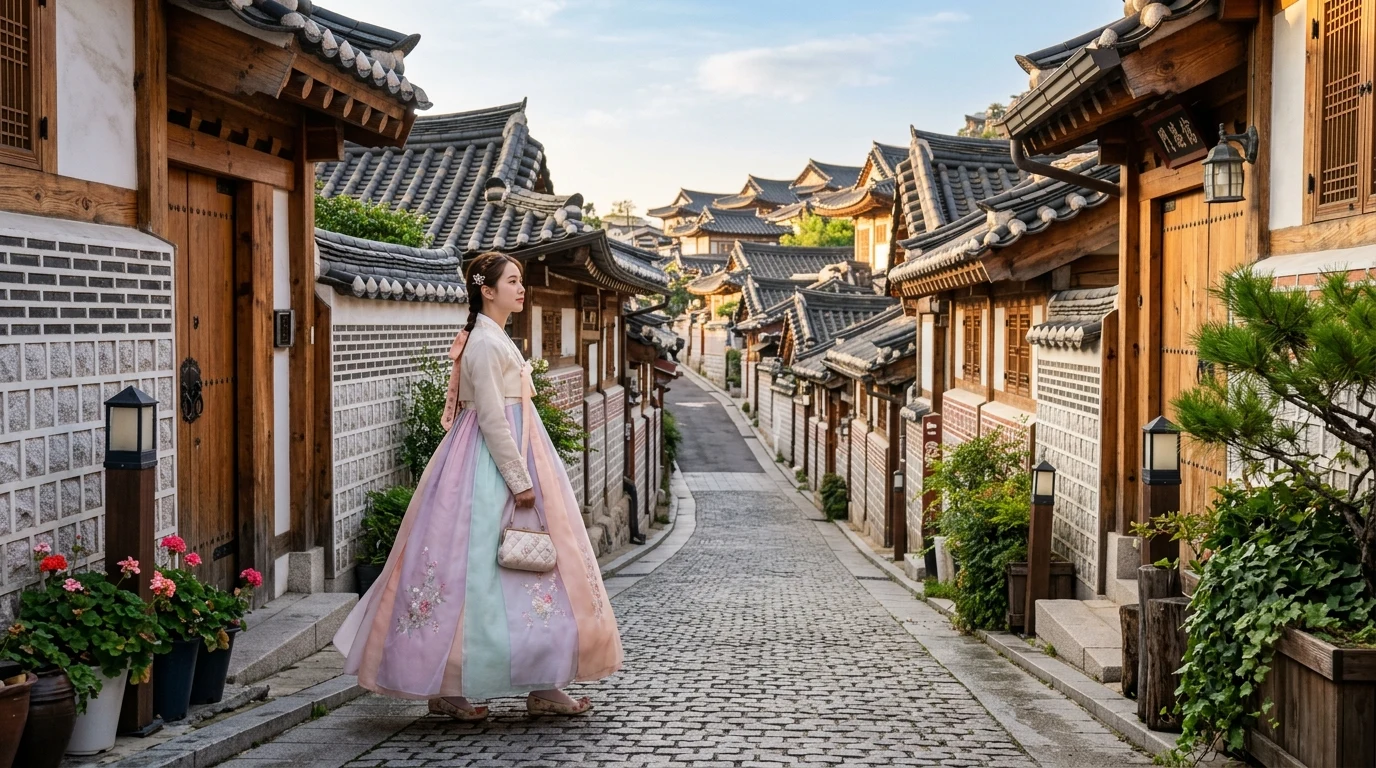
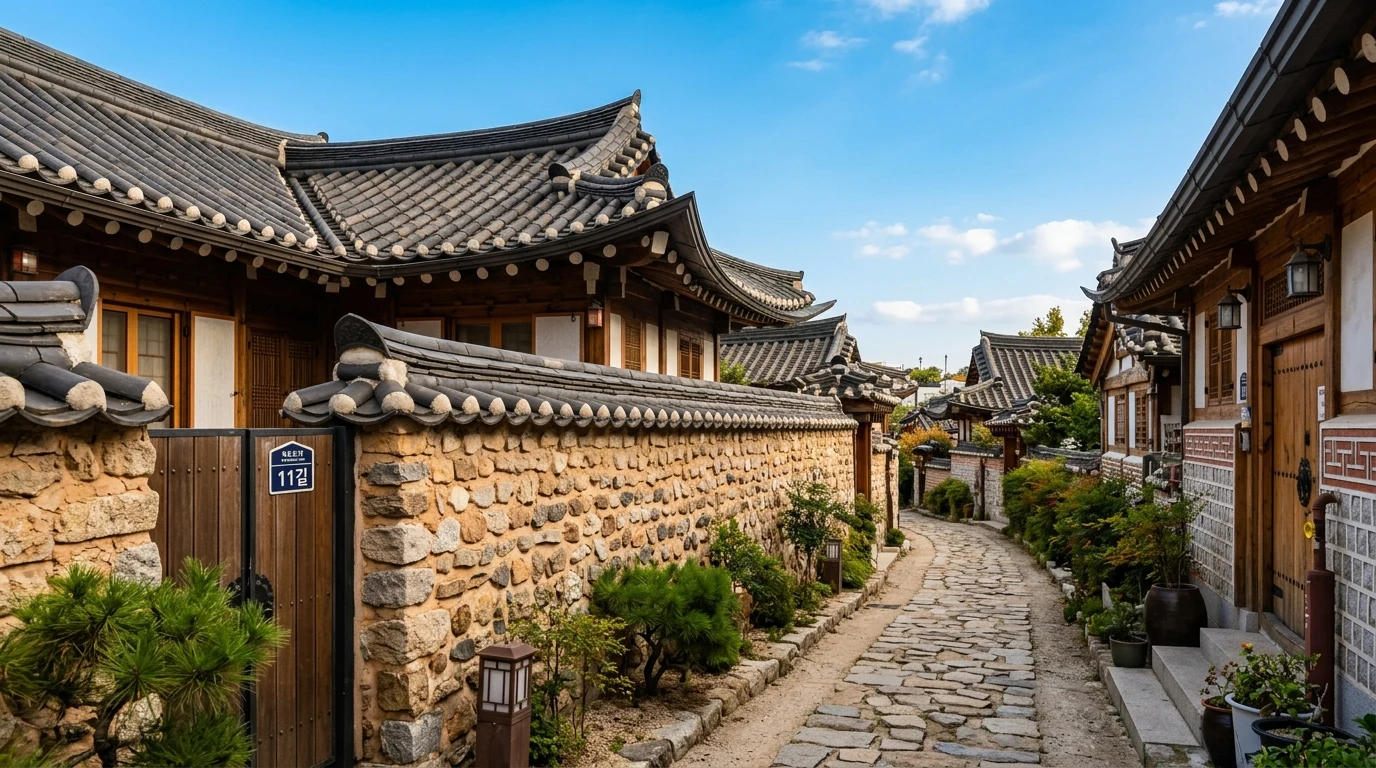
The strongest Bukchon hanbok portrait alleys are not the widest views. They are the alleys where walls, rooflines, and distance stay controlled enough that the hanbok still leads the frame. If the scene opens too far, the subject can feel visually smaller than the neighborhood. If the alley is too cluttered, signs and street elements begin competing with the clothing.
That is why moderate density works best. A clean wall line, one or two roof layers, and enough walking space for a half-turn or slow step produce the most stable results.
Hanbok color changes the choice too. Lighter hanbok tones pair best with cleaner wall-led alleys, while deeper colors can handle a little more roofline layering without disappearing. The more visually active the clothing becomes, the simpler the alley needs to be.
— Why does Bukchon hanbok photography feel different from Gyeongbokgung
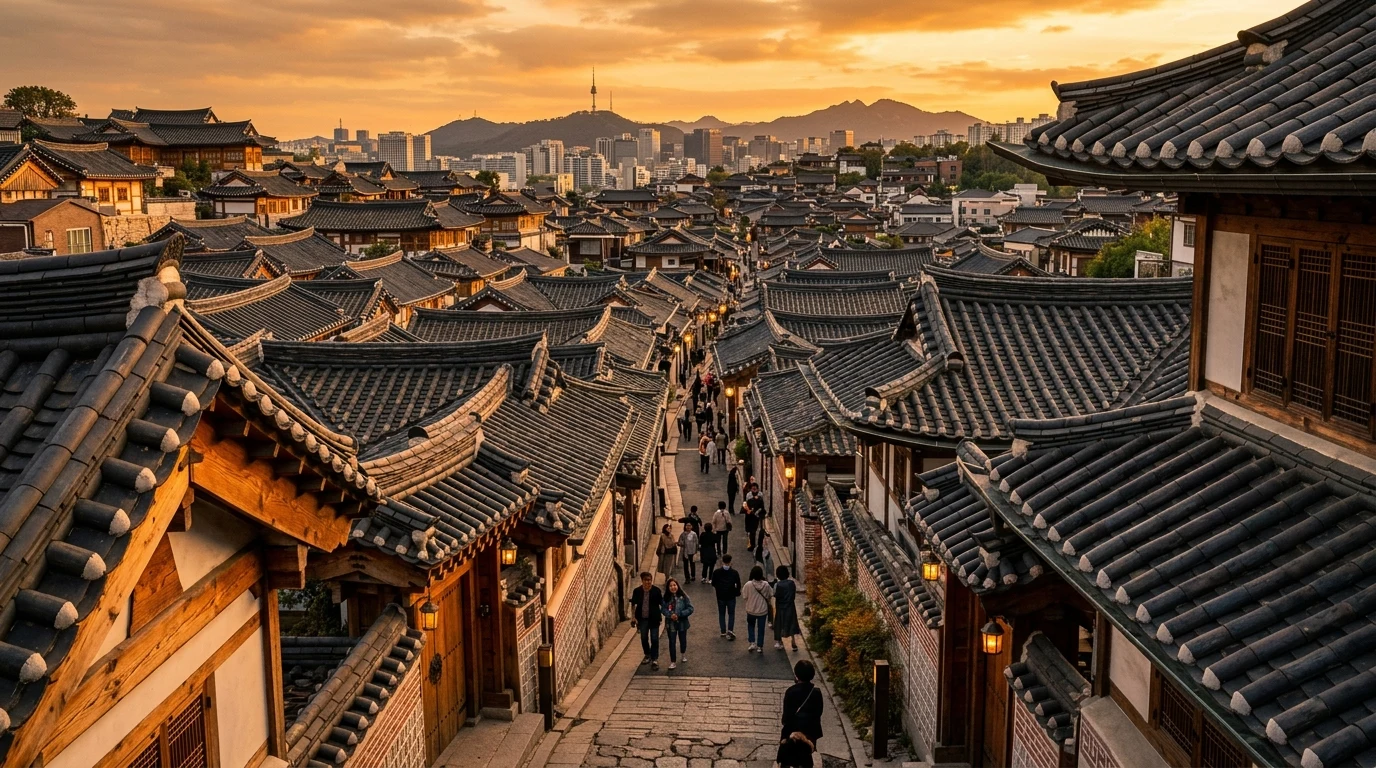
Gyeongbokgung gives hanbok photos symmetry, scale, and open royal space. Bukchon gives a quieter route with shorter sightlines, more turning points, and a more residential hanok mood. That makes Bukchon hanbok photography feel less ceremonial and more like a lived traditional neighborhood.
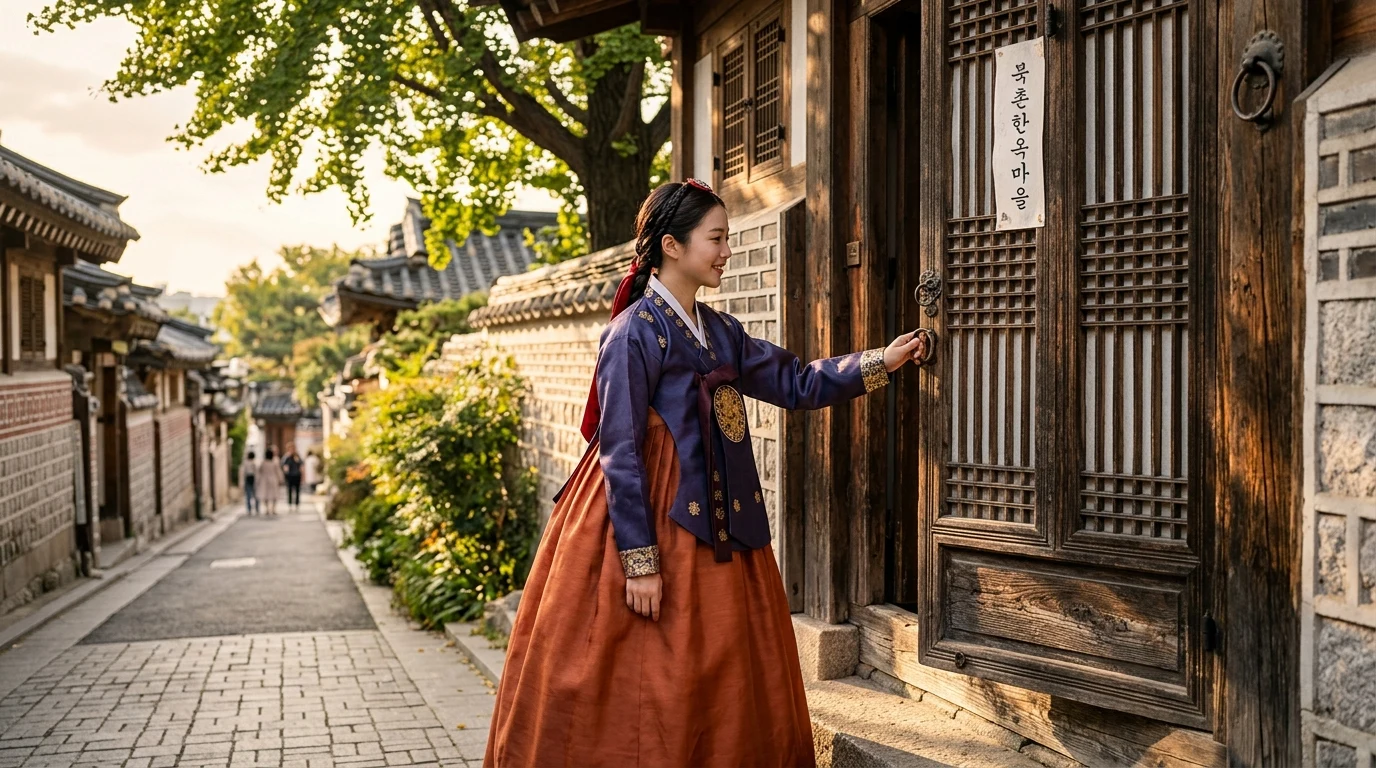
Because of that difference, Bukchon rewards movement more than stillness. Short walking shots, slight turns at a wall edge, or pauses in a sloped alley work better than fully frontal posing.
That also changes pose choice. Palace routes can support symmetrical, front-facing hanbok poses, but Bukchon works better with softer turns and walking-based movement that follow the direction of the alley. The neighborhood feels lived-in, so the gestures should feel lighter too.
If you want to compare that alley-based hanbok rhythm with palace-based hanbok photography, Best Photo Spots in Gyeongbokgung is the most useful companion read. The
— How should you break the route into easier sections
For a first visit, the easiest structure is to begin with one cleaner wall-heavy alley, then move into a slightly denser section where rooflines overlap more clearly, and only after that decide whether you want extra atmosphere shots deeper inside Bukchon. This keeps the route from becoming too long too early.
It also helps separate shot types. The early section works better for stable portraits, while the deeper section is stronger for mood-heavy walking shots.
Short rest points matter as well. Even a modest Bukchon route can feel tiring in hanbok because the alleys keep rising, turning, and narrowing. Brief pauses every couple of sections preserve both energy and shot quality better than pushing too far too quickly.
If you want to turn that Bukchon hanbok mood into something usable after the walk, a K-style profile flow is a natural mid-route bridge.
— What is the easiest first-time Bukchon hanbok course
The easiest first-time Bukchon hanbok course is to enter from Anguk, secure portraits in one or two simpler alleys first, move inward only after the route feels clear, then return toward the larger street flow before the background density starts feeling repetitive.
That sequence gives first-time visitors a route that stays readable and still delivers enough visual contrast. The earlier section handles cleaner portraits, while the inner section adds roofline overlap and a more residential hanok mood.
Bukchon works best when visitors accept that not every corner needs to become a stop. A shorter route with clearer background changes produces better hanbok photos than a longer route filled with similar-looking alleys.
— How do crowd timing and shooting order make the route easier
Busy midday periods in Bukchon can make the most famous alleys feel harder than they look online. In those moments, choosing a nearby alley with similar wall and roof rhythm is smarter than waiting too long for one exact frame. Bukchon is made of repeated visual logic, so small route shifts work very well.
It also helps to decide the shot order in advance. Cleaner portrait-led shots work best earlier in the route, while deeper alley mood shots can come later once the subject and photographer are already comfortable with the pace. That order keeps the route more efficient and the final photo set more balanced.
— How do season and hanbok color change the best alley choice
Spring and early summer favor lighter wall-led alleys because pale hanbok tones read more clearly against simple backgrounds and softer shadow. Fall and winter strengthen deeper roofline texture, which means richer hanbok colors can hold their place more easily without overwhelming the frame.
That is why the route should respond to both outfit and season. The stronger the hanbok color, the cleaner the alley needs to be. The more layered the alley becomes, the simpler the pose should stay. Bukchon rewards that balance more than any single famous corner.
For first-time visitors, this is one of the easiest ways to reduce mistakes. Instead of chasing one online-famous lane, connect two or three alleys that fit the clothing and the season. The result feels much more consistent.
— Which shot types should beginners secure first in Bukchon
For first-time visitors, the most useful first shot is a stable portrait or three-quarter frame in a cleaner alley. Mood-heavy walking shots can always come later, but a clear portrait becomes harder once the route moves into denser interior lanes. That is one reason the Anguk-side start works so well.
After that, it helps to add one walking-based shot or one over-the-shoulder turn that lets the alley direction stay visible. Bukchon hanbok photography looks better when the movement feels small and connected to the lane rather than dramatic or theatrical. The neighborhood gives the image its mood through slope and wall rhythm, not through exaggerated motion.
Once those basic portraits and movement-led shots are secure, the deeper mood frames become much easier to collect. That order keeps the route readable and gives first-time visitors a more balanced final set.
A Bukchon hanbok photo route works best when it starts from Anguk and builds through simple alleys first.
The best hanbok portrait alleys keep walls, rooflines, and distance controlled enough that the clothing still leads the frame.
First-time visitors do better with a shorter route that separates portrait sections from deeper atmosphere sections.