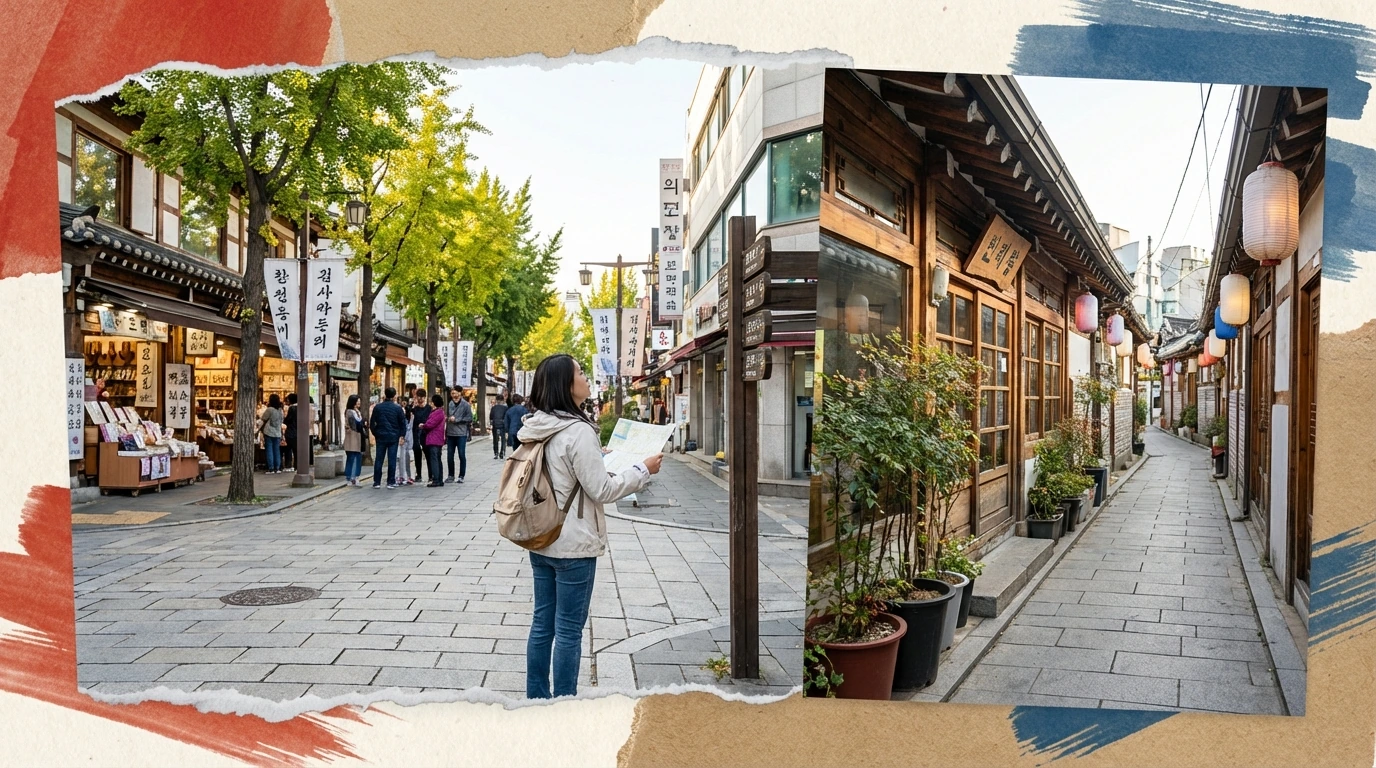
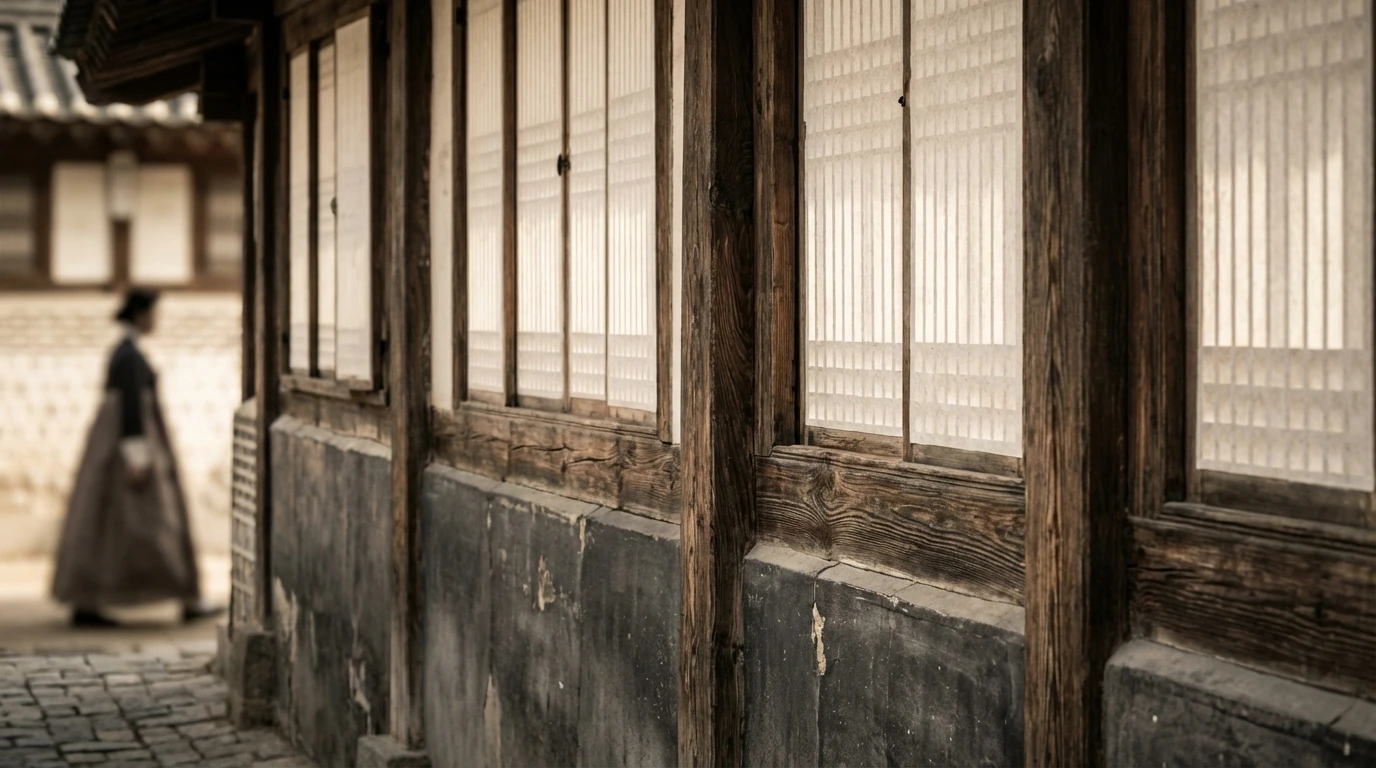
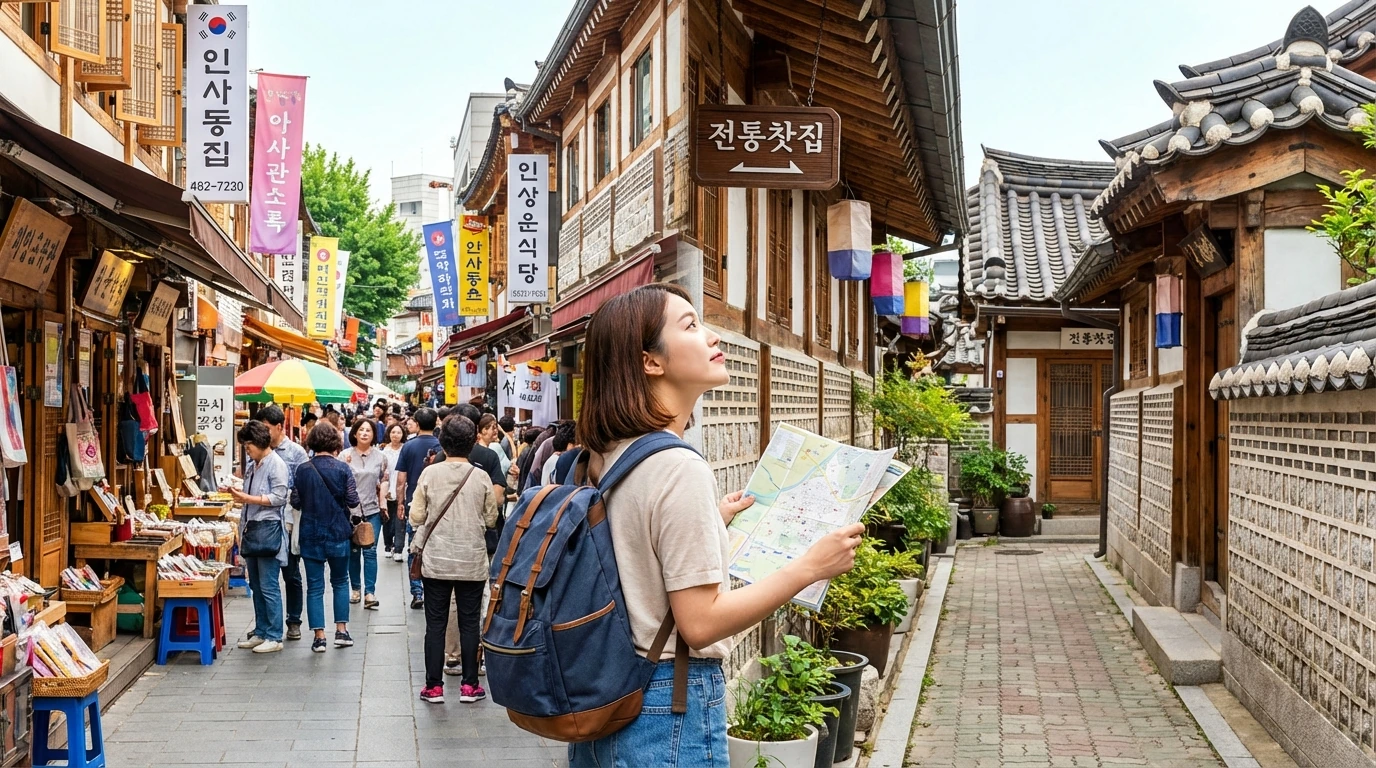
Insadong is a 700-meter stretch of road in central Seoul, packed with traditional Korean craft shops, art galleries, and teahouses. Instead of relying on abstract historical vibes, Insadong delivers a highly specific street-level experience characterized by wooden storefronts, hidden alleys, and Hangul-only signage.
How to Get to Insadong and Practical Info
- How to get there: Take Subway Line 3 to Anguk Station, Exit 6. Walk straight for 1 minute (about 100 meters) and turn left at the major tourist information booth. Alternatively, use Jonggak Station (Line 1, Exit 3) and walk 5 minutes north.
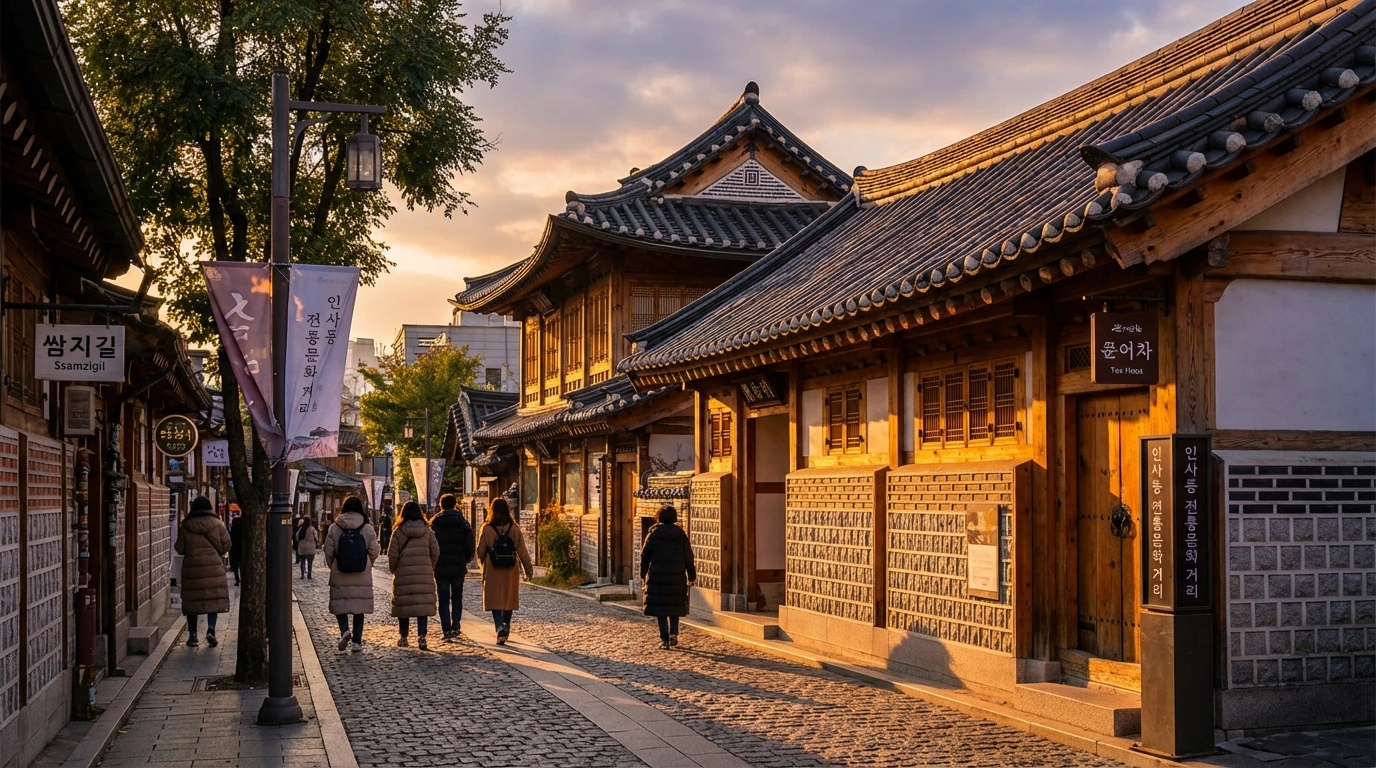
- Recommended time to visit: Arrive at 3:00 PM. At this hour, the afternoon sunlight hits the dark gray hanok roof tiles perfectly in the narrow alleys.
- Estimated duration: 90 to 120 minutes is enough to walk the main strip, browse Ssamziegil, and sit for tea.
- Crowding/Precautions: The street gets very crowded between 2:00 PM and 5:00 PM on weekends. The main road (Insadong-gil) is completely vehicle-free on Saturdays from 2:00 PM to 10:00 PM and Sundays from 10:00 AM to 10:00 PM.
What Can You Actually Buy and See Here?
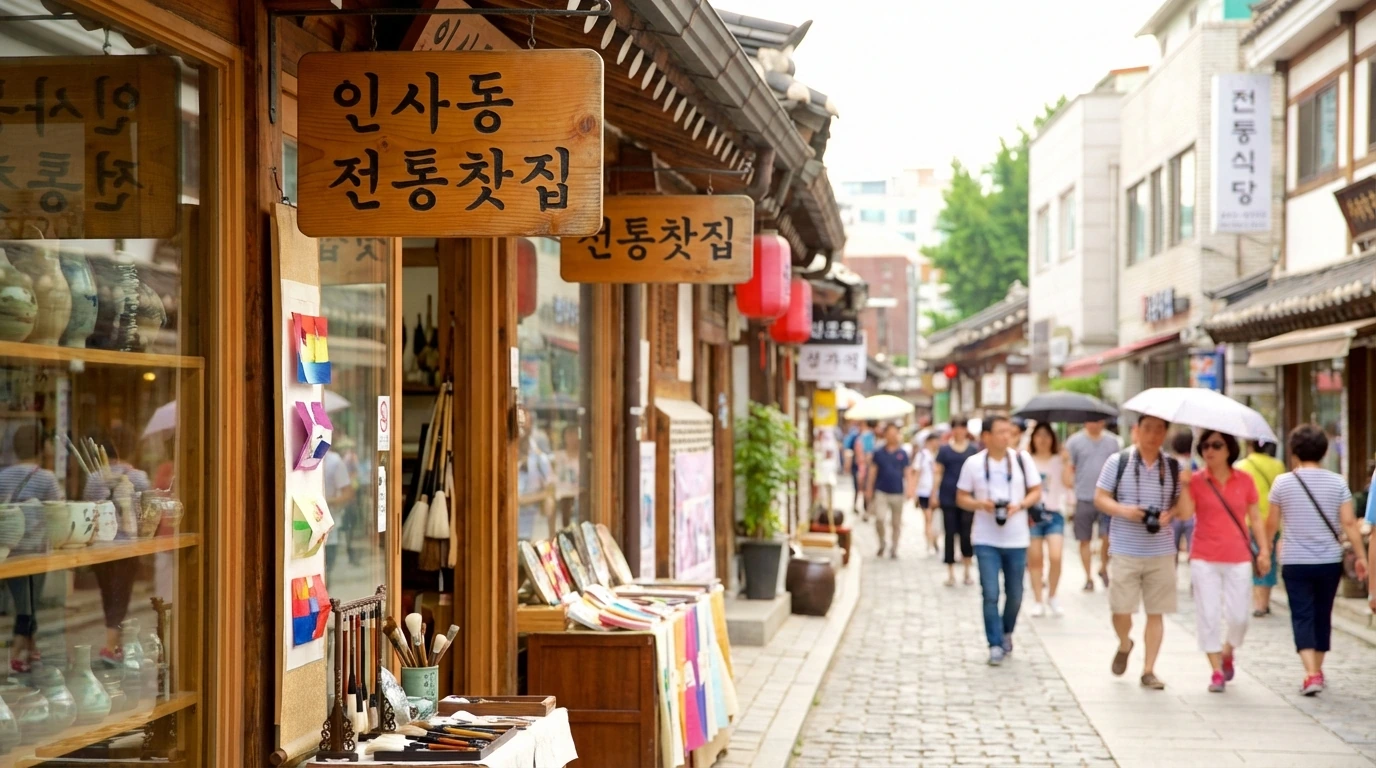
The main street is lined with dozens of independent shops selling tangible goods. You will find handmade Hanji (traditional Korean paper), calligraphy brushes, and ceramics. Prices for small souvenirs are clearly marked: wooden bookmarks average 3,000 KRW, while hand-painted folding fans cost between 15,000 KRW and 25,000 KRW.
For concentrated shopping, walk 300 meters down the main street to find Ssamziegil, a 4-story spiral shopping complex housing 72 independent boutiques. It takes about 20 minutes to walk the ramp to the top floor, where you get a clear view of the surrounding rooftops.
Where Are the Best Photo Spots in the Alleys?
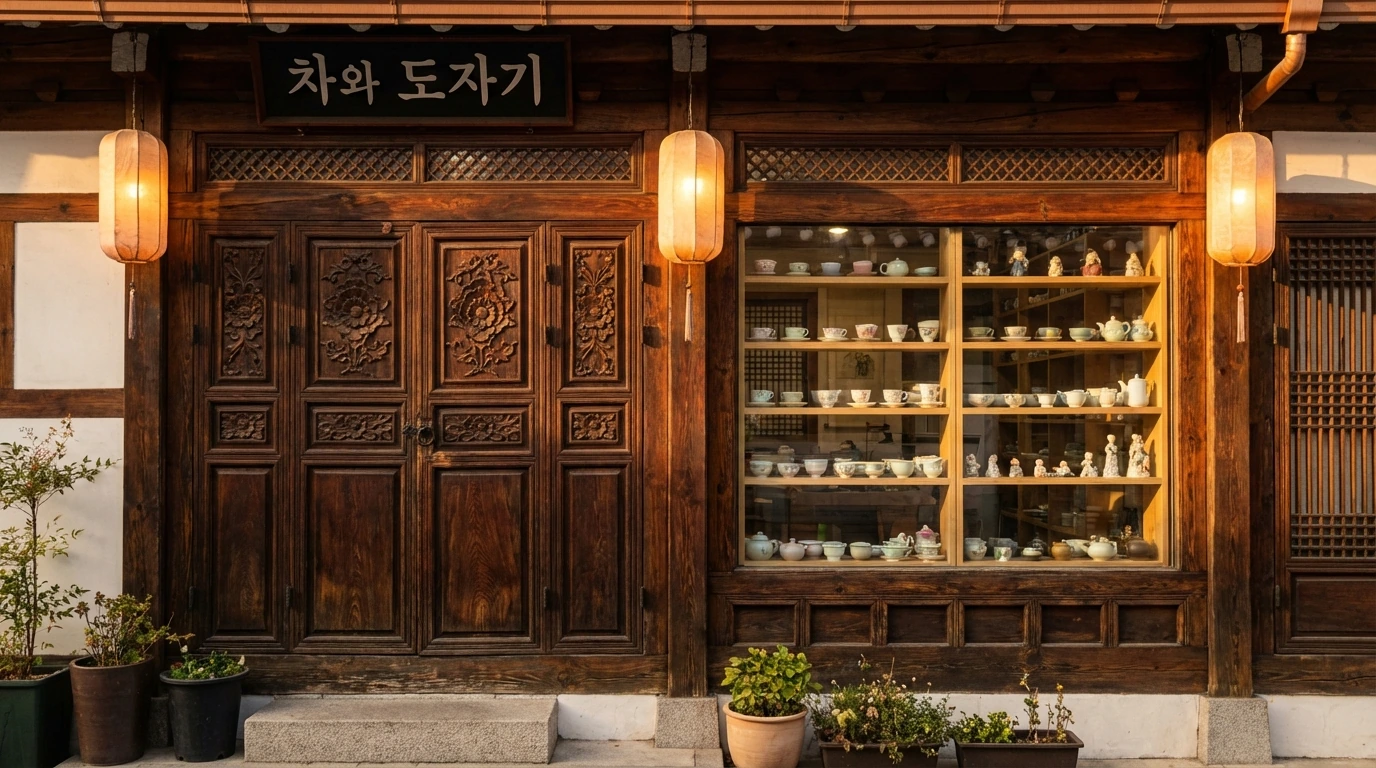
The real visual density of Insadong is in its side alleys, specifically Insadong 14-gil and 12-gil. These narrow 2-meter-wide paths are lined with converted Hanok (traditional houses) operating as restaurants and teahouses.
At 3:00 PM, the sunlight casts sharp, distinct shadows across the brick walls and wooden window frames here. You won't find sweeping panoramas; instead, you get tightly framed shots of aged wood, stacked ceramic pots (onggi), and hanging paper lanterns.
Does It Really Look Different From Other Seoul Districts?
Yes. Insadong has strict zoning laws that prohibit massive neon billboards and foreign-language signage. Every brand, including international chains, must display their name in Hangul (the Korean alphabet). The Starbucks sign located halfway down the street is famously written entirely in Korean letters, making it a popular photo stop.
Most buildings are capped at 2 to 4 stories, constructed from brick, stone, and wood, directly contrasting the 15-story glass towers in nearby Jongno or the flashing LED screens of Myeongdong.
Taking a Break: Tea Houses and Prices
There are over 20 traditional tea houses hidden in the alleys branching off the main street. A typical seating lasts 45 minutes. A cup of iced Omija (five-flavor berry) tea or hot Jujube (red date) tea costs between 6,500 KRW and 8,500 KRW. They are usually served with a small, complimentary traditional sweet, like a piece of yakgwa (honey pastry) or puffed rice.
Where to Go Next?
Because of its central location, Insadong is perfectly positioned as a transit hub between major historical sites:
- Gyeongbokgung Palace: A 12-minute walk west.
- Bukchon Hanok Village: A 10-minute walk north up the hill.
- Ikseon-dong Hanok Village: A 7-minute walk east across the main intersection.
The best way to use this hub is to understand that broader street logic first and then move into the narrower guides depending on your interest. For scene-by-scene image choices, continue to Best Photo Spots in Insadong for Traditional Seoul Shots. For a more contained indoor route, use Ssamziegil Insadong Photo Guide by Floor. For slower pacing through tea houses and alleys, read Best Traditional Tea Houses in Insadong Walking Guide.
Insadong is a 700-meter street best accessed from Anguk Station Exit 6 (a 1-minute walk).
The main street is vehicle-free on weekends, making it ideal for walking between shops selling 3,000 KRW souvenirs and 15,000 KRW crafts.
Local zoning laws restrict foreign signage and building heights to 2-4 stories, preserving a physical, low-rise brick and wood environment.