EDITORIAL CHECK
Source and Review Basis
Seongsu guides separate fixed-place advice from pop-up and cafe variables, using Seoul tourism neighborhood references and city pop-up examples as the baseline.
People searching for a Seongsu pop-up store guide typically need more than one trending brand name. They want to know where to begin, why brand spaces in Seongsu feel less chaotic than they might expect, and how the district turns temporary stores into a walkable experience instead of a disconnected checklist. In Seongsu, reading one pop-up in isolation frequently misses the point. The district makes more sense when visitors understand how the main walking flow, industrial facades, and side-street transitions keep feeding the branded spaces around them. This guide narrows the larger logic from Best Things to Do in Seongsu-dong - Pop-Ups, Cafes, Alley Walks into the pop-up-specific route and mood.
First Seongsu pop-up route decision
- Best starting logic: enter from the Seongsu Station side first, then narrow into the denser brand-space sections once the main flow feels clear.
- Best for: new brand pop-up browsing, exterior mood watching, and short weekend trend walks.
- First-visit tip: it is more satisfying to connect two or three spaces within one route than to chase one store and leave immediately.
- Queue rule: do not spend the whole visit on one long line if the surrounding street is clearly offering more scenes.
- Time budget: allow 90 minutes for a light route, or 2 to 3 hours if one brand space has a real wait.
- Queue check: decide within the first 10 minutes whether a line is worth the route cost.
Seongsu pop-ups feel easiest when visitors stop treating the district like a map of isolated pins. If people jump directly between named stores, the walk starts feeling inefficient very quickly. But if they read the public flow first and narrow gradually, queues, exterior browsing, and side-street movement begin to feel like one connected rhythm. That is one of the main reasons Seongsu is remembered so strongly as a pop-up district.
The easiest first route is not the one with the most saved posts. It is the one that lets you compare 2 or 3 nearby spaces without crossing the district too many times. If a first stop has a long queue, take 3 minutes to read the exterior, then decide whether the brand itself matters enough to wait.
Why Seongsu brand spaces stand out clearly
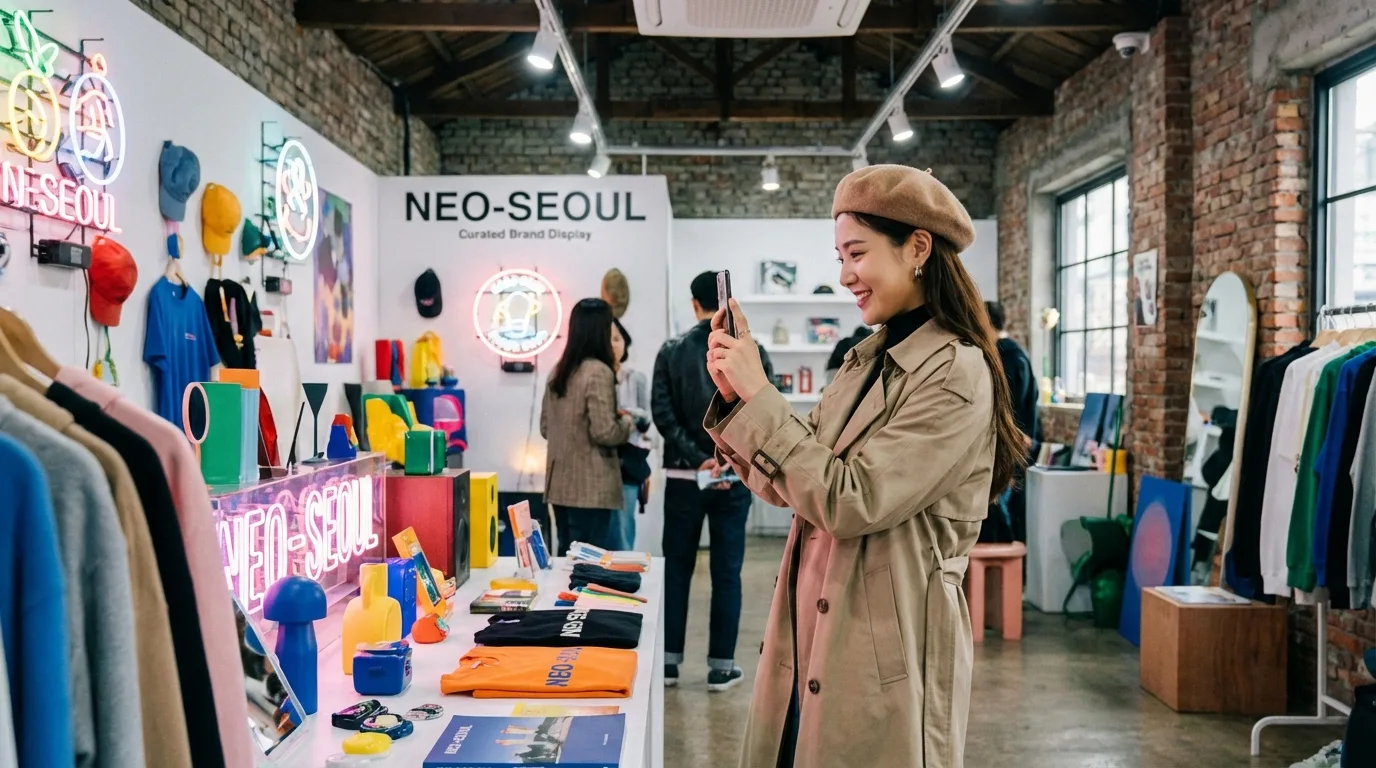
Seongsu pop-ups are not visible only because the brands are strong. They are visible because the district gives them a readable stage. Facades are frequently calmer, industrial shells still remain, and walls or entryways give temporary spaces enough visual support without making the area feel overdesigned.
That is why Seongsu brand spaces are frequently remembered less as retail information and more as atmosphere. The same brand can feel much more temporary and much less memorable inside a department store. In Seongsu, the brand tends to read as part of the street scene while still holding a clear identity. That balance is what makes the district feel edited rather than random.
If you want the wider Seongsu sequence after pop-ups, read Seongsu Cafe Photo Spots and Seongsu Industrial Alley Walk Guide together. They show how the brand-space route keeps extending into cafe facades and the older factory shell behind them.
The district gives brands a visible stage because many spaces still borrow from former factory shells, brick facades, wide doorways, and rougher alley edges. Those details make a temporary installation feel placed inside a neighborhood rather than dropped into a blank showroom. For photos, keep at least one piece of that street structure in the frame.
Brand spaces also change quickly, so the best route is flexible. A pop-up that is worth waiting for this week may be gone or quieter next week. Treat Seongsu as a current street read rather than a fixed museum route.
Reading long weekend queues at Seongsu pop-up stores
In Seongsu, a long line is not just a problem. It is also information. It tells you which brand space is shaping the district mood that week, but it also warns you not to spend the entire route on one stop unless it is truly the priority. First-time visitors typically get more out of Seongsu when they judge the exterior, the crowd, and the surrounding block before deciding whether the line is worth it.
This is where Seongsu has a practical advantage. Even near a crowded pop-up, there is frequently another showroom, facade, or smaller branded space close by. That means waiting does not always feel like wasted time, because the surrounding street continues to give you something to read. Seongsu feels less trapped than any other Seoul pop-up district for exactly that reason.
A line is worth it when the brand, interior experience, or limited product is the actual purpose of the visit. It is less worth it when you only want to understand the district mood. For a first-time walk, a 20-minute wait can be reasonable; a 60-minute wait can consume the route unless the pop-up is the main destination.
Use the queue as a signal, not a command. If the line wraps the entrance and blocks the facade, you may get a better Seongsu memory by photographing the exterior rhythm, walking to a second nearby space, and returning later if the line softens.
Pop-ups and cafes work better together
Seongsu pop-ups are visually dense, but visitors frequently do not stay in each one for very long. If the entire route becomes only brand space after brand space, fatigue can build faster than expected. Cafes solve that rhythm problem. They act like pauses that keep the district readable instead of overwhelming.
That is one reason Seongsu feels more like a taste-driven neighborhood than a pure event zone. People tend to remember not only what they entered, but the order in which one scene handed off to the next. A pop-up route in Seongsu becomes much more useful when visitors understand why cafes are not separate from the route but part of how the route works.
If you want to continue naturally into that next layer, Seongsu Cafe Photo Spots is the best follow-up. It shows how cafe facades and photo-friendly pauses extend the same district rhythm in a different way.
Build the route with a reset point. After 2 or 3 pop-up spaces, a cafe stop prevents the walk from becoming a queue checklist. The cafe does not have to be famous. It only needs to give the route a pause, a bathroom break, and enough time to decide whether the next brand space is still worth chasing.
This is why Seongsu works for people who enjoy observing as much as shopping. The brand spaces create peaks, while cafes and alley walks keep the district from becoming too intense.
Who enjoys Seongsu pop-up stores most
Seongsu pop-ups work best for people who want to see what kind of brand mood has landed on the street, not only for people who want to buy something quickly. Even without entering every store, there is enough to observe through facades, signage, queues, and the way each space fits into the district.
Visitors focused only on fast retail efficiency may find Seongsu less convenient than expected. Lines are common, side streets keep pulling attention, and the district encourages wandering more than direct completion. But that is also the point. Seongsu lasts in memory because people remember what they saw in sequence, not just what they purchased.
The strongest visitor profile is someone who can enjoy the exterior even without entering every space. If you only count purchases, Seongsu can feel slow. If you read displays, windows, doorways, crowd behavior, and the way brands occupy older buildings, the same 90-minute walk becomes much richer.
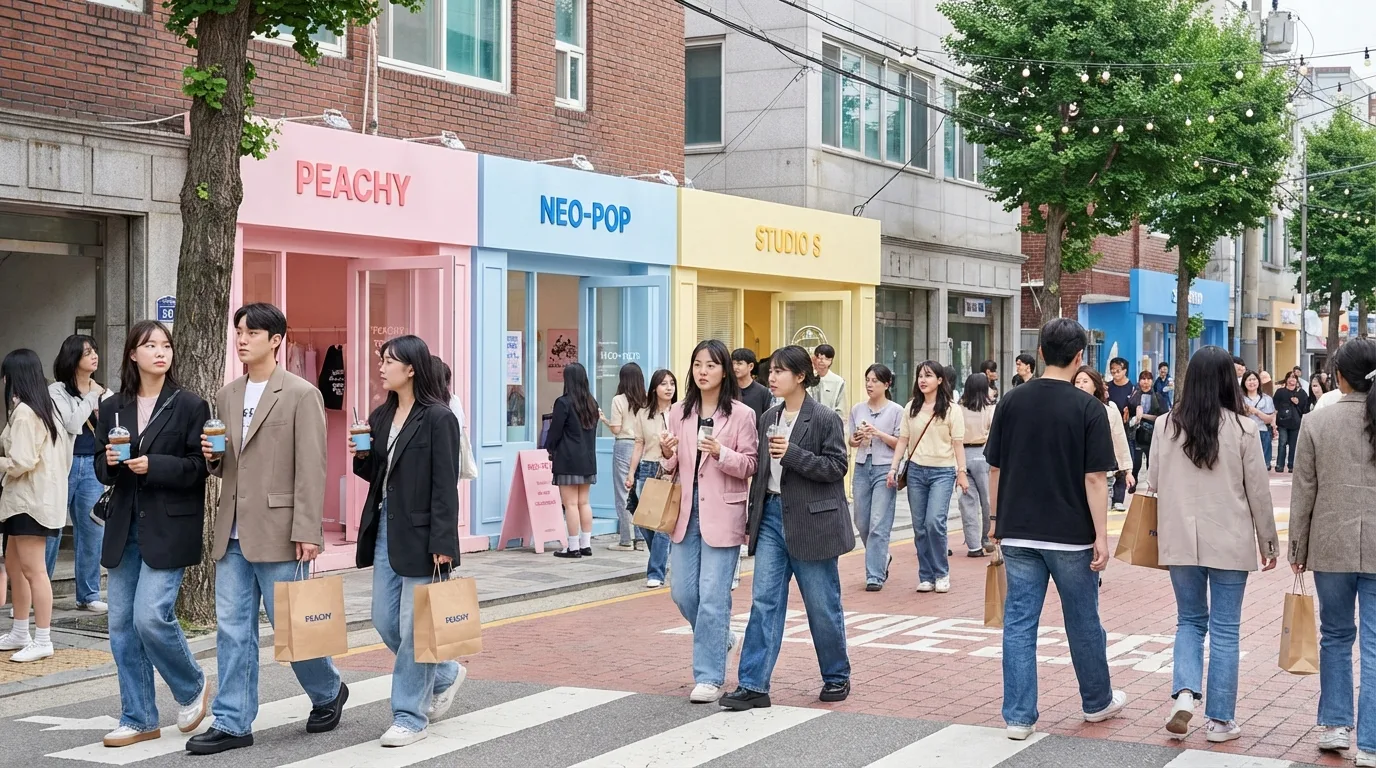
The easiest Seongsu pop-up route starts from the main Seongsu Station flow and narrows gradually into denser brand-space blocks.
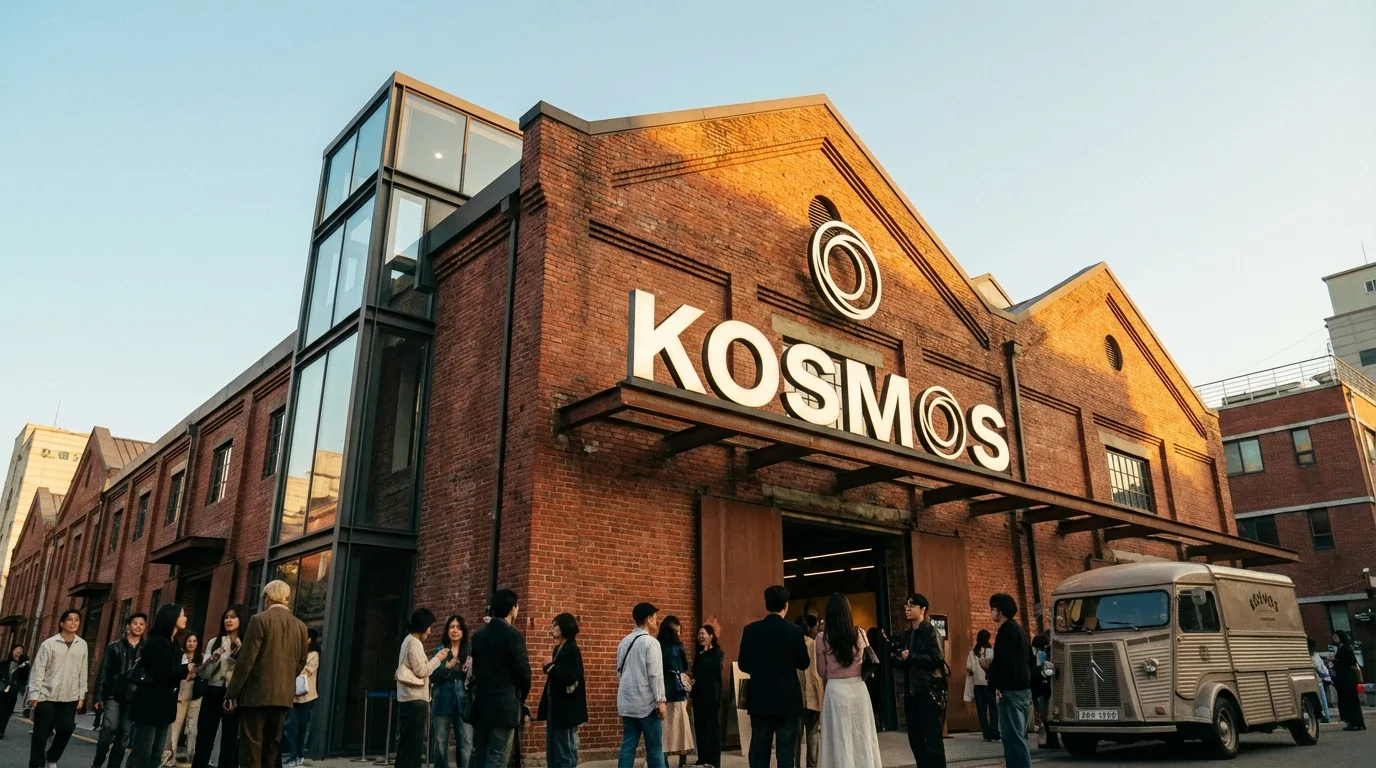
Seongsu brand spaces stand out because the district's industrial facades and calmer street structure give temporary stores a strong visual stage.
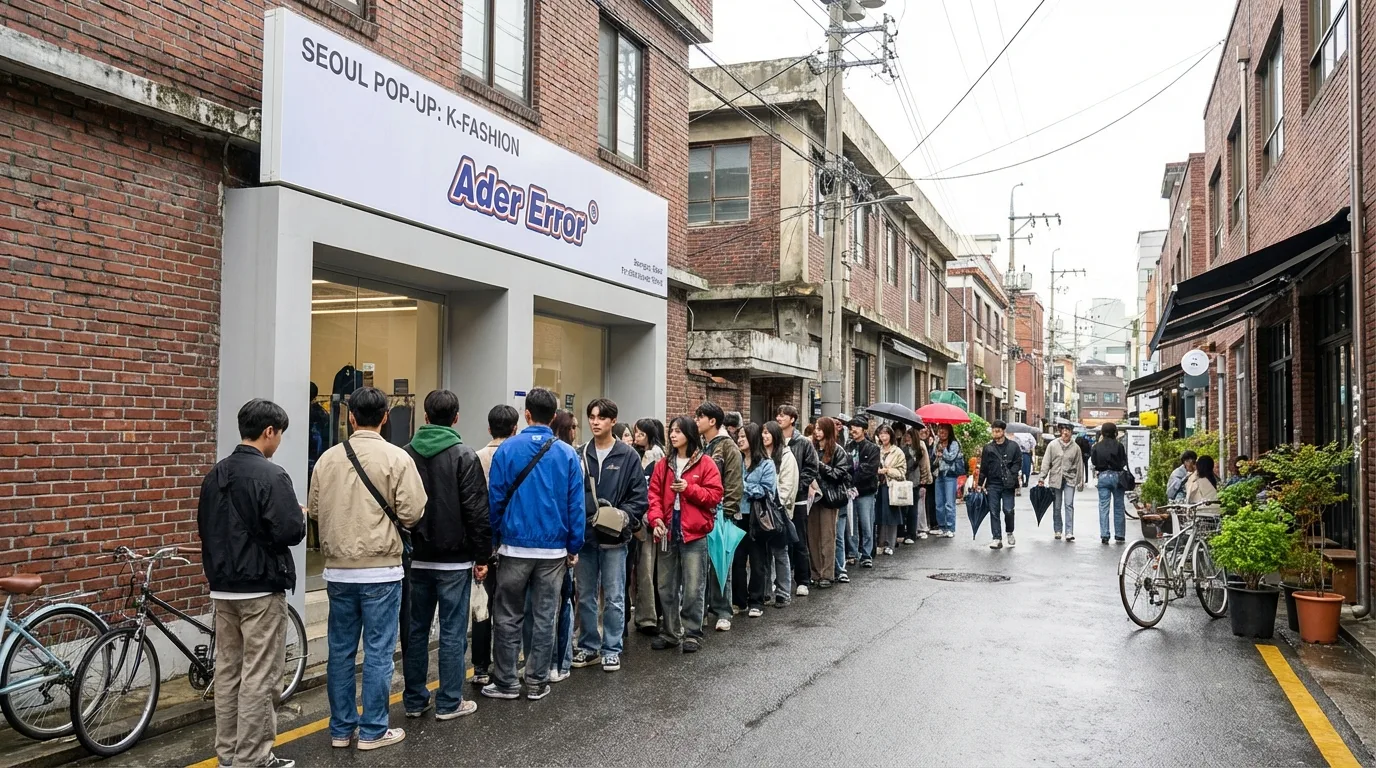
Weekend queues are easier to manage when visitors treat them as one part of a wider street route rather than the whole destination.