EDITORIAL CHECK
Source and Review Basis
Seongsu guides separate fixed-place advice from pop-up and cafe variables, using Seoul tourism neighborhood references and city pop-up examples as the baseline.
People looking for a Seongsu industrial alley walk typically want more than one photogenic brick wall. They want to know why these quieter streets make Seongsu feel more like Seongsu, why factory proportions still matter, and how to read the district once the branded spaces and cafe facades begin to thin out. Seongsu cannot be explained through pop-ups and cafes alone. New spaces read more clearly here because the older industrial frame still remains. This guide closes the Seongsu cluster by narrowing into the alleys themselves and explaining why they still anchor the whole neighborhood.
Where should you begin if you want to feel Seongsu's industrial alleys properly
- Best starting logic: begin where the main retail rhythm starts thinning, then move gradually into quieter alley sections instead of diving deep immediately.
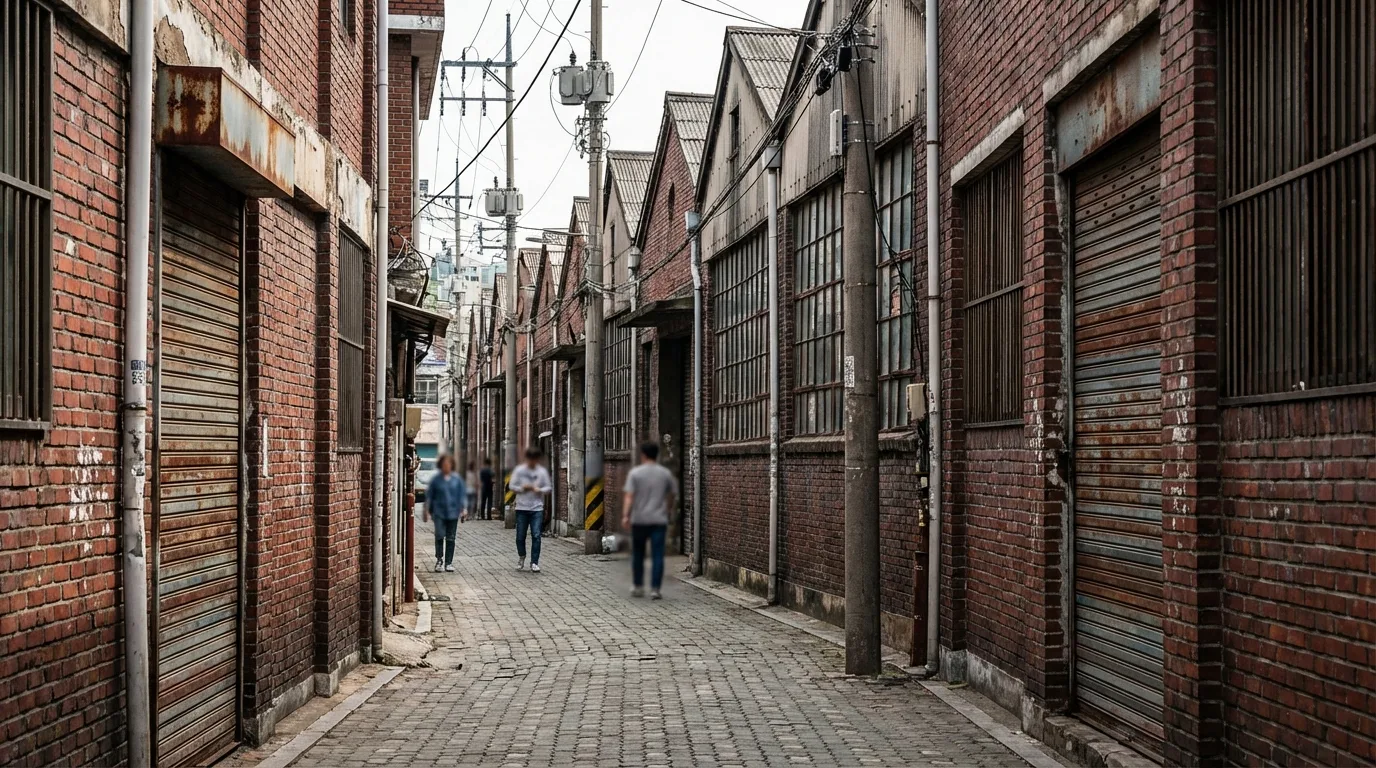
- Best scene types: brick walls, metal shutters, low factory proportions, and restrained storefront fronts.
- First-visit tip: do not chase one destination only; read how the lane opens and closes as you walk.
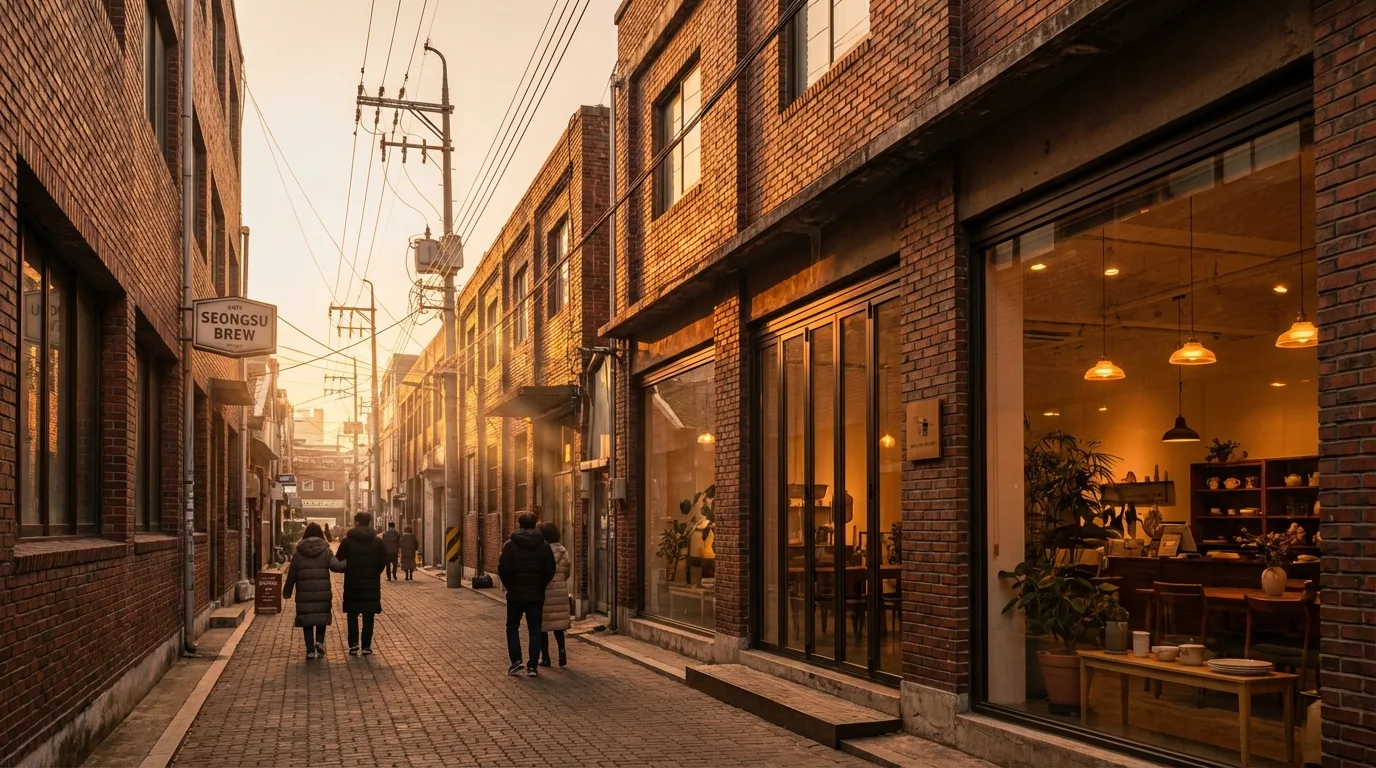
- Photo rule: frames become stronger when alley depth and building spacing stay visible together.
Seongsu's industrial alleys are not meant to be consumed like single landmarks. They become more legible when visitors notice where the public rhythm softens and where the texture of walls and facades begins to change. That transition is what separates Seongsu from a more generic trend district. The alleys may look secondary at first, but they are the structure that holds the whole neighborhood together.
Why do Seongsu brick buildings and factory facades still matter so much
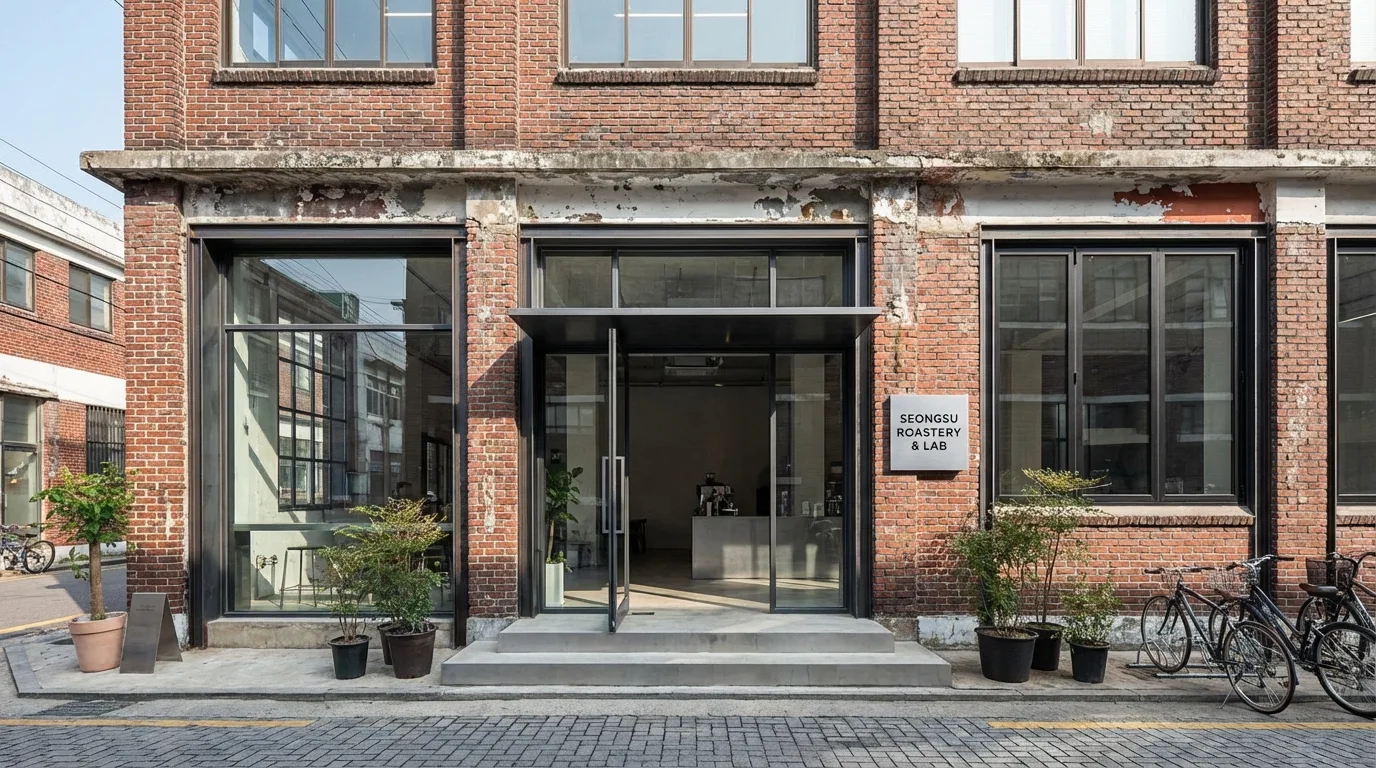
Seongsu keeps feeling new because something old is still present. Brick walls, metal doors, lower building heights, and factory-style proportions stop the district from becoming too smooth. When new cafes or pop-ups arrive, the background does not disappear. Instead, it makes the newer spaces easier to read because the underlying frame is still visible.
That is one of Seongsu's biggest advantages. In many districts, new development erases what came before. In Seongsu, the older shell remains just enough to keep the neighborhood grounded. Visitors are not only seeing trends. They are seeing what those trends are resting on. That is why the industrial alleys are not just a retro effect. They are part of the actual logic that stabilizes the district.
If you want to connect this more directly to the cafe side, Best Seongsu Cafe Photo Spots is the most useful companion read. It shows why Seongsu cafe facades become stronger when this alley texture stays behind them.
Why does alley depth matter more than wide overview shots in Seongsu alley photos
Seongsu alley photos become more convincing when they preserve depth rather than chasing one broad overview. The district works through spacing, folded turns, long wall runs, and the way newer signs appear inside older structures. Industrial photo spots that capture a frame that is too wide can flatten that logic and make Seongsu look like any other stylish street.
Narrower compositions frequently work better because they let the viewer feel how the lane opens, how the wall continues, and how small people appear against the building shell. That kind of image leaves a much stronger impression of "Seongsu industrial alley" instead of simply "a nice Seoul street."
Why do Seongsu's industrial alleys frequently look strongest in late afternoon
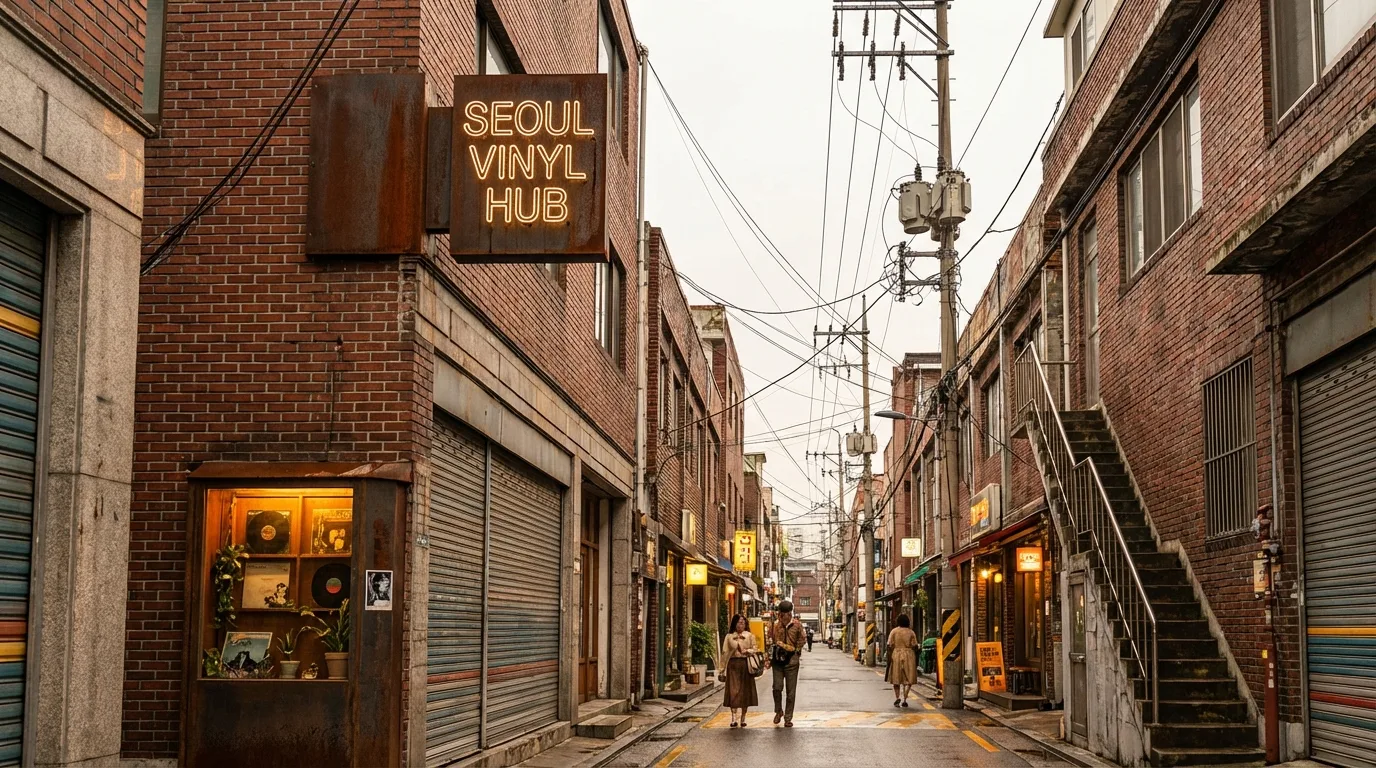
Midday light shows texture clearly, but late afternoon frequently reveals Seongsu more fully. Brick and metal surfaces begin to hold shadow better, and the glow leaking from cafes or showrooms starts pressing gently against the industrial background. That tension makes the district feel more layered and more recognizably Seongsu.
Going too late can reduce the alley structure into isolated light points. If the goal is industrial mood rather than nightlife spectacle, the best timing is typically where daylight information and early evening atmosphere overlap. Seongsu is at its strongest when texture remains visible.
Who will probably enjoy Seongsu's industrial alley walks the most
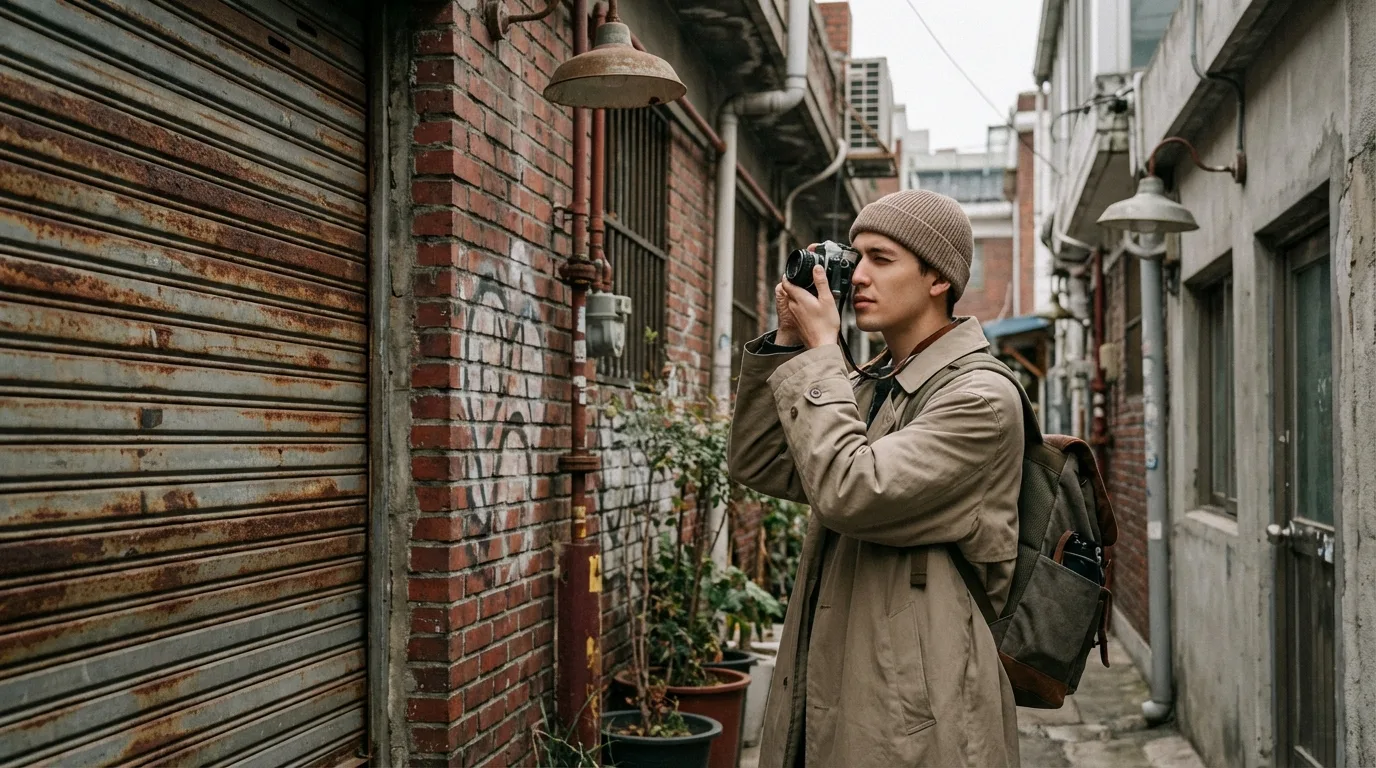
These alleys work best for visitors who care more about background than checklist. If you want to understand why Seongsu lingers longer in memory than some faster Seoul trend zones, the alley structure explains a great deal. For photographers especially, brick, shutters, low roofs, and newer signage meeting in one frame are already enough to hold attention.
Visitors looking only for quick shopping efficiency may find these lanes too slow. But that slowness is part of what makes Seongsu coherent. Pop-ups, cafes, and alleys all matter, yet the alleys are what hold the district in place. That is why this final Seongsu sub-guide ends not with another activity, but with the background logic that explains why the district looks the way it does.
Which season makes Seongsu's industrial alleys feel most legible
Seasons matter here less because of flowers or foliage and more because of how much visual pressure sits on the brick, asphalt, and metal. Spring typically feels easiest for a first walk because temperatures are mild and the district still holds enough daylight for a long slow route. Summer is vivid but harder to read when humidity softens the edges of distance and crowds spill more aggressively from the better-known cafes. Fall is frequently the strongest season for industrial atmosphere because the light turns drier and warmer, which makes worn brick and muted signage feel sharper. Winter can be excellent as well if you enjoy cleaner geometry, bare trees, colder air, and fewer distractions from greenery.
That difference matters when you plan the rhythm of the walk. Spring and fall support longer loops with more stopping. Summer typically benefits from a shorter first pass followed by a cafe break before re-entering quieter lanes. Winter rewards a slightly faster pace, but the district frequently looks more stripped back and more obviously factory-shaped, which many photographers actually prefer. Seongsu is one of those neighborhoods where seasonal change alters readability rather than changing the subject completely.
How should first-time visitors build a practical Seongsu alley route
The easiest mistake is entering the quietest lanes too early, before your eye has adjusted to the district. A better route is to begin where the branded storefront rhythm is still present, then peel away gradually once the main street starts loosening. That shift is what teaches you how Seongsu works. You notice the facades getting simpler, the walls carrying more age, and the sense of destination giving way to a more observational walk.
For many visitors, the strongest sequence is simple. Start near the busier cafe-pop-up zone, give yourself one or two recognizable storefront references, then walk until the signage calms down and the brick-and-metal shell starts taking over again. After that, loop back toward a cafe only after you have spent enough time inside the quieter texture. If you reverse that order and begin in the calmest lane, the industrial atmosphere can register as merely empty instead of distinctive. The walk gets better once the transition itself becomes part of the experience.
What kinds of photos actually describe Seongsu better than generic street shots
Seongsu alley photos become more convincing when they preserve evidence of use. A roller door half worn with age, a brick wall showing repairs, a low roofline behind a sharper new sign, or a narrow run of pavement that suddenly opens into a slightly wider yard all describe the neighborhood more effectively than a pretty but anonymous facade. The question is not whether the scene looks stylish. The question is whether it still looks specifically like a surviving industrial shell being reused in pieces.
This is why one storefront photo rarely explains enough. A more useful frame typically includes at least two layers of time. That could mean an older wall behind a polished window, a quiet warehouse proportion beside a carefully branded entrance, or a narrow alley with just enough depth to show how new businesses never fully erased the earlier structure. If your images keep looking too clean or too lifestyle-generic, the fix is typically not a different filter. It is stepping back and letting more of the working shell remain visible.
When are the alleys busiest, and how should you respond when they stop feeling quiet
Seongsu's industrial alleys are most satisfying when they still feel like background space rather than overflow space. On weekends, especially from late morning through mid-afternoon, that balance can collapse quickly around the most visible cafe-adjacent lanes. When that happens, the district starts reading less like a textured industrial walk and more like a spillover queue with cameras. The solution is not to abandon the walk altogether, but to keep moving and refuse the obvious bottleneck.
The strongest response is typically lateral rather than forward. If one alley suddenly fills with waiting lines or clustered photo stops, move one lane over instead of pushing deeper into the same congestion. Seongsu rewards small adjustments. Because the industrial shell extends beyond the most obvious hotspots, one quiet turn can restore the mood almost immediately. This also makes the walk friendlier for people who are there to observe rather than perform. The district only needs a little breathing room to become legible again.
How do smartphone and camera users need to approach these alleys differently
Smartphones work well in Seongsu when they favor proportion and repetition over distant detail. The wide lens can capture long brick runs and layered facades effectively, but it also makes empty asphalt expand fast, which can weaken the frame. That means phone users typically get better results by staying closer to a wall line, a shutter, or a bend in the lane and letting the industrial spacing sit behind the subject. If you shoot from too far back, the street can lose its character and flatten into general Seoul pavement.
Camera users can do more with compression, especially when they want to stack newer signage against an older shell or isolate a repeating run of factory windows. A moderate telephoto can make Seongsu's density read more clearly because it reduces empty foreground and lets the older structure dominate. Even so, the walk is still the main tool. Equipment only helps once you have chosen the right lane and the right moment. In Seongsu, the best images typically come from knowing when the district has become too polished and when one quieter wall over will restore the industrial mood.
Where should the walk lead next once the industrial mood is clear
The natural next step depends on what you understood from the alleys. If the older shell made the district feel more coherent, go back to Best Things to Do in Seongsu-dong ??Pop-Ups, Cafes, Alley Walks and reread the full structure with that background in mind. If the facade texture started making the cafes look more interesting instead of more commercial, Best Seongsu Cafe Photo Spots becomes more valuable after this walk than before it.
For many visitors, though, the real benefit of the industrial route is conceptual. It explains why Seongsu does not dissolve into trendiness the way some other popular districts do. The cafes can change, the pop-ups can rotate, and individual storefronts can disappear, but the older alley frame keeps anchoring the neighborhood. Once you notice that, Seongsu stops feeling random and starts feeling structured.
Seongsu's industrial alley mood is strongest when visitors read brick buildings, spacing, and quieter lane transitions behind the main street.
New Seongsu spaces stand out more clearly because the older factory shell never disappeared completely.
Photos typically work better when they keep alley depth and building proportion instead of relying on one wide overview.