EDITORIAL CHECK
Source and Review Basis
Seongsu guides separate fixed-place advice from pop-up and cafe variables, using Seoul tourism neighborhood references and city pop-up examples as the baseline.
During the 1970s and 1980s, Seongsu-dong served as Seoul's industrial workhorse, packed with handmade shoe factories, metal machine workshops, and printing presses. Today, this neighborhood has transformed into South Korea's most dynamic design hub, where vintage red-brick warehouses and weathered concrete frameworks have been repurposed into avant-garde fashion flagships, artisan coffee roasteries, and art galleries.
Yet international travelers arriving without prior preparation often find themselves overwhelmed by dense weekend crowds and ninety-minute cafe queues. Rushing into the nearest viral cafe often results in nothing more than a close-up photo of an iced latte against an overcrowded background. The genuine aesthetic power of Seongsu lies in the architectural dialogue between coarse industrial brickwork, glass reflections of passing city life, and the negative space of narrow side alleys. This hands-on guide breaks down the three main cafe zones, optical lens choices for distortion-free facade shots, crowd-bypass scheduling, and street photography etiquette.
— The Three Main Cafe Zones in Seongsu
Because Seongsu covers a sizable urban expanse with starkly different vibes across its blocks, setting your subway exit and target zone in advance eliminates pointless backtracking. The district is divided into three distinct sectors:
-
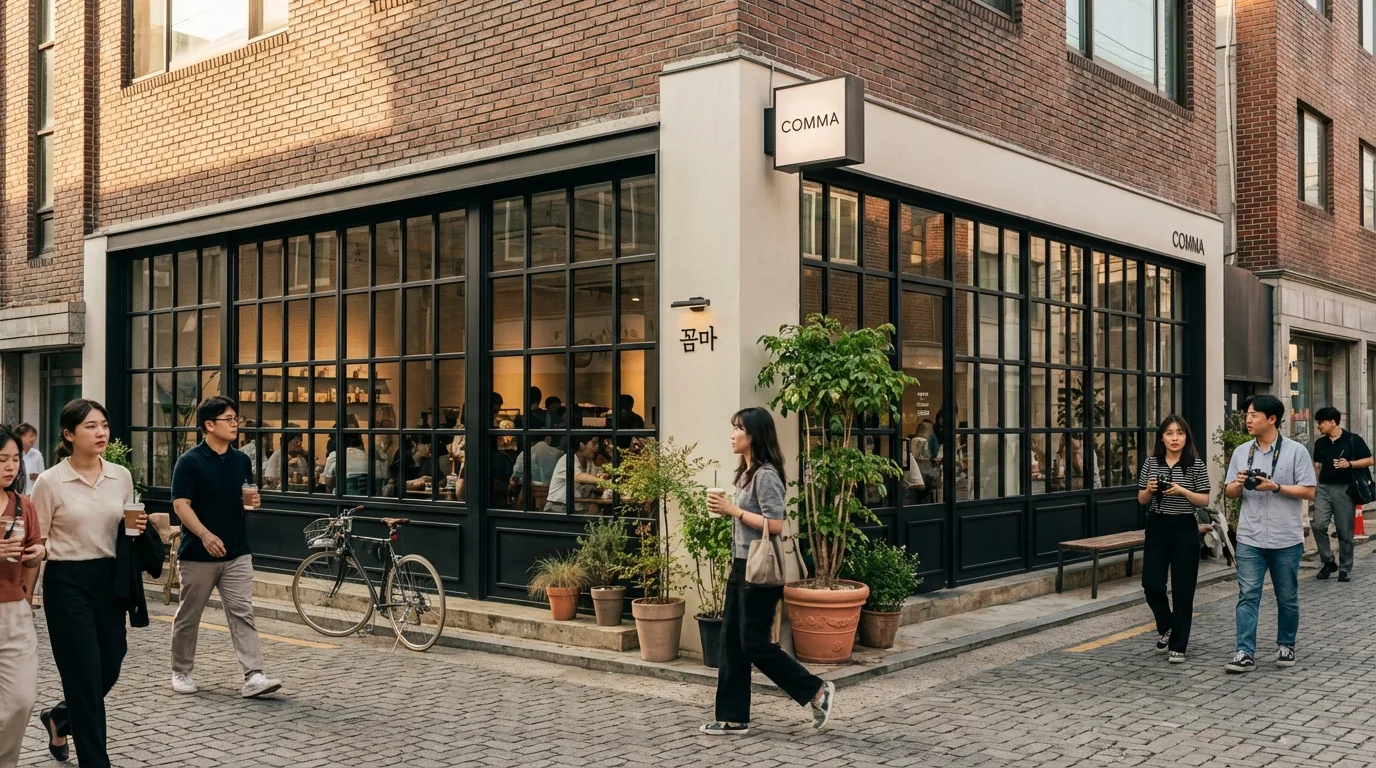
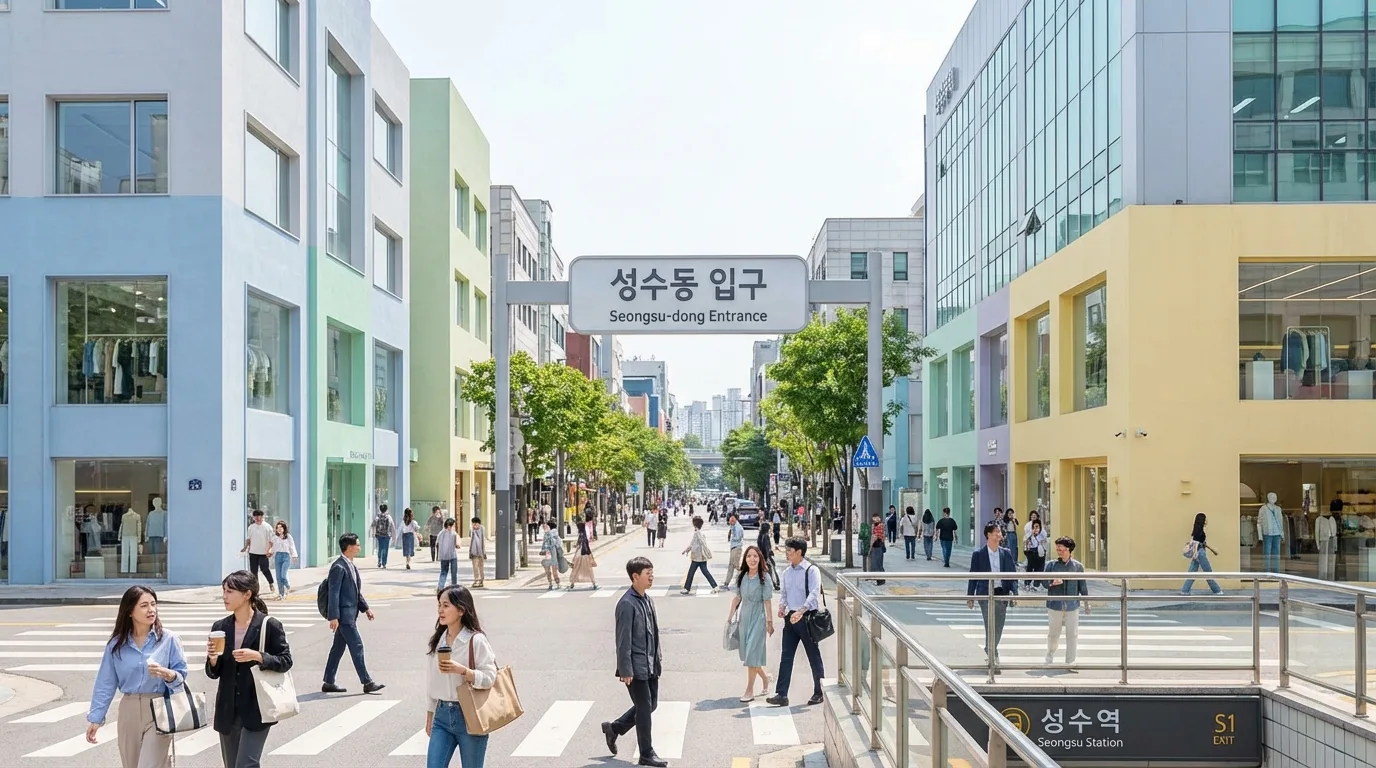
Yeonmujang-gil Main Street (Seongsu Station Line 2, Exit 4): This lively street represents the beating heart of contemporary Korean street culture. Towering concept stores, immersive beauty brand pop-ups, and chic bakery cafes line both sides of the roadway. It is the premier sector for capturing polished architectural facades, vibrant window displays, and fashionable Seoulites strolling past striking storefronts. Naturally, it draws the thickest pedestrian crowds on weekend afternoons.
-
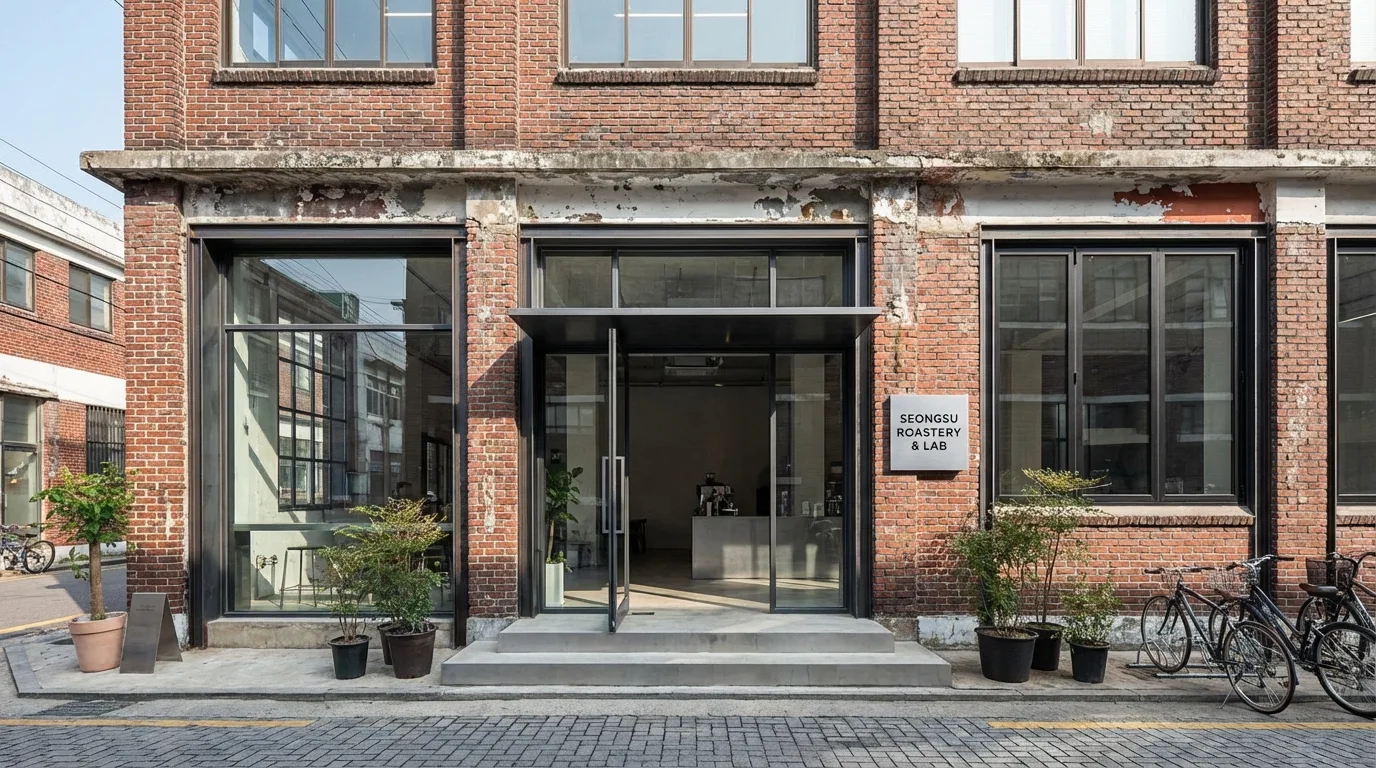
Seongsu Station Exit 3 Industrial Warehouse District (Seongsui-ro): The birthplace of Seongsu's urban regeneration movement, home to pioneering landmarks like Daelim Changgo, Cafe Onion Seongsu, and Grandpa Factory. Converted from former rice mills and iron foundries, these spacious venues showcase raw brick masonry, exposed steel trusses, rusted corrugated metal, and dramatic skylights. Photographers seeking moody industrial textures and sweeping architectural scales should prioritize this zone.
-
Seoul Forest Atelier Street & Alleyways (Seoul Forest Station Suin-Bundang Line, Exit 5 / Ttukseom Station Line 2, Exit 8): Tucked behind the bustling barbecue strip, this neighborhood features two-story detached brick residential villas converted into boutique specialty roasteries (such as Center Coffee and Mesh Coffee) and French pastry salons. Tree-lined sidewalks, quiet residential courtyards, and sun-drenched cafe patios make this sector ideal for intimate lifestyle portraits away from main-road traffic.
For first-time visitors, the optimal walking route spans 1.8 kilometers (approximately two hours at a leisurely pace). Begin at Seongsu Station Exit 3 to photograph Daelim Changgo's storied brick exterior, cross Seongsui-ro into the vibrant buzz of Yeonmujang-gil, and finish along the tranquil lanes of Seoul Forest Atelier Street. This sequence showcases the entire evolution of Seongsu from rugged factory heritage to cutting-edge retail design.
— How to Frame Red-Brick Facades and Industrial Surfaces
Red clay brick, raw poured concrete, and blackened steel frames define Seongsu's visual signature. Capturing these architectural textures cleanly on a smartphone requires mindful lens discipline.
First, avoid wide-angle distortion by using a 2x optical telephoto lens (approx. 50mm equivalent). Modern smartphone default lenses (around 24mm) or ultra-wide 0.5x settings produce noticeable barrel distortion, bending straight vertical walls into outward-curving trapezoids. Instead, step across to the opposite sidewalk (maintaining four to six meters of distance) and toggle your camera to 2x zoom. This compresses optical perspective, ensuring that building corners, window mullions, and mortar joints remain perfectly plumb and vertical, producing professional architectural geometry.
Second, manage glass reflections at a 30- to 45-degree diagonal angle. Many converted Seongsu venues incorporate expansive floor-to-ceiling glass vitrines. Standing directly in front of the glass causes the camera lens and your own reflection to dominate the frame. Angling your viewpoint thirty to forty-five degrees eliminates self-reflections while allowing exterior clouds and adjacent brick facades to mirror gracefully across the surface, layering outdoor and indoor depth.
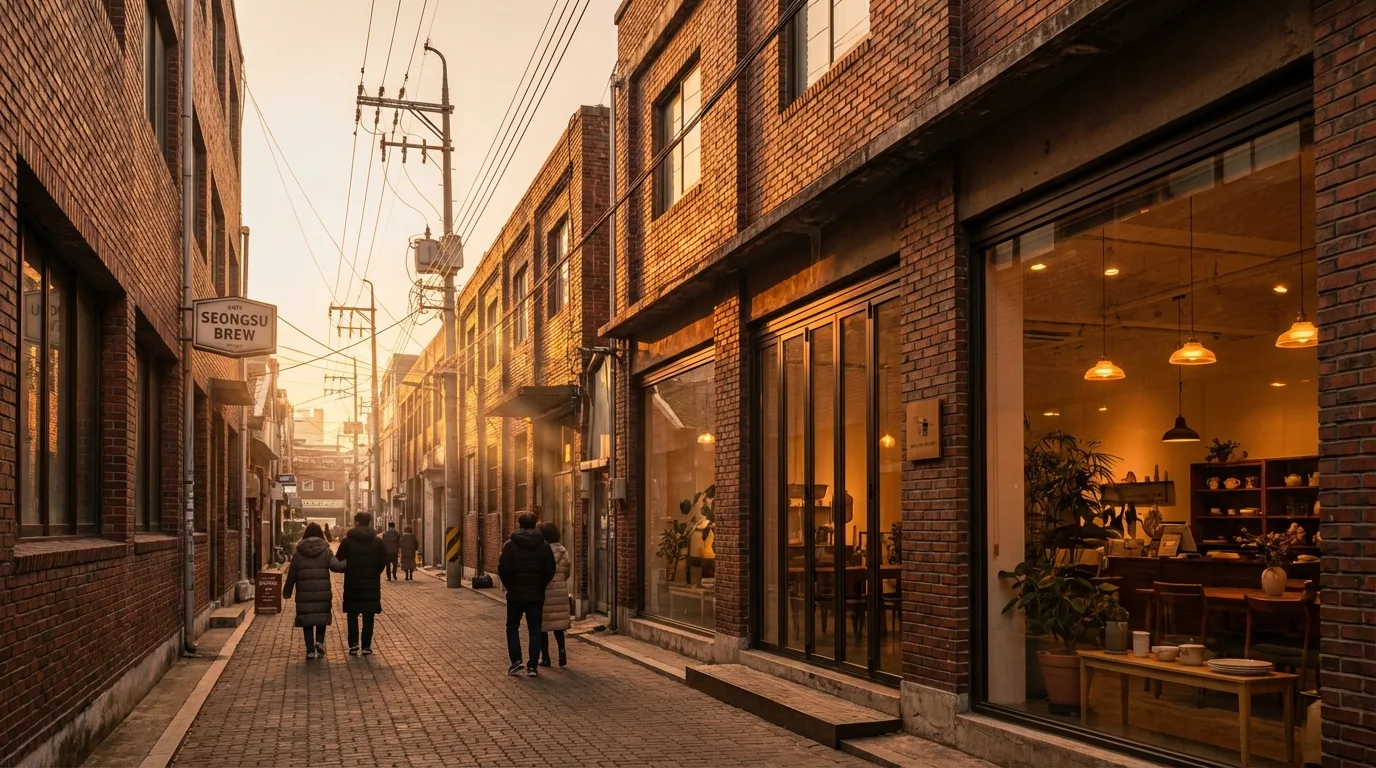
Third, preserve upper negative space with overhead wiring. Overhead electrical utility cables crisscross Seongsu's low-rise skyline. While some visitors attempt to crop them out, these power lines provide an authentic industrial motif that grounds the image in vintage Seoul reality. Composing the frame so that the top thirty percent remains open sky with strung wires creates breathing room above heavy brick masonry.
— Lighting Windows: Golden Hour and Crowd Avoidance
Ambient lighting and crowd density dictate the success of your shoot. Seongsu displays remarkably distinct moods depending on the clock:
Peak Congestion Window to Sidestep: Between 1:30 PM and 5:30 PM on Saturdays and Sundays, Yeonmujang-gil experiences massive gridlock. Sidewalks narrow as long lines form outside popular bakeries and temporary brand pop-ups, rendering clean exterior shots nearly impossible.
The Golden Morning Window (10:30 AM – 12:00 PM): Most artisanal roasteries and concept stores unlock their doors between 10:30 AM and 11:00 AM. Arriving during this window grants you tranquil streets with minimal foot traffic. Crisp morning sunlight hits eastern-facing brick walls at a low angle, carving distinct micro-shadows along weathered textures. Furthermore, coveted window seats remain vacant for unhurried indoor compositions.
Twilight and Blue Hour Contrast (4:30 PM – 6:30 PM): Late afternoon sun casts warm honey tones across red-brick masonry. As twilight descends into blue hour (twenty to thirty minutes after sunset), the deep cobalt sky contrasts brilliantly with the glowing incandescent filament bulbs and neon signage inside cafes.
When facing extensive cafe wait times, avoid idling on the curb. Register your spot on the Catchtable mobile queueing tablet (or KakaoTalk system) near the doorway, then spend the thirty-minute waiting buffer exploring and photographing adjacent alley facades.
— Street Photography Tips: Embracing Pedestrian Flow
Striving for a completely deserted street in Seongsu often strips the neighborhood of its authentic character. Seongsu thrives on human movement—stylish design students in oversized blazers, neighborhood couriers on vintage motorbikes, and local baristas heading between roasteries.
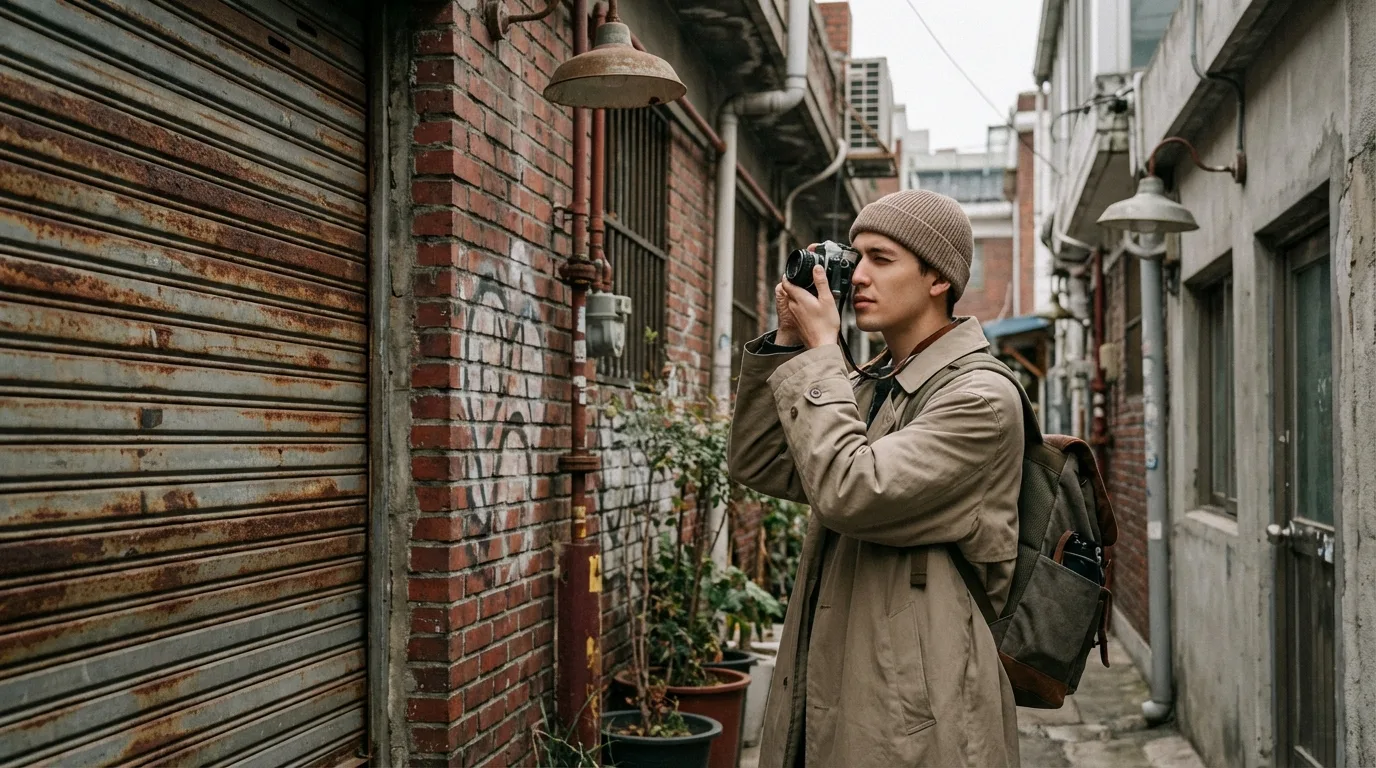
Incorporate passing pedestrians into your compositions rather than viewing them as disruptions. Timing your shutter as a pedestrian strides past one corner of your frame imparts the dynamic feel of an editorial street lookbook.
Adjust your shooting height down to chest or waist level. Lowering the lens slightly and tilting upward elongates subject silhouettes and accentuates the towering presence of renovated brick warehouses.
Seongsu also excels on overcast or lightly drizzling days. Wet asphalt deepens in color, accentuating the warm crimson tone of nearby brick buildings. Pavement puddles reflect glowing neon storefront logos, and diffused cloud cover eliminates harsh specular glare, allowing delicate interior ambient lighting to register clearly on digital sensors.
— Etiquette, Legal Rules, and Visitor Checklist
Practicing thoughtful local etiquette ensures a welcoming experience for residents and small-business owners alike:
-
Portrait Privacy Laws in Korea: South Korean law strictly enforces personal portrait rights (초상권). Avoid snapping direct recognizable portraits of other customers seated behind cafe windows. If strangers appear visibly in your frames, blur their faces before publishing images onto social media or public blogs.
-
Commercial vs. Personal Photography: Casual smartphone snapshots and travel travelogue filming are freely welcomed throughout public alleys. However, commercial e-commerce model shoots utilizing external reflectors, tripods, or multi-outfit clothing changes require formal facility permits in private spaces such as the Dior Seongsu courtyard or LCDC complex plaza.
-
One-Beverage-Per-Guest Ordering Etiquette: When entering any cafe to photograph its interior design, observe the standard Korean policy of ordering at least one drink per guest. Occupying tables solely for photos without placing an order is regarded as disruptive to small independent roasters. Switching your camera shutter to silent mode also respects the ambient cafe atmosphere.
[Essential Field Packing Checklist]
- Comfortable walking sneakers: Seongsu's uneven historic alleyways and elevated stone curbs require resilient footwear for multi-hour walks.
- High-capacity external power bank: Operating map navigation, camera apps, and digital waitlist systems drains battery reserves rapidly.
- Compact crossbody bag: A slim bag worn close to the body prevents bumping into merchandise in tight boutique aisles and bustling cafe counters.
To deepen your understanding of Seongsu's manufacturing roots and pop-up culture, explore our comprehensive Seongsu Industrial Alley Walk Guide and Seongsu Pop-Up Store Guide.
Yeonmujang-gil (Exit 4) leads trend-driven facades, while Seongsui-ro (Exit 3) holds monumental industrial warehouse conversions.
Step across the street and shoot with a 2x telephoto lens to prevent optical barrel distortion and keep brick mortar lines vertical.
Arriving between 10:30 AM and 12:00 PM yields crowd-free facades, while Catchtable remote waitlists free up time for alley exploration.