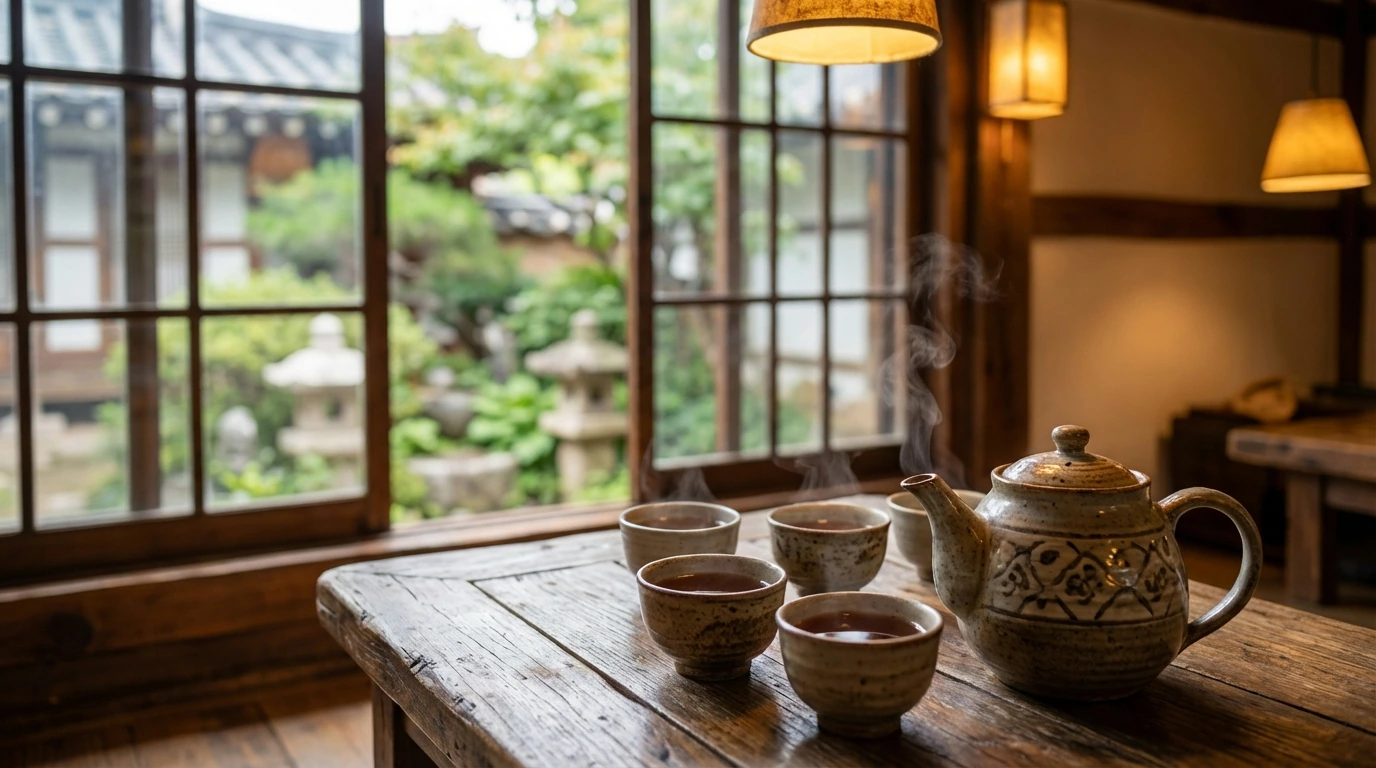
Late in the afternoon, one turn off Insadong's main street is often enough to change the pace completely. Storefront noise drops, wood tones become more visible, and tea-house entrances begin to feel like pauses rather than destinations. In the broader rhythm explained in Best Things to Do in Insadong, tea houses matter because they slow the district down. This guide focuses on where traditional tea houses in Insadong tend to work best, how to read the alleys around them, and what kind of walking route makes the area feel clearer.
— Why Insadong Tea Houses Feel Better in Alleys Than on the Main Street
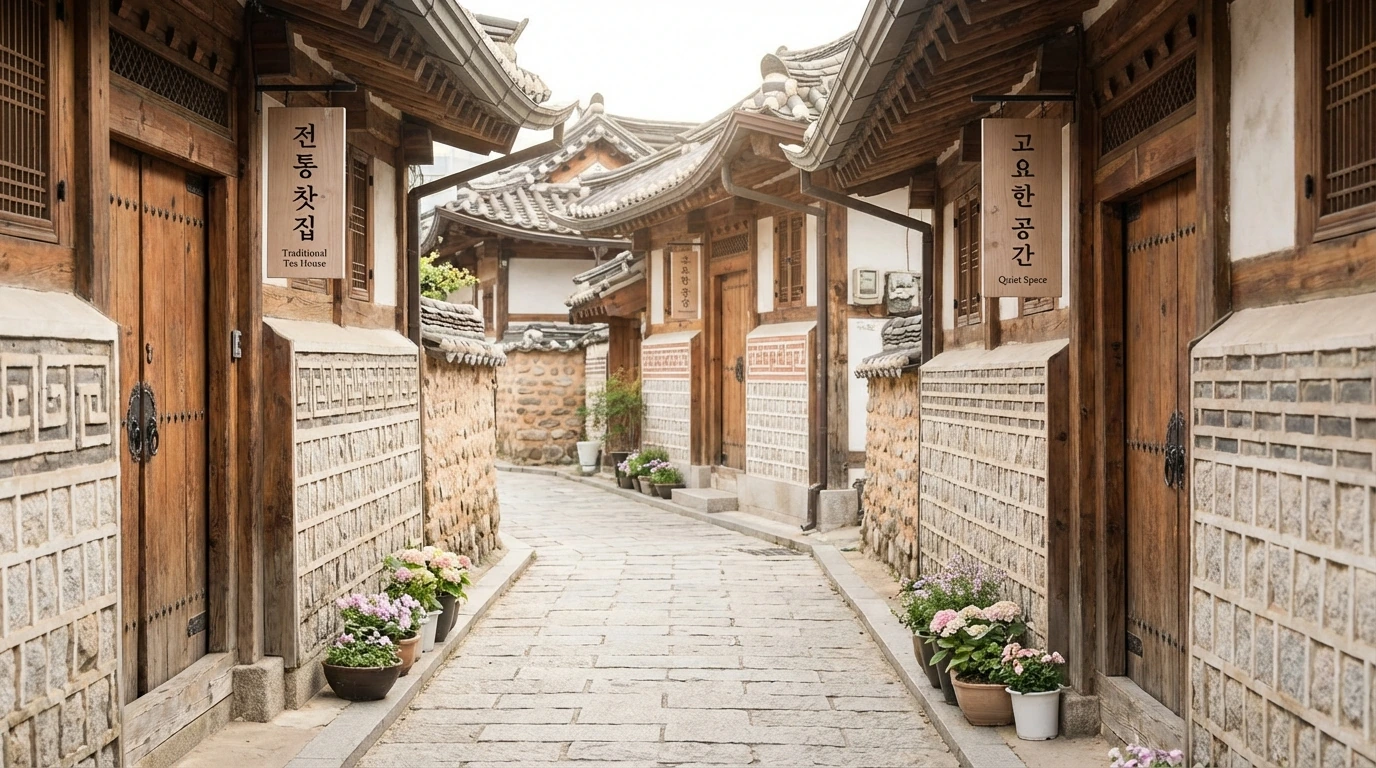
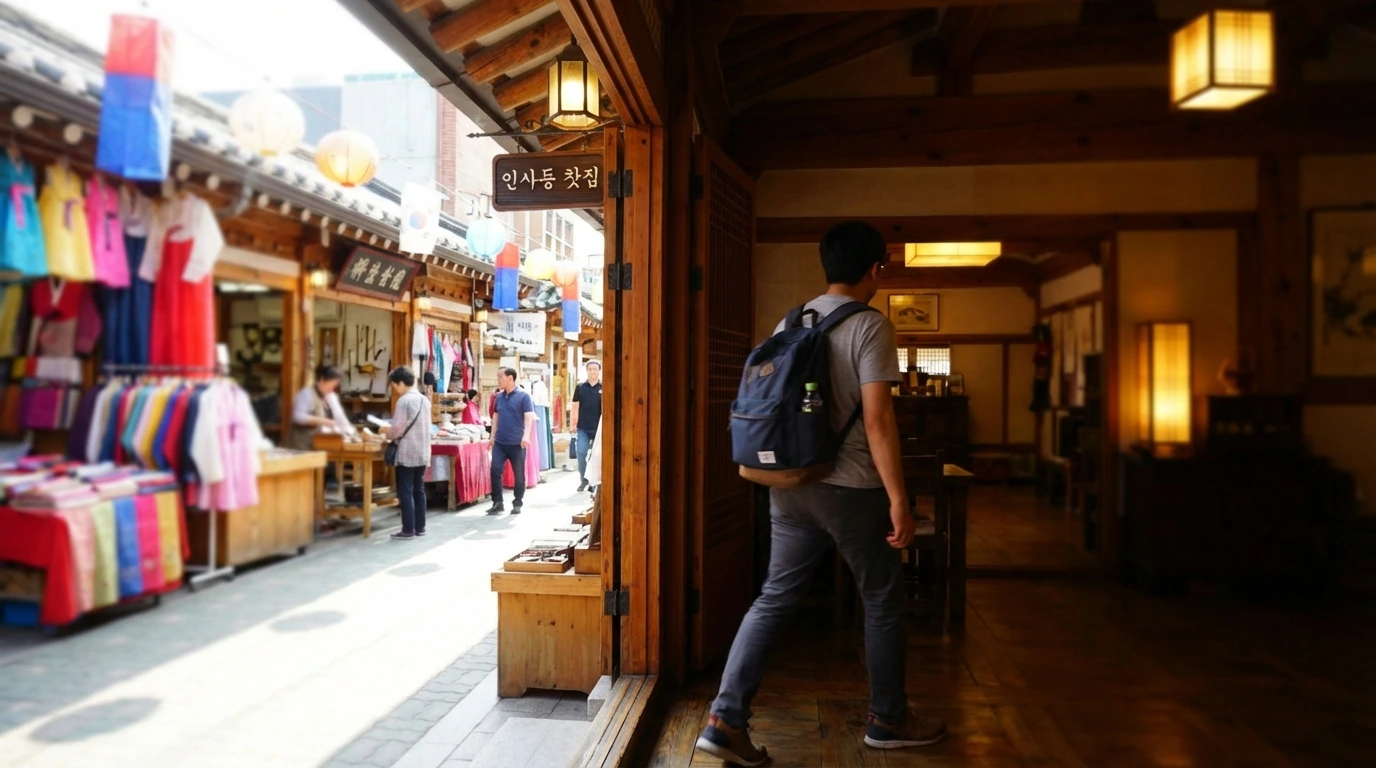
Traditional tea houses in Insadong usually feel more convincing once you step off the busiest central path. On the main street, crowd flow and retail fronts dominate the experience. In the alleys, entrances, signboards, quieter lighting, and older textures become easier to read. That makes tea houses feel less like another stop on a tourist strip and more like part of the district's slower traditional rhythm.
This is why choosing the alley often matters more than choosing the first visible tea house. In Insadong, atmosphere is rarely created by one famous doorway alone. It is created by the transition into that doorway. When the surrounding lane already supports a quieter mood, the tea house usually feels stronger too.
— What to Look for First When Choosing a Tea-House Alley
If you are visiting for the first time, look for lanes that bend slightly away from the main walking pressure rather than staying fully exposed to it. The best Insadong tea house routes usually have restrained signage, some breathing room near entrances, and neighboring storefronts that share similar materials and tone. In those places, the tea house feels integrated into the street instead of visually detached from it.
That difference matters because not every visible tea house gives the same experience. Some are easy to access but feel too exposed to the main flow. Others sit deeper in the lane and feel calmer from the moment you approach them. If the goal is to understand why Insadong tea houses are memorable, the second type usually tells the story better.
— The Difference Between Tea Houses for Rest and Tea Houses for Atmosphere
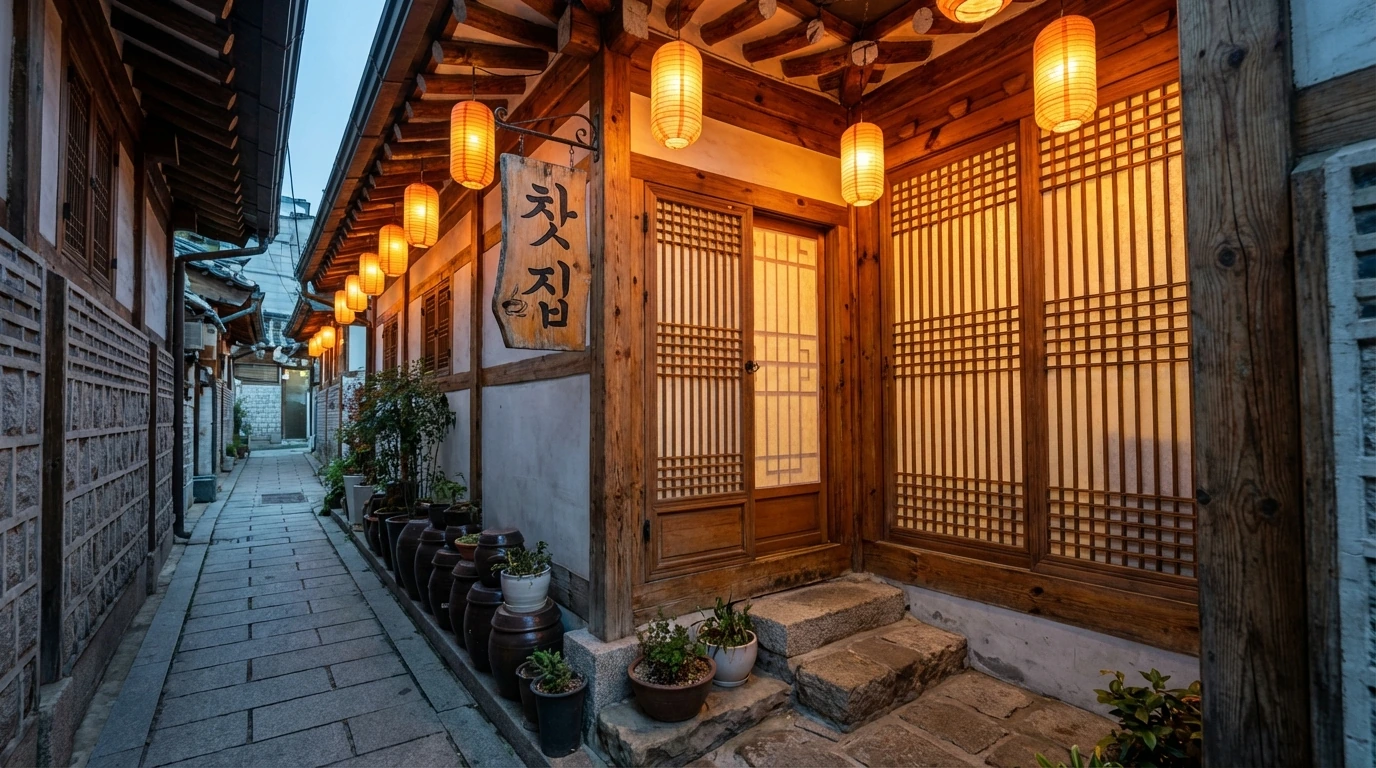
Not all tea houses in Insadong serve the same purpose. Some work best as quiet places to sit and reset, while others stand out because the entrance, exterior texture, or small decorative details are visually memorable. Rest-oriented tea houses often have more stable interior lighting, more comfortable seating rhythm, and less abrupt noise near the entrance. Atmosphere-oriented tea houses tend to leave a stronger impression from outside, even before you step in.
Knowing that difference helps shape the route. If you mainly want rest, it makes sense to choose a deeper alley and treat the stop as a pause in the walk. If you are more interested in mood and visual memory, a tea house that reads clearly from the street can work well even as a shorter stop. That is why an Insadong tea house guide should be read as route logic, not just as a list of names.
— How to Add Tea Houses Naturally into an Insadong Walk
The most natural sequence is usually not to enter a tea house immediately from the busiest part of the district. It works better to walk through craft-shop areas or quieter photo lanes first, then let the tea house become a middle pause. That creates a stronger transition from street texture into interior calm, which is part of what makes the stop memorable.
This route also pairs well with Best Photo Spots in Insadong for Traditional Seoul Shots. Once you have already noticed alley details and slower storefront textures outside, the tea-house interior feels like a continuation rather than a separate activity. In Insadong, mood often becomes clearer when the walk and the stop support each other.
— A First-Time Walking Route for Insadong Tea Houses
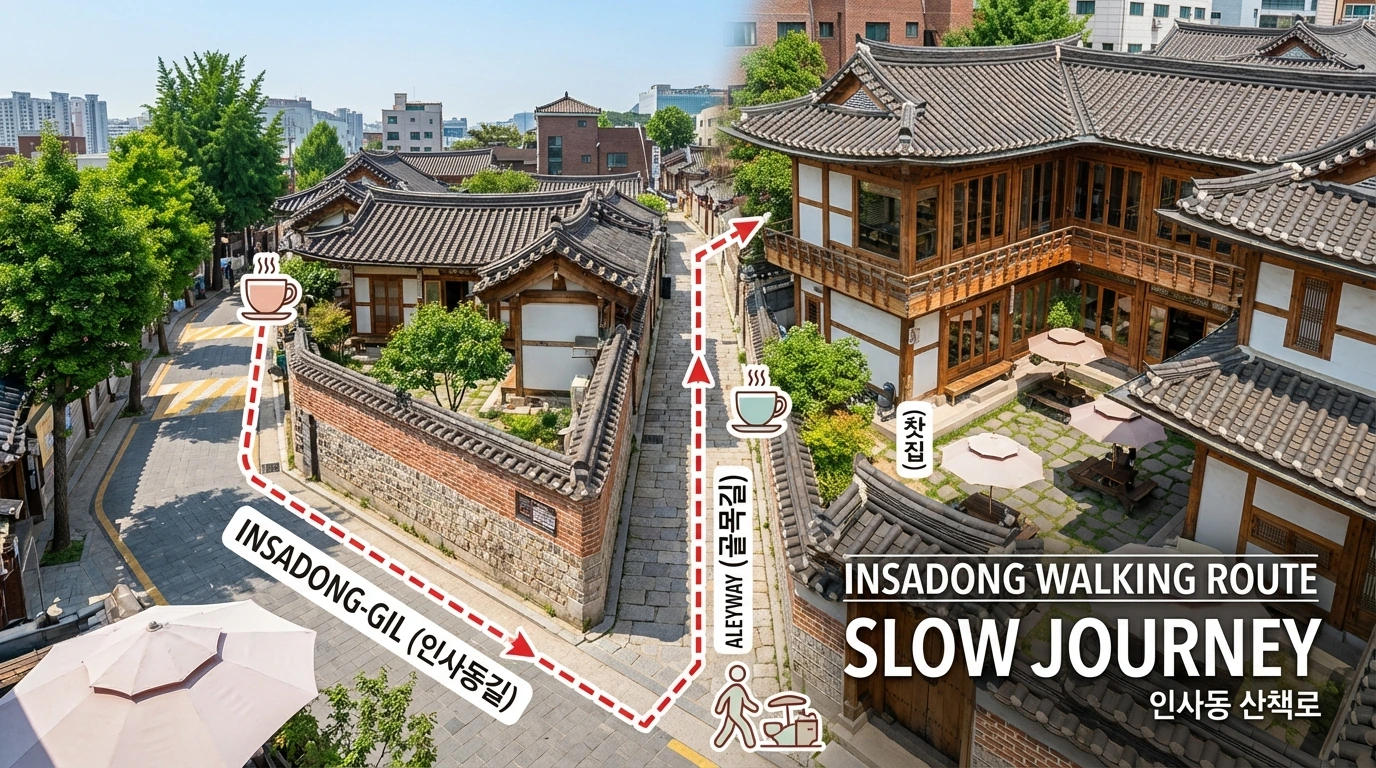
For a first visit, start near the main street, move through one or two side alleys, pause at a tea house around the middle of the walk, and then exit through a different lane. That sequence gives you both the public and private sides of Insadong. You experience how the district presents itself first, and then how it softens once you slow down inside the alleys.
Within the three Insadong sub-guides, this is the most rest-oriented route. Ssamziegil Insadong Photo Guide by Floor explains layered indoor movement, while this guide explains how to lower speed between alleys and tea-house entrances. Together they make the district feel more complete.
— What is the easiest first-time walking order for choosing an Insadong tea house
For a first visit, it usually helps to begin on the main street, move into one medium-width alley instead of the largest obvious turn, compare two or three tea-house fronts, and then return toward the central flow. That sequence makes it easier to compare the public tourist-facing rhythm with the quieter tea-house rhythm without getting lost in too many similar-looking side lanes.
The most important part is not trying to see too many options. Three comparisons are often enough. Doorway depth, the amount of street noise, and how the wood and lighting read near the entrance usually tell you more than a longer list ever will.
An Insadong tea-house walk is really a rhythm choice. The best route is often the one where your pace slows naturally before you reach the tea itself.
— How do time of day and weather change the tea-house route
Late afternoon may be the most familiar recommendation, but it is not the only useful condition. Morning light makes alley structure easier to read, which can help first-time visitors understand which lanes feel too open and which already hold a calmer tea-house mood. Late afternoon adds warmth and atmosphere, but it can also make some areas busier.
Cloudy or recently rainy conditions can work surprisingly well too. Insadong tea-house alleys depend less on bright sunshine than on wood tone, soft storefront light, and the slower material texture of the district. In those conditions, the route can feel quieter and more coherent rather than less photogenic.
— What outside signals help you avoid the wrong tea-house stop
Before going in, it helps to read three simple things: how much breathing room sits in front of the entrance, how loud the alley still feels, and whether the interior mood spills outward naturally or aggressively. A tea house can be popular and still be too exposed for the kind of calm many visitors want.
Those small signals often predict the larger experience better than name recognition alone. If the alley naturally slows down near the entrance, the tea house usually fits the district's traditional rhythm better. In Insadong, the approach often tells you almost as much as the tea itself.
Insadong tea houses usually feel strongest in alleys where quieter lighting and older textures stay visible.
The best tea-house route depends on whether you want a calm rest stop or an entrance with stronger visual atmosphere.
A side-alley walk with a mid-route tea-house stop gives first-time visitors the clearest sense of Insadong's slower rhythm.