At first glance, the best photo spots in Insadong can seem harder to identify than the palace zones of Seoul. That is because Insadong is not built around one dominant monument. As explained in Best Things to Do in Insadong, the district works through signboards, tea-house entrances, craft-shop fronts, and narrower alleys that reveal older Seoul at walking speed. This guide shows where those Insadong photo spots actually read well, how to move through them, and why certain frames work better than others.
— Where the Best Photo Spots in Insadong Usually Begin
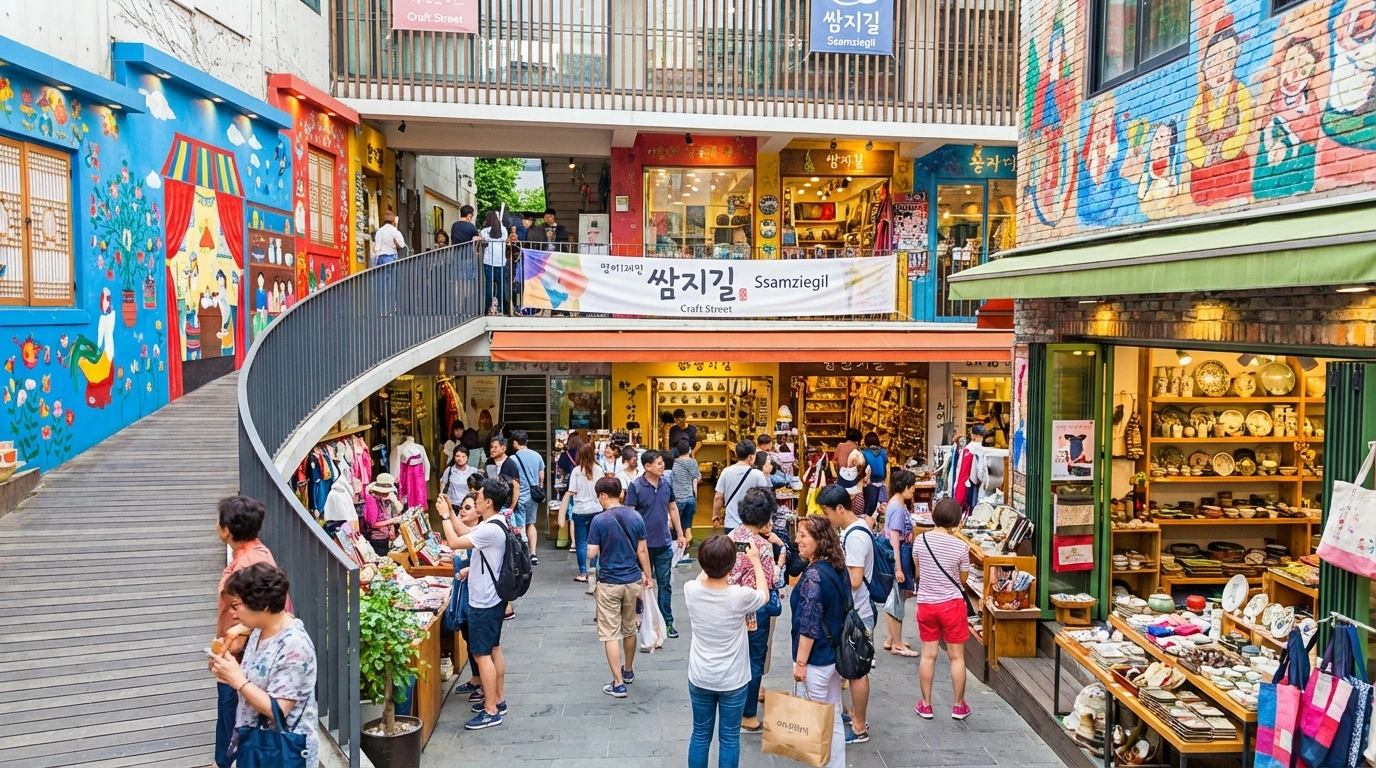
The best starting point is not the widest part of the main street, but the sections where pedestrian flow and storefront texture overlap. In those areas, traditional signboards, craft displays, and passing movement all stay inside one readable frame. If you shoot too wide, the district can flatten into a generic tourist street. If you narrow the frame around one storefront edge, one sign line, and one walking path, it starts to feel specifically Insadong.
That is what makes the main street useful for orientation. Visitors can quickly see how Insadong differs from palace districts. A palace gives you symmetry and major sightlines. Insadong gives you compressed texture. The best photo spots in Insadong often begin where that texture sits close to the viewer rather than far away.
For first-time visitors, it helps to read the main street as a calibration zone rather than as the final destination. Sign size, storefront density, and walking pace all tell you what kind of frame will still feel like Insadong once you move inward. The district has fewer monumental cues than palace areas, so these smaller texture decisions matter more than people expect.
— Why Side Alleys Feel More Distinctly Insadong
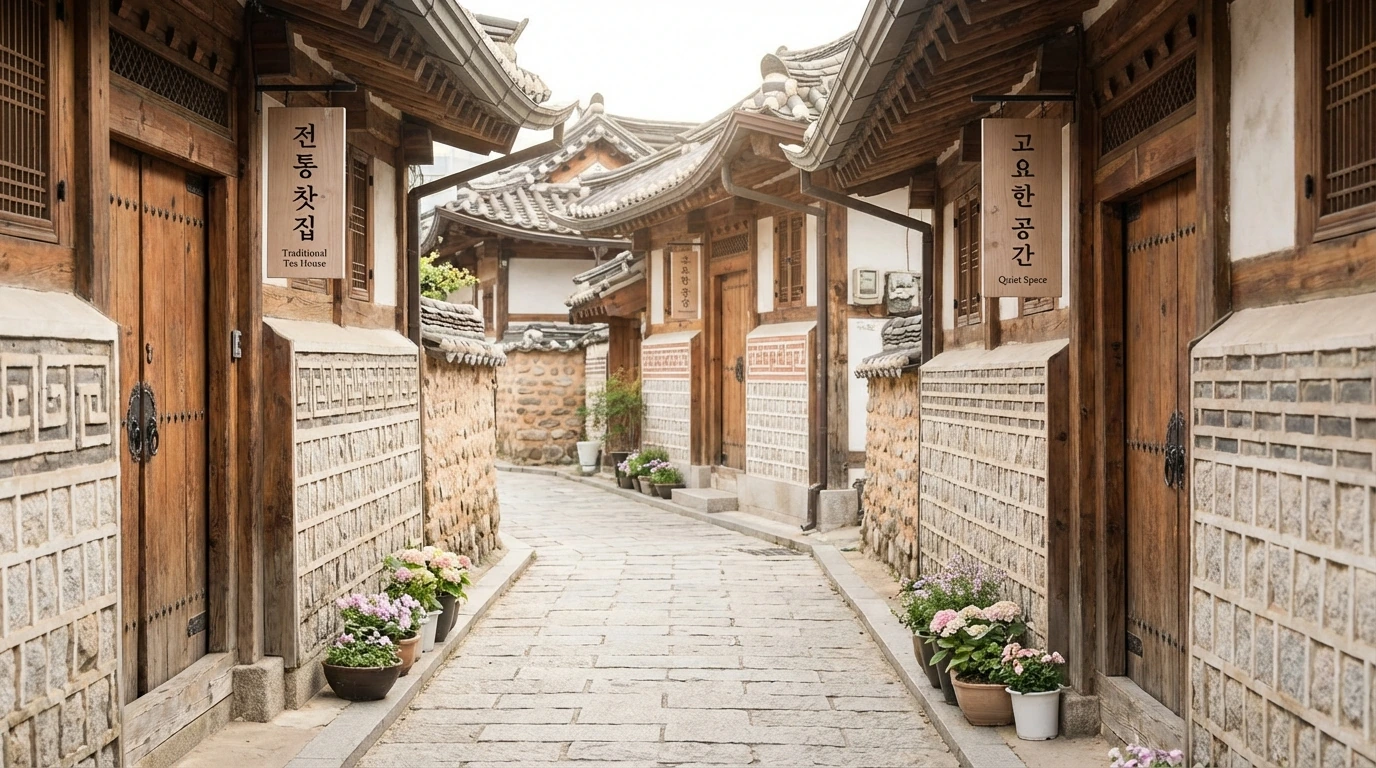
Once you step a little off the main route, the district changes pace. Crowds thin out, and details become easier to isolate: tea-house thresholds, older wall surfaces, narrow stair entries, wooden frames, and handmade display elements. These alley sections usually feel more recognizably Insadong because they lower visual noise without losing the district's traditional material language.
That is also why alley photography matters here. In another neighborhood, an alley may just be a shortcut. In Insadong, it often becomes the place where the district's rhythm feels most convincing. You stop seeing a general tourist zone and start seeing how older Seoul survives in tighter, more tactile fragments.
Going deeper is not always better, though. Alleys that sit one or two turns off the main flow often work better than the deepest interior corners. They stay calm enough to feel distinct while still preserving the district's stronger visual identity. That middle zone is often where Insadong becomes easiest to photograph well.
— Why Tea-House Fronts and Craft Shops Work So Well in Photos
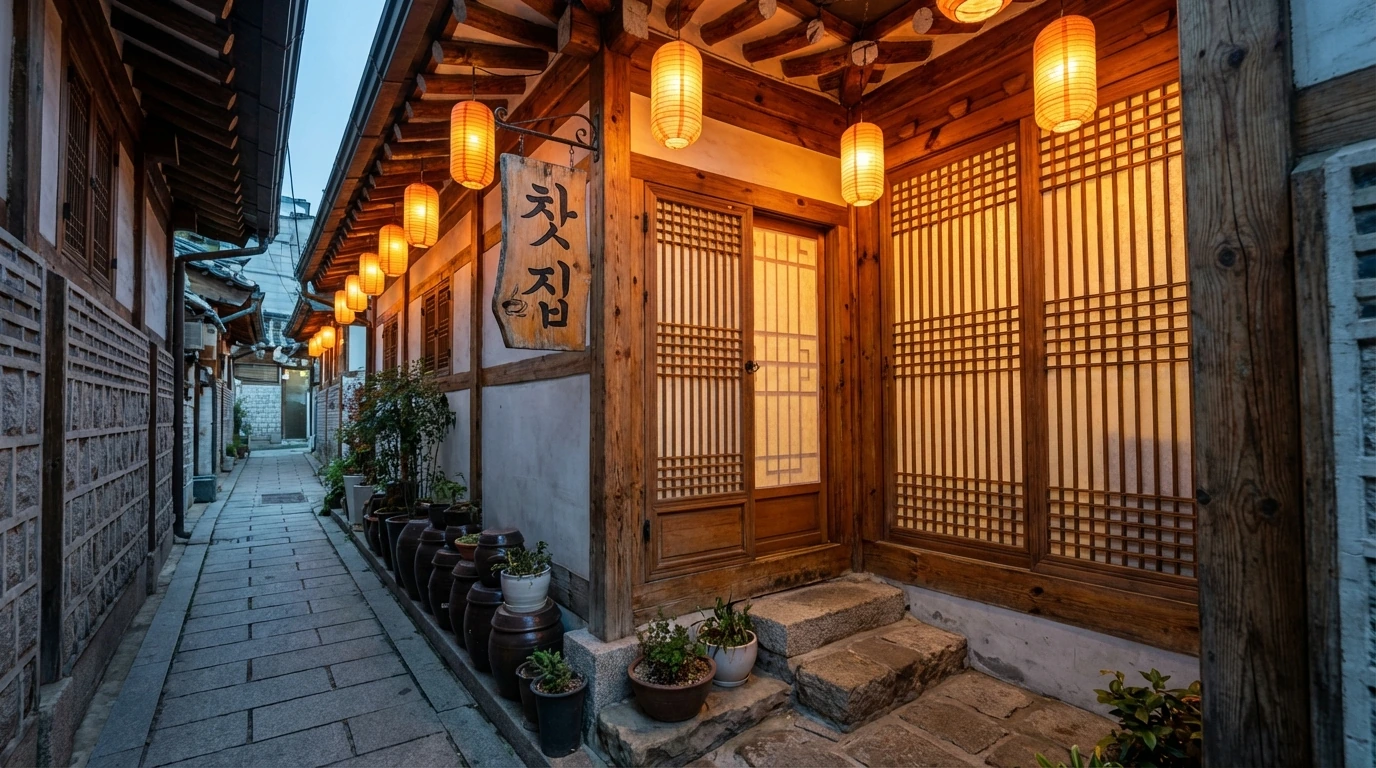
Some of the strongest Insadong photo spots are not panoramic at all. They are tea-house fronts and craft-shop exteriors where inside and outside mood meet at the entrance. Wood tones, paper textures, warm light, and small display objects give these places a stable visual center. Even simple portraits or street frames become more legible there because the background already carries a coherent tone.
These places also suit Insadong's slower visual logic. Instead of dramatic posing, small movements usually work better: pausing at a doorway, turning slightly toward a side street, or standing near a storefront rather than directly in front of a major sign. The district rewards stillness and texture more than spectacle.
Clothing choice changes the result too. Tea-house fronts and craft stores usually pair best with quieter colors because the background is already doing subtle work through wood, paper, and muted light. If the outfit becomes too loud, the frame stops reading as traditional Seoul mood and starts feeling like unrelated styling placed against an old wall.
— When Insadong Photo Spots Look Best
Insadong usually works better in daylight and late afternoon than in full night conditions. The district is not primarily defined by neon or sharp artificial contrast, so natural light helps reveal the materials that make the area memorable. During the day, storefront structure and alley order are easier to read. In late afternoon, wood, paper, and muted tones often gain softer depth without losing detail.
Midday can still be useful, but crowd density often makes the frames feel less controlled. For first-time visitors, the better question is not simply what hour to arrive, but whether the light is helping the material surfaces read clearly. If the surfaces look flat, the district loses much of what makes it different.
Even overcast light can work surprisingly well here. Insadong does not depend on dramatic sunshine in the way some skyline or river routes do. Softer light can help paper, wood, and wall surfaces feel more even and less harsh. The district photographs best when its material language stays readable.
— A First-Time Walking Route for Insadong Photography
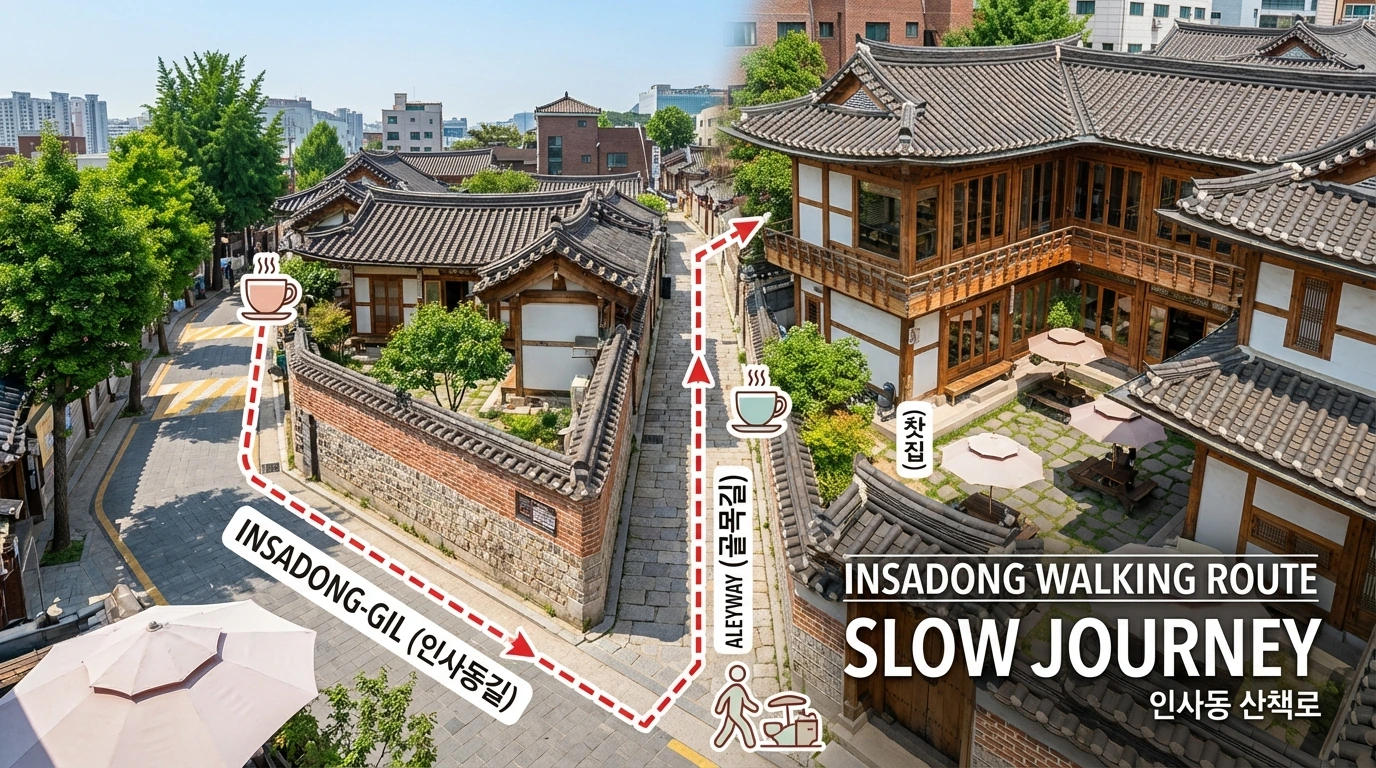
For a first visit, the most reliable route is to start on the main street, move into one or two smaller alleys, pause around tea-house fronts and craft-shop thresholds, and then return to the central walking flow. That sequence helps you compare Insadong's public tourist rhythm with its quieter interior edges. The contrast is what makes the district photograph well.
It also turns Best Things to Do in Insadong into something visible on the ground. The hub explains why Insadong matters as a traditional Seoul street. This guide shows how that importance becomes photographic: not through one giant frame, but through a connected series of slower, more tactile scenes.
— How do crowds and outfit tone change the Insadong result
Weekend midday Insadong can become so busy that wide frames start reading like tourism records instead of atmosphere. In those conditions, it often works better to use alley mouths, storefront thresholds, and tighter material-led backgrounds that naturally close the frame. Insadong does not need grand scale to feel specific.
Outfit tone matters for the same reason. Quieter colors usually let the district's wood, paper, and muted sign textures stay visible. The strongest Insadong frames often come from restraint. The goal is not to overpower the location but to let traditional Seoul surface through the image more clearly.
— What is the simplest first-time route if you want Insadong to stay readable
First-time visitors usually do better when they reduce Insadong into three scene types: a main-street storefront zone, one quieter tea-house alley, and one transition point where smaller craft details become visible. Those three scene types already explain most of what makes the district photograph well.
The route stays practical because the sections sit close enough together that the walk never becomes tiring. Starting in the busier public flow, stepping inward for calmer frames, and then returning outward again helps visitors compare tourist-facing Insadong with its quieter traditional texture. That contrast often matters more than the exact shop name or alley address.
The best photo spots in Insadong usually come from storefront texture and alley transitions rather than one oversized landmark view.
Tea-house fronts and craft-shop entrances work especially well because they combine material detail with a slower visual rhythm.
A main-street-to-alley walking route in daylight or late afternoon gives the clearest read on Insadong's traditional Seoul mood.