People searching for Olive Young must-buys often start with ranking videos, store-front displays, or whatever looks famous on the entrance shelf. Real Korean beauty shopping works better when the order is reversed. You need to know whether skincare comes first, whether the trip needs mini sizes, whether a salon visit is part of the plan, and whether the makeup is meant for daily wear or for photos. This hub brings Olive Young shopping, salon phrases in Korea, travel beauty planning, and photo-friendly makeup into one practical decision flow.
— What to sort out before buying Olive Young must-buys
- Write down the current skin issue first: irritation, dehydration, oil imbalance, breakouts, post-acne marks, or simple dullness.
- Check the trip format too: a weekend trip, a two-week stay, checked baggage, or carry-on only all change what deserves space.
- Separate daily makeup from camera makeup: one routine may need comfort, the other may need better balance under flash or indoor lighting.
- Confirm whether a salon visit is coming up: haircut, dye, or perm consultations often need clearer language before they need more products.
Olive Young must-buys become much easier to choose once the shopping list is based on use cases rather than on hype. A soothing cream built around panthenol and ceramide solves a very different problem from a brightening serum built around niacinamide. A travel pouch for a five-day trip does not need the same product count as a month-long routine rebuild. In larger Korean beauty stores, people often spend more time in the problem-solving sections than in the seasonal best-seller zone for exactly this reason.
This hub narrows the shopping logic step by step. It starts with store strategy, then moves into skincare priorities, travel pouch planning, salon communication, and makeup choices that hold up better in photos. That order prevents the usual mistake of buying a pile of interesting products without a working routine behind them.
— Korean beauty shopping works better when the problem comes before the category
Inside the store, product types appear first: toner, serum, cream, cushion, lip tint, hair essence. The more useful filter is the problem that needs solving. Skin that feels red and tight usually needs barrier support before it needs another active. Skin that looks greasy by noon may still need hydration, but in a lighter structure. Shopping by product type alone often leads to duplicates that do the same job badly.
That is why problem-first shopping is more stable. If sensitivity is the main issue, a gentle cleanser, one calming toner, and one barrier cream are usually more helpful than three different trending serums. If breakouts are the issue, adding multiple strong cleansers or exfoliating pads can make the skin feel productive for two days and worse for the rest of the week. The useful store question is not what is famous but what this product should replace or support.
This also makes the store route easier. Once the need is clear, you can move through the shelves in a narrower order: cleanse, calm, seal, then only add makeup or treatment items if the basics already make sense. That is the difference between Korean beauty shopping that feels intentional and shopping that turns into trend collecting.
— The first products worth picking up in the skincare section
For most travelers and first-time K-beauty shoppers, the smartest start is not a high-concept serum. It is the basic structure: cleanser, calming layer, barrier support, sunscreen, and only then one treatment step if needed. In practice, people often buy sheet masks, ampoules, or toner pads first because they feel exciting, then realize later that the cleanser is too stripping or the cream is too light for the climate.
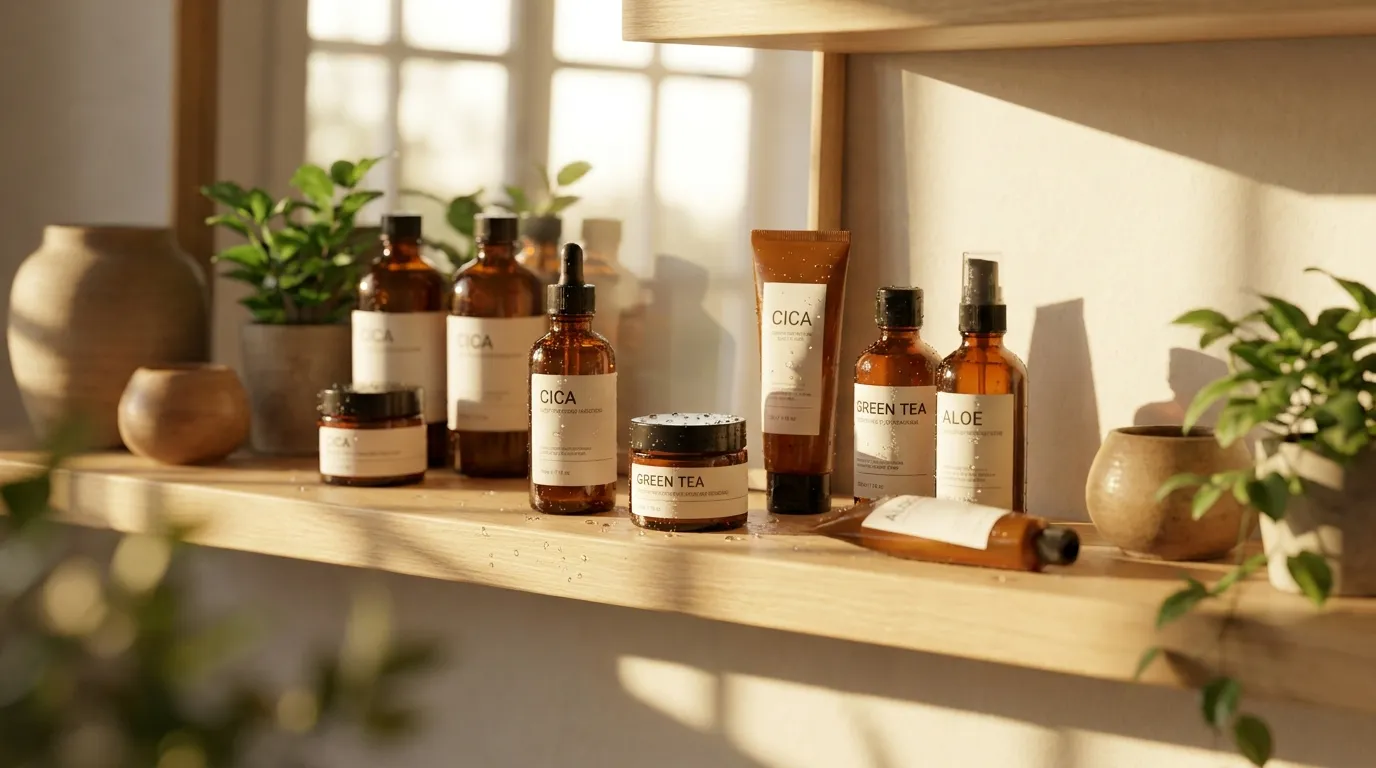
Ingredient structure matters here. Skin that flushes or stings easily often responds better to centella asiatica, madecassoside, allantoin, panthenol, or beta-glucan as first-stop calming ingredients. If dehydration is the bigger issue, ceramide, cholesterol, and fatty-acid support often hold up better than watery hydration alone. If brightness is the target, niacinamide or a moderate vitamin C derivative can be practical, but starting a trip with a very high-strength active is often a bad trade.
The in-store test should also be practical. Texture alone is not enough. What matters is residue, stickiness under sunscreen, and whether the product leaves the face cleaner or heavier after ten minutes. That check is far more useful than the first glossy finish on the back of the hand.
— Travel K-beauty pouch planning is mostly about overlap removal
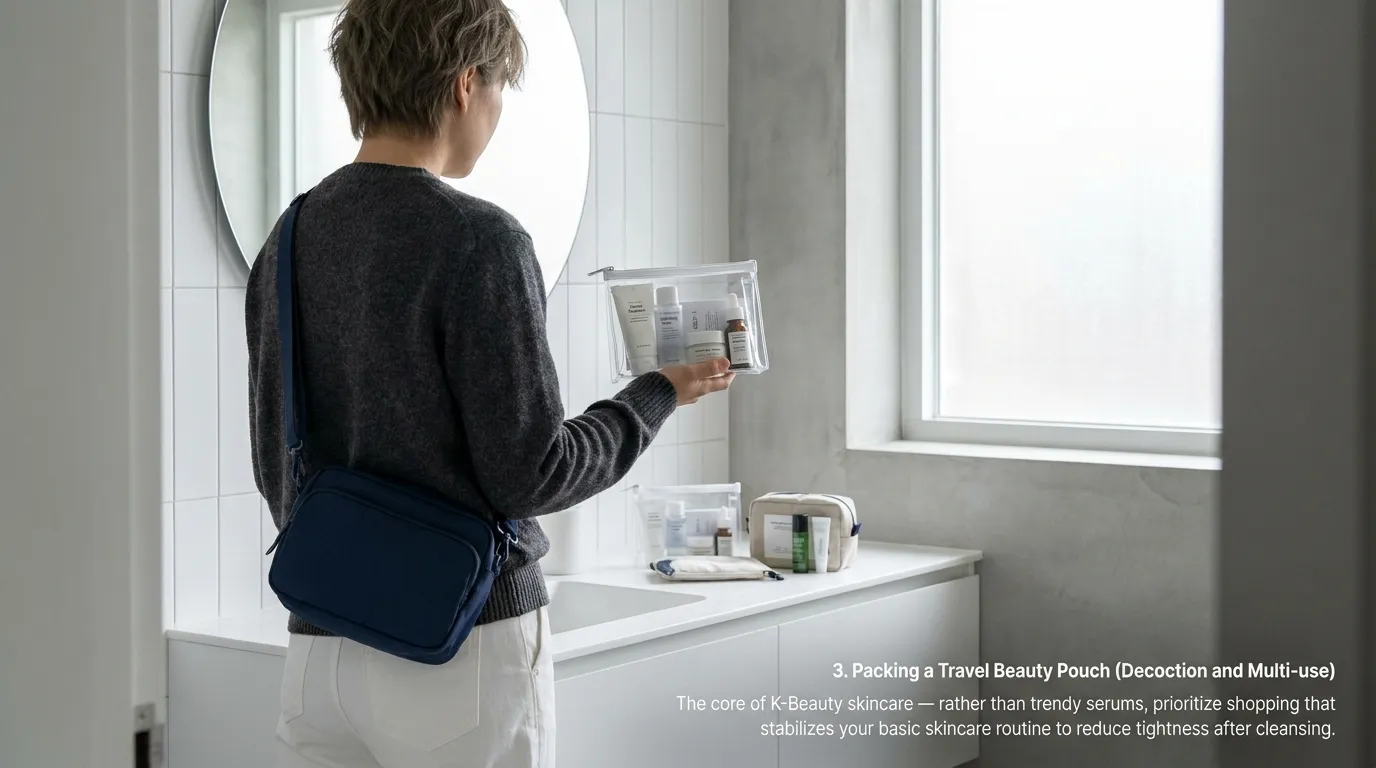
Many people pack travel beauty the wrong way by choosing products that look cute or small instead of products that reduce overlap. A short trip usually does not need a full toner-serum-ampoule-mask stack. A compact pouch often works better with a gentle cleanser, one barrier-supporting moisturizer, sunscreen, lip care, one cushion or skin tint, and one precision concealer.
Dry cabin air and hotel heating change the priorities too. On travel days, recovery products often matter more than fun products. A compact cream with panthenol or ceramide, a fragrance-light lip balm, and one calming layer often do more for the trip than a drawer full of trend-driven actives. Over-exfoliating pads or strong retinol experiments are common shopping mistakes when people get excited in-store.
This is where travel-size logic matters more than brand loyalty. A multi-use gel cream can cover both day and night on a short trip. A tinted sunscreen can reduce the need for a full base routine. A mini cleansing balm can work better than carrying both a heavy oil and a foaming cleanser. Korean beauty shopping gets lighter once each item clearly earns its space.
Travel planning also shapes what not to buy. If the schedule is short, there may be no reason to buy three products that all promise brightening. If the luggage is tight, a good sunscreen and a barrier cream will usually outlast a bag full of impulse sheet masks.
— Salon phrases in Korea matter before the hair product shelf does
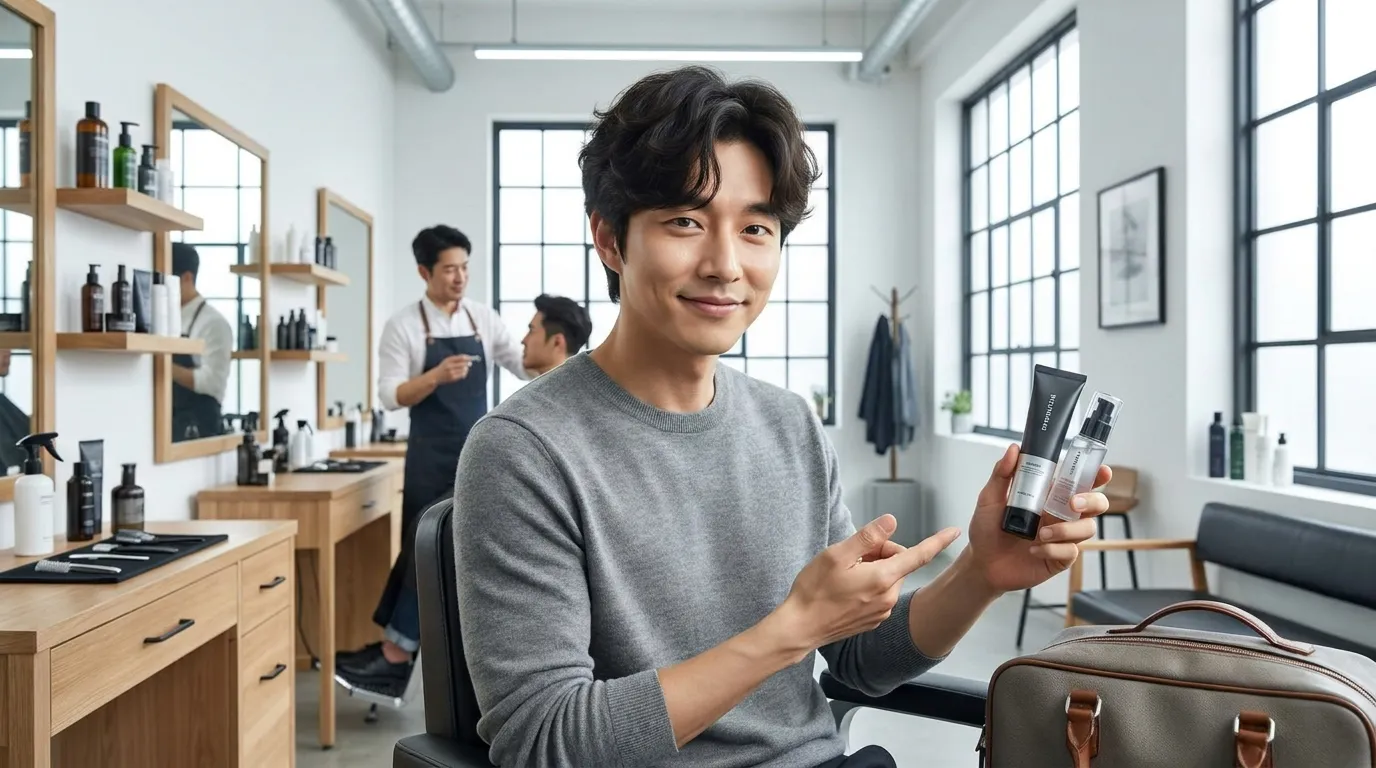
If a Korean salon visit is part of the trip, the shopping plan should include language preparation. People often buy color shampoo or styling products before the appointment, but the bigger issue is not being able to explain what they want. A reference photo helps, but the result gets much more accurate once you can point to length, layers, bangs, volume, unwanted redness, or bleach limits in simple terms.
The most useful phrases are short and concrete. Below the collarbone. Soft layers. No heavy red tone. No bleach if possible. Easy to style in the morning. Those phrases work better than vague requests like just a little shorter or something natural. Even when English is possible, shorter request blocks usually produce clearer consultations.
This is also where beauty shopping and salon planning connect. If the appointment is for color, aftercare products make more sense once the color direction is fixed. If the appointment is mainly for shape, shopping first for generic styling items may create the wrong expectations. The order should be: define the result, communicate it clearly, then shop for maintenance around that result.
— Makeup for better photos follows different shopping logic from daily makeup
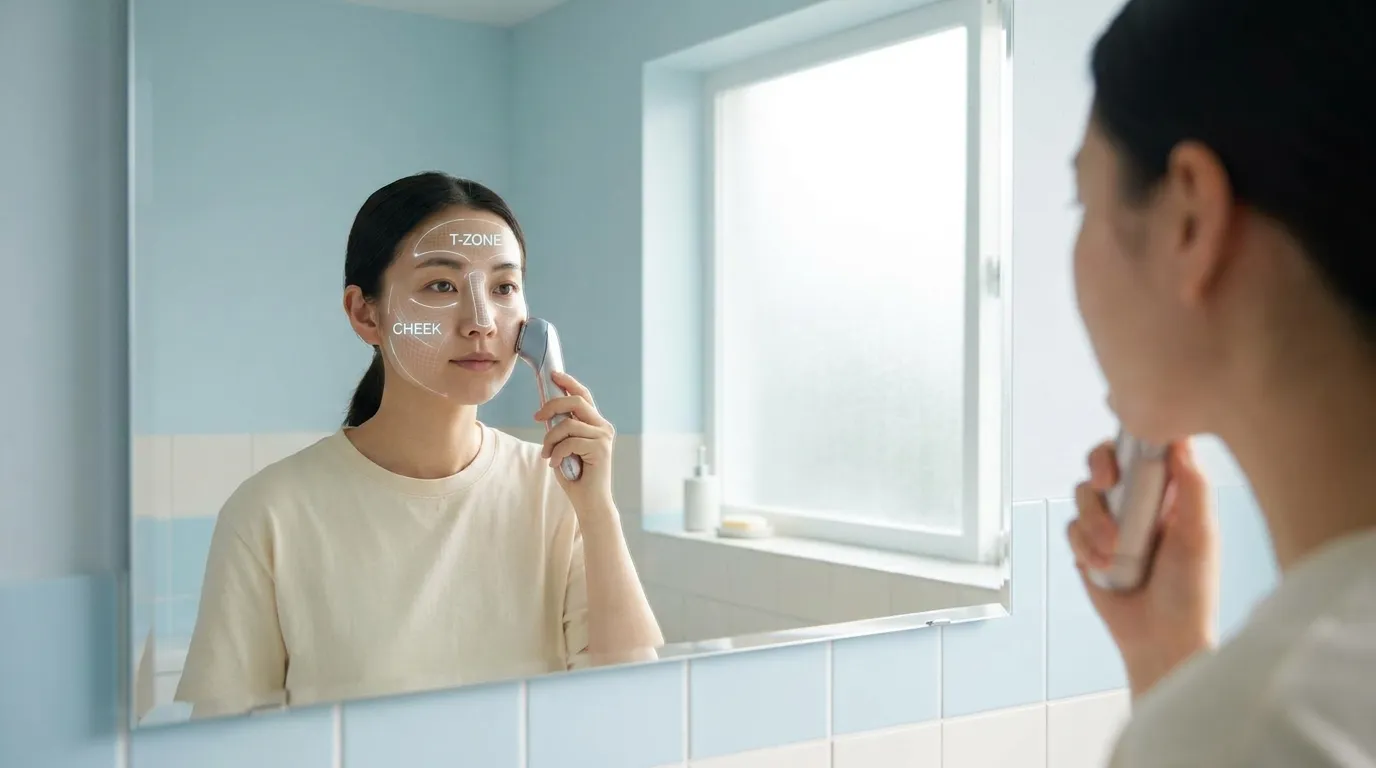
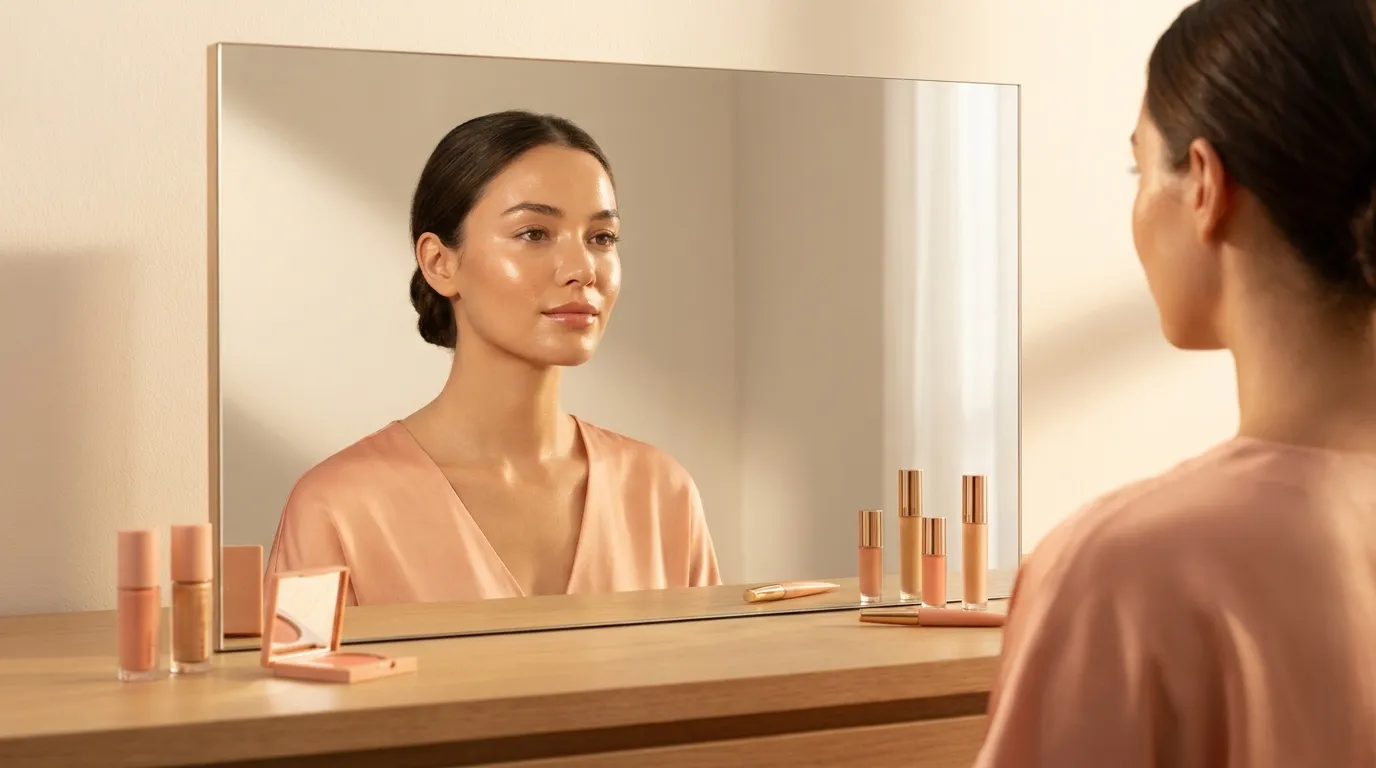
Makeup tips for better photos are not the same as using more makeup. Under flash or bright indoor light, too much glow can make pores and uneven texture jump out. Too much matte texture can flatten the center of the face and make the skin look lifeless. That is why a semi-matte base, controlled concealer placement, and more deliberate cheek shaping often beat trend-heavy glow products in photos.
This matters inside Olive Young because many products look beautiful under store lighting and disappointing under real flash. A base product that photographs well usually keeps the T-zone from turning shiny while still leaving enough life around the center of the face. Lip color also matters more than many people expect. Shades that are too pale can erase the face in photos, while slightly deeper MLBB tones often keep the face centered without looking too dramatic.
Photo makeup also depends on skincare from the night before. If the skin is flaky or over-exfoliated, the foundation category alone will not save the result. A barrier-supporting evening routine often changes the next-day camera finish more than another base product purchase does.
— What reading order makes the most sense after this hub
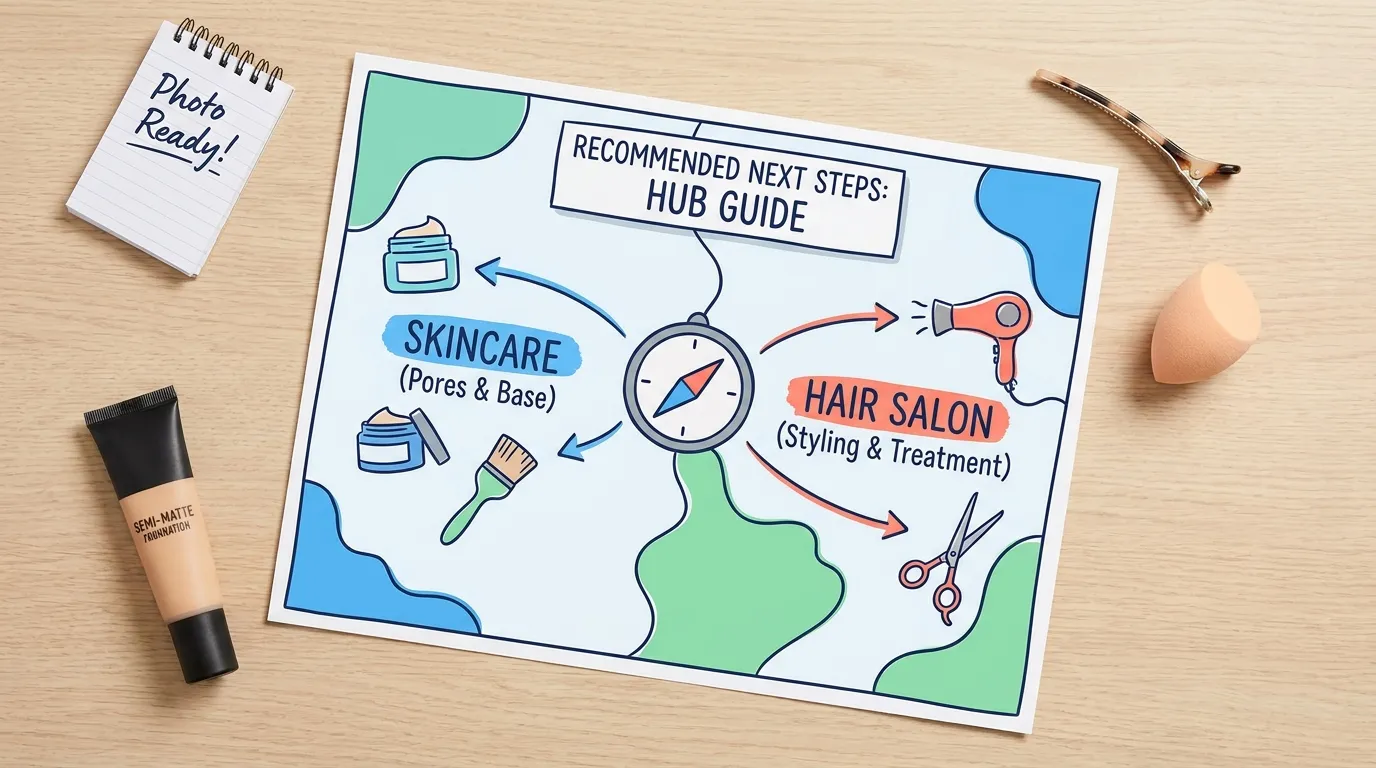
If skincare is the most urgent gap, move first into the Olive Young skincare route. That is usually the cleanest next step because beginner picks, repeat-buy basics, and store navigation all become easier once the base routine is clear. If the trip is imminent and luggage space is tighter than skincare confusion, the travel pouch route may deserve priority instead.
If the salon appointment is already booked, salon phrases and hairstyle requests should come before product buying. There is no point in buying maintenance around a haircut or color result that has not been clearly defined yet. If the next event is a photo-heavy day, then the makeup branch becomes the practical next read because base finish and lip balance matter more immediately.
The most useful existing follow-up hubs right now are Korean Skincare Routine Guide and K-Beauty Base Makeup Tips. Shopping becomes much more stable once you know where the product belongs inside the routine.
The smartest Olive Young must-buys come from matching skin issues, trip format, and makeup purpose before looking at trend shelves.
Korean beauty shopping gets easier once ingredients like centella asiatica, panthenol, ceramide, and niacinamide are read by role instead of by hype.
This hub works best when you narrow next into skincare shopping, travel pouch editing, salon communication, or photo-focused makeup based on the most immediate need.