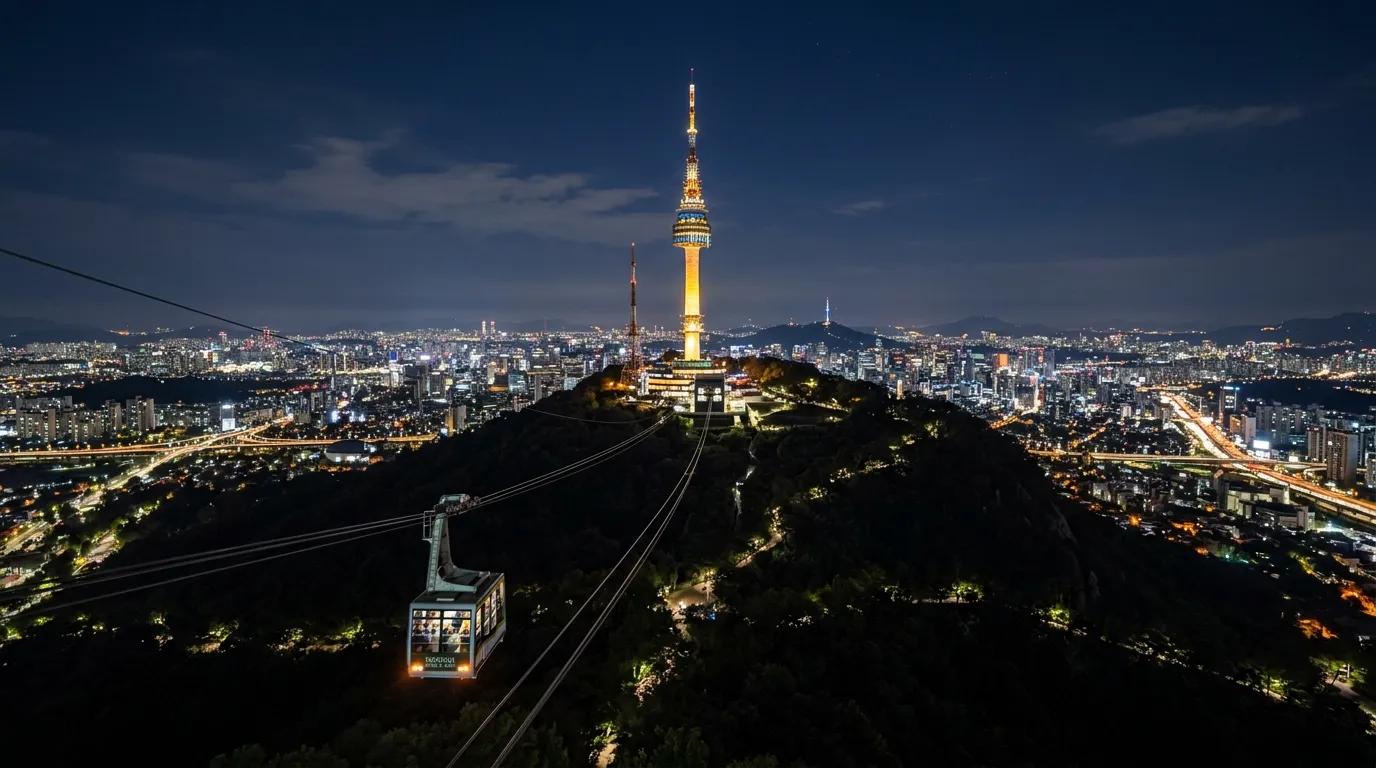
Many visitors assume the best N Seoul Tower night view spots begin and end with the top observatory, but the actual experience changes depending on where you pause, which direction you face, and how early you arrive. The
This guide explains the best N Seoul Tower night view spots as a sequence rather than a single platform, so visitors can understand where the skyline reads most clearly and when Seoul's night structure is easiest to interpret.
That sequence matters more than many first-time visitors expect. Two people can visit the same tower on the same evening and come away with very different impressions of Seoul depending on where they paused first and how they moved between indoor and outdoor zones. The site is not only about being high. It is about how the city becomes readable through staged sightlines.
— Which N Seoul Tower Night View Spots Read Most Clearly
Verified date: 2026-10-11. Facility and transit details may change depending on operating authorities.
| Item | Details | | :--- | :--- | | Public Transit | Namsan Circular Shuttle Bus (01A / 01B) from Chungmuro Station Exit 2 or Dongguk Univ. Station Exit 6 | | Observatory Hours | Weekdays 10:00 – 22:30 / Weekends & Holidays 10:00 – 23:00 (last entry 30 min before closing) | | Vehicle Access | Private passenger cars restricted for environmental preservation (bus, cable car, or walking trail only) | | Inquiries | N Seoul Tower Information (+82-2-3455-9277) |
- How to get there: A 5 to 10-minute walk from the nearest subway station exit.
- Best time to visit: Between 2:00 PM and 4:00 PM for optimal natural lighting.
- Estimated duration: 1 to 2.5 hours depending on crowds.
- Budget & Tips: Expect to spend around 15,000 KRW per person on average.
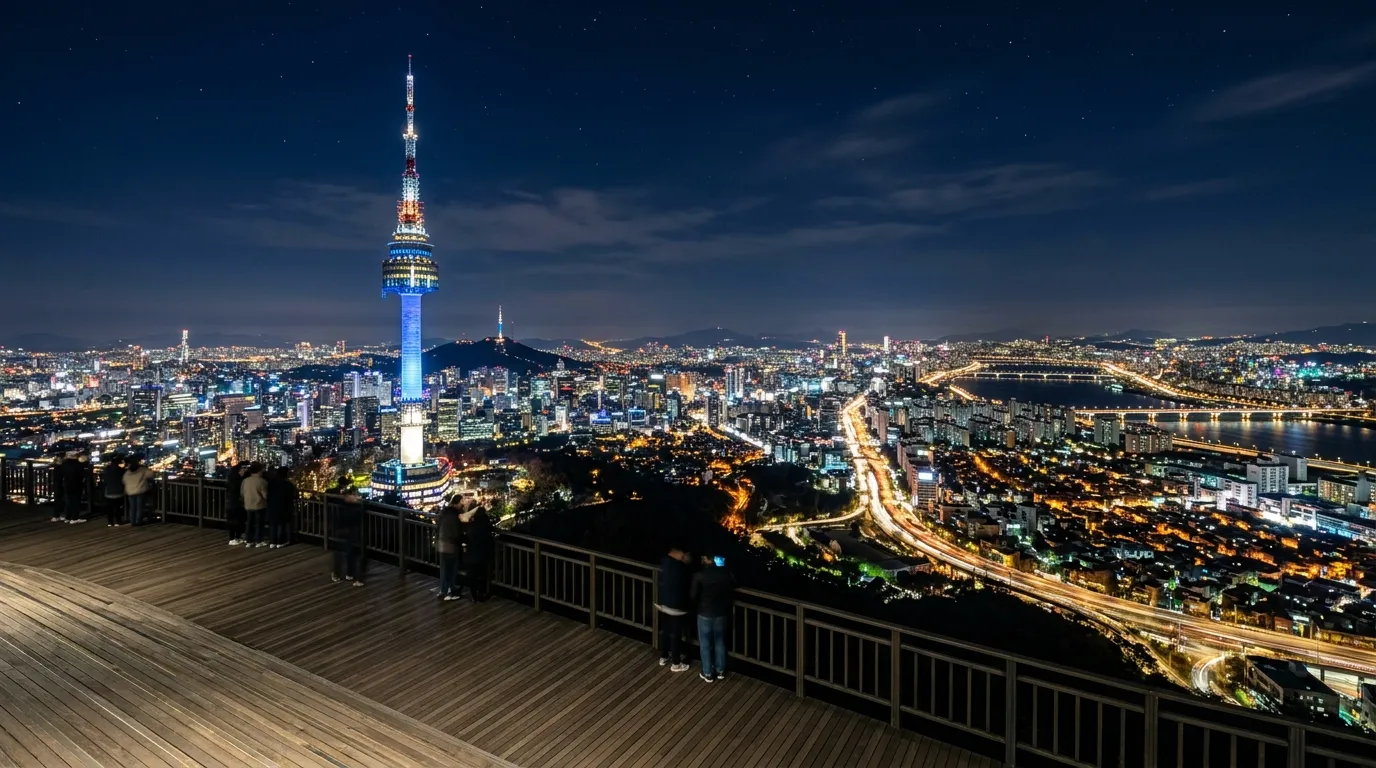
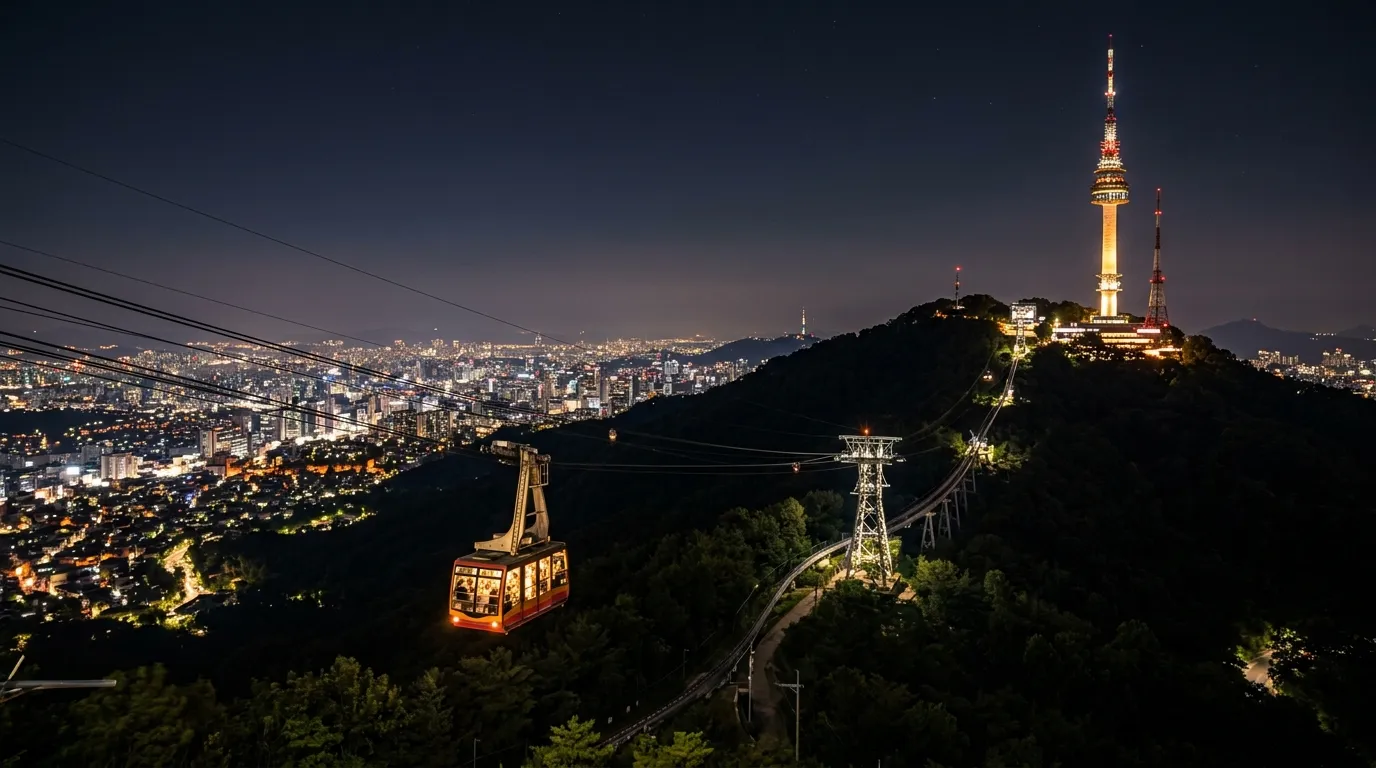
The clearest experience is not delivered by one fixed point alone. The area near the cable car arrival gives a fast first opening over the city, the outdoor decks around the tower are useful for comparing directional views, and the interior observatory helps visitors scan the urban spread with more stability. Each stop highlights a different version of Seoul at night.
For first-time visitors, it usually works better to start outdoors and then move inward. The open-air zones make the mountain setting and city elevation easier to feel, while the interior levels help organize the skyline once you already understand the broader shape. In practice, the strongest reading comes from linking those spaces rather than treating the observatory as the whole attraction.
It also helps to remember that the night-view experience starts before the full observation level. Whether visitors arrive by cable car or on foot, the city begins opening in partial layers before the top platform takes over. That early build-up is part of what makes the final panorama feel coherent instead of abrupt.
The most efficient rhythm is often a quick outdoor scan first, followed by a slower indoor read of individual directions. Dividing the visit this way keeps the tower from feeling like one long crowded stop and makes each section feel more purposeful.
— When the Seoul Night Layers Show Best
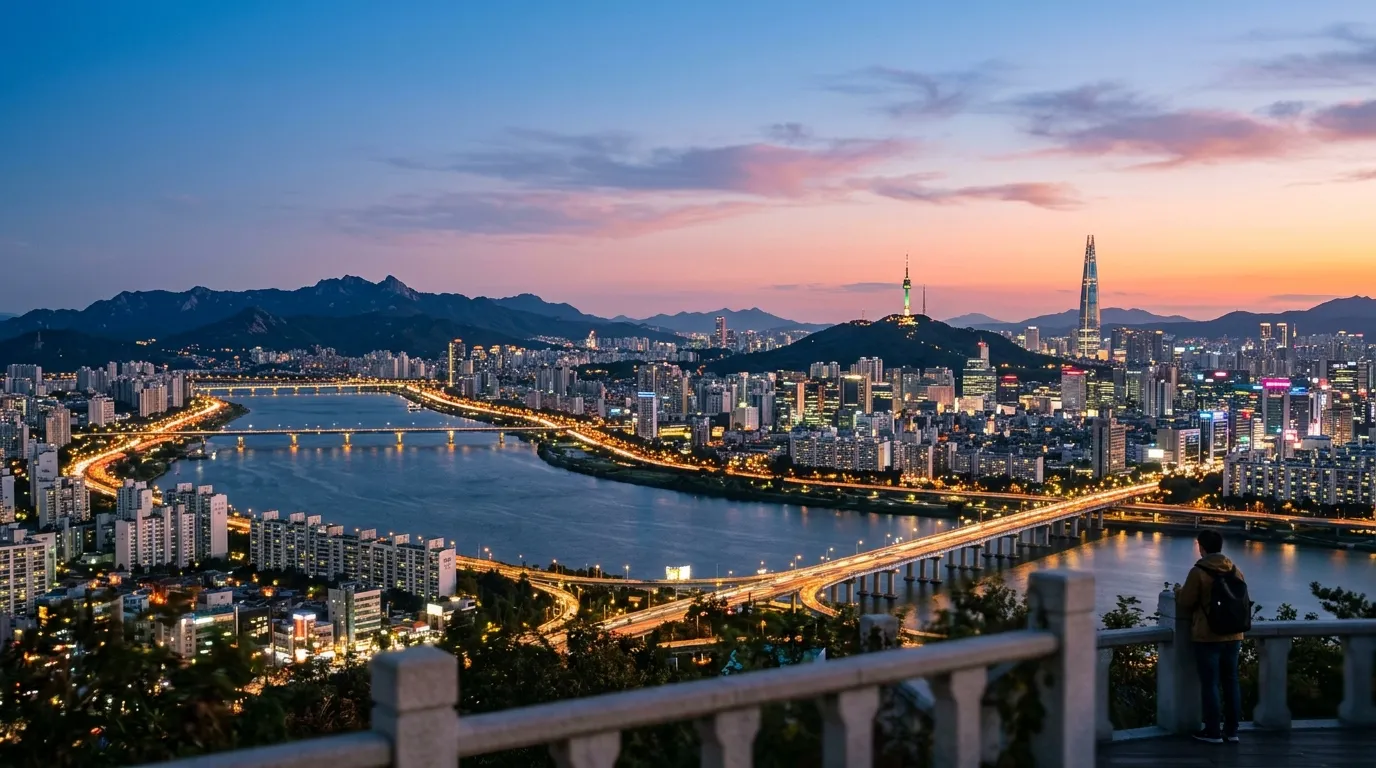
The most useful time is not necessarily the latest hour. Just after sunset, the city still keeps enough sky tone and terrain visibility to show how Seoul sits across slopes and dense districts. Once lights stabilize, the contrast between business zones, residential spread, and major road corridors becomes much easier to read.
That timing matters whether or not you are taking photos. Visitors seeing Seoul for the first time often benefit from arriving while some blue light remains, because the city still reads as structure rather than pure brightness. Later in the evening, the view becomes denser and more luminous, but slightly less explanatory. The difference is between understanding Seoul and simply absorbing its glow.
Crowd patterns move with the clock as well. The most beautiful transition period is also often the busiest, so visitors who want both atmosphere and usable sightlines often do better arriving a little earlier rather than aiming for the exact peak minute. Very late hours can be calmer, but the skyline becomes less informative for anyone trying to understand Seoul's shape for the first time.
Season changes the timing too. Summer demands more patience because useful twilight arrives later, while colder months can produce clearer light separation but make long outdoor pauses less comfortable. The best arrival time is not fixed. It depends on whether the goal is explanation, mood, photography, or a mix of all three.
— Which Directions Explain Seoul Most Clearly
Not every direction tells the same story. Views toward the denser core of the city reveal traffic patterns, office concentration, and the compressed texture of central Seoul. Turning toward the river-facing side often makes the city's long horizontal organization feel more obvious. Other directions foreground residential scale rather than spectacle.
That means the tower works best when visitors compare rather than consume the panorama passively. Instead of circling quickly, it helps to stop at each side and ask what kind of Seoul that view is describing. N Seoul Tower is valuable because it does not only show a bright city. It shows that Seoul at night is made of different visual systems layered together.
For first-time visitors, three basic directional categories are usually enough. One side explains dense business-centered Seoul, one side explains the longer river-oriented structure, and another side explains the scale of residential spread. Thinking in those terms keeps the visit manageable without reducing the city to one generic skyline.
That habit also improves photography decisions. A portrait against river-facing lines says something different from a portrait against dense commercial light. The tower becomes much easier to use once visitors understand that each direction describes a different version of Seoul.
— What to Notice Before Reaching for a Camera
Before taking photos, it helps to decide what kind of scene you are trying to build. Some visitors want the tower environment itself, others want the city lights spread behind a portrait, and others want a wide urban frame with minimal foreground. Without that decision, the view can start to feel visually scattered even though the city is impressive.
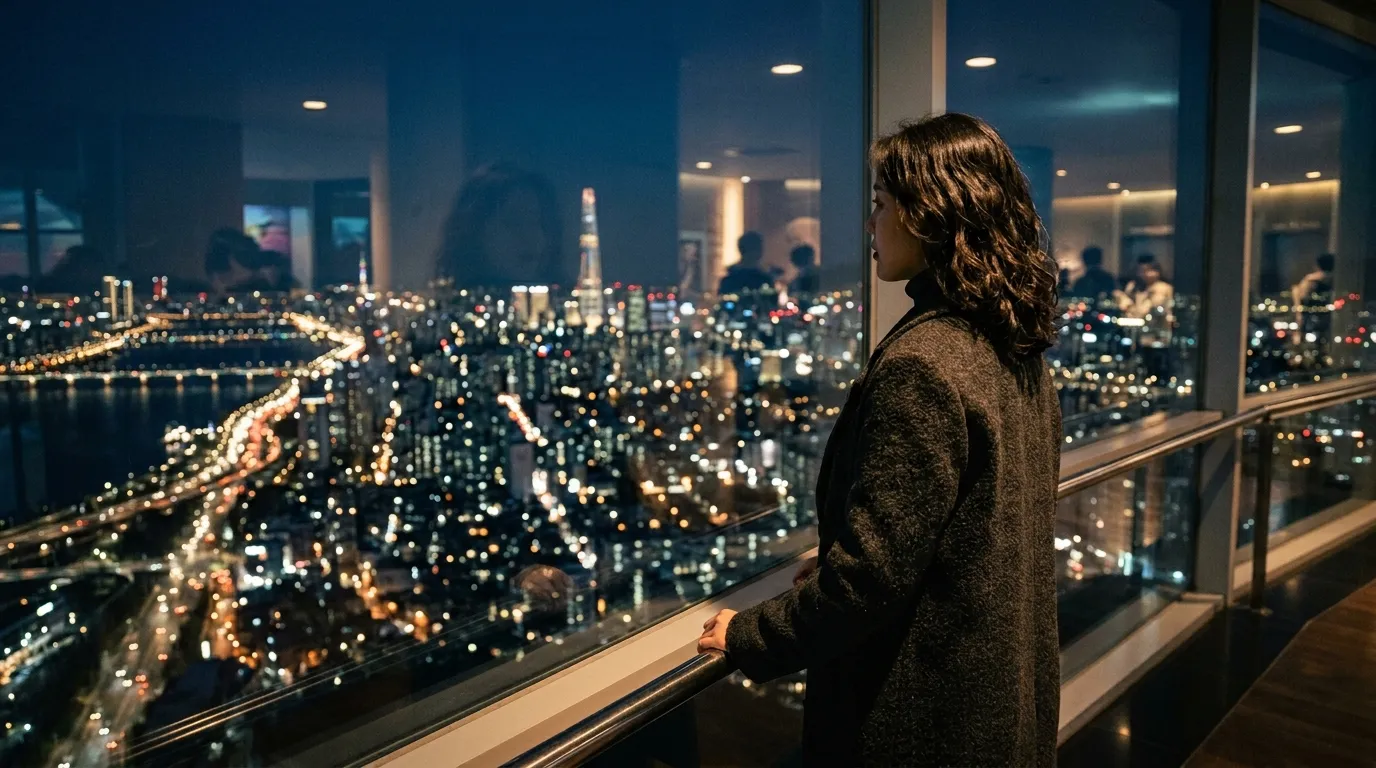
Practical conditions matter too. Indoor levels reduce weather problems but introduce reflection, while outdoor decks feel more spatially alive but are more affected by wind and crowd flow. Because of that, the site rewards people who set priorities early. The shorter your visit, the more important it becomes to know whether you are here for atmosphere, orientation, or image-making.
It helps to carry a simple order of priorities in mind. Do you want the tower environment itself, a portrait with city scale behind it, or a readable overview of Seoul? Once that is clear, many small decisions become easier. On crowded evenings, the useful spot is rarely the one that looks popular. It is the one that serves your actual goal.
Visitors should also be willing to change zones quickly. If reflection makes the indoor view unusable or wind makes the outdoor deck uncomfortable, moving between spaces is usually smarter than forcing one position to work. N Seoul Tower rewards comparison and adjustment more than stubbornness.
— Why This Spot Is Mentioned Before Other Seoul Night Views
Riverside night points are strong for reflections and bridge lines. High-rise observatories are strong for polished distance and scale. N Seoul Tower is usually mentioned first because it combines approach, elevation, and symbolic location. Visitors do not only arrive at a viewpoint. They move through a hilltop transition and then read the city from within its center.
That is why the site keeps appearing across different search intents. It works as a date-night destination, a first-night Seoul overview, a skyline reference point, and a practical photography stop. More importantly, it explains Seoul rather than merely decorating it. That is what keeps it central in the city's night-view identity.
— What route usually works best for first-time visitors
A first visit usually works best when people arrive, take in the outdoor sightlines first, then move into the observatory once the mountain setting and city elevation already make sense. That order helps the indoor panorama feel organized rather than overwhelming. It also reduces the common mistake of entering the tower too quickly and trying to understand Seoul only through glass.
On busier evenings, it helps to avoid spending too long in one place. A short outdoor orientation, a slower indoor comparison of directions, and then a final return to the tower surroundings often create a better visit than waiting for the perfect position at one railing. The tower becomes clearer when its different view types are compared.
The route also links naturally with other Namsan-side experiences. Visitors who want the approach itself to matter more can continue with Namsan Cable Car Photo Tips for Better Seoul Frames. That is part of why N Seoul Tower remains so central: it works on its own, but it also sets the reference point for understanding other Seoul night views.
The strongest night-view experience at N Seoul Tower comes from combining the outdoor decks and observatory rather than relying on one point alone.
Arriving around the shift from sunset to full illumination makes Seoul's structure and lighting layers easier to read.
N Seoul Tower remains Seoul's best-known night-view spot because the approach and the panorama form one coherent experience.