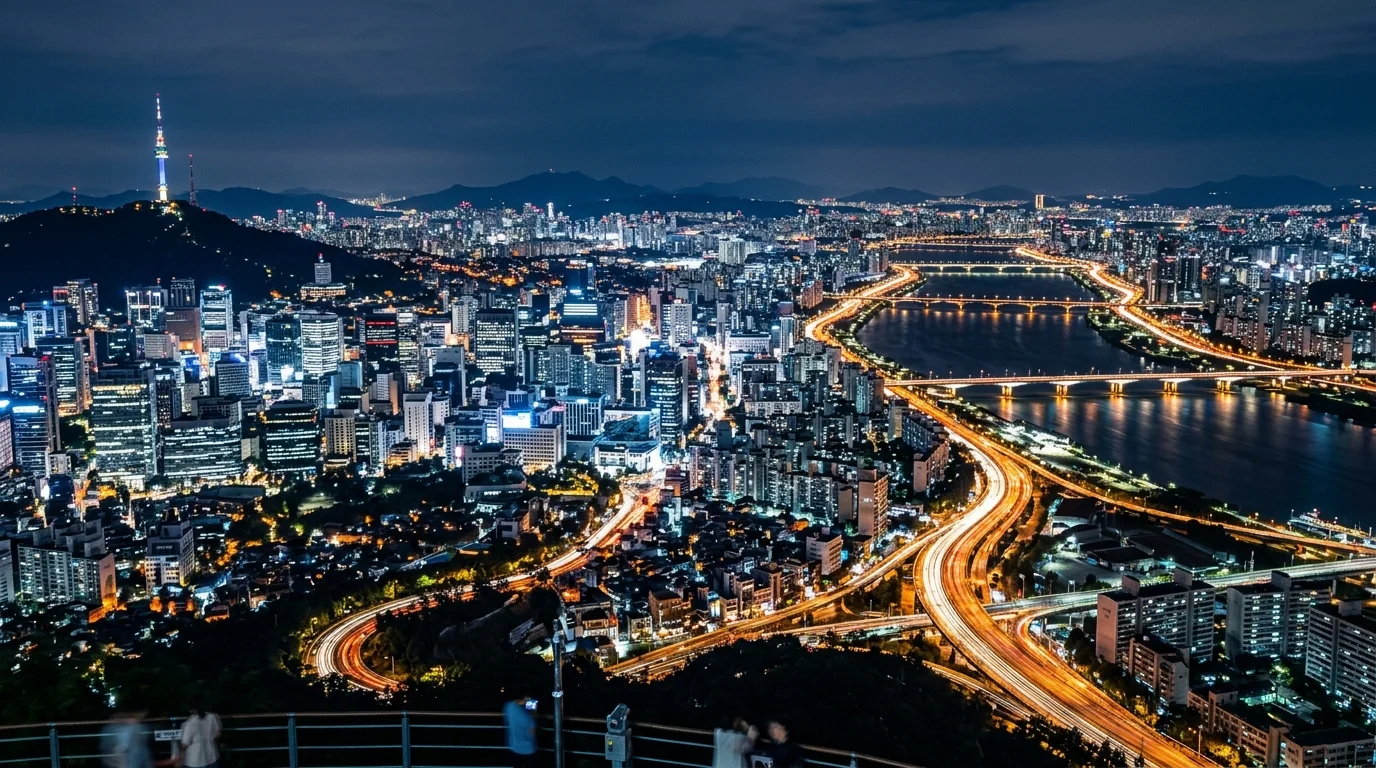
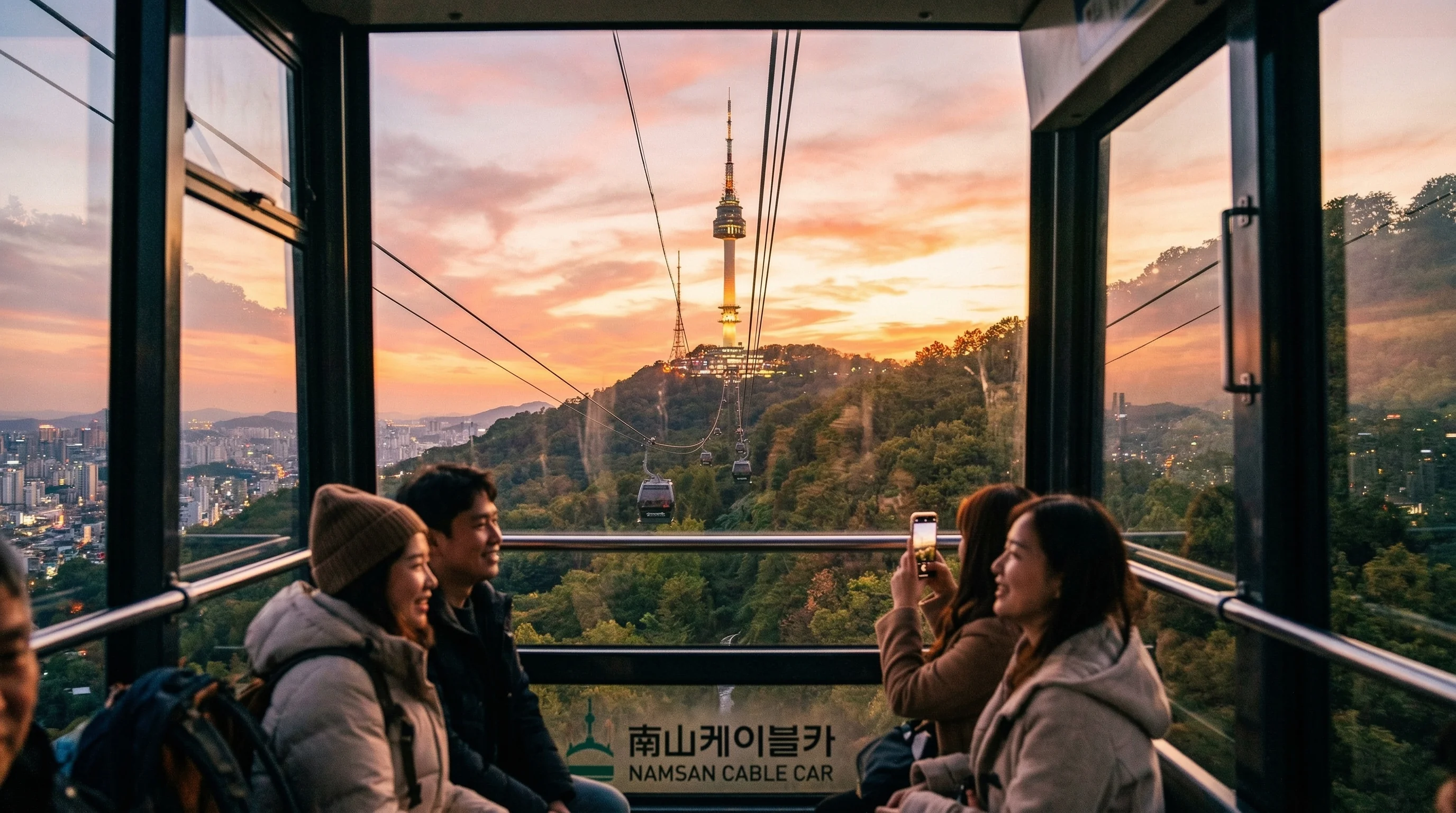
N Seoul Tower is often the first landmark visitors check off their Seoul itinerary. However, arriving without a solid plan often leads to standing in long cable car queues or missing the optimal lighting for photography. Understanding the layout, exact travel times, and crowd patterns makes the difference between an exhausting trip and a seamless experience.
This guide provides concrete, verifiable details on how to navigate the Namsan area, from identifying the best subway exits to choosing the exact hour to reach the observation deck.
What Are the Essential Facts for Visiting N Seoul Tower?
- How to Get There: Take Myeongdong Station (Subway Line 4), Exit 3. From the exit, it is a 12-minute uphill walk (about 700 meters) to the Namsan Cable Car boarding station.
- Recommended Time to Visit: Arrive at the cable car station by 4:30 PM and reach the observatory by 5:15 PM. This gives you clear daylight views, the 6:00 PM sunset, and the 6:30 PM transition to full night lights.
- Estimated Duration: Allocate 2.5 to 3 hours total. This includes a 30-minute cable car wait, 1 hour at the observation deck, 30 minutes exploring the base plaza, and the descent.
- Ticket Prices: The observatory ticket costs 21,000 KRW for adults and 16,000 KRW for children under 12. The Namsan Cable Car requires a separate ticket, costing 15,000 KRW for a round trip or 12,000 KRW for one-way.
- Crowding & Precautions: The peak congestion window is between 6:00 PM and 8:00 PM on Fridays and Saturdays. During these hours, the downward cable car wait time can easily exceed 45 minutes.
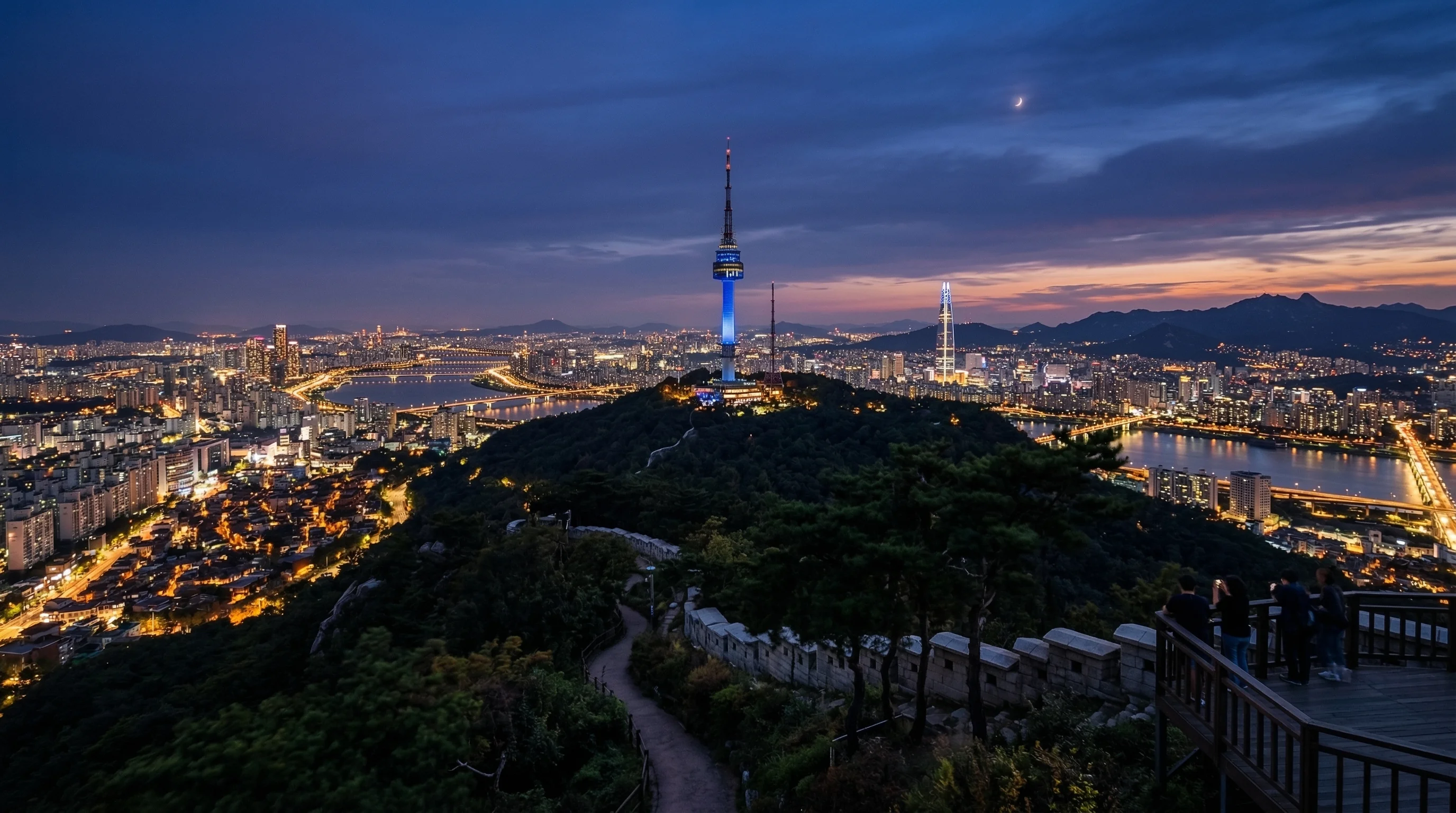
N Seoul Tower sits exactly 243 meters above sea level on Namsan Mountain, and the tower itself rises another 236.7 meters. This combined elevation of nearly 480 meters makes it the highest vantage point in central Seoul. Unlike the Lotte World Tower, which sits on the eastern edge of the city and looks down from 555 meters, N Seoul Tower is geographically central. This means you look directly down onto the Myeongdong commercial district to the north and the Itaewon residential area to the south from a height where individual cars and building logos are still clearly visible.
The site is divided into two main areas: the N Seoul Tower Plaza (the base floors which are free to enter) and the N Seoul Tower Observatory (the paid upper deck). Many visitors do not realize that the wooden deck at the plaza level—specifically the southern edge near the Love Locks—offers a completely unobstructed view of the Han River and the Gangnam skyline without requiring an observatory ticket. If your time is limited to just 60 minutes, skipping the paid deck and focusing on the outdoor plaza still delivers 80% of the visual experience.
How Do the Access Routes Compare?
There are three primary ways to reach the tower, and each requires a different time commitment. The most popular method is the Namsan Cable Car. From Myeongdong Station Exit 3, you walk 12 minutes up the hill past the Pacific Hotel to reach the boarding station. The ride itself takes exactly 3 minutes and covers 605 meters of cable. However, on weekends after 5:00 PM, the ticket line and boarding queue easily add 40 to 50 minutes of standing time before you even enter the cabin.
The second option is the Namsan Sunhwan Shuttle Bus (Route 01). You can board this green electric bus right outside Chungmuro Station (Exit 2) or Dongguk University Station (Exit 6). The bus fare is only 1,200 KRW, making it the most cost-effective method. The ride takes about 15 minutes, navigating the winding mountain roads, and drops you off a steep 5-minute walk from the tower base. This is the most efficient route if you want to completely avoid cable car lines.
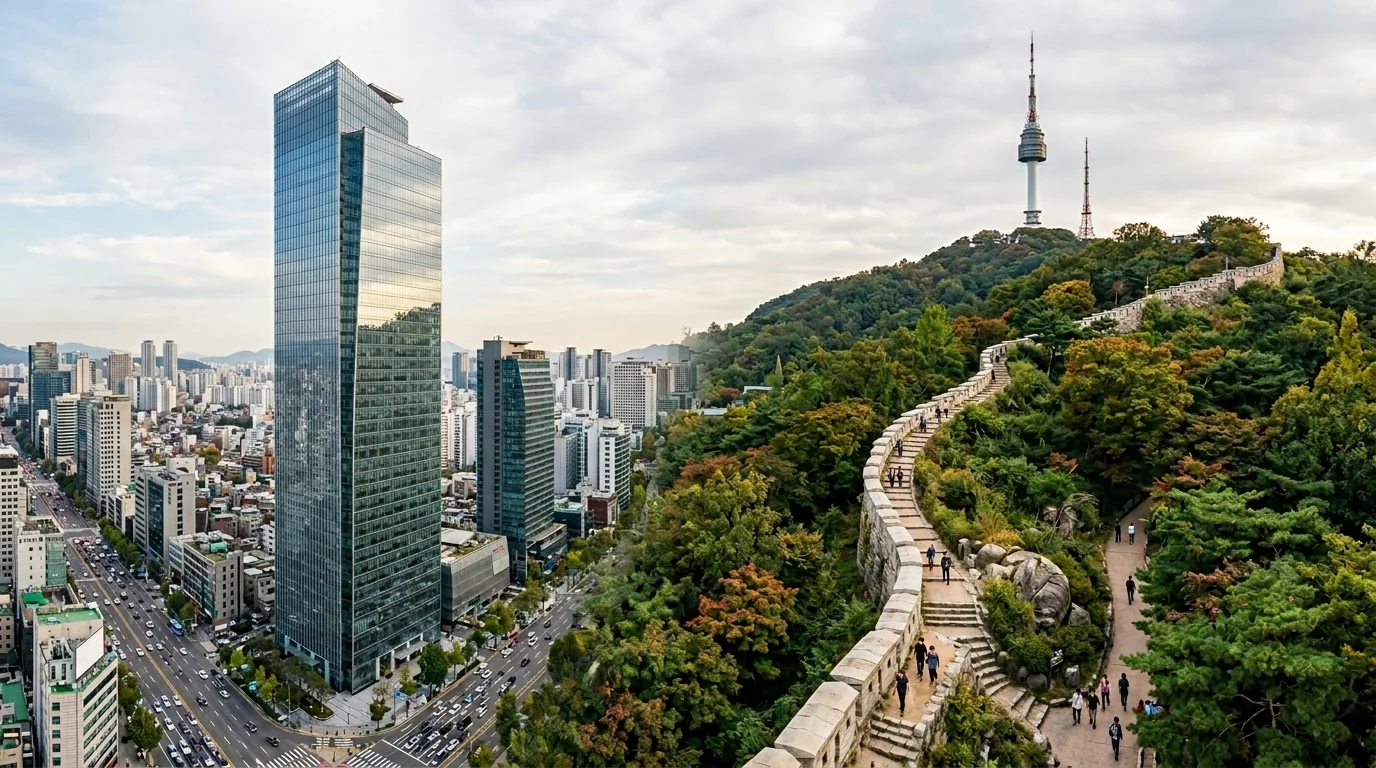
The third option is walking the Namsan Dulle-gil trail. Starting from the National Theater of Korea or the Namsan Public Library, the pedestrian path takes about 40 minutes at a moderate pace. The trail is fully paved and features a gentle 10-degree incline, making it accessible for most fitness levels. At 3:00 PM in autumn, the sunlight hits the stone retaining walls and red maple leaves perfectly, making it the best option for daylight photography before reaching the tower.
Why the 5:30 PM Arrival Window Matters
Many visitors arrive at 8:00 PM for the night view, but the visual contrast is actually weakest in full darkness. At 8:00 PM, the mountains disappear completely into black shapes, and the Han River reflects very little light. The physical structure of the city is lost in the darkness.
The most visually dense window occurs between 5:30 PM and 6:30 PM (adjusting slightly depending on the season's sunset time). At 5:30 PM, the directional sunlight casts long shadows across the Jongno district's high-rises. By 6:00 PM, the streetlights and office building grids turn on while the sky still holds a deep cobalt blue color. This 30-minute crossover period is when smartphone cameras can capture both the glowing neon signs of Myeongdong and the sharp outlines of the surrounding Bukhan Mountain range in a single frame.
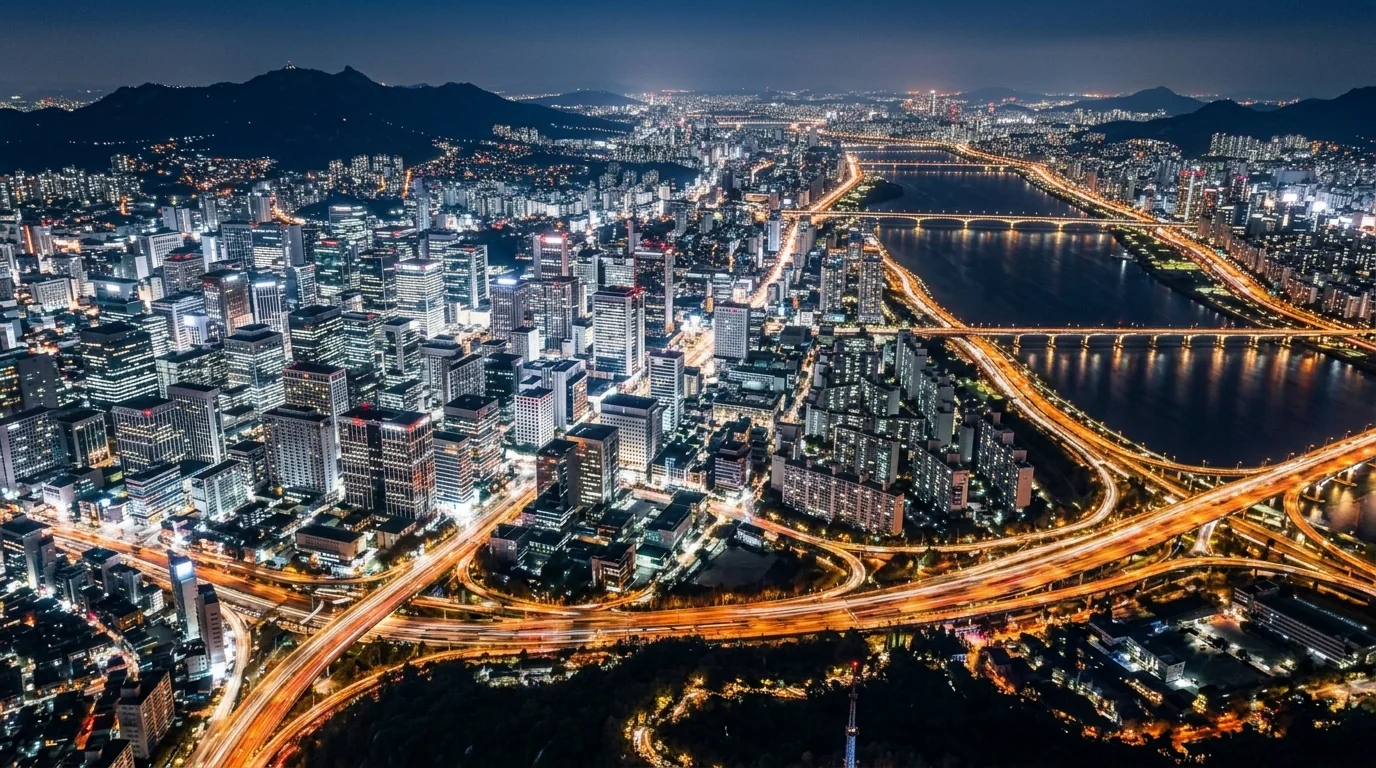
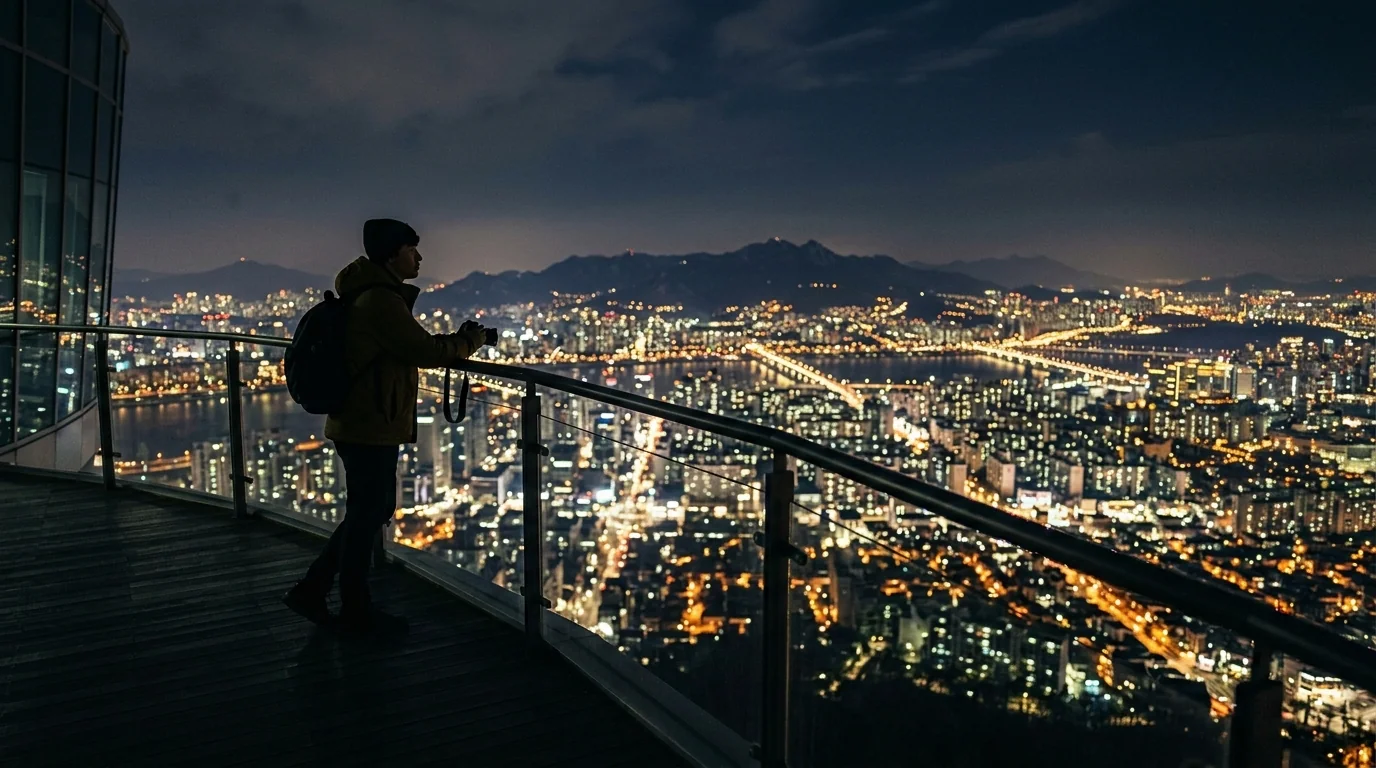
If you plan to shoot through the observatory's glass windows, wear dark clothing. The interior lights reflect heavily against the glass. Pressing your lens flat against the pane and shielding it with a dark jacket will eliminate 90% of the glare, allowing for crisp shots of the traffic trails 200 meters below.
Understanding the Plaza Level vs. The Observatory Deck
The N Seoul Tower Plaza occupies the lower five floors (T1 to T5) and includes outdoor terraces, casual restaurants, and the famous Love Locks fences. The viewing angles from the outdoor T2 terrace are excellent for wide-angle landscape shots. Since there is no glass barrier, you can easily use a small tripod here—which is strictly prohibited inside the paid observatory.
The main Observatory (T4 and T5 levels) requires the 21,000 KRW ticket. The high-speed elevator ride to the top takes exactly 30 seconds. The T4 level features 360-degree glass panels with the names of global cities and their exact distances etched onto the panes. The key advantage of the paid deck is the direct northern view over Gyeongbokgung Palace and the Blue House, which is partially blocked by tall pine trees at the plaza level.
If your goal is to photograph yourself with the city in the background, the outdoor plaza is actually better. The indoor observatory is kept relatively dark to enhance the outside view, making indoor portraits grainy unless you use an external flash or a strong artificial light source.
Are the On-Site Dining Options Worth It?
Dining at N Seoul Tower falls into two categories: casual plaza food and premium observatory restaurants. The ground floor features a standard food court serving 12,000 KRW tonkatsu (pork cutlet)—a historic staple for Namsan visitors since the 1990s—along with convenience stores, churro stands, and coffee chains. These are practical choices for a quick 20-minute rest.
At the top of the tower sits N.Grill, a revolving French restaurant on the T7 level. A dinner course here starts at 160,000 KRW per person. The floor completes a full 360-degree rotation every 100 minutes, meaning you see the entire city without leaving your table. While the food is upscale, the primary value is the guaranteed window seat and the fact that an N.Grill reservation includes free admission to the observatory, effectively saving you the 21,000 KRW ticket price. For weekend dinners, reservations must be made at least three weeks in advance.
Navigating the Downward Journey After 8:00 PM
Leaving the tower requires as much planning as arriving. By 8:00 PM, the line for the downward cable car regularly stretches past the wooden viewing deck and snakes around the ticket booth. Waiting in a 45-minute line in the cold wind is a common, yet easily avoidable, mistake.
If the cable car line is longer than 50 meters, the fastest exit is the Route 01 Shuttle Bus. The bus stop is a 5-minute downhill walk from the tower base. The buses depart every 9 to 15 minutes. Taking the bus to Chungmuro Station gets you back to the subway network in under 20 minutes, completely bypassing the cable car bottleneck.
For visitors heading towards Itaewon, walking down the southern trail is another excellent option. The 30-minute descent is well-lit, paved, and drops you right into the Hannam-dong and Itaewon districts, placing you exactly where most evening dining and nightlife options are concentrated.
From here, the narrower guides are easiest to use when each one answers a more specific question. For sightlines and pause points, continue to Best N Seoul Tower Night View Spots for First Visits. The hub works best when it establishes the landmark logic first and leaves the exact route details to those follow-up guides.
Myeongdong Station Exit 3 is the starting point for the 12-minute walk to the cable car station, which costs 15,000 KRW round-trip.
Arriving at the observatory by 5:30 PM ensures you capture the 30-minute twilight window when both building lights and mountain outlines are visible.
To avoid the 45-minute downward cable car wait at 8:00 PM, take the Route 01 shuttle bus to Chungmuro Station instead.