EDITORIAL CHECK
Source and Review Basis
Hongdae guides are checked against Seoul tourism and city street references for Red Road, walking flow, performances, nightlife, and time-of-day differences.
People looking for Hongdae aesthetic cafes for photos typically start with pretty drinks, exposed props, or famous interiors. In practice, the strongest cafe images come from spaces where seating rhythm, window light, wall texture, and visual pause are clearly organized inside a small footprint. Extending the exterior logic from Hongdae Seoul Neighborhood Guide and Best Hongdae Street Photo Spots From Buskers to Alleys, this guide explains how to read Hongdae cafes as photo spaces rather than just trend stops.
This matters because many Hongdae cafes feel attractive in person for reasons that do not always survive the camera. A room can feel lively, stylish, and full of detail, then turn visually crowded the moment a subject sits down. The difference typically comes from structure, not popularity.
Reading a cafe as a photo space means asking where the image settles. Where does the light stop? Where does the background stop competing? Which seat keeps movement from cutting through the frame? Those are the questions that make a Hongdae cafe actually useful on camera.
— Why Layout Matters More Than Decor in Hongdae Cafes
Even a visually rich cafe becomes hard to photograph if the movement path is messy. A quieter interior with a clear line from entrance to seating to window can produce a much stronger frame. In Hongdae, the appeal of many cafes comes less from the number of objects in the room and more from how tightly mood is edited into a compact space.
That is especially important because many Hongdae cafes are not large. The useful question is not simply what looks pretty, but where the background settles once you stop moving. That shift in perspective makes it easier to separate a genuinely photogenic cafe from one that only feels impressive on first glance.
The best seat is frequently not the one that looks strongest from the door. Corners where the sightline changes once, window ends, and wall-adjacent tables frequently work better because the room closes behind the subject more cleanly. In a smaller Hongdae cafe, one good seat can matter more than the entire concept.
For that reason, first-time visitors should typically scan the room before ordering instead of committing instantly to the first available table. A few seconds of reading the layout can save the whole shoot.
— Why Window Light Makes Cafe Photos More Reliable
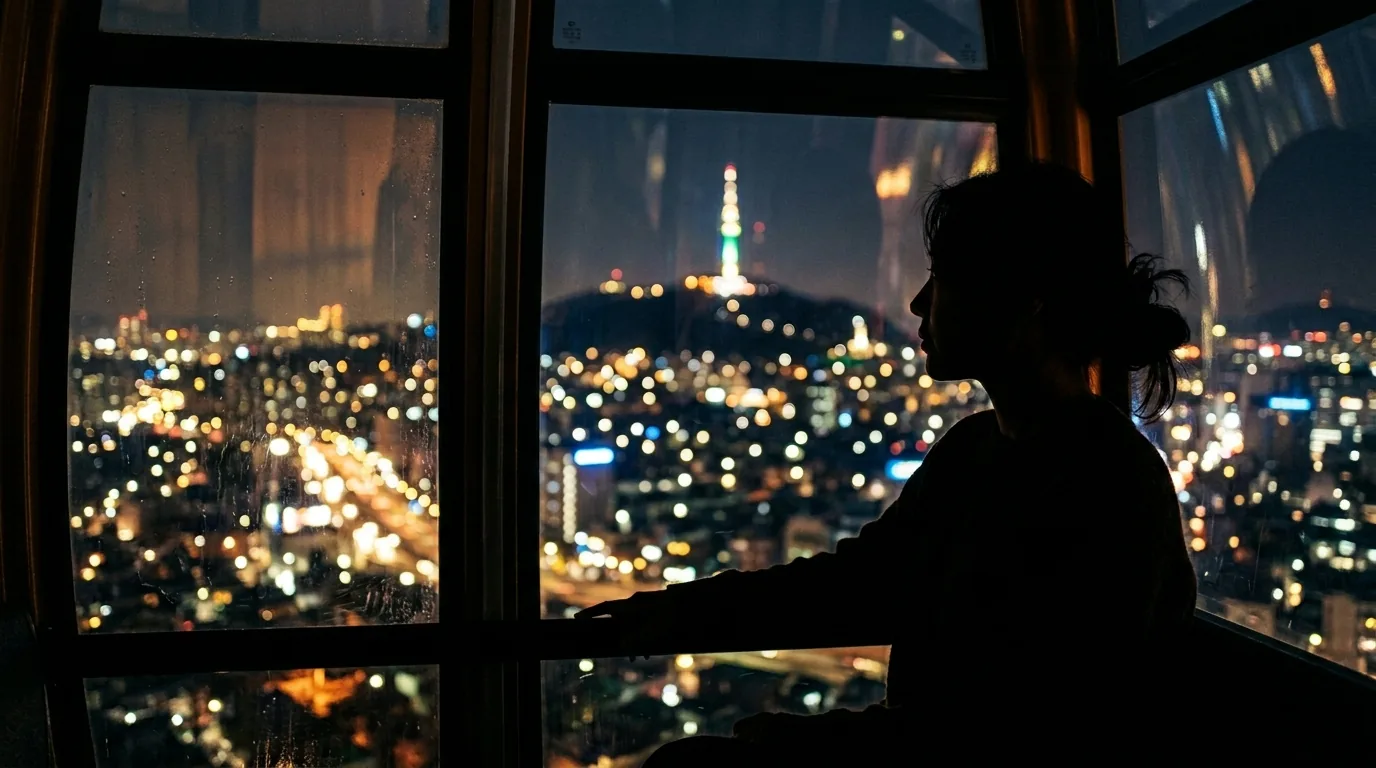
One of the fastest ways to judge Hongdae aesthetic cafes for photos is to study the window light. When light enters from a clear direction, faces, tabletops, and wall texture can stay readable at the same time. When interior bulbs compete in several tones or the windows are too small, the mood may still feel strong in person but the image frequently turns dense or flat.
That is why cafes with disciplined natural light typically outperform more theatrical interiors. In a district as visually busy as Hongdae, the cafe is strongest when it reorganizes that energy instead of duplicating it. Window zones frequently do exactly that by turning outside complexity into a calmer frame.
Timing changes that judgment too. Morning and late afternoon window seats typically keep skin tone and table surfaces more manageable than midday light, which can become harsh and split the frame too aggressively. If the goal is a calmer portrait or lifestyle shot, directional light matters more than maximum brightness.
Rainy days can also be surprisingly useful. Reflections soften, interiors feel more tonal, and materials such as wood, concrete, or warm lamps frequently read more cleanly through the glass.
— Do Prop-Heavy Cafes or Simpler Cafes Photograph Better
More props do not automatically create a better photo zone. Posters, shelving, lamps, and vintage objects can easily overload the frame if their height and spacing are not controlled. A simpler wall, an edited table area, or one strong material surface frequently gives the subject more room to stay legible.
That is why many effective Hongdae cafe interiors are not empty, but selectively concentrated. Instead of counting objects, it helps to judge whether the background separates into layers. If the room gives you a clear foreground, middle distance, and surface texture behind them, even a small cafe can feel much deeper on camera.
This becomes even more important when the cafe is busy. A wall full of props can collapse quickly once several people and bags enter the frame, while a simpler but better-separated background can still hold together under moderate crowd pressure. In practice, the best photo cafe is not only pretty when empty. It stays readable when in use.
That is a useful filter for Hongdae in particular, because popular places can become visually dense very fast.
— How Seating Rhythm Changes the Mood of a Cafe Frame
Seating layout determines image density. A row of window seats, a wall-side pair table, or an open central table each produces a different kind of frame. The best photo spots inside Hongdae cafes are typically not just the prettiest seats. They are the seats where customer movement does not keep breaking the background and where the space closes naturally behind the subject.
Those positions frequently appear near a wall corner, the far end of the window, or beside a stair turn where the eye changes direction once. Instead of trying to capture the whole room, it typically works better to bind one chair, the edge of the table, and the rear surface into a tighter composition.
Seat direction matters as well. A slightly diagonal relationship to the window or wall frequently works better than a straight face-on setup because it gives the shoulders and background more shape. For pairs, this is even more important. Slightly angled seating typically produces a more natural frame than rigid face-to-face symmetry.
Hongdae cafe images frequently work best when a small gesture is visible: a hand on a cup, a half-turn toward the light, a glance toward the other person. The room supports those moments better than it supports a stiff pose.
— What First-Time Visitors Should Choose First
If this is your first Hongdae cafe stop, start with a place built around one dominant tone or material rather than a space that tries to do everything at once. Wood-heavy interiors, concrete textures, or a room shaped by one direction of warm vintage light are typically easier to read and photograph well.
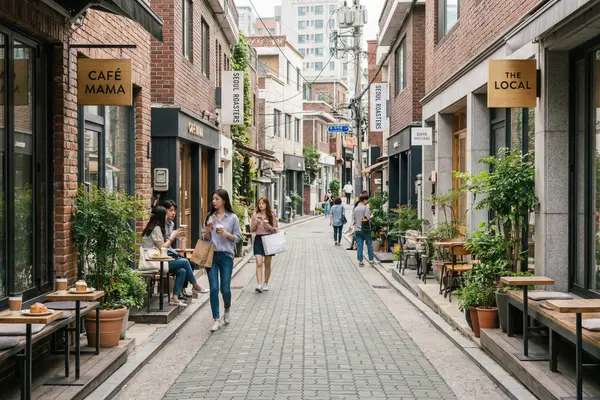
It also helps to compare that interior mood with Best Hongdae Street Photo Spots From Buskers to Alleys. Outside, Hongdae is defined by crowd movement and signage pressure. Inside, seating rhythm and light take over that role. Once you read both, the district makes more sense as a full visual system rather than a random collection of trendy stops.
For a first visit, simpler thematic discipline is typically safer than maximal concept. A cafe built around one strong material or one clear tonal world is easier to photograph well than a place trying to combine too many ideas at once. Strong wood, concrete, warm vintage light, or one controlled color family typically performs better than a room that wants attention from every wall.
It also helps to decide whether the cafe comes before or after the street walk. If the street comes first, the cafe can function as a visual reset. If the cafe comes first, it can become the controlled opening before Hongdae's exterior density begins.
— What should first-time visitors check to avoid weak Hongdae cafe photos
Three things typically matter most: whether the light arrives from one clear direction, whether seating is spaced enough to avoid constant background interruption, and whether the room has one dominant visual tone. If those are present, even a less famous cafe can photograph extremely well. If they are missing, a highly popular cafe can still produce flat or crowded results.
Crowd timing matters too. In Hongdae, peak cafe hours frequently create overlap between the order line and the seating area, which can break the frame repeatedly. From a photo perspective, the most useful times are frequently shortly after opening or just before the heaviest rush. In the end, the strongest Hongdae aesthetic cafe is rarely just the prettiest one. It is the one where light, seat choice, and movement all become easier to control.
Photogenic Hongdae cafes are defined more by layout and visual pause than by the number of decorative objects.
Directional window light typically gives the most reliable combination of skin tone, tabletop detail, and wall texture.
For a first visit, cafes organized around one strong tone or material are easier to photograph well than overly mixed interiors.