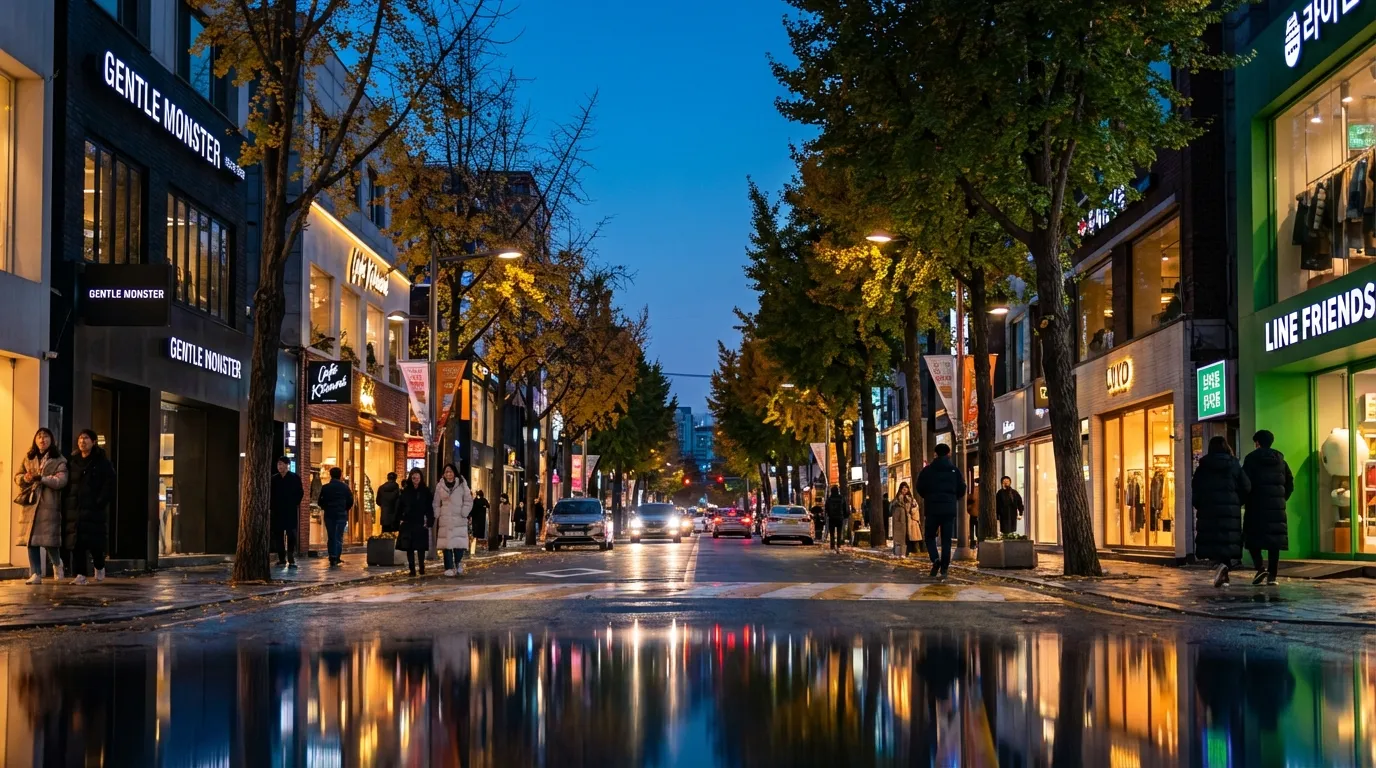
Garosu-gil is a 700-meter ginkgo-lined street in Sinsa-dong that offers one of Seoul's most organized walking routes. Instead of vague vibes, this guide gives you the exact routing, timing, and costs to make your visit efficient. Knowing when to switch from the main stretch to the side alleys dictates whether you spend 15 minutes waiting for a cafe table or walk right in.
Where to start the Garosu-gil route
- How to get there: Take Subway Line 3 to Sinsa Station, Exit 8. Walk straight for 250 meters (about 3 minutes) until you see the large corner pharmacy and Olive Young on your left. That is the entrance.
- Recommended time to visit: 3:00 PM for peak cafe sunlight, or 6:00 PM to catch the streetlights turning on.
- Estimated duration: 2.5 to 3 hours, which covers walking the 700-meter main street, 1 cafe stop, and browsing 4-5 boutiques.
- Crowding/Precautions: Weekends hit peak capacity by 2:00 PM. Visit on a Tuesday or Wednesday afternoon for immediate seating. Most cafes charge 6,000 KRW to 7,500 KRW for a signature latte.
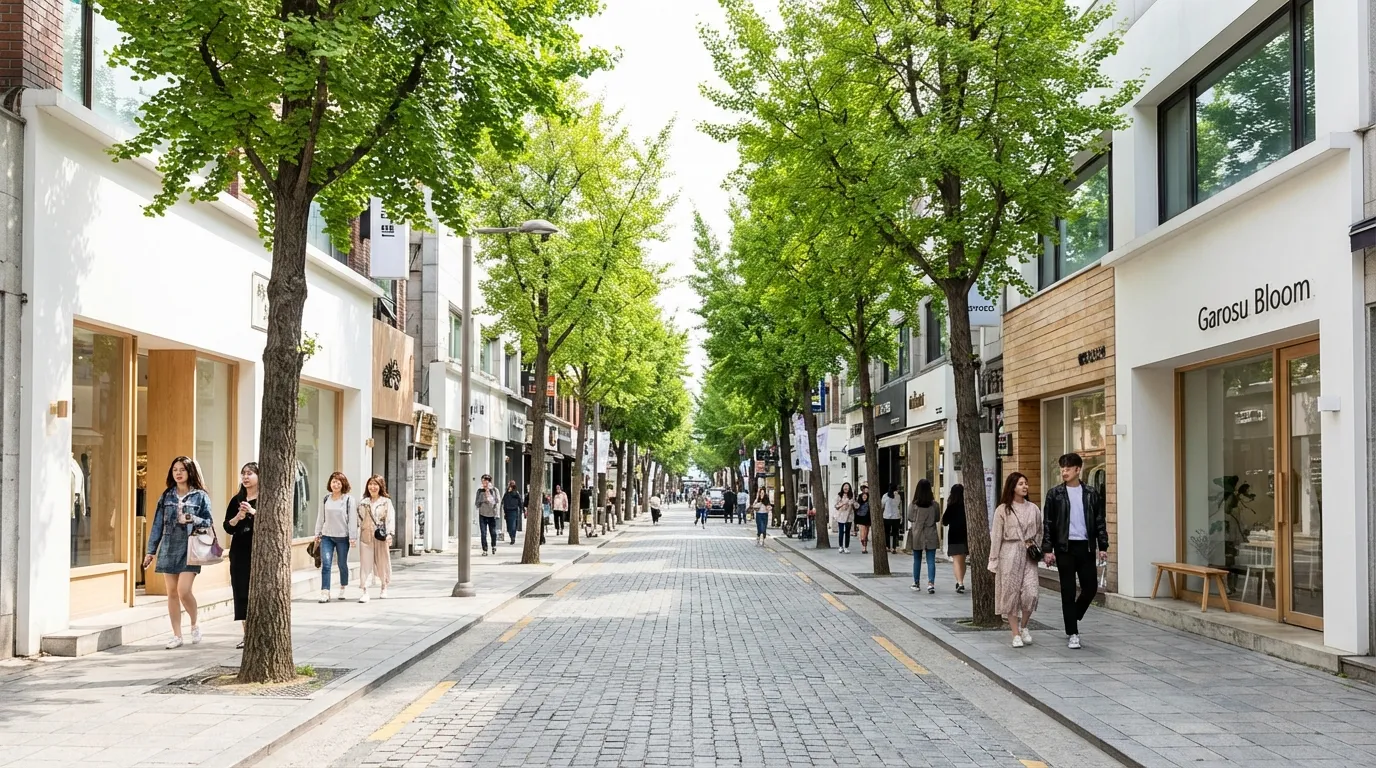
The 700-meter main street is physically straightforward. Start at the southern end near Sinsa Station and walk north toward the Han River. The street features over 150 gingko trees that divide the two-lane road. Walk up the right side first to browse the 2-story and 3-story flagship stores, then cross over at the top and walk down the left side.
How do cafes and shopping connect?
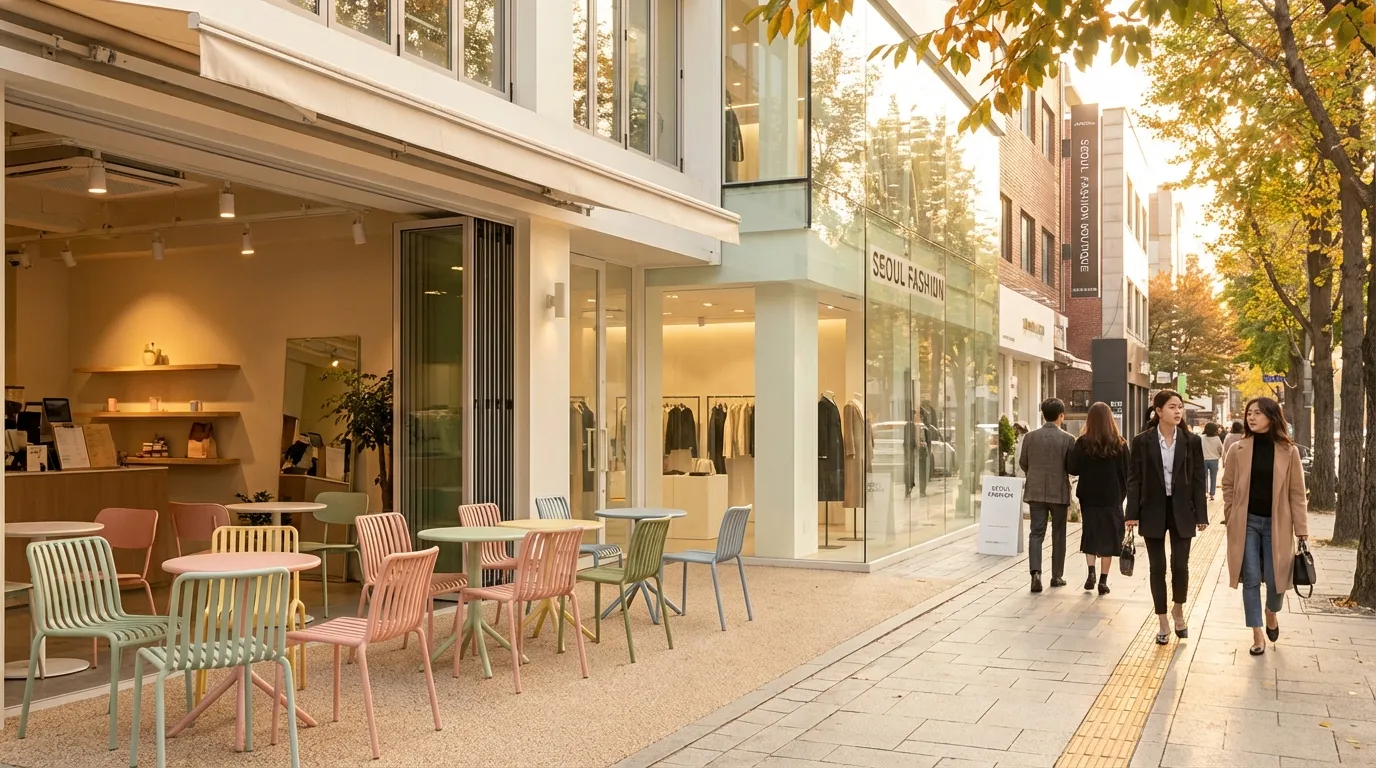
At exactly 3:00 PM, the sunlight hits the western side of the street, making it the ideal time to grab a seat on a 2nd-floor cafe terrace. The district holds over 40 major cosmetic and fashion flagships along the main road. If you walk into a cosmetic store, you can test products at the styling bars for 15-20 minutes.
You can buy a 5,500 KRW Americano, walk 50 meters to a fashion pop-up, browse for 20 minutes, and step right back out onto the tree-lined pavement. The physical proximity—usually less than a 1-minute walk between major doors—keeps the momentum going.
The 6:00 PM shift to evening walking
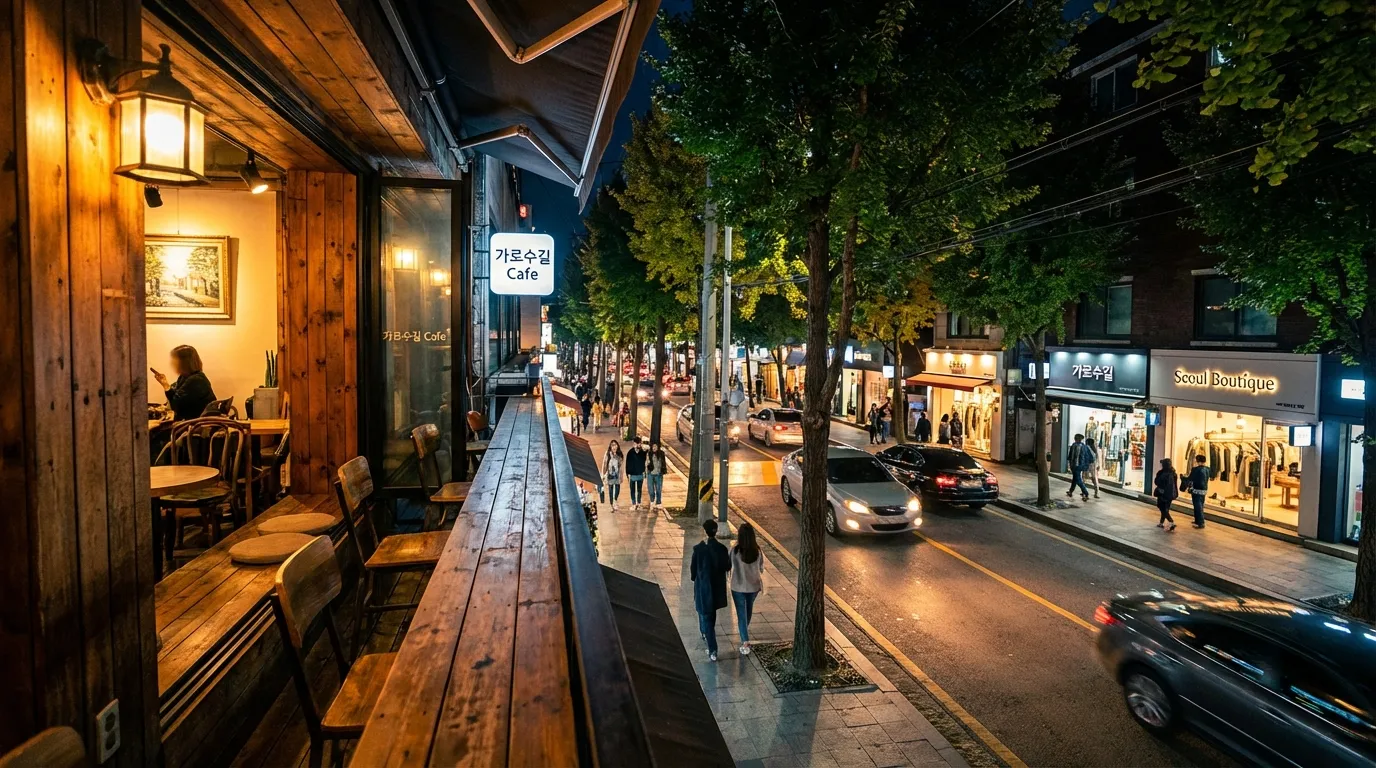
By 6:00 PM in the spring and fall, the main street's warm yellow streetlights power on, reflecting off the large glass storefronts. The foot traffic slows down by about 30%, shifting from aggressive shopping to casual strolling.
The cafes experience a second wave of visitors around 7:30 PM, right after the dinner rush. During this time, the temperature usually drops a few degrees, making the 700-meter walk back toward Sinsa Station feel remarkably comfortable.
Who benefits from the Serosu-gil alleys?
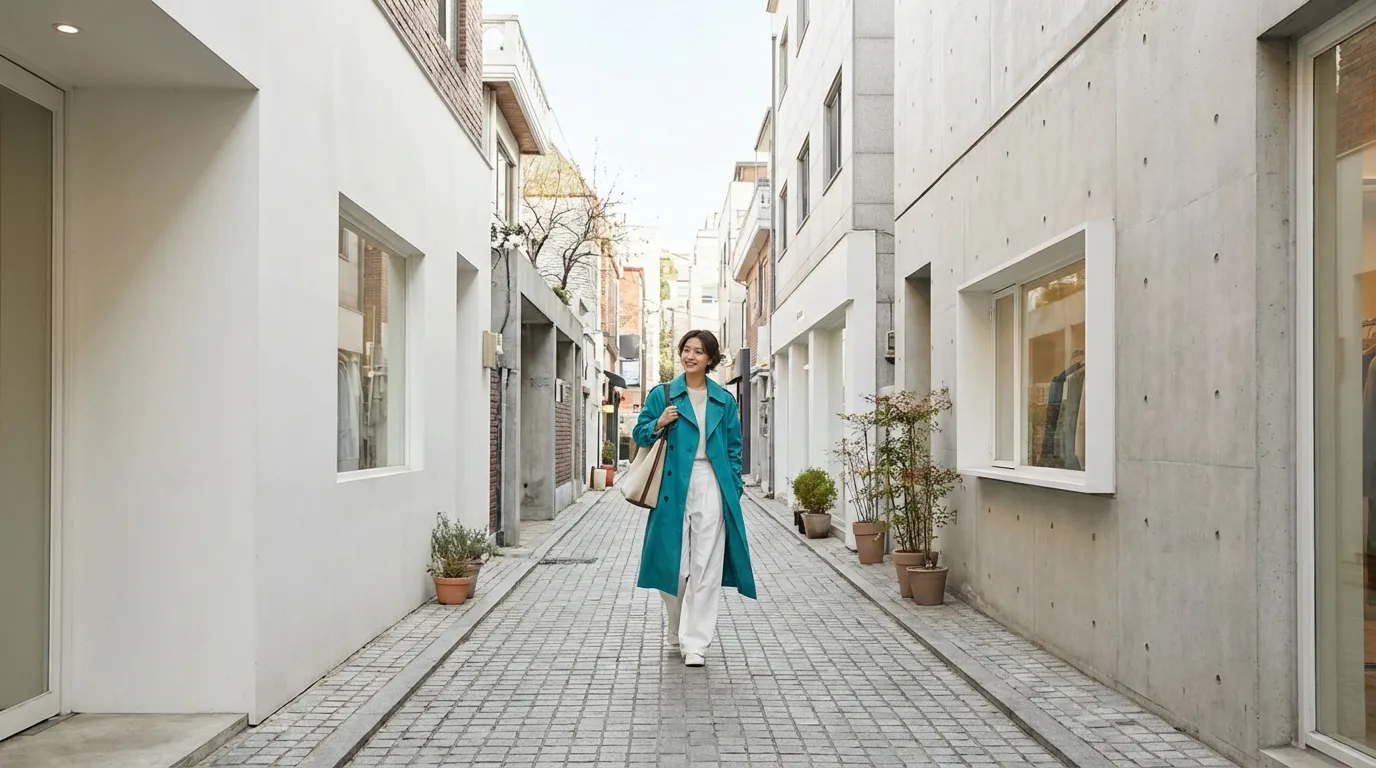
The side alleys, known locally as "Serosu-gil," run parallel to the main street and offer a 40% drop in foot traffic. You only need to walk 1 minute (about 50 meters) left or right off the main road to find these narrower lanes.
These alleys house the smaller, independent roasteries where a hand-drip coffee might cost 8,000 KRW but comes with a quieter environment. If the main street feels too loud, ducking into Serosu-gil instantly lowers the volume and provides access to 10-table bistros and niche perfume shops.
If you want to turn that calm Seoul beauty mood into something directly usable, trying a K-style beauty profile is a natural bridge after the walk itself.
Why the layout works for simple loops
You don't need a map app running constantly here. The grid is rigid. If you walk 3 blocks north, turn left for 1 block, and walk 3 blocks south, you will always end up right back where you started. This predictable 10-minute loop layout means you can wander without getting lost.
Practical Tips for the Final Stretch
Instead of stopping after one straight walk, take two or three 5-minute detours into the side alleys. If you want photos, look for the window light and terrace edges on the western side of the street between 3:00 PM and 5:00 PM.
The follow-up guides work best once that broader logic is clear. For cafe-first framing, continue to Best Cafe Photo Spots in Garosu-gil — Easy Aesthetic Route. For browsing rhythm, use Garosu-gil Shopping Walk Guide — Select Shops and Route. For the softer after-dark mood, read Garosu-gil Evening Walk Guide — Sinsa Night Mood and Route.
Exit Sinsa Station at Exit 8 and walk 3 minutes to reach the start of the 700-meter main street.
Visit around 3:00 PM for the best terrace sunlight and expect to spend 6,000 KRW to 7,500 KRW on specialty drinks.
Duck into the Serosu-gil side alleys to escape the crowds and find smaller, quieter 10-table cafes.