People searching for a Garosu-gil evening walk guide usually want to know when the district feels best, where to begin, and how to build a slower Sinsa night route without turning it into a rushed checklist. Garosu-gil works differently from Seoul's louder night districts. Instead of intensity, it offers softer light, slower movement, and a more polished walking mood. This guide explains the best hour to go, which blocks feel most natural, and how to keep the route memorable without overcomplicating it.
— When does Garosu-gil feel best for an evening walk
- Best time: just before sunset into early evening usually gives the best balance of light and street mood.
- Best route logic: start on the main street, then move into smaller cafe and shop lanes once the area feels readable.
- Best for: visitors who want a date walk, a calm Seoul night route, or a polished district without heavy crowd pressure.
- Read with: start from Best Things to Do in Garosu-gil — Cafes and Evening Walks, then use Garosu-gil Shopping Walk Guide — Select Shops and Route if you want a stronger browsing route.
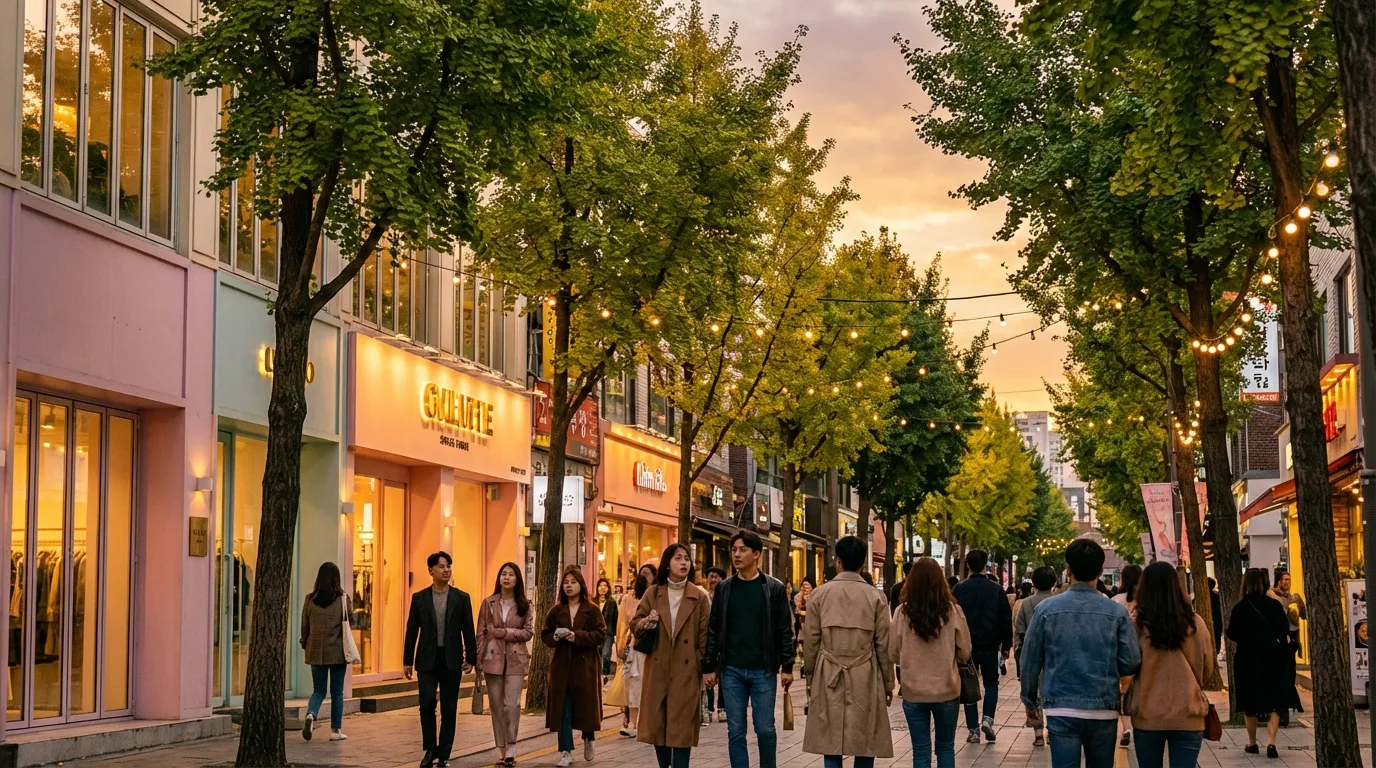
Garosu-gil often looks best before it becomes fully dark. At that hour, trees, storefront glow, and walking pace still balance each other instead of collapsing into one flat night scene.
That is also why the district rarely rewards staying too late. Its strength is the soft transition into night, not a dramatic midnight atmosphere.
This timing matters because Garosu-gil does not depend on hard neon or skyline spectacle. It depends on the overlap between remaining daylight, tree-lined structure, and warm storefront light. When those layers are visible together, the district feels much more coherent than it does in full darkness.
For first-time visitors, starting before full night usually makes the route easier to understand. You can still read the street shape in daylight, then watch the mood shift as windows, terraces, and softer lighting take over.
— Which blocks show the Sinsa night mood most clearly
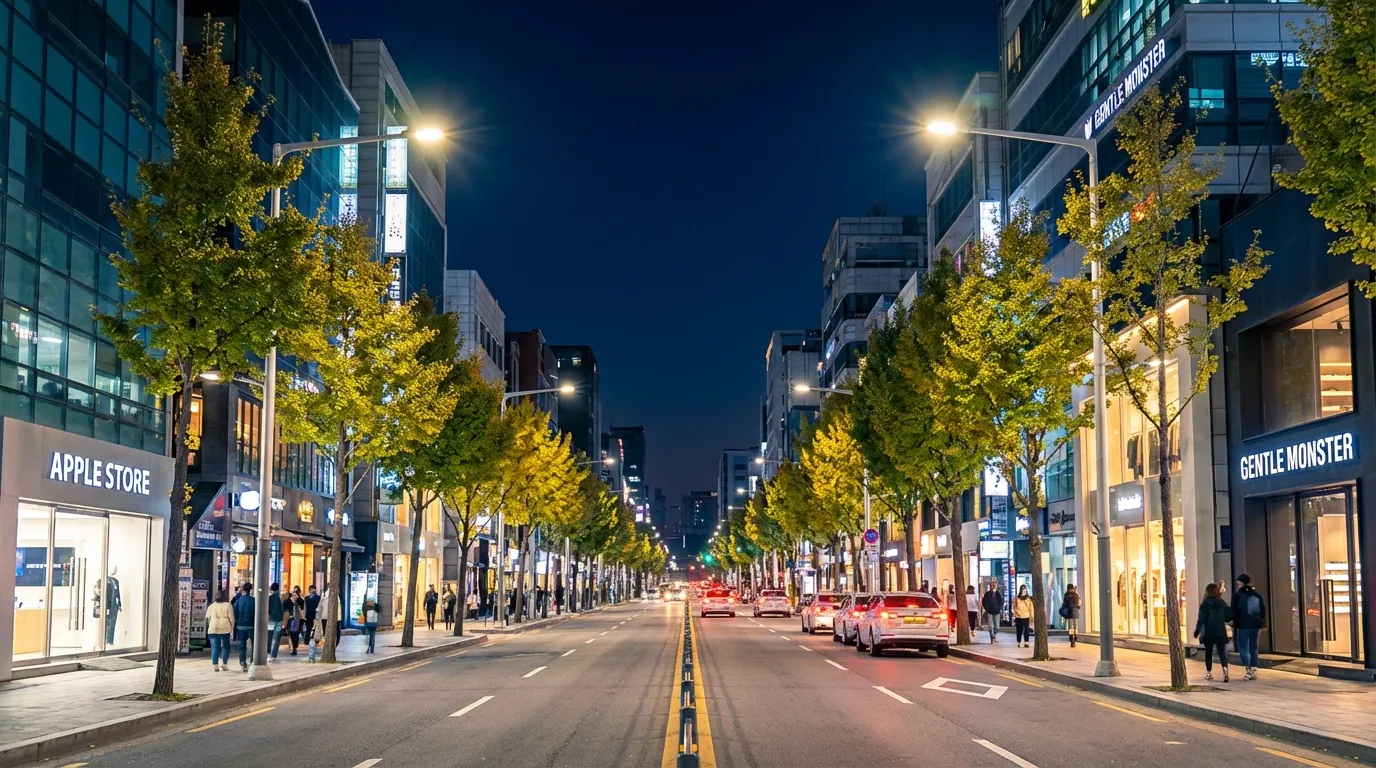
The main street creates the base mood, but the smaller side lanes complete it. You need both to understand why Garosu-gil feels more polished than loud.
If you stay only on the main stretch, the district can feel too broad. If you stay only in the lanes, it can feel too fragmentary. The best evening walk lets those two scales support each other.
That is what gives Garosu-gil its evening identity. The main avenue provides the clean rhythm, and the side lanes provide the finer mood. One without the other can feel incomplete. Together they create the polished but relaxed Sinsa atmosphere that people usually mean when they say Garosu-gil feels good at night.
— What walking pace works best for a date route here
Garosu-gil works best when the route stays slow. This is not a district that rewards crossing as many blocks as possible in one pass.
Two or three clear sections are usually enough. A short main-street walk, a pause near a cafe or terrace, and one quieter lane often produce a stronger memory than trying to cover everything.
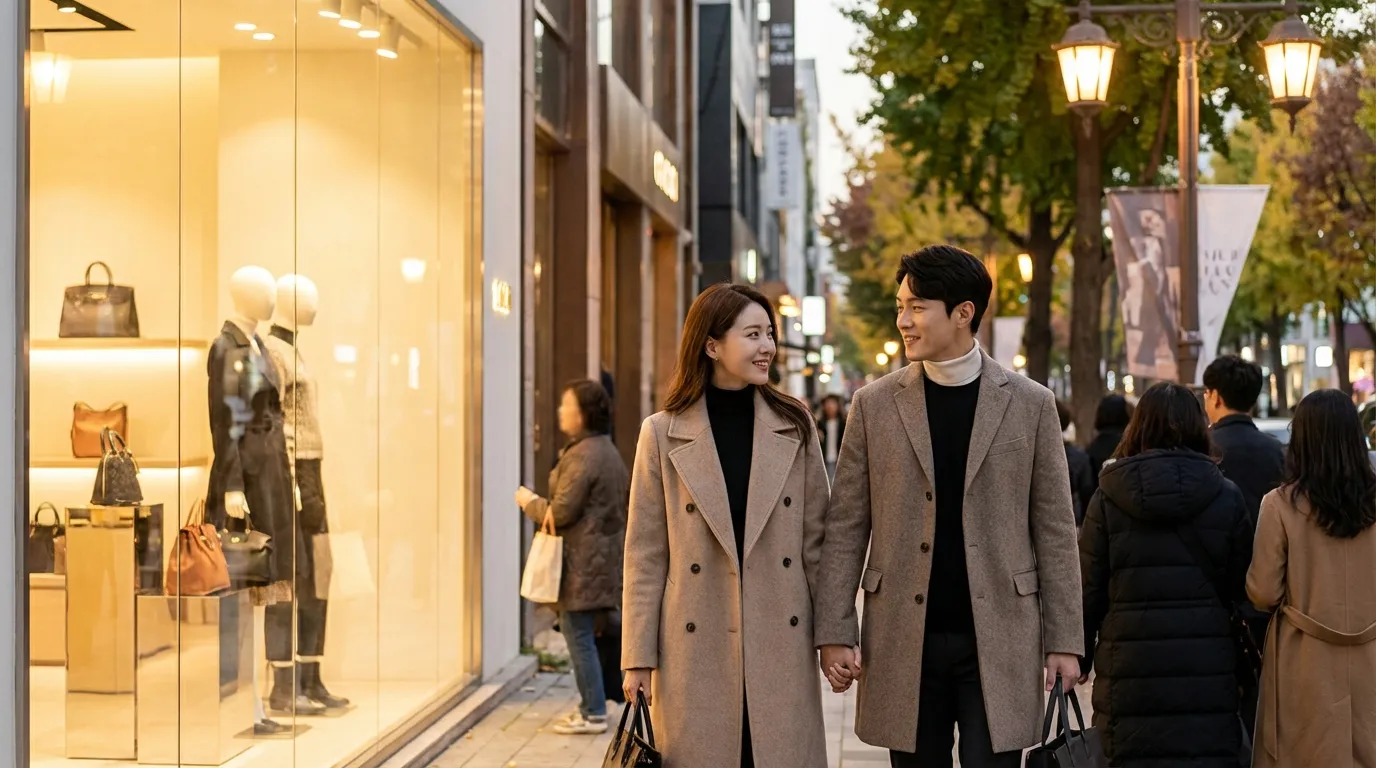
This is also why the district works so well for date walks. Unlike louder Seoul areas, the route does not force constant decisions or movement. You can keep talking, adjust the pace, and decide block by block whether to stop, which makes the evening feel shaped rather than crowded.
Garosu-gil is strongest when the night is built around mood instead of urgency. If the goal is to spend time well rather than maximize stop count, the district becomes much easier to appreciate.
If you want to turn that calmer Sinsa night mood into something immediately usable, trying a K-style beauty profile is a natural bridge after the walk.
— How do cafe and shop lights change the feeling after sunset
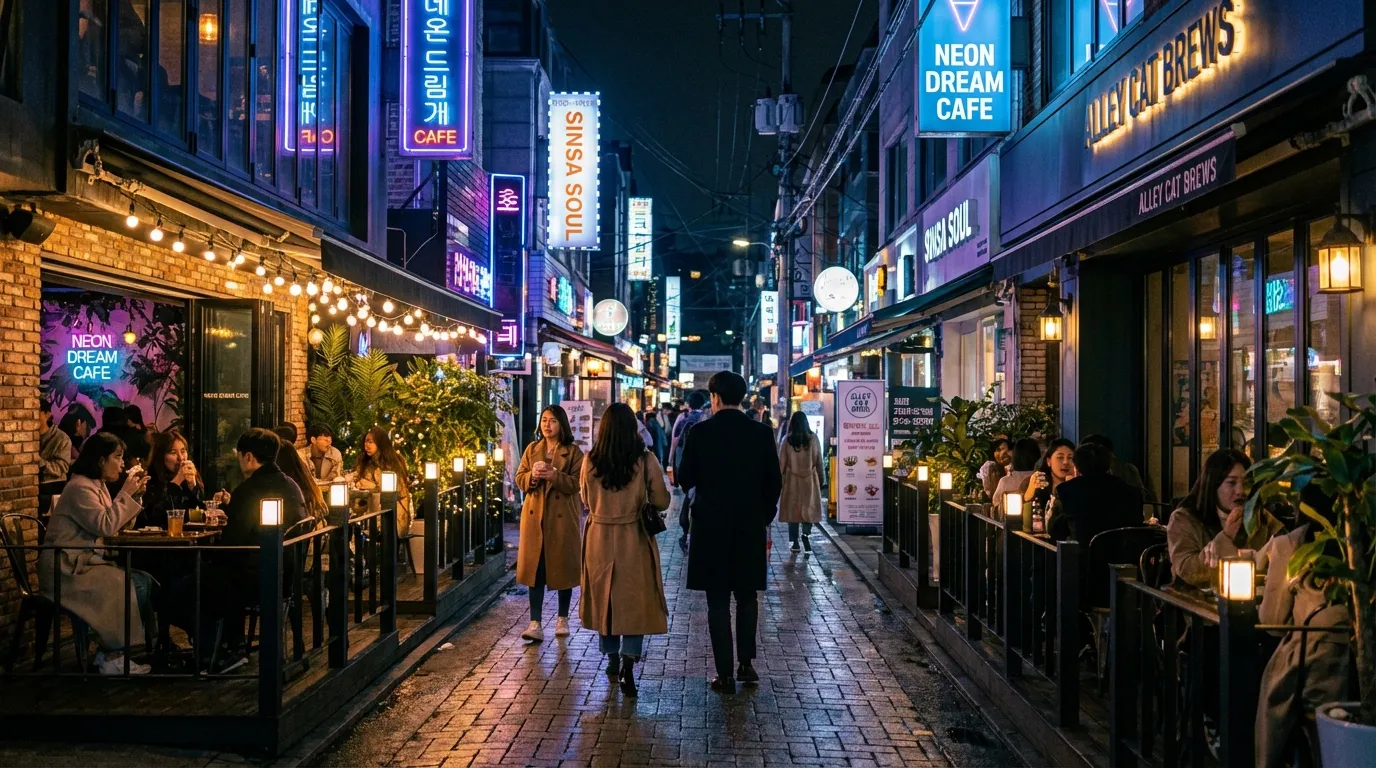
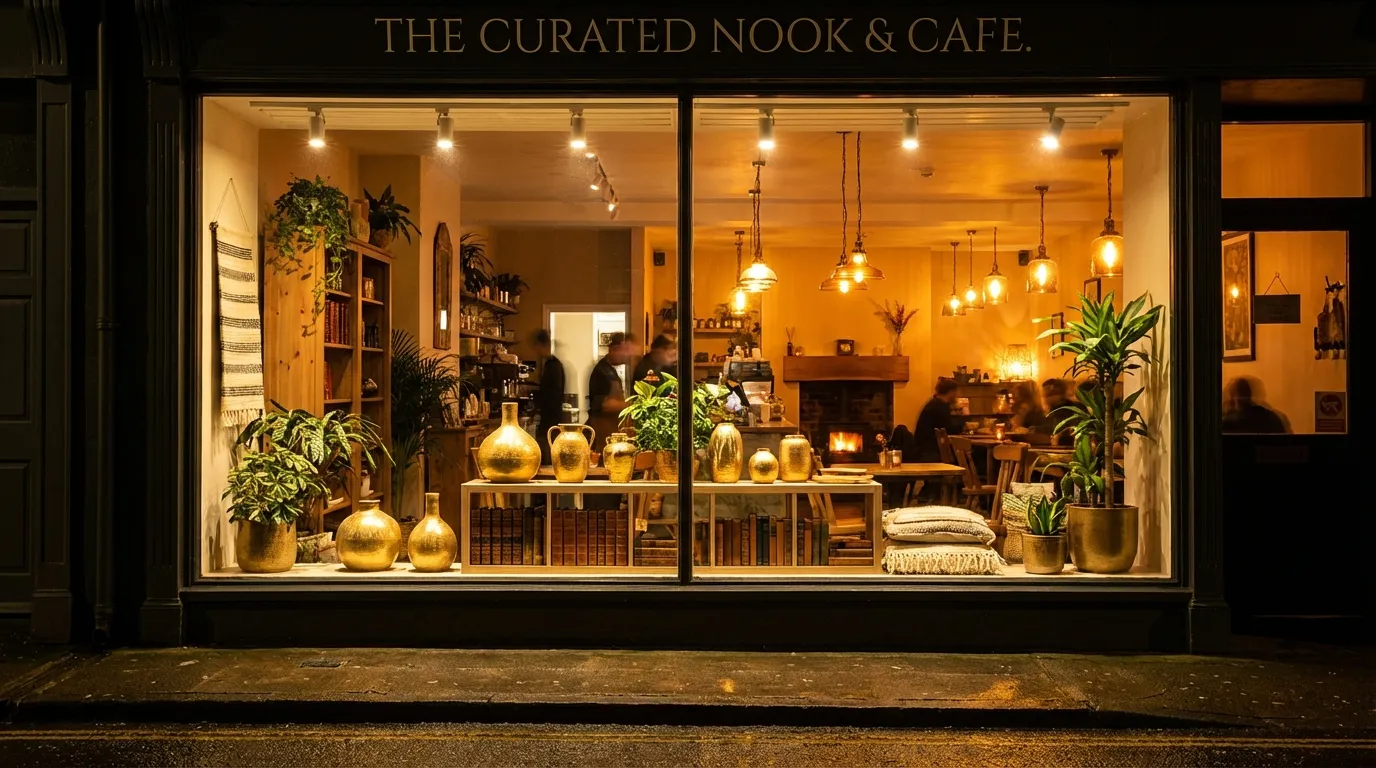
After sunset, cafes feel warmer and shop windows feel more composed. Together they stop reading as separate stops and start reading as one continuous street atmosphere.
That is what makes Garosu-gil different from more neon-driven Seoul areas. The night here is shaped by quiet repetition rather than visual overload.
That difference changes photography too. Garosu-gil evening images usually work better when they include window light, soft silhouettes, and the tree-lined street edge rather than chasing one dramatic landmark. The district photographs best as a refined walking mood, not as a spectacle.
On rainy evenings, the effect is subtler than in brighter districts. Instead of strong neon reflection, you often get a quieter sheen on the pavement, which fits the area well if the frame stays restrained.
— How should you handle Garosu-gil on a weekend evening
Weekend evenings do raise the energy, but Garosu-gil usually still reads more as an active stroll than as a compressed crowd district. The main challenge is pacing: if you try to keep moving at one constant speed, the walk can start feeling flat or tiring. It often works better to alternate between one active block and one calmer pause.
- On weekends, it helps to read one main-street section first and move quickly through the busiest cluster.
- If you do not need a long cafe stop, short visual pauses often work better than committing to one busy place.
- For photos, early evening is usually much stronger than late-night darkness.
- A main-street loop plus one or two quieter lanes is often enough for a memorable night route.
That is one reason Garosu-gil still works well on weekends. It rarely turns fully chaotic. Instead, it becomes a slightly more animated version of the same polished walking district.
— What route helps first-time visitors avoid a flat evening walk
The safest route is simple: one main-street section, one cafe lane, and one softly lit storefront area. That gives enough contrast without making the district feel repetitive.
What matters most is not distance. It is whether the route keeps the mood clear.
In practical terms, a late-afternoon arrival, one clear main-street stretch, one cafe-side lane, and a soft-lit finish is already enough. Add one short stop and the district usually feels complete. Garosu-gil is strongest when it is edited lightly rather than covered aggressively.
— Should you stop at a cafe first or walk before sitting down
That choice changes the whole evening more than many visitors expect. If the goal is to feel the district shift from day to night, it usually works better to walk one short stretch first and sit down afterward. If the day has already been long and the pace needs to reset, a short early cafe stop can also work, as long as the route returns to the street before the evening mood fully settles.
The key is that the cafe should regulate the rhythm, not replace it. Garosu-gil feels strongest when a short stop leads back into a slightly changed street rather than turning the outing into one long interior stay.
— If you want photos too, what kind of scenes suit the route best
Garosu-gil evening photos usually work better when they follow the district's restraint. Window glow, tree shadows, terrace edges, and soft side angles often look more convincing than searching for one dramatic "night shot." The best frames usually show a polished street that still feels lived in.
That is another reason dusk works so well. Faces hold light more gently, the street does not collapse into darkness, and the district keeps its refined structure. Garosu-gil is not a late-night spectacle route. It is a soft-lit evening route, and the photography works best when it accepts that.
Garosu-gil usually feels best from dusk into early evening, before the district loses its softer balance.
The strongest route mixes one main-street stretch with smaller cafe or shop lanes instead of staying in only one type of block.
A slower pace works better here than maximum coverage, especially for a date walk or a calmer Seoul night route.