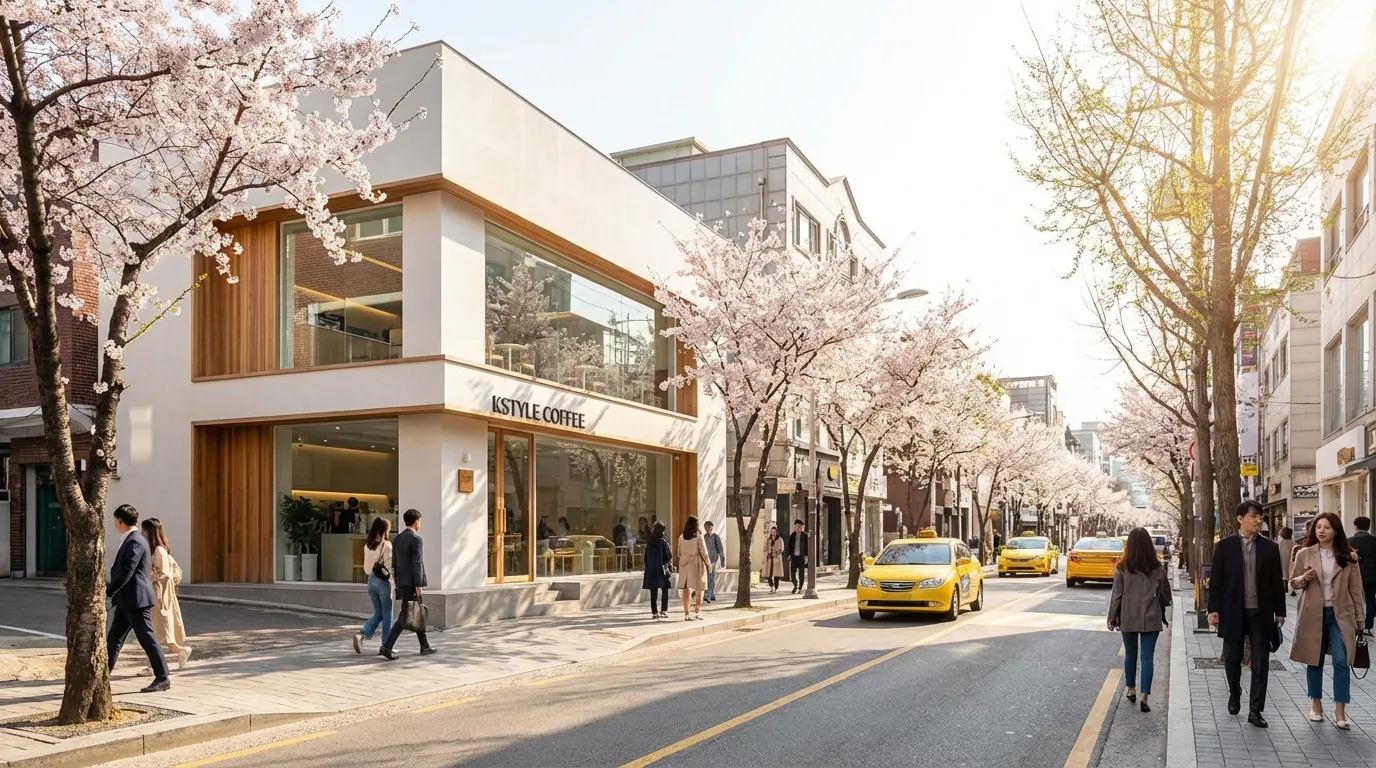
People searching for the best cafe photo spots in Garosu-gil usually do not need a long list of trendy names. They want to know where photos come out easiest, whether window seats or terraces work better, and what time of day gives the cleanest Sinsa cafe mood. Garosu-gil photographs best when window light, storefront rhythm, and calmer street movement support the frame together. This guide explains where to start, which seat types work best, and how to build an easy first-time cafe photo route.
What makes Garosu-gil useful is not just that it has stylish cafes, but that many of them sit inside a street rhythm that still feels readable on camera. The strongest images usually happen when interior tone and outside movement support each other instead of competing.
That is why seat choice often matters more than cafe fame. Two cafes may look equally attractive in search results, yet one becomes much easier to photograph because its light, table spacing, and street relation are more controlled.
— Where should you start if you want easy cafe photos in Garosu-gil
- Best starting area: begin on the main Garosu-gil stretch, then narrow into smaller cafe lanes.
- Best time split: late morning to early afternoon works well for window light, while late afternoon is better for street mood.
- Best photo types: window seats, doorway-side tables, and terrace spots where trees or signs stay lightly in frame.
- Read first: use Best Things to Do in Garosu-gil — Cafes and Evening Walks if you want the wider district route before focusing on cafes.
For a first visit, main-street cafes are easier because they help you understand the district before you start chasing smaller alley mood. Going too deep into side lanes too early can make the background feel random rather than styled.
Garosu-gil works best when the cafe and the street still feel connected in the frame.
Starting on the main stretch gives you a visual baseline. Once you understand how Garosu-gil light, trees, and storefront spacing behave, it becomes much easier to judge whether a smaller lane cafe really improves the scene or just complicates it.
That is why main-street cafes are not merely convenient. They are structurally easier to read.
— Are window seats or terraces better for aesthetic shots
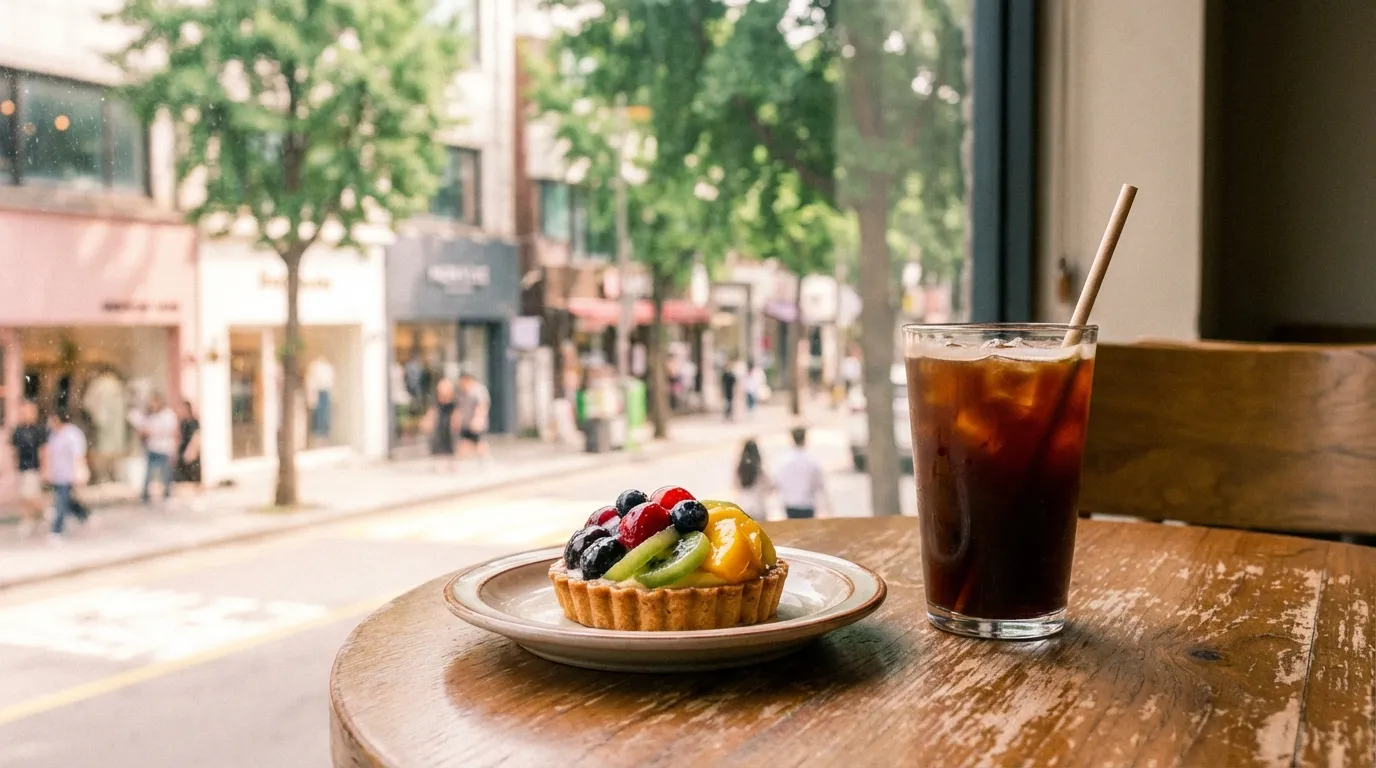
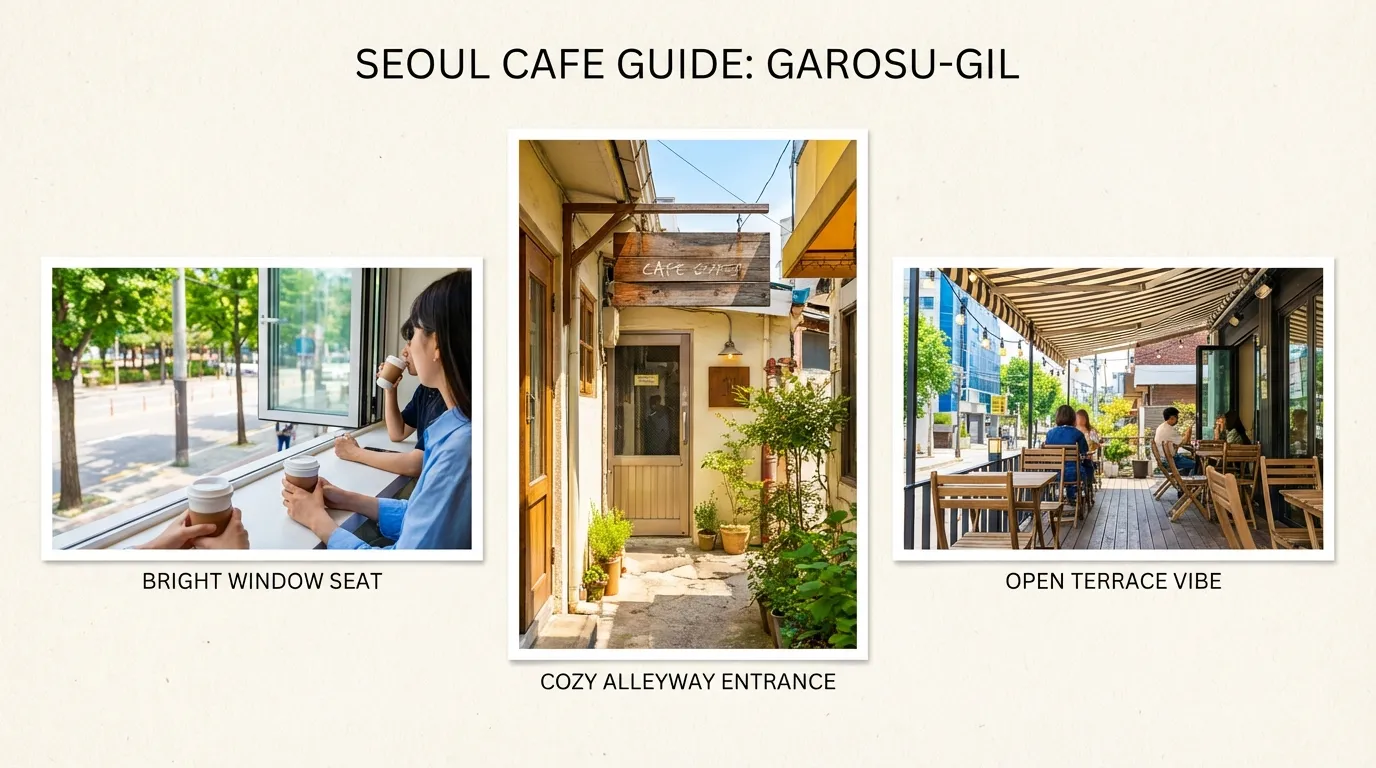
Window seats are usually better for stable photos. They help balance face tone, drinks, and the outside street without asking you to control too many moving parts at once.
Terraces can look more like Garosu-gil, but they are harder to manage because pedestrians, parked cars, or signage can take over the frame quickly.
If the goal is one reliable photo, start inside by the window. If the goal is stronger street mood, use the terrace briefly once the light feels softer.
Window seats are useful because they usually organize several things at once: skin tone, cup detail, tabletop texture, and a controlled strip of the street outside. Terraces can be great too, but they ask for much more tolerance for passing movement, signage, and unpredictability.
So the easiest approach is often to secure the reliable image inside first, then use the terrace for one or two mood-heavy frames afterward.
— Which cafe lanes feel best for Sinsa cafe photos
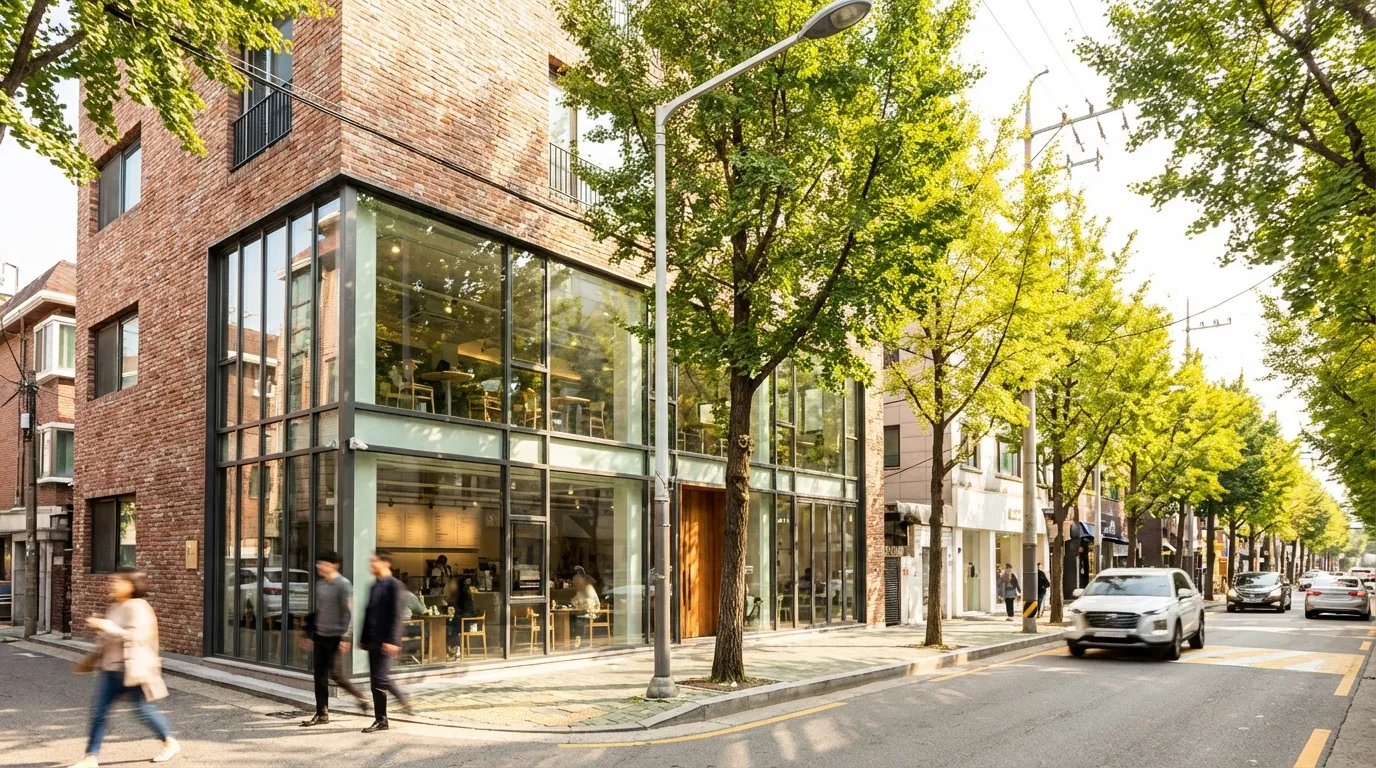
Lanes just off the main street often work best. They keep enough Garosu-gil identity through signage, walls, and trees, but they avoid some of the distraction of the busiest central stretch.
These lanes usually reward angled compositions more than straight-on shots. A doorway, a side table, or a partial sign often looks better than trying to show the whole cafe at once.
If you want to turn that calmer Seoul cafe mood into something immediately usable, trying a K-style beauty profile is a natural bridge after the route.
The best side-lane cafes are often only one block off the main road. Too deep into the side streets and the background can begin to feel closed in. Just off the main route, however, Garosu-gil's trees, signs, and wall textures still stay visible enough to keep the district identity intact.
That is why lane distance matters. The goal is not to hide from the street completely. It is to soften it.
— Does brunch light or pre-evening light feel better here
Brunch-time light is better when you want cleaner interiors, clear tabletops, and calm compositions. It is usually the easiest option for first-time visitors.
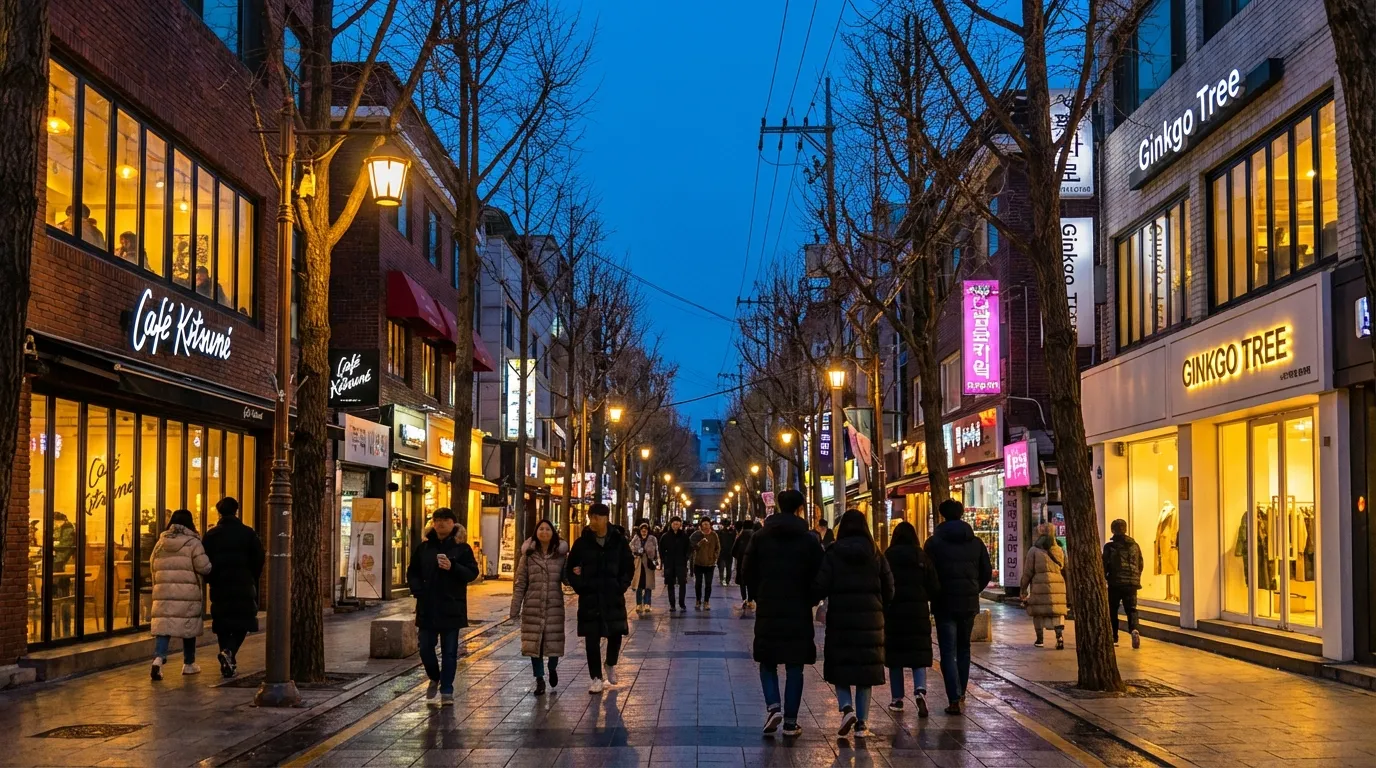
Pre-evening light changes the district. Storefront glow starts to matter more, and the photos feel less like a cafe checklist and more like part of a slower Sinsa walk.
Neither is universally better. Daytime is stronger for control, while late afternoon is stronger for atmosphere.
Brunch light is especially useful for cleaner tabletops, desserts, and more stable indoor compositions. Late afternoon works better once you want the cafe to feel connected to the slower street mood outside. The stronger option depends on whether control or atmosphere matters more that day.
The same cafe can behave very differently across those two windows, which is why time choice is often as important as cafe choice.
— What route helps first-time visitors avoid bad cafe-photo choices
The safest route is to test three scene types only: one window-seat cafe, one alley cafe, and one street-facing terrace. That gives you contrast without flooding the walk with too many similar backgrounds.
What matters is not the total number of cafes. It is whether you understand which scene type fits your photos best.
For most first-time visitors, one good window cafe, one softer alley cafe, and one street-facing scene are enough to understand the district. Anything beyond that is usually refinement rather than necessity.
— How do crowd timing and seat selection make Garosu-gil cafe photos easier
At busy weekend hours, even strong cafes can become visually messy because the order line and the seating line start interrupting each other. In those cases, it helps to stop thinking in wide shots and start choosing seats where a wall edge, window frame, or doorway can close the composition for you. Smaller but cleaner frames usually outperform ambitious ones.
Seat angle matters too. A slightly diagonal view with one-sided light usually works better than a fully frontal composition because it shapes the shoulders, the table, and the background more clearly. In the end, Garosu-gil cafe photography becomes easier once you stop chasing the most famous cafe and start reading which seat produces the least visual conflict.
Garosu-gil cafe photos are easiest when you start on the main street and then narrow into calmer cafe lanes.
Window seats are better for reliable photos, while terraces work better once you want stronger street mood.
First-time visitors usually do better testing window, alley, and terrace scenes instead of trying every popular cafe.