EDITORIAL CHECK
Source and Review Basis
Han River guides are checked against Seoul city Hangang references for park locations, seasonal events, picnic flow, and night-view route details that can change by season.
People searching for a Banpo Han River night view guide want more than proof that the fountain is famous. They want to know where to start, which angles make Banpo Bridge photos feel clearer, and whether the Some Sevit side or the bridge-side walkway fits their evening better. Banpo is one of the strongest Seoul night-view areas, but it becomes easier only after visitors understand that the fountain, the bridge, and the riverside walk do not all work in the same way. This guide narrows the wider Han River logic from Best Things to Do at Han River Park - Picnic and Night View and Best Han River Night Photo Spots - Reflections and Views into Banpo's actual night rhythm.
First Banpo night route and arrival window
💡 Banpo Han River Park Night View Fact Check (Verified Oct 2026)
※ Verified on: 2026-10-11. Fees and fountain operating schedules are subject to change based on weather conditions and operating authority policies.
| Category | Verified Details (Seoul Future Hangang Project Headquarters) | Official Source | |:---|:---|:---| | Subway Access | Express Bus Terminal Station (Lines 3/7/9) Exits 8-1 & 8-2 (approx. 15-min walk), Sinbanpo Station (Line 9) Exit 1 (approx. 15-min walk) | Directions | | Parking Fees | First 30 min 1,000 KRW / 200 KRW per 10 min thereafter / Daily max 10,000 KRW (Free on Seollal & Chuseok holidays) | Parking Info | | Moonlight Rainbow Fountain | Low season (Mar 15–May, Oct): 12:00, 19:30, 20:00, 20:30, 21:00 (20 min per show) / Peak season (Jun–Sep): 21:30 added | Fountain Guide | | Fountain Suspension | Fountain operations suspend during adverse weather (cancelled during rain forecasts) | Fountain Guide |
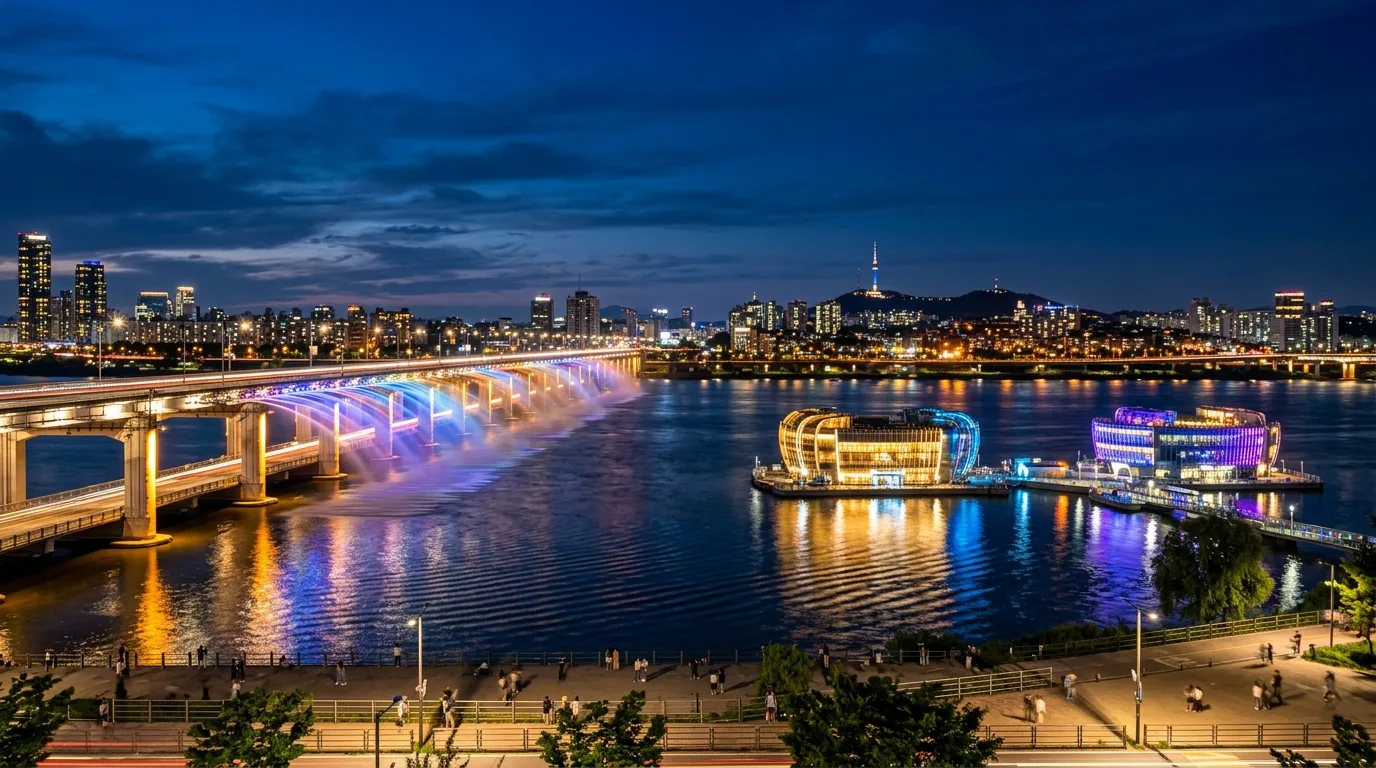
- Best starting logic: begin where Banpo Bridge and Some Sevit can both be read together, so the full night structure makes sense early.
- Best for: visitors who want a Seoul night walk, cleaner Banpo Bridge photos, and a river route with stronger visual contrast.
- Best timing: the transition from early evening into full night feels better than arriving only after everything is already dark.
- Time budget: allow 60 to 90 minutes for a first visit that includes bridge views, Some Sevit, and a short riverside walk.
- Route order: overview first, wider bridge photos second, fountain timing third, slower walk last.
- Main rule: Banpo works best as a short sequence of changing scenes, not as one fixed viewing point.
Banpo is less about staying still than Yeouido. It becomes memorable through movement, because the bridge, reflective water, and walking flow keep shifting in emphasis as you move.
That is why the first decision matters. If the starting area already shows how the bridge structure and riverside lights relate to each other, the rest of the route feels much easier to read.
Arriving 30 to 45 minutes before the main night mood gives the route more room. You can see the bridge shape while the sky still has color, then watch the reflections take over gradually. If you arrive only after full darkness, Banpo can still look dramatic, but the first-time visitor has fewer clues about where to stand and what each side of the park is doing.
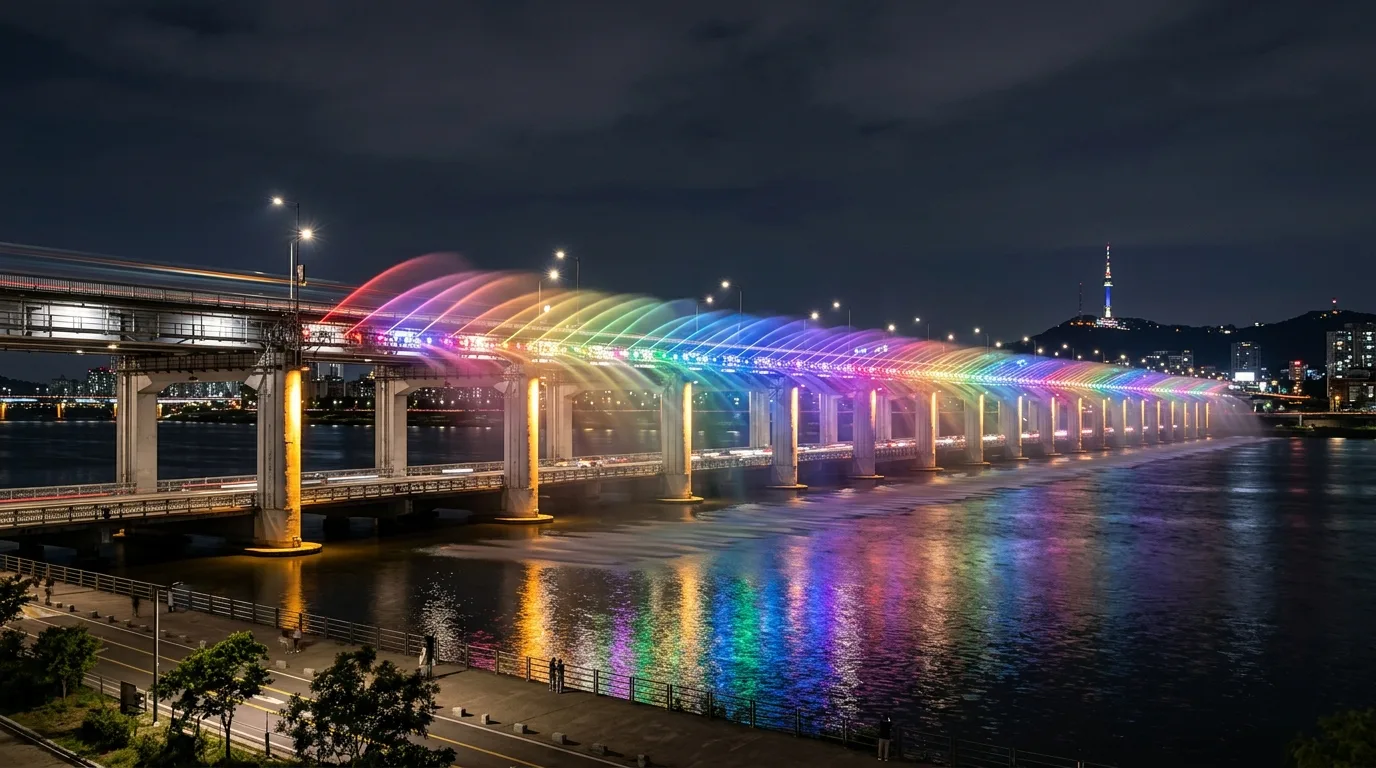
Banpo Bridge photos need distance before drama
Many visitors assume the best Banpo Bridge photo must be taken from the closest possible point to the fountain. In practice, that can make the scene feel too crowded, with water action and foot traffic overwhelming the bridge itself.
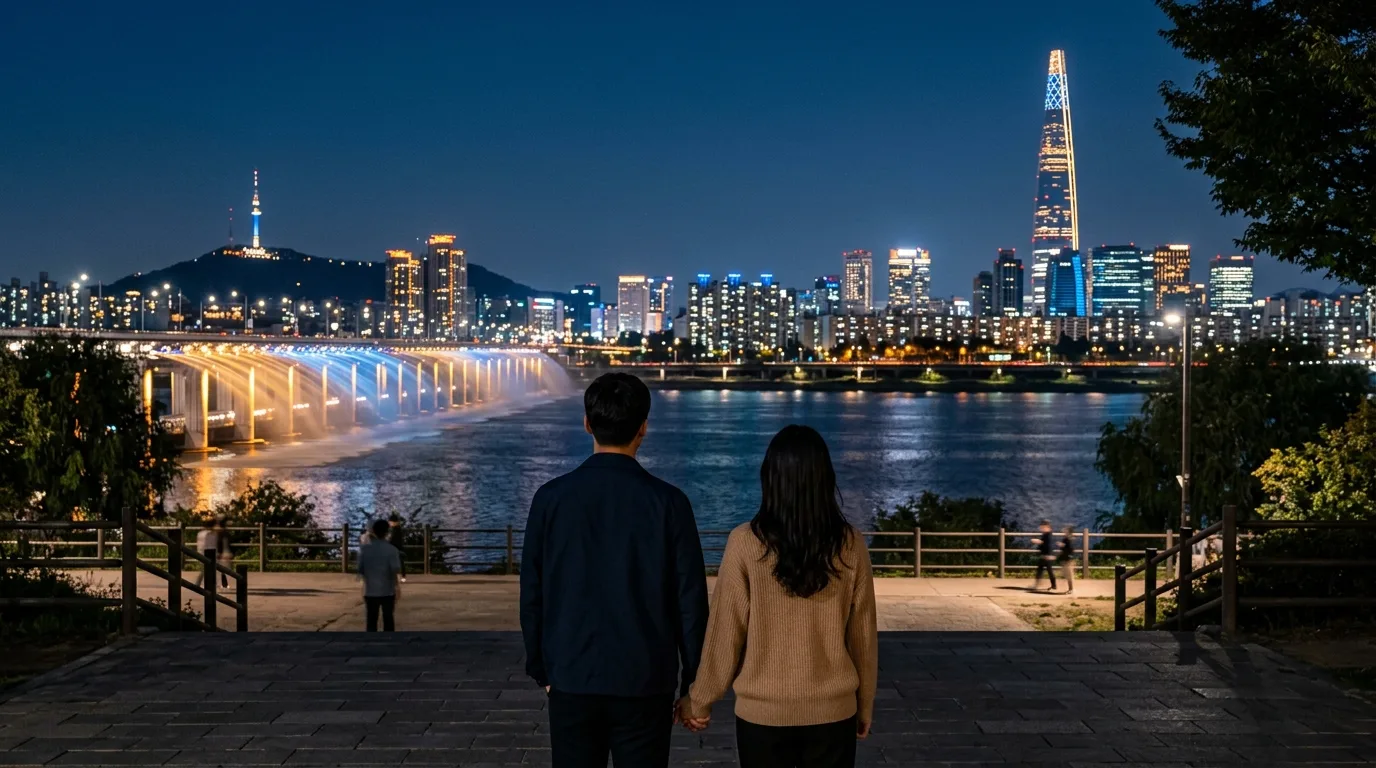
From a slightly more removed angle, the bridge line, reflective water, and surrounding lights start to organize themselves into one clearer frame. That produces a stronger Seoul night image than standing at the most obvious close-up point.
So the better question is not how near you are to the fountain. It is whether the bridge, river, and walkway are all readable together in one scene.
For phone photos, take one wider frame before any close-up. Keep the bridge line, a strip of water, and at least a small part of the walking edge in the same image. That frame becomes the reference shot for the night. After that, closer fountain shots make more sense because the viewer already understands where the scene sits.
From the closest crowded edge, people raise the camera too high and lose the water reflection. A lower angle can keep the river visible, but only if the foreground is not blocked by bags, railings, or other visitors. If the foreground keeps interrupting the image, step back 10 to 20 meters instead of waiting for the same tight spot to clear.
Moonlight Rainbow Fountain as one stage, not the whole route
The Moonlight Rainbow Fountain feels like the center of Banpo, but it fits more cleanly as one stage inside a longer night route. If visitors go only for the fountain, the outing can feel shorter and more one-dimensional than expected.
Arrive while the riverside lighting is still settling into the evening, walk through the Some Sevit side first, and let the fountain become the visual peak rather than the entire plan. That sequence gives Banpo more depth and helps the night feel like a route instead of an isolated spectacle.
Check the fountain schedule on the visit day because seasonal operation and weather can affect it. Even when the fountain is running, do not build the whole evening around a single show window. A stronger plan gives you 2 or 3 usable photo moments before the fountain starts, so the visit still works if wind, maintenance, or crowding changes the view.
The practical sequence is simple: first locate the bridge, then find a wider angle, then wait for the fountain from a position you can actually hold. If you search for the perfect point only after the water starts, the best minutes can pass while you are still moving.
If you want to carry that cooler Seoul night mood into something more directly usable afterward, trying a K-style beauty profile is a natural continuation.
Some Sevit versus the bridge-side walkway
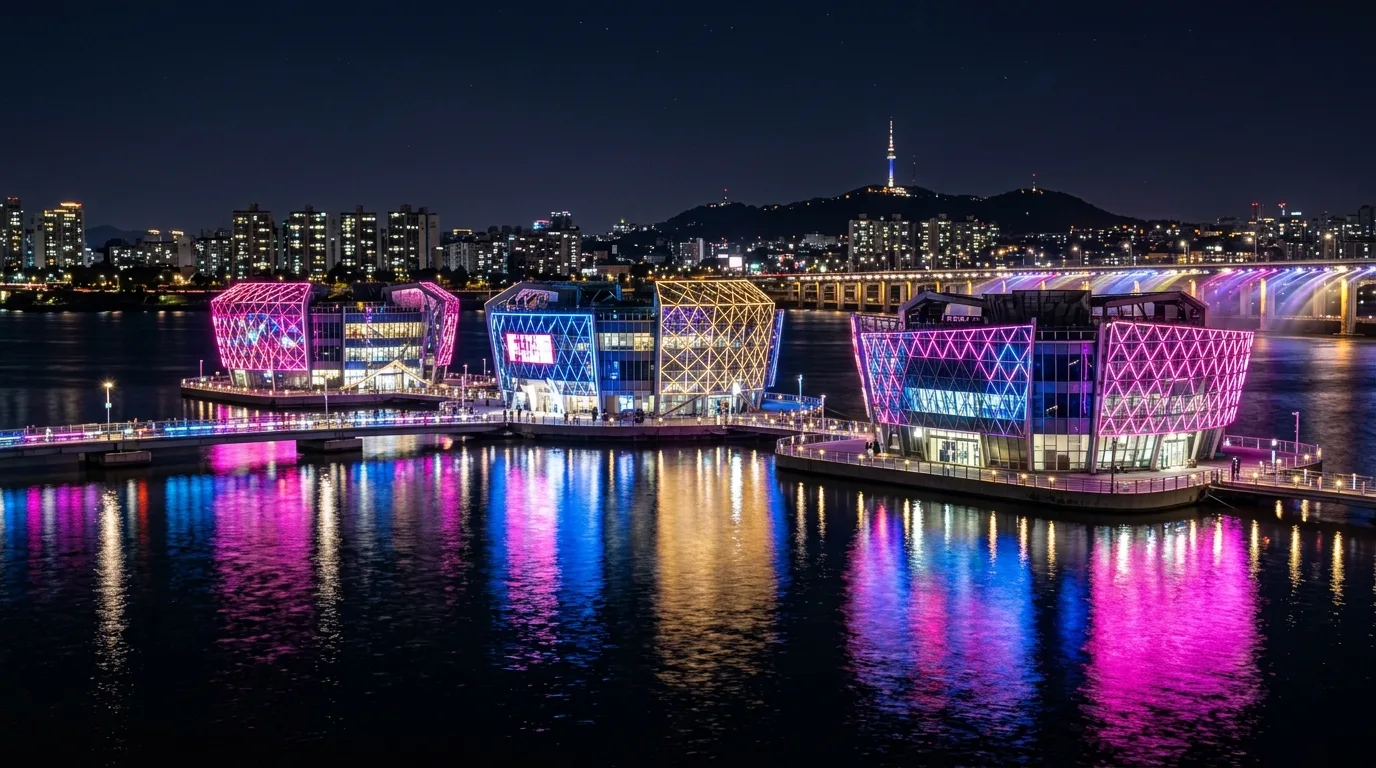
The Some Sevit side is stronger when you want structure. Reflections, lighting, and the river edge read more clearly there, so Banpo's night view feels more immediately "Seoul" in a visual sense.
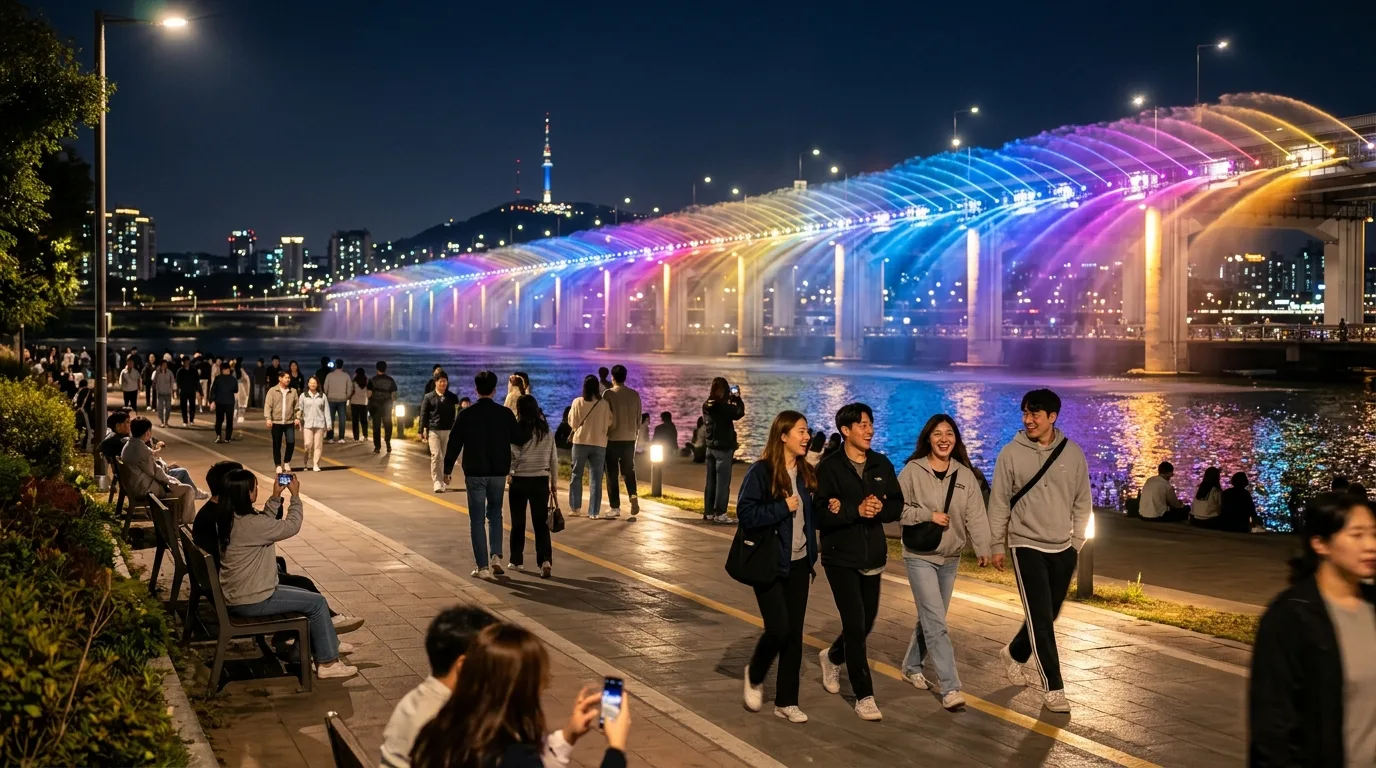
The bridge-side walkway and lower riverside sections can feel less polished, but they deliver more direct night-air atmosphere. For visitors who care less about one iconic frame and more about the sensation of walking through a city-night river scene, that side can be more satisfying.
In that sense, Some Sevit is the more structured Banpo and the walkway side is the more experiential Banpo. The best route samples both briefly instead of choosing only one.
Use Some Sevit when you want cleaner shapes, brighter reflections, and a more polished first impression. Use the bridge-side walkway when you want the sound of the river, passing bicycles, and a less staged city-night feeling. The two areas are close enough that a first visit does not need to pick one permanently, but it helps to know which side should carry the main photo.
If you have only 30 minutes, stay with the more structured side and avoid turning the visit into a rushed loop. If you have 60 minutes or more, take the structured photos first, then let the walkway handle the looser ending. That order keeps the strongest images from being left until everyone is tired.
Who should choose Banpo instead of Yeouido at night
Banpo is better for visitors who want the evening itself to feel visually decisive. It rewards shorter, sharper scene changes: bridge structure, fountain timing, reflections, and a stronger sense that the river has become a composed Seoul night view.
Yeouido is easier for longer stays and calmer pacing, but Banpo is better when the goal is to remember one clear evening sequence rather than simply spend time by the river. That makes it especially strong for first-time visitors who want one memorable Seoul night route without turning the outing into a long checklist.
Choose Banpo when the outing needs a visible payoff within the first hour. The bridge gives structure, the fountain can add motion, and Some Sevit gives a clear night landmark. Choose Yeouido when comfort, conversation, and sitting time matter more than one strong visual sequence.
For a date, Banpo works best when both people are comfortable walking. For a family visit or a slower group outing, it may need more breaks than expected because the attractive scenes pull people in different directions. The night view is strong, but the route still asks visitors to move, compare, pause, and reframe.
If you want the slower daytime counterpart first, Yeouido Han River Picnic Guide — What to Prepare First is the best follow-up because it shows how the same river changes when the goal is comfort rather than night atmosphere.
Banpo works best at night when visitors treat it as a short sequence of changing river scenes rather than one single viewing point.
Banpo Bridge photos are clearer from a slightly removed angle where the bridge, water, and walkway can be read together.
The Some Sevit side is stronger for structured night views, while the walkway side is stronger for atmosphere and direct river-night pacing.