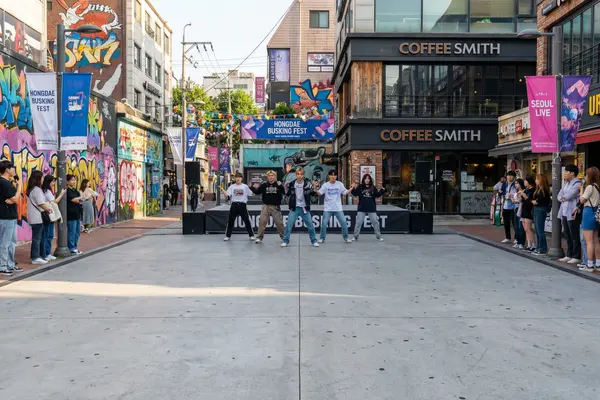
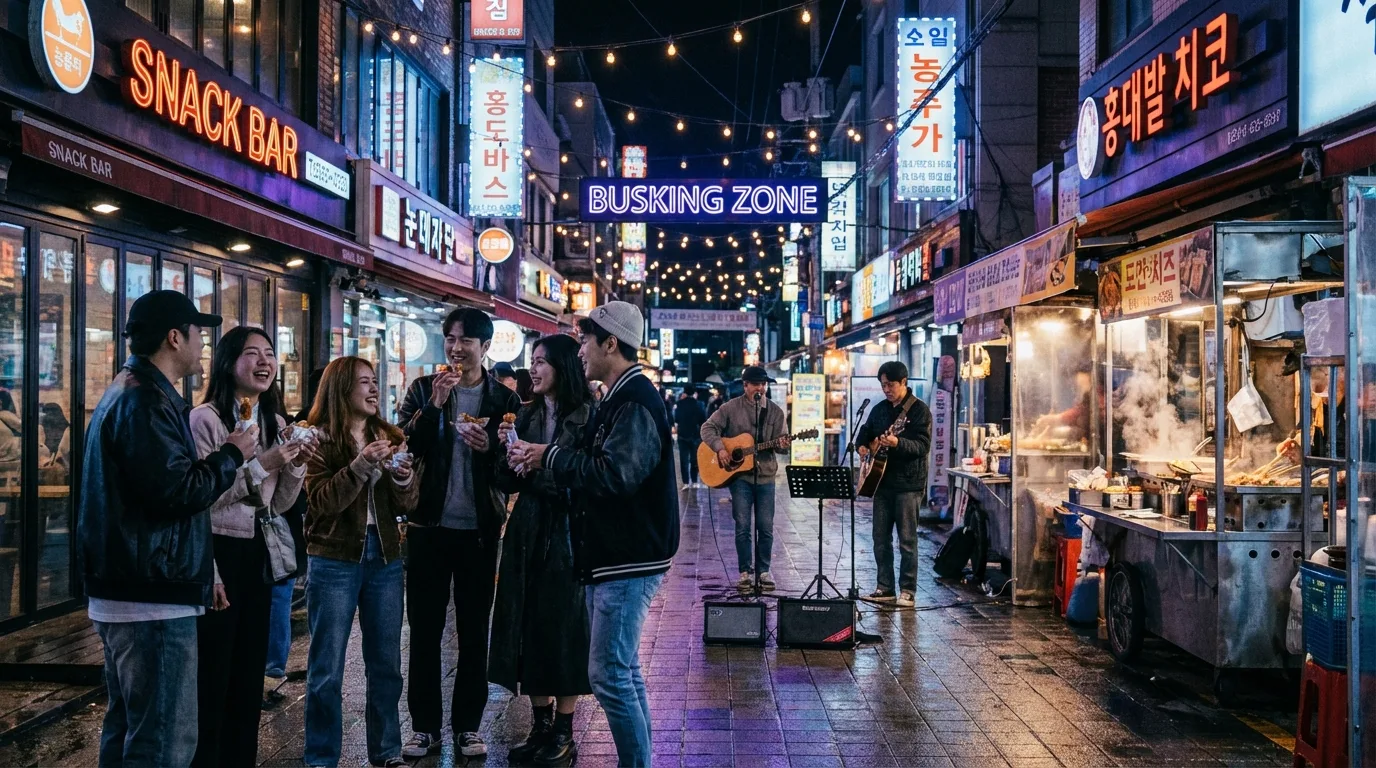
Seoul street fashion trends become easier to understand when you stop asking only which item is popular and start asking where the outfit is being read. Hongdae fashion is absorbed into crowd movement, signage, music, and alley changes, while Seongsu street style leaves more room for silhouette, fabric, and color balance to stand apart. This hub explains Seoul street outfits through district conditions, item volume, shopping routes, and photo purpose instead of treating trend names as the whole answer.
The existing Hongdae and Seongsu comparison guide looks narrowly at how those two districts change a fashion photo. This hub sits one level above that. It gives the wider map first, so later branch guides can narrow into Hongdae outfit tips, Seongsu outfit tips, Seoul select shops, and practical clothing shopping routes in Korea.
Practical reading map before judging Seoul street fashion
- Starting route: read Hongdae around the Hongik Univ. Station Exit 8-9 walking flow, then read Seongsu around Seongsu Station Exit 3-4 toward Yeonmujang-gil and cafe-street blocks.
- Best time window: weekday 2-5 p.m. is calmer for checking silhouettes; Friday evening or weekend 3-7 p.m. reveals the real crowd density.
- Time needed: Hongdae can show its rhythm in 40-60 minutes, while Seongsu works better with 90-120 minutes because stores, cafes, and side streets are more separated.
- Cost logic: street observation is free, but pop-ups, cafes, and select shops should be planned with a separate drink or small-shopping budget.
- Comparison order: check top length, bottom width, shoe volume, bag placement, fabric shine, and background density in the same sequence.
Trend names can blur the real choice. Wide denim, cropped jackets, nylon outerwear, compact shoulder bags, and heavy sneakers may all appear in Seoul, but they do not do the same job in every district. In Hongdae, the item becomes part of a moving social rhythm. In Seongsu, the same item can look more edited because the background gives it more space.
For a first read, it is more useful to look for clothes that survive the street than clothes that simply appear a lot. Does the long pant drag on the ground? Does the crossbody strap cut through the upper body? Does the jacket make the shoulders look larger than intended? Those checks matter before any shopping list.
Hongdae outfits read through speed, layering, and attitude
Hongdae outfits make the most sense in motion. The district has denser pedestrian flow, compressed storefronts, and more visual noise, so a look is judged less like a clean catalog image and more like part of a fast street rhythm. Oversized tops, graphic tees, wide denim, chunky sneakers, and visible accessories can work there because the background has enough energy to hold them.
Layering has a wider tolerance in Hongdae. A hoodie under a shirt, a cropped jacket over a longer tee, or a graphic top with wider pants can feel intentional because the surrounding street already contains overlapping signs, people, music, and storefronts. The risk appears when the upper body and lower body both become large. If the top is wide, the pants need a clearer vertical drop. If the pants are very wide, the top should stop near the waist or show enough structure to keep the body line readable.
Shoes and bags matter more than many visitors expect. Hongdae involves stairs, narrow lanes, crowd movement, and longer walking stretches. Very thin shoes may look clean in a mirror but can feel weak in the street. Sneakers with some sole weight, stable boots, or structured casual shoes tend to hold the outfit better. A small crossbody, nylon shoulder bag, or compact sling bag also makes more sense than a large tote if the plan includes walking through busy sections.
Color can be more direct here. Black, washed blue, red accents, silver hardware, and high-contrast graphics can keep an outfit from disappearing. The restraint should come from quantity. Two strong signals are enough. If hair color, top graphic, bag charm, and shoe shape all compete at once, the person can become harder to read than the clothing.
Seongsu outfits show silhouette and fabric faster
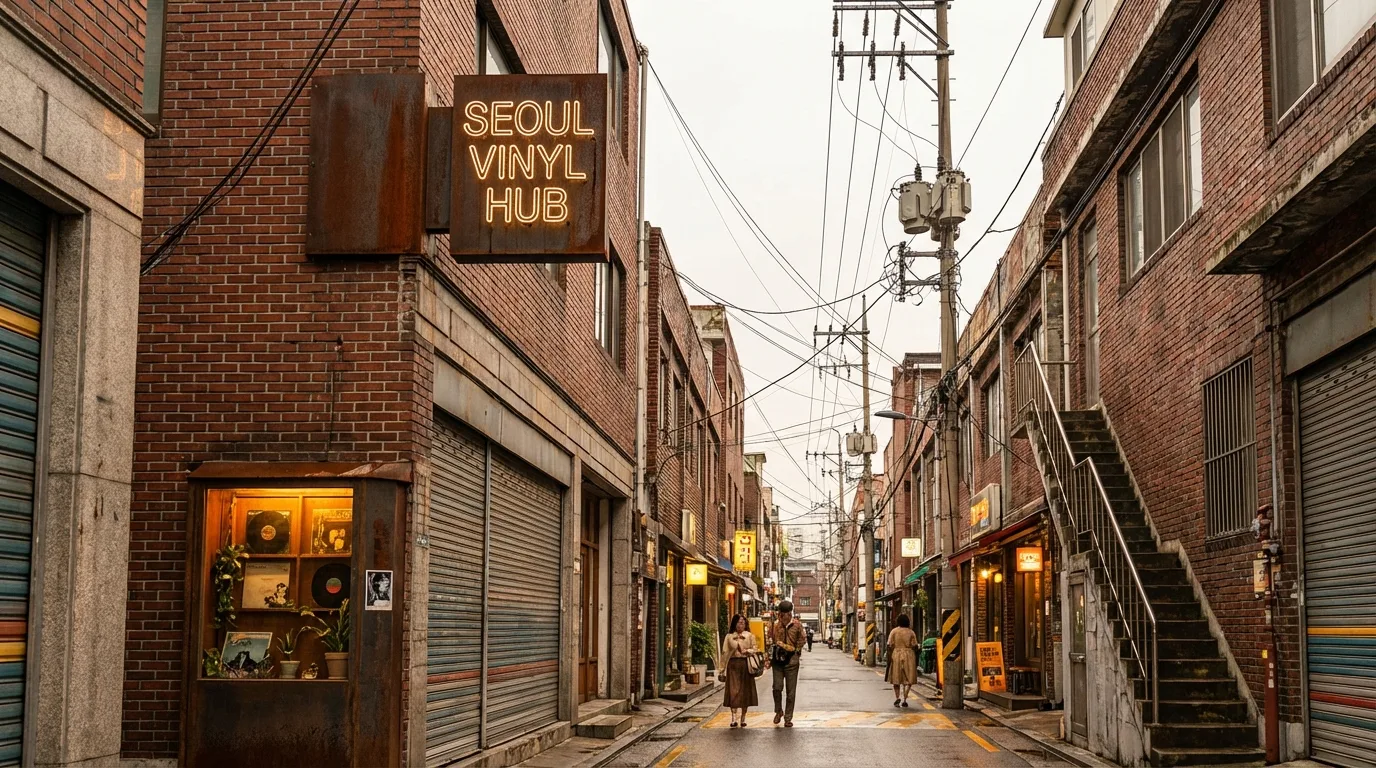
Seongsu outfits stay visually separated for longer. Wider facades, industrial buildings, showroom fronts, and cafe exteriors give clothing more background space, so silhouette and material become visible quickly. A jacket that feels energetic in Hongdae may look oversized in Seongsu if the shoulder and sleeve length are not controlled. A pant hem that seemed casual in a crowd may look unfinished against a clean wall.
This is why minimal clothing can look stronger in Seongsu. A neutral shirt, straight pants, tone-on-tone outerwear, and a structured bag may contain fewer elements, but the district's calmer surfaces make line and fabric easier to see. Matte nylon, firm denim, thin wool blends, soft leather-like textures, and crisp cotton all create different surfaces even when the color palette stays quiet.
The main Seongsu mistake is becoming too polished. All black, all grey, or all beige can look clean at first, then become flat once the outfit is placed against another clean surface. A small contrast point solves that: a lighter inner layer, a shoe toe with a different finish, a bag strap that breaks the upper body, or a single metallic detail near the face.
Weekend Seongsu can still become crowded because pop-up lines and cafe traffic overlap. The difference is that the background often keeps its planes. Walls, windows, and storefront spacing remain visible enough to frame an outfit again after the crowd moves. If your goal is material comparison, shopping photos, or checking whether an outfit looks balanced from head to toe, Seongsu is easier to use.
Trend signals that matter on Seoul streets
The most useful trend signals are not only item names. The first signal is the ratio between a wider bottom and a shorter top. Wide denim or cargo pants need a clear upper-body stop point, or the lower body can look heavy. The second signal is light technical fabric. Nylon jackets, windbreakers, and thin zip layers appear frequently in transitional weather, but strong shine can move the look toward sportswear unless a quieter pant or bag balances it.
The third signal is low-saturation color. Charcoal, washed blue, ivory, faded khaki, and steel grey are easier to repeat than all-black or very bright color blocking. The fourth signal is the relationship between small bags and shoe volume. When the bag becomes smaller, a very flat shoe can make the lower body look underweighted. A sneaker, loafer, or boot with enough toe shape can restore balance.
The fifth signal is where decoration sits. Keychains, belts, necklaces, headwear, and bag charms do not need to appear together. One detail near the face and one detail near the waist or hand area are usually enough to make the outfit feel styled without turning it into a display.
These signals last longer than a single seasonal label. Seoul street fashion changes quickly, but the way clothing is read in a real street stays more stable. Where the top ends, how long the pants fall, how the shoe supports the walk, and how much the background fights the color palette are the details that keep deciding whether a look feels convincing.
If the style families themselves still feel hard to separate, the K-Fashion Style Types from Y2K to Girl Crush hub is the wider companion. This article explains district reading, while that guide explains how Y2K, girl crush, high teen, fairycore, and techwear split by silhouette and detail.
Failure signs when an outfit meets a real district
The first failure sign is too much volume everywhere. A wide hoodie, wide jacket, wide pants, and large backpack can look powerful in a still reference, but the body line disappears in a real street. Hongdae can absorb more of that volume because the background is already active. Seongsu exposes it faster.
The second sign is a broken ankle-to-shoe connection. If the pant covers too much of a low shoe, the hem looks heavy. If the pant is cropped and the sock, shoe, and skin all create separate bands, the leg line becomes fragmented. Seoul street outfits fail at the feet more quickly than at the top.
The third sign is a bag that cuts the upper body in the wrong place. A crossbody strap can break a graphic tee or shirt placket. A heavy tote can drag one shoulder down. Hongdae requires practical carrying because the route involves more movement, but Seongsu makes bag placement more visible in photos and storefront reflections.
The fourth sign is seasonal overloading. Summer does not need linen, sandals, straw texture, and pale color all at once. Fall does not need brown knit, check pattern, leather, and boots in one outfit. If fabric already says the season, let color stay quieter. If color carries the season, keep the fabric closer to a daily basic.
The last sign is confusing a photo outfit with a walking outfit. Sunglasses, a short top, and heavy shoes can make one image stronger. After two hours of walking, sitting, carrying items, and using the subway, friction, sweat, wrinkles, and storage become more visible. Decide whether the outfit is for one frame or for a full route before adding more details.
How to choose the route by shopping, photos, or daily wear
| Purpose | Start with | Outfit rule | |---|---|---| | Spontaneous street photos | Hongdae | Keep layering, graphic rhythm, and shoe volume visible | | Silhouette checks and showroom browsing | Seongsu | Watch top length, fabric surface, and bag position | | First Seoul shopping route | Hongdae then Seongsu | Gather mood widely, then refine shape and material | | Minimal daily outfit testing | Seongsu | Reduce color count and create contrast through shoes or bag | | Strong night mood | Hongdae | Use two clear points that still read inside signage and crowd flow |
For shopping, do not try to cover both districts deeply in one day. Hongdae is better for scanning small stores and reading street rhythm quickly. Seongsu is better for entering spaces, comparing material, and photographing whether the outfit looks balanced. If you must combine them, use Seongsu earlier in the day and move to Hongdae later when street energy becomes part of the outfit test.
For photos, reverse the question. If the clothing itself should be the main subject, Seongsu gives cleaner lines from daytime through golden hour. If the district mood should push the outfit, Hongdae becomes stronger toward evening. For the narrower district comparison, continue to Hongdae vs Seongsu Street Fashion.
If your wardrobe base is still unstable, start with K-Fashion Wardrobe Essentials before chasing more trend pieces. Street fashion does not require buying more special items first. It begins with seeing which pants, jackets, shoes, and bags already read well in actual Seoul backgrounds.
Seoul street fashion trends are easier to read through district conditions than through item names alone.
Hongdae supports layered energy, graphic rhythm, and stronger shoes, while Seongsu shows silhouette and fabric clarity faster.
Before shopping, check top length, bottom width, bag position, ankle break, and shoe volume in the same order.